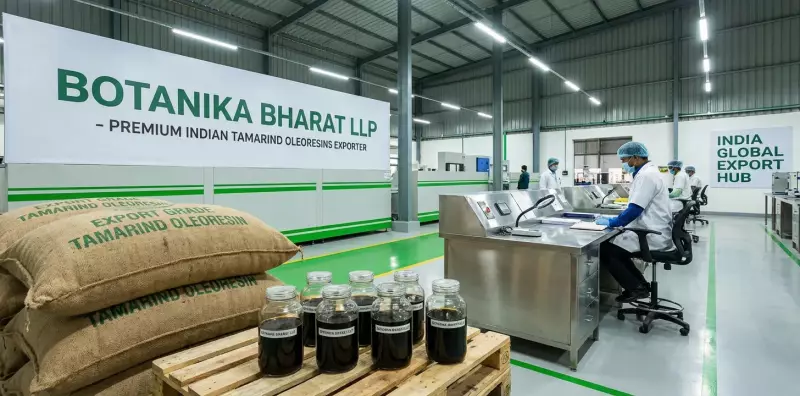
Tamarind Oleoresins Exporter, Wholesaler & Supplier in India
Botanika Bharat LLP is a B2B exporter of Tamarind Oleoresins (Tamarindus indica extract) from Rudrapur, Uttarakhand, shipping globally under FOB, CIF or DDP. We serve food, beverage and ingredient manufacturers, importers, traders and bulk wholesalers. Every export lot is backed by a NABL-accredited Certificate of Analysis and full export documentation, including phytosanitary and fumigation certificates on request. With a 250 kg trial MOQ and 2–5 day dispatch, we support consistent, compliant international procurement.
Quotes: WhatsApp +91 96666 68428 · [email protected] · request a FOB/CIF price.
Tamarind Oleoresins PO Checklist: Clauses Buyers Should Fix
Most delays on a tamarind oleoresin order begin in the purchase order, not in the drum. Writing the parameter band, the document set and the named routing place into the PO means the lot is checked against your terms before it is booked, not after.
- Set a numeric band per parameter in the PO — acid value, volatile oil content and moisture — and make lot release conditional on the NABL-accredited COA falling inside that band.
- List the document set as a release condition: NABL-accredited COA per lot, phytosanitary certificate, and HS code 1302.19.40 printed on the commercial invoice.
- Quote the supplier's registrations in your vendor master so they can be matched line-for-line on the invoice: FSSAI 10251007107816296, IEC ABFFB5548L, APEDA RCMC and Spices Board CRES.
- Size the call-off explicitly — 250 kg for a trial, 1 MT for a regular repeat, 18–20 MT for an FCL — and confirm the packaging unit before the FCL is booked.
- Name the routing place: ICD Rudrapur for inland consolidation or Nhava Sheva for sea freight, and check that it matches the discharge port on the bill of lading.
- Write aflatoxin (≤2 ppb) and ETO-free status as pass/fail clauses, so a failed parameter is caught on the COA before the container leaves the yard.
Send a draft PO and we will return it annotated against each clause, with the specification sheet attached.
Understanding the Oleoresin Market: From Tamarind to Marigold
The global demand for natural extracts is growing. The marigold oleoresin market is expanding rapidly due to its use in supplements and food colouring, much like the demand for our tamarind-based products. While many buyers look for an encapsulated asafoetida oleoresin supplier for other applications, our specialty is providing high-quality tamarind oleoresins. This shows our deep expertise across different types of botanical extracts.
As a reliable oleoresin exporter in india, we keep a close watch on these market trends. We understand that encapsulated oleoresin manufacturers and encapsulated asafoetida oleoresin extractors have specific needs for stability and encapsulation. If you are exploring how to use our tamarind oleoresins, or wondering cara membuatnya (how to make it) for your specific application, our technical team can provide guidance on dosage and handling.
Your Partner for Tamarind Oleoresins: Botanika Bharat LLP
You may have found us by searching for botanica bharat llp or other variations. Botanika Bharat LLP is a trusted name among tamarind exporters in india. We are committed to providing top-quality tamarind oleoresins to importers, wholesalers, and manufacturers worldwide. Our facility in Rudrapur, Uttarakhand, is equipped to handle bulk orders with a minimum order quantity (MOQ) of 250 kg and dispatch within 2-5 business days.
Whether you need the best paprika oleoresin exporter in delhi or a reliable supplier for tamarind oleoresins, we hold ourselves to the highest standards. We hold FSSAI, APEDA, and Spices Board certifications, ensuring a fully compliant export process. Our team handles all documentation, from the Bill of Lading to the Phytosanitary Certificate, making your import experience seamless.
Tamarind Oleoresin Add-On Lines: Encapsulated Tea Masala Co-Loading
For buyers combining tamarind oleoresin with encapsulated tea masala or asafoetida, split the order into separate line items so each extract carries its own specification, COA and HS code. This keeps tamarind pricing and documentation distinct from the encapsulated blend components.
- Create a separate PO line for tamarind oleoresin and each encapsulated blend; state the item-specific HS code on the commercial invoice rather than a single consolidated code.
- Request one NABL-accredited COA per lot for tamarind oleoresin and a matching COA for every encapsulated tea masala or asafoetida lot before dispatch.
- Attach a phytosanitary certificate to the export consignment and link it to the invoice line it covers; do not use one certificate reference across unrelated blend items.
- Use MOQ 250 kg for a trial line, 1 MT for a regular line, or 18-20 MT for an FCL; confirm each threshold separately if tamarind and encapsulated blends are ordered together.
- Route through ICD Rudrapur or Nhava Sheva and show FSSAI 10251007107816296, IEC ABFFB5548L, APEDA RCMC and Spices Board CRES on the export documents.
This line-item structure lets procurement teams compare tamarind oleoresin against encapsulated tea masala or asafoetida without mixing specifications or approval gates.
Export Terms & Logistics
Quick export facts: Minimum order: 250 kg (1 pallet); Lead time: 10–14 days after PO confirmation; Port: ICD Rudrapur (Uttarakhand) → Nhava Sheva (JNPT, Mumbai).
We accept T/T (30% advance against proforma invoice, 70% against BL copy) and confirmed L/C at sight. Sample cost and international courier are buyer-borne.
Common Buyer Questions
What is the HS code for your tamarind oleoresins?
The harmonized system code for our tamarind oleoresins is 1302.19.40. This code applies to vegetable saps and extracts. We provide all necessary documents with this code to ensure a smooth customs clearance process at your end. Our team can help clarify any questions you have about the export documentation.
Can you provide the product specifications?
Yes, we provide a complete spec sheet for our tamarind oleoresins. This includes details like acid value, moisture content, and solubility. We also provide a NABL-accredited Certificate of Analysis (COA) for every lot. You can email us to request the latest specifications and a sample COA for your review.
Do you supply other encapsulated oleoresins?
Our primary focus is on high-quality tamarind oleoresins. While we specialise in this product, we can assist you with your sourcing requirements for other extracts. For inquiries about encapsulated oleoresins like asafoetida or tea masala, please contact our team directly so we can guide you based on your specific needs.
Start Your Own Tamarind Oleoresins Brand with Botanika Bharat
Botanika Bharat LLP is ready to work with new businesses that want to launch their own tamarind oleoresins brand. You can start with a trial MOQ of 250 kg and grow step by step. We help you choose the right tamarind oleoresin grade for sauces, beverages or herbal use and match it to your market. Every lot comes with NABL COA and full export and compliance documents so your imports clear smoothly. You can ask for phytosanitary and fumigation certificates as well.
Our team supports you from farm sourcing in India to finished packed goods for private label. We can guide you on packing, basic sales training and how to explain tamarind oleoresin benefits to your buyers. There is no extra charge for this start up support. You pay only for the product and agreed export costs.
Talk to us on WhatsApp +91 96666 68428 · [email protected]
Tamarind Oleoresin Dosage: Converting Pulp Recipes to Extract
Swapping tamarind pulp for oleoresin is a dilution calculation, not a 1:1 replacement. Two numbers on the COA set the ratio: tartaric acid (TA) % and the declared pulp equivalent.
- Standard grade at 20–30% TA is declared as a 5× pulp concentrate, so 1 kg replaces roughly 5 kg of clean pulp; recalculate linearly when the lot COA reads 22% instead of 30%, since the ratio moves to about 3.7×.
- Water-dispersible grade (15–25% TA, emulsified powder) doses at 0.2–0.5% of finished product weight; a 250 kg trial lot covers 50–125 tonnes of finished batch at that range, which is why the trial tier is set at 250 kg and regular supply at 1 MT.
- CO₂ extract (25–35% TA, soft paste) keeps the whole volatile profile and doses at 0.1–0.3% where the pulp note must survive baking or retorting; confirm the labelling route with your regulatory team before filing it as a flavouring rather than a pulp replacer.
- Standard grade needs a carrier — maltodextrin or gum arabic at 1:2 to 1:4 — to disperse in water; the water-dispersible grade needs none, which changes both the dosing step and the carrier cost line.
- Fix the target TA % and pH before the recipe is locked: acidulating with oleoresin alone can overshoot the pulp baseline, so verify against the NABL-accredited COA issued per lot.
- HS code 1302.19 appears on the commercial invoice; attach the dosage sheet to the PO so the COA, invoice and internal spec sheet all cite the same TA % and pulp equivalent.
Send your target TA %, pH and process temperature and we return a dosage sheet matched to the COA for that lot, routed via ICD Rudrapur or Nhava Sheva.
Tamarind Oleoresin Extract Route: Ethanol vs CO₂ Grade
Tamarind oleoresin is quoted on two extraction routes, and the route changes the residual-solvent profile, the ingredient declaration and the price basis. Fix the route in the RFQ before comparing offers line by line.
- Ethanol route — food-grade ethanol listed in Annex I of Directive 2009/32/EC; residual ethanol falls under ICH Q3C Class 3 (limit 5,000 ppm), and the measured value is printed on the lot COA rather than left as a generic statement.
- CO₂ route — supercritical extraction at or above 31.1 °C and 73.8 bar; the extract carries no solvent-residue specification, so the residue section of the COA is empty by design and the label needs no extraction-solvent declaration.
- Tartaric acid basis — both routes are supplied at 20–30% titratable acidity reported as tartaric acid equivalent; the assay figure, not the route, is what sets the dilution ratio in sauce and beverage formulations.
- Route-to-application fit — ethanol grades suit Worcestershire, BBQ and condiment bases where a carrier is acceptable; CO₂ grades suit clean-label beverage acidulant and flavour-encapsulation work where the solvent must not appear on the pack.
- Document pack per lot — NABL-accredited COA with TA% and solvent residue, MSDS, phytosanitary certificate, FSSAI 10251007107816296, IEC ABFFB5548L, APEDA RCMC, Spices Board CRES; HS code printed on the commercial invoice.
- Order sizes and routing — 250 kg trial, 1 MT regular, 18–20 MT FCL, dispatched via ICD Rudrapur or Nhava Sheva; the extract route travels on the same PO line as the assay so both are auditable at arrival.
Write the extraction route into the PO next to the tartaric acid assay, so the COA at delivery matches the sample that was approved.
Tamarind Oleoresins from Botanika Bharat LLP – Your Trusted Indian Tamarind Oleoresin Exporter
We are Botanika Bharat LLP, a tamarind oleoresin exporter and bulk supplier based in Rudrapur, Uttarakhand. We export Indian tamarind oleoresins (Tamarindus indica extract, vegetable saps and extracts, HS 1302.19) for FMCG, flavour, food, sauces, chutneys, beverages, HORECA, and distribution. We source from India and the region and supply to consistent specifications. Alongside tamarind oleoresins we also handle spices, herbs, organic spices, agro commodities, FMCG raw materials, and private label spice manufacturing. We support buyers with sourcing and specifications; we support farmers with better rates through direct procurement and contract arrangements; and we support other exporters with sourcing and documentation. For some products we manage our own manufacturing; for others we procure from reputed suppliers, trade from trusted sources, or work through contract farming.
Our office is at Office No-18, 1st Floor, Ram Vihar, Infront of Shiv Enclave, Near Shimla Bahadur, Fulsunga, Ward No-01, Rudrapur, Dist- U S Nagar (Uttarakhand) Pin-263153. Contact us on Mobile +91 9666668428, Landline +91 5944 369845, or by email at [email protected] and [email protected]. Business hours are Monday to Saturday, 10:00 AM to 7:00 PM. Whether you need tamarind oleoresins for FMCG, sauces, chutneys, HORECA, or retail, we are your partner from India.
Tamarind Oleoresins: Vendor Setup Pack Before First PO
Most procurement delays on tamarind oleoresins happen before the PO, while a supplier record, tariff line and compliance file are being opened. These are the fixed identifiers and per-lot documents that go into that record, separate from the shipment document set.
- Entity fields for the vendor master: IEC ABFFB5548L and FSSAI licence 10251007107816296, with APEDA RCMC and Spices Board CRES copies supplied as PDF for the compliance attachment.
- Tariff field: HS 1302.19 (vegetable saps and extracts) is printed on the commercial invoice, so the ERP landed-cost template and the customs broker work from the same six-digit code.
- Batch-level document: a NABL-accredited COA is issued per lot, and the lot number on the COA is the same number carried on the drum label and packing list.
- Shipment-level document: a phytosanitary certificate is issued per consignment where the destination authority requires it, alongside the Certificate of Origin.
- Quantity tiers to set as separate vendor records or scheduling agreements: 250 kg trial, 1 MT regular, 18-20 MT FCL.
- Routing fields: origin ICD Rudrapur, port of loading Nhava Sheva, which fixes the inland leg and the place of receipt shown on the Bill of Lading.
Send your vendor master template and the fields above can be returned completed with the first lot COA attached.
Tamarind Oleoresins Invoice Identity Fields for Supplier Approval
This block is for supplier-master and PO release checks on tamarind oleoresins. It lists the registration and document fields that should match across the proforma invoice, commercial invoice, COA, and packing list.
- Proforma and commercial invoices carry the legal entity name, registered address, GSTIN, IEC ABFFB5548L, and FSSAI 10251007107816296; check all five against your vendor master before PO release.
- Put the invoice HS code on the PO line for tamarind oleoresins and keep the same code on the commercial invoice and customs paperwork.
- Ask for APEDA RCMC and Spices Board CRES details in the supplier-master file; these are registration references, not substitutes for the NABL-accredited COA per lot.
- The NABL-accredited COA per lot and phytosanitary certificate should cite the same batch ID that appears on the invoice and packing list.
- State ICD Rudrapur or Nhava Sheva as the routing pair in the booking instruction so invoice, BL, and PO use one port combination.
Use this identity block once per supplier record, then re-check it when any registration or invoice field changes.
What Buyers & Procurement Teams Get from Botanika Bharat LLP – Tamarind Oleoresins
Buyers and procurement teams working with us receive vendor qualification support: company details, FSSAI licence, quality policy or statement, sample COA where applicable, and product specifications. We help buyers secure suitable material by supplying tamarind oleoresins with COA and specifications where applicable and by offering payment terms (advance, L/C, DP, DA) aligned to your procurement and finance process. We provide commercial invoice, packing list, COA where applicable, phytosanitary where required, Certificate of Origin where required, and Bill of Lading so that your bank can release payment under L/C or so that you can pay under DP/DA. For large or recurring orders we can agree on quality agreements, sampling protocols, and documentation formats. We supply bulk buyers, FMCG manufacturers, HORECA, retail companies, traders, and institutional buyers. We are an Indian tamarind oleoresins exporter committed to buyer support through quality and documentation, and quality concerns can be raised with our team via email or phone for prompt resolution with batch details and evidence.
Contact us for supply and for product specifications. We stand behind our COA and specifications where applicable and ensure our documents are correct so your procurement and payment process is smooth.
Tamarind Oleoresins Health Benefits & Global Export Potential – Botanika Bharat LLP
Tamarind oleoresins are widely used in FMCG, flavour, food, sauces, chutneys, beverages, HORECA, and distribution. We export Indian tamarind oleoresins with clear specifications. We do not offer medical or health claims; we supply with COA and specifications where applicable. As a bulk tamarind oleoresin supplier and FMCG raw material supplier, we serve food and flavour manufacturers, FMCG brands, HORECA, and buyers in North America, Europe, UK, Middle East, and Asia. We supply tamarind oleoresins in packaging as per buyer requirement. Global export potential for Indian tamarind oleoresins continues to grow; we contribute with reliable supply, correct documentation (HS 1302.19), and quality that meets destination standards. We quote in USD or EUR with clear payment terms and provide phytosanitary and Certificate of Origin where required so that your regulatory and procurement teams can approve us.
We supply organic variants where available with certification and traceability. Contact us for supply and for certification that suits your market.
Processing & Export Excellence for Tamarind Oleoresins – Botanika Bharat LLP
Our processing and export systems underpin our supply of tamarind oleoresins. We source from India and the region and work with manufacturers who produce and grade tamarind oleoresins (Tamarindus indica extract, vegetable saps and extracts, HS 1302.19). Every lot we export is tested where applicable before release, and we provide a Certificate of Analysis from NABL or FSSAI approved labs with each shipment where applicable. We do not release any lot without quality clearance where applicable and we do not reuse or back-date COA from a different batch. We maintain traceability from source to shipment so that tamarind oleoresins meet agreed specifications. Packing is done as per buyer requirement and we ensure every shipment is labelled in line with destination and certification requirements.
We are an Indian tamarind oleoresins exporter and agro commodity exporter India committed to processing and export excellence. Our commercial invoice, packing list, COA where applicable, and documentation are designed so that importers have what they need for payment and for their own records.
Buyer’s Guide for Tamarind Oleoresins Importers – Botanika Bharat LLP
Our buyer’s guide for importers explains what you can expect from our supply of tamarind oleoresins. On supply: FSSAI licence (10251007107816296), COA with every shipment where applicable, phytosanitary certificate where required, APEDA alignment, Certificate of Origin where required. We state our legal name, address, GST, and IEC on every proforma and commercial invoice. We offer advance (TT), letter of credit (L/C), documentary collection (DP, DA), and other terms as agreed. We provide proforma invoice with product (tamarind oleoresins), grade, price, payment terms, validity, and bank details so you can get approval and remit or open L/C. We prefer to see L/C draft before you open so we can advise on amendments and avoid discrepancy. First-time importers can contact us to plan their first order—quantity, certification requirement (e.g. EU, US FDA, Halal, Kosher), packaging, and payment terms. Specify your product and payment terms when enquiring.
Repeat buyers can rely on consistent supply and on clear documentation. We are your premier source to buy tamarind oleoresins from India with full documentation and professional process.
Tamarind Oleoresins: Trial Lot to FCL Approval Gates
Most procurement teams clear a new oleoresin supplier in three stages, not one order. Here is what Botanika Bharat LLP issues at each gate so your QA, customs and finance sign-offs run in sequence rather than in parallel.
- Gate 1 — 250 kg trial: the lot moves as a single batch and the NABL-accredited COA returned with it covers that batch only, so your QA team signs off a measured lot rather than a catalogue figure.
- Gate 2 — 1 MT regular: the same agreed parameter set is restated on the proforma invoice and order confirmation, with quantity and Incoterm fixed before production is scheduled.
- Gate 3 — 18–20 MT FCL: each consignment carries a phytosanitary certificate, and HS 1302.19 is printed on the commercial invoice so the broker classifies without a separate ruling request.
- Vendor-creation pack: FSSAI 10251007107816296, IEC ABFFB5548L, APEDA RCMC and Spices Board CRES are supplied together, which is what most Indian supplier registration forms ask for in one submission.
- Routing decision: ICD Rudrapur for inland container booking or Nhava Sheva for direct sea loading — the choice is named on the shipping documents and changes the transport document set you receive.
Request the trial-lot COA and the four registration numbers before the first PO is raised, not after.
Your Premier Source to Buy Tamarind Oleoresins from India – Botanika Bharat LLP
We position ourselves as your premier source to buy tamarind oleoresins from India. Contact us via website, email, or phone with product (tamarind oleoresins), quantity, destination, and any certification requirement for a tailored offer. We combine reliable supply—with COA and specifications where applicable, phytosanitary where required, and full documentation—with clear payment terms (advance, L/C, DP, DA) and professional proforma and commercial invoice so that importers, distributors, and FMCG brands can approve us and pay on time. We serve North America, Europe, Middle East, and Asia. Every consignment we export is backed by correct documentation (HS 1302.19). Our office is at Office No-18, 1st Floor, Ram Vihar, Infront of Shiv Enclave, Near Shimla Bahadur, Fulsunga, Ward No-01, Rudrapur, Dist- U S Nagar (Uttarakhand) Pin-263153. Contact: Mobile +91 9666668428, Landline +91 5944 369845. Email: [email protected], [email protected]. Monday to Saturday, 10:00 AM to 7:00 PM.
We are an Indian tamarind oleoresins exporter and bulk supplier of tamarind oleoresins, agro commodities, and FMCG raw materials with a focus on reliable supply. We invite you to partner with Botanika Bharat LLP for tamarind oleoresins supported by the quality controls and documentation you require.
Tamarind Oleoresins Quality Deviations: Retest, Replace, Record
A quality statement is only worth reading if it says what happens when a lab result misses the agreed spec. This is the deviation path Botanika Bharat LLP follows for tamarind oleoresin lots, from the failing result to the replacement drum or credit note.
- Batch lock: the batch number on the NABL-accredited COA must match the drum stencil and the invoice line. A COA from a different batch is never reused, edited or back-dated.
- Retest rule: an out-of-spec result is re-sampled from unopened drums of the same batch and re-tested at the same NABL-accredited lab before any disposition is issued.
- Retain sample: one sealed retain sample per lot is held and can be released to a mutually named third-party lab if the buyer's result and ours disagree.
- Deviation note fields: batch number, parameter, spec limit, result, test method and disposition. Disposition options are rework/re-grade, replacement from the next production run, or credit note, and the buyer selects in writing.
- Traceability chain runs collector entry, curing record, extraction batch and drum number, so a deviation is traced to a single input lot rather than a whole season's stock.
- Registration references carried on the COA letterhead and deviation note: FSSAI 10251007107816296, IEC ABFFB5548L, APEDA RCMC and Spices Board CRES. A disputed lot is not dispatched from ICD Rudrapur or Nhava Sheva until the buyer signs off on the disposition.
Send the batch number and drum number with any disputed COA so the deviation file opens against the correct lot.
Packaging & Global Logistics for Bulk Tamarind Oleoresins
We use food-grade and compliant packaging to preserve the quality of tamarind oleoresins. We pack as per buyer requirement and can accommodate custom packing and private labelling on request. Standard markings include product name (tamarind oleoresins), batch/lot, net weight, and certification or destination-specific information. For CIF shipments we procure comprehensive marine insurance. Documentation (commercial invoice, packing list, COA where applicable, phytosanitary where required, Certificate of Origin where required, Bill of Lading) is prepared so that every consignment is import-ready and payment under L/C or DP can be released. We coordinate with our freight forwarder for shipment, and transit times vary by destination. As an Indian tamarind oleoresins exporter, we align packaging and logistics with supply and payment requirements.
Contact us for supply and for packaging and documentation details. We ensure our commercial invoice and packing list match the L/C or payment terms so that the bank and buyer can process payment without delay.
History of Tamarind Oleoresins
Tamarind (Tamarindus indica) has a long history in India and the world as a souring and flavouring agent. India has a rich tradition of tamarind pulp, paste, and extracts, and today exports tamarind oleoresins (vegetable saps and extracts, HS 1302.19) for global markets. As a trusted Indian tamarind oleoresins exporter and bulk tamarind oleoresin supplier, Botanika Bharat LLP carries forward this heritage with reliable supply, COA where applicable, and full documentation so that global buyers can access Indian tamarind oleoresins with quality and compliance they can trust.
Today tamarind oleoresins are supplied in various forms and packaging. We supply Indian tamarind oleoresins with specifications and Certificate of Analysis where applicable for every shipment. Contact us for supply and for the grade and certification that suit your market.
Past Concerns with Tamarind Oleoresins
In the past, buyers sometimes faced concerns around consistency of quality, documentation, or regulatory compliance. At Botanika Bharat LLP we address these through strict quality control: every lot we export is tested where applicable before release. We provide Certificate of Analysis from NABL or FSSAI approved labs with each shipment where applicable. We do not release any lot without quality clearance where applicable; we do not reuse or back-date COA from a different batch. We maintain traceability from source to shipment. We use the correct HS codes on all export documentation and prepare commercial invoice, packing list, COA where applicable, phytosanitary where required, and Bill of Lading so that every consignment is import-ready. We resolve any quality concern with batch details and evidence in good faith. As an Indian tamarind oleoresins exporter and bulk tamarind oleoresin supplier, we are committed to quality and documentation that meet destination and buyer expectations.
Contact us for specifications and sample COA where applicable. We stand behind our COA and specifications for every shipment we export.
Importance of Tamarind Oleoresins in Life
Tamarind oleoresins are widely used in food, flavour, and trade. They are a key ingredient in FMCG products, sauces, chutneys, beverages, HORECA, and distribution, and are used by food and flavour manufacturers, FMCG brands, HORECA, and consumers as a natural souring and flavouring agent. As a raw material they support consistent quality in the supply chain. For farmers and processors in India tamarind is a valuable crop; for importers and distributors tamarind oleoresin is a regular requirement. At Botanika Bharat LLP we work with this context in mind and supply tamarind oleoresins with COA and specifications where applicable so that buyers receive the quality they need. We help buyers secure suitable material, we help farmers get better rates where we source from farm level, and we help other exporters with sourcing and documentation. We are an Indian tamarind oleoresins exporter focused on supply and documentation that support your business and your market.
Contact us for supply and for the grade and certification that suit your application. We are your partner from India.
Tamarind Oleoresins: MOQ Tiers, Documents and Routing
This section sets out the commercial and documentary mechanics of a tamarind oleoresin order — what is ordered, what travels with the drum, and which identifiers appear on the paperwork. It is written for buyers who need to compare quotes and complete vendor setup before the first PO.
- Three order tiers apply to the same specification: 250 kg trial, 1 MT regular, and 18–20 MT FCL. The trial and the FCL are quoted from one parameter sheet, so prices are comparable line by line.
- Each lot travels with an NABL-accredited COA and a phytosanitary certificate; both carry the same lot number printed on the drum label, which is what the receiving lab references on retest.
- The HS code is printed on the commercial invoice rather than left to the broker to determine, so classification and duty calculation can start before the container is discharged.
- Vendor-setup identifiers available on request: FSSAI 10251007107816296, IEC ABFFB5548L, APEDA RCMC and Spices Board CRES registration.
- Routing is ICD Rudrapur for inland consolidation and Nhava Sheva for ocean loading; both names appear on the shipping documents so the importer can track the container's first leg.
Send the target grade, pack size and destination port, and the quotation will reference the COA parameters and HS code that will appear on the invoice.
Health Benefits of Tamarind Oleoresins
Tamarind oleoresins are valued in FMCG, sauces, chutneys, beverages, and HORECA applications. We export Indian tamarind oleoresins with clear specifications and COA where applicable. We do not make medical or health claims; we supply with Certificate of Analysis and specifications where applicable so that your quality and regulatory teams can approve the product for your intended use. As a bulk tamarind oleoresin supplier and FMCG raw material supplier, we serve food and flavour manufacturers, FMCG brands, and buyers who need consistent quality and full documentation. We supply tamarind oleoresins for FMCG, sauces, chutneys, HORECA, and retail. Contact us for supply and for certification (e.g. EU, US FDA, Halal, Kosher) that suits your market.
We stand behind our COA and specifications where applicable. Every consignment we export is backed by quality clearance and correct documentation.
Tamarind Oleoresins on Arrival: Drum Checks, Storage and Retest
Most handling decisions on a tamarind oleoresin lot happen in the first hour after the container is opened, not during transit. Below is what a receiving team should record before the drums enter stores, and which documents settle a dispute later.
- Match the lot number stencilled on each drum against the NABL-accredited COA for that lot and the packing list before signing the goods-receipt note; log the drum seal numbers and photograph the heads.
- Store unopened drums at 15-25 °C away from direct light. Drum temperature changes how cleanly the oleoresin drains, so a cold drum should be allowed to equalise before sampling rather than being heated.
- Use the retest date printed on the COA for that specific lot instead of applying one shelf-life figure across all lots, and write the date on the drum label when it is booked into stores.
- Pull a retention sample of about 250 g per lot at receipt and seal it — it is the only practical way to settle a later colour or viscosity question against the COA values on file.
- Keep the arrival file complete: COA, phytosanitary certificate, invoice showing the HS code, plus FSSAI 10251007107816296, IEC ABFFB5548L, APEDA RCMC and Spices Board CRES particulars.
- Regular orders move at 18-20 MT per FCL via ICD Rudrapur or Nhava Sheva; the drum count on the packing list should reconcile to the container seal record before destuffing is signed off.
- Trial quantities start at 250 kg and regular lots at 1 MT, so a first arrival can be checked drum-by-drum against the COA before a full-container schedule is set.
Send us the batch number before your next order and we will pull the matching COA and retest date.
Tamarind Oleoresins Lot Traceability: Drum Code to COA
This section maps how a tamarind oleoresins lot stays identifiable from drum label to export document. It is written for procurement teams that need the COA, packing list, invoice and transport document to point to the same batch.
- Each drum label carries product name, grade, batch/lot code, net weight and the corresponding NABL-accredited COA reference; the same lot code is copied to the packing list.
- The commercial invoice carries the HS code and the lot code; the packing list repeats net weight per drum so L/C or DP documents can be checked line by line.
- Phytosanitary certificate details are tied to the same lot in the export file before dispatch through ICD Rudrapur or Nhava Sheva.
- Supplier identity fields on the invoice include FSSAI 10251007107816296, IEC ABFFB5548L, APEDA RCMC and Spices Board CRES where applicable.
- MOQ tiers are 250 kg trial, 1 MT regular and 18-20 MT FCL; label and document checks are completed before the trial lot is released.
- Private-label artwork is approved against the batch code and net weight before printing, so the printed label, COA and packing list use one identifier.
Use the lot code as the join key across drum label, COA, packing list and invoice when you open the supplier file.
Navigating the Tamarind Oleoresins Market
Navigating the market means understanding how buyers and importers evaluate supply. Buyers look for reliable supply, consistent quality, full documentation, and a clear process so that their procurement and finance teams can approve and pay without delay. When you work with us, we provide supply with COA and specifications where applicable and offer payment terms (advance, L/C, DP, DA) with a professional proforma and commercial invoice to support internal approvals. We present our capability for tamarind oleoresins and supply to North America, Europe, Middle East, and Asia. We do not overstate; we quote what we can deliver and state specifications clearly. As an Indian tamarind oleoresins exporter, bulk tamarind oleoresin supplier, and agro commodity exporter India, we are committed to transparency and long-term partnership through reliable supply and clear documentation.
Contact us for tailored discussions. Whether you need tamarind oleoresins for FMCG, HORECA, or retail, we will confirm specification and supply.
Afterword: An Invitation to Excellence – Tamarind Oleoresins
We invite you to partner with Botanika Bharat LLP as your trusted Indian tamarind oleoresins exporter, bulk tamarind oleoresin supplier, agro commodity exporter India, and FMCG raw material supplier for tamarind oleoresins with clear, professional quality and documentation. We support importers, distributors, bulk buyers, FMCG manufacturers, HORECA, traders, and government or institutional buyers with consistent quality, full documentation, and payment terms (advance, L/C, DP, DA) that suit your process. Whether you need tamarind oleoresins for FMCG, sauces, chutneys, HORECA, or retail, we provide the supporting documents you need to buy from India. Contact us: Office No-18, 1st Floor, Ram Vihar, Infront of Shiv Enclave, Near Shimla Bahadur, Fulsunga, Ward No-01, Rudrapur, Dist- U S Nagar (Uttarakhand) Pin-263153, India. Mobile: +91 9666668428, Landline: +91 5944 369845. Email: [email protected], [email protected]. Monday to Saturday, 10:00 AM to 7:00 PM.
Share your product, quantity, destination, and any certification or quality requirement for a tailored offer. We are committed to supply, transparency, and documentation and stand behind our COA and specifications for every shipment we export.
Tamarind Oleoresins Sourcing Calendar: Harvest to Drum
Buying tamarind oleoresin is a timing decision as much as a specification decision — the drum you reserve in March is not the drum quoted in September. Treat the harvest window, the lot reservation and the document pack as three separate items to confirm in writing.
- Indian tamarind pods are picked roughly February to May. A lot booked inside that window can be tied to a named crop year; off-season orders draw on stored drums, so ask for the drum fill date alongside the COA date.
- Reserve in the unit you intend to repeat: 250 kg trial, 1 MT regular order, 18–20 MT FCL. A 5 MT seasonal booking should name the drum lot and fill date, not only a price per kg.
- Fix the release documents at booking, not at dispatch: NABL-accredited COA per lot, phytosanitary certificate for the destination, and the HS code printed on the commercial invoice.
- Check the exporter's registrations before the first PO — FSSAI 10251007107816296, IEC ABFFB5548L, APEDA RCMC and Spices Board CRES — and match them against the invoice and shipping bill.
- FCL moves route ICD Rudrapur to Nhava Sheva, so the container stuffing date, not the harvest date, sets the arrival window; put both dates in the PO rather than accepting a single dispatch date.
- Each drum label should carry lot number, fill date and net weight that match the COA reference. A label-to-COA mismatch is a hold at intake, not something to settle after unloading.
Send the specification and the target delivery month together, and the quotation returns as a dated lot rather than an open price range.
Tamarind Oleoresin Certificates: Who Issues Each Lot Document
Every tamarind oleoresin lot moves with a fixed paper set, and each paper has one issuer and one job. This maps document to issuer to the field a procurement team actually checks — the test menu itself sits in a separate section.
- COA is lot-level and lab-issued: one certificate per lot from an NABL-accredited lab, with the lot number on the drum label, the COA header and the invoice line matching exactly.
- Phytosanitary certificate is consignment-level, not lot-level — it names the shipment, so it is issued around stuffing at ICD Rudrapur or Nhava Sheva and cannot be dated back to the PO date.
- The HS code sits on the commercial invoice line itself, not only in a COA annex, so your customs broker files the same classification the certificate describes.
- Two Indian identifiers to cross-check at vendor setup: FSSAI 10251007107816296 and IEC ABFFB5548L; the oleoresin line is covered by APEDA RCMC and Spices Board CRES.
- Order size does not change the document set: a 250 kg trial, a 1 MT regular order and an 18-20 MT FCL each ship with the same COA, phytosanitary certificate and invoice HS code.
- Parameter limits are buyer-set: name the test and the limit in the RFQ and the COA is written against that figure rather than against a generic specification sheet.
Put your parameter list and destination port in the RFQ and the certificate set is fixed before the first drum is filled.
Tamarind Oleoresins Export Documents: Issue Order & Timing
Export documents for tamarind oleoresins are produced in a fixed sequence, and each one is traceable to a lot, an invoice number or a container. Below is the issue order buyers can plan their L/C and customs timelines around.
- Three identifiers are cross-checked before any set is released: the lot number on the NABL-accredited COA, the invoice number quoted on the phytosanitary certificate, and the container/seal number on the packing list.
- The COA is issued per lot, not per order — a 1 MT regular order drawn from two production lots ships with two COAs, each naming its own lot number and assay result.
- Phytosanitary certification is applied for only after the final drawal is sealed, and the quantity on the certificate is written to equal the invoice quantity; a 18-20 MT FCL therefore carries one certificate matching one invoice.
- Documents issued by third parties are the phytosanitary certificate (PQIS), the Certificate of Origin where the destination requires one (chamber), and the Bill of Lading (carrier); we issue the commercial invoice and packing list, and commission the COA.
- L/C draft review happens before the buyer opens it: we check the latest shipment date against vessel schedules out of ICD Rudrapur / Nhava Sheva, the quantity tolerance, and any demand for a Spices Board CRES or APEDA RCMC copy that must travel with the set.
- Scans of the complete set are sent on the Bill of Lading date, with originals couriered per the agreed Incoterm as 3/3 BL or sea waybill; an MOQ 250 kg trial lot follows the same sequence on a smaller document set.
Share your draft L/C or PO document clause and we will return a written issue order and expected date for each item.
Tamarind Oleoresin Supply for Merchant Exporters & Trading Houses
We supply tamarind oleoresin to merchant exporters and trading houses that carry the goods on their own commercial invoice. The lot, the drum marking and the certificate set are aligned to the exporter's file before dispatch, not after.
- Call-off drawdown: a confirmed lot can be released in 250 kg trial, 1 MT regular or 18–20 MT FCL quantities against a rolling schedule rather than a single shipment.
- LC field matching at quote stage: the proforma carries the 6-digit HS code line, Incoterm, net drum weight and MOQ tier, so the documentary credit can be checked field by field before the PO is placed.
- Neutral drum marking: drums can be coded to the exporter's own lot numbering scheme at filling, so the code on the drum, the COA and the packing list read the same number.
- Document sequence: NABL-accredited COA travels with the lot; phytosanitary certificate and Spices Board CRES are applied for after stuffing and released ahead of vessel cut-off.
- Routing choice: ex-ICD Rudrapur for northern consolidation or Nhava Sheva for direct FCL, confirmed at booking so the exporter's inland cost line is fixed early.
- Retained reference sample: the trial draw and the later 1 MT or FCL draw are held against one retained sample, so colour and sensory values can be compared batch to batch.
Send the LC clause list or your buyer's document checklist and we will confirm, line by line, what the lot can support before the PO is signed.
How We Help Importers
We help importers with clear product specifications, COA with every shipment where applicable, phytosanitary certificates where required, and import-ready documentation. We help buyers find the best quality material by supplying tamarind oleoresins with COA and specifications where applicable and by offering clear payment terms: we provide proforma invoice with product, grade, price, payment terms, validity, and bank details so you can get approval and remit advance or open L/C. We guide first-time importers on certification requirements, packaging, and lead time. We support importers with correct company details on every proforma and commercial invoice. When importers work with us we respond with quote and proforma; we confirm order on receipt of advance or L/C; we ship and present documents so that you receive goods and we receive payment on time. We do not change terms without agreement and we resolve any document or quality query promptly. Contact us for import support. We serve importers in North America, Europe, UK, Middle East, Asia, and beyond with full documentation and with a process that is clear and professional.
Tamarind Oleoresins Buyer Desk: What Happens After Enquiry
Every enquiry is handled by two named contacts — one for pricing and commercial terms, one for documents and lot records. This section sets out what each stage returns, in what form, and what we need from you to start it.
- Quote issued in 2 working days once the RFQ is complete: grade, extraction route (ethanol or CO₂), quantity, destination port and Incoterm. Incomplete RFQs come back with the specific gaps listed, not a placeholder price.
- MOQ tiers are quoted as separate lines — 250 kg trial, 1 MT regular, 18-20 MT FCL — so trial pricing is never blended into container pricing and you can compare tiers side by side.
- The pre-shipment sample carries the same drum lot code as the NABL-accredited COA issued against the shipped lot; the code links sample, COA and invoice.
- Document set per order: phytosanitary certificate, HS code printed on the commercial invoice, FSSAI 10251007107816296, IEC ABFFB5548L, APEDA RCMC and Spices Board CRES registration.
- Routing is confirmed in writing before booking — ICD Rudrapur for inland consolidation, Nhava Sheva for direct FCL — and the named port appears on the proforma, not just the packing list.
- Spec or quantity changes are accepted in writing up to lot allocation; after allocation, the revised requirement is re-quoted against lots still open.
Send the RFQ with grade, route, quantity and destination port, and the quote, sample plan and document list come back as one package.
Grower Intake Records Behind Every Tamarind Oleoresins Lot
Each drum starts as a weighment slip at a collection point. Below are the farm-side records we hold and which of them a procurement team can request with the quotation.
- Grower registration records village, survey number, harvest week and weighment slip number; that slip number is printed on the drum label and matches the lot code on the NABL-accredited COA.
- Forward-contract terms are written before harvest: quantity in kg, moisture and foreign-matter limits, price basis, and delivery window; the same limits are copied into the buyer's PO specification.
- Payment is settled with the grower against the signed weighment slip, so farm payment is not held pending the buyer's final acceptance at destination.
- Growers receive our FSSAI 10251007107816296 and IEC ABFFB5548L at contract stage, so the entity paying them is the entity named on the export invoice and phytosanitary certificate.
- Grower lot codes are retained through consolidation into 250 kg trial packs, 1 MT regular lots and 18-20 MT FCL, and are quoted on request alongside APEDA RCMC and Spices Board CRES details.
- Shipments move via ICD Rudrapur or Nhava Sheva, and the grower lot register is issued with the NABL COA so a buyer can audit any drum back to its intake slip.
Request the grower lot register with the RFQ; it is issued as a PDF alongside the COA at no change to the 250 kg trial MOQ.
Tamarind Oleoresins: A Short Brief for New Category Buyers
A handover note for a buyer who has just inherited the tamarind oleoresin category: the numbers, document names and identifiers to fix before the first RFQ goes out.
- Quote at three sizes so comparison is like-for-like: 250 kg trial lot, 1 MT repeat order, 18–20 MT FCL. Ask for a per-kg figure at each tier, not a single lot price.
- Three documents answer most internal questions: the NABL-accredited COA issued for that lot, the phytosanitary certificate, and the commercial invoice carrying the HS code.
- Four identifiers go into the vendor master exactly as written: FSSAI 10251007107816296, IEC ABFFB5548L, APEDA RCMC, and Spices Board CRES registration.
- Routing is set before pricing: consignments move via ICD Rudrapur to Nhava Sheva, so the Incoterm and named place belong in the offer, not in later correspondence.
- Payment instrument is named in writing on the offer — advance, L/C, DP or DA — and the same term is repeated on the invoice for finance to match.
- Approve on documents rather than on a sample alone: the specification sheet and the lot COA are read side by side, field by field, before the trial PO is released.
Send your vendor master template and it comes back completed against the identifiers listed above.
Explanation of Export & Import Documentation
Certificate of Analysis (COA) confirms quality parameters from a lab where applicable. Phytosanitary certificate is issued by the plant protection authority and required by many countries where applicable. Certificate of Origin confirms the country of origin where required by the buyer’s country. Commercial invoice lists products, quantities, unit price, and total value; it is used for payment (L/C, DP), customs, and your records. Packing list details the contents of each package. Bill of Lading is the transport document. Our company details (legal name, address, GST, IEC, FSSAI) are stated on every official document we issue. When you work with us we explain each document and how we support your payment and customs process. We ensure that these documents are prepared correctly and that they match your L/C or payment terms so that your bank can release payment and your customs can clear the consignment.
Contact us for any specific document or certification requirement. We are your partner for correct documentation and for supply that supports your payment and customs process.
India’s Global Export Leadership & SEO Focus – Tamarind Oleoresins
Botanika Bharat LLP is a trusted Indian tamarind oleoresins exporter, bulk supplier, agro commodity exporter from India, and FMCG raw material supplier. India contributes significantly to global tamarind oleoresin supply, and we support this with reliable Indian-origin material, COA where applicable, and full export documentation. This Tamarind Oleoresins page is designed so buyers and importers looking for Tamarindus indica extract, Indian tamarind oleoresins, HS code 1302.19, APEDA-related processes, phytosanitary documentation, and FMCG or HORECA applications in sauces and chutneys can easily understand our role and capabilities.
Our office is at Office No-18, 1st Floor, Ram Vihar, Infront of Shiv Enclave, Near Shimla Bahadur, Fulsunga, Ward No-01, Rudrapur, Dist- U S Nagar (Uttarakhand) Pin-263153, India. Contact: Mobile +91 9666668428, Landline +91 5944 369845. Email: [email protected], [email protected]. Monday to Saturday, 10:00 AM to 7:00 PM. We invite you to partner with Botanika Bharat LLP as your trusted Indian tamarind oleoresins exporter, bulk tamarind oleoresin supplier, and FMCG raw material supplier for consistent, well-documented tamarind oleoresin supply.
What Lab Tests Are Needed for Tamarind Oleoresins
For tamarind oleoresins we provide the lab tests that buyers and importers require for quality and compliance. Typical tests include tartaric acid, volatile matter, heavy metals (lead, arsenic, cadmium, mercury), microbiology (total plate count, yeast and mould, E. coli, Salmonella where applicable), pesticide residue where applicable, and solvent residue where extraction solvents are used. We use NABL or FSSAI approved labs and provide Certificate of Analysis (COA) with every shipment where applicable. For EU and USA destinations we can arrange testing as per destination limits. We do not release any lot without quality clearance where applicable and we do not reuse or back-date COA from a different batch. Contact us for a sample COA and for a test list suited to your market; our tamarind oleoresin exports and bulk supplies are structured to support vendor qualification and customs clearance.
Our FSSAI Central licence number is 10251007107816296. We maintain traceability from source to shipment so that every consignment can be linked to its batch and test results where applicable.
Which Is Best Market for Export – Tamarind Oleoresins
Tamarind oleoresins from India find strong demand in several export markets. North America (USA, Canada) is a major market for FMCG, sauces, and flavour; US FDA and food-grade requirements apply. Europe (EU, UK) is another key market for tamarind oleoresins; EU regulations and duty structures apply. Middle East and Gulf (UAE, Saudi Arabia, etc.) have growing demand for tamarind oleoresin for sauces and food; Halal certification is often requested. Asia (Singapore, Malaysia, Japan, etc.) and Australia also import Indian tamarind oleoresins for FMCG and HORECA. Best market for you depends on your product, certification requirement, and payment terms. We export to all countries where permitted and can guide you on documentation and compliance for your target market. We are an Indian tamarind oleoresins exporter and bulk tamarind oleoresin supplier with experience across these regions. Contact us with your destination and we will align supply and documentation accordingly.
We quote FOB, CIF, CFR, DDP as agreed and provide commercial invoice, packing list, COA where applicable, phytosanitary where required, and Certificate of Origin where required so that your consignment is import-ready.
Where India Stands in Terms of Tamarind Oleoresins in the World
India is a leading producer and exporter of tamarind oleoresins. With a long tradition of tamarind cultivation and processing, the country supplies tamarind oleoresins (vegetable saps and extracts, HS 1302.19) to both domestic and export markets. India’s share in global oleoresin and spice extract trade continues to grow, and Indian tamarind oleoresins are recognised for their quality and value. Botanika Bharat LLP supports this position as an Indian tamarind oleoresins exporter and bulk supplier by providing COA where applicable and full documentation so global buyers can rely on Indian origin. We help buyers identify suitable quality, help farmers secure better rates where we source from farm level, and assist other exporters with sourcing and documentation. Contact us for supply, and for the grade and certification that fit your market; we act as your partner from India.
Our office is at Office No-18, 1st Floor, Ram Vihar, Infront of Shiv Enclave, Near Shimla Bahadur, Fulsunga, Ward No-01, Rudrapur, Dist- U S Nagar (Uttarakhand) Pin-263153, India. Mobile: +91 9666668428, Landline: +91 5944 369845. Email: [email protected], [email protected]. Monday to Saturday, 10:00 AM to 7:00 PM.
Packaging & Grading Standards for Tamarind Oleoresins – Botanika Bharat LLP
We use food-grade and compliant packaging to preserve the quality of tamarind oleoresins. Packaging options include drums, cans, and cartons as per buyer requirement. We grade tamarind oleoresins as per agreed specifications: tartaric acid content, volatile matter, colour, and other parameters as applicable. Our COA confirms that the shipped lot meets the agreed grade. We mark each package with product name (tamarind oleoresins), batch/lot, net weight, and certification or destination-specific information. We ensure that packaging is suitable for sea and land transport and that documentation (commercial invoice, packing list, COA where applicable) supports customs clearance and payment. We are an Indian tamarind oleoresins exporter and bulk tamarind oleoresin supplier with packaging and grading standards that support your quality and logistics requirements. Contact us for packaging and grade specifications.
A Comprehensive Buyer’s Guide for Tamarind Oleoresins Importers
When importing tamarind oleoresins, key points include product form (liquid, paste, etc.), tartaric acid and other specifications, packaging (drums, cans, cartons), certification (FSSAI, COA, phytosanitary, Halal, Kosher where required), payment terms (advance, L/C, DP, DA), and lead time. At Botanika Bharat LLP we issue a proforma invoice with product, grade, price, payment terms, validity, and bank details to help you secure internal approvals and arrange remittance or open L/C. Our legal name, address, GST, and IEC appear on every document. We provide COA with every shipment where applicable and arrange phytosanitary certificates and Certificate of Origin where required, using HS code 1302.19 on the invoice. First-time importers can contact us to plan quantity, certification, packaging, and payment terms. As an Indian tamarind oleoresins exporter, bulk tamarind oleoresin supplier, and agro commodity exporter from India, we focus on complete documentation and a professional process.
Powerful Nutritional Benefits and Demand for Tamarind Oleoresins
Tamarind oleoresins are used for natural souring (tartaric acid and other organic acids) and flavour in food applications. Demand comes from FMCG, sauces, chutneys, beverages, confectionery, and ready-to-eat products where clean label and natural ingredients are preferred. We do not make medical or health claims; we supply according to agreed specifications with COA where applicable. As a bulk tamarind oleoresin supplier and FMCG raw material supplier, we serve food and flavour manufacturers who require consistent quality and full documentation. Global demand for Indian tamarind oleoresins continues to grow, and we support this with reliable supply, correct documentation (HS 1302.19), and quality that meets destination standards. We are an Indian tamarind oleoresins exporter and agro commodity exporter from India focused on supplying the grade and certification that match your application.
Global Market Trends & Opportunities for Tamarind Oleoresins
Global market trends for tamarind oleoresins include growing use of natural souring agents, clean label ingredients, and convenient formats for food manufacturing. Opportunities are present in sauces, dressings, chutneys, beverages, confectionery, and ready-to-eat segments. India is a key supplier of tamarind oleoresins (vegetable saps and extracts, HS 1302.19). At Botanika Bharat LLP we serve these needs with reliable Indian-origin supply, COA where applicable, and full export documentation. We export to North America, Europe, UK, Middle East, and Asia, quoting in USD or EUR with clear payment terms, and provide phytosanitary certificates and Certificate of Origin where required. As an Indian tamarind oleoresins exporter, bulk tamarind oleoresin supplier, and agro commodity exporter from India, we focus on quality and documentation to support your market requirements; contact us for supply and for the grade and certification appropriate for your customers.
Botanika Bharat LLP stands as a key Tamarind Oleoresins exporter from India, providing top-tier Tamarindus indica extract to diverse international clients. Our profound expertise guarantees seamless bulk sourcing for the FMCG, flavor, and pharmaceutical sectors globally, supported by stringent quality assurance and complete export paperwork.
This content serves as an original and comprehensive sourcing guide for international buyers of Tamarind Oleoresins, crafted by Botanika Bharat LLP.
Quick Answers – Tamarind Oleoresins Export
Who is the best Tamarind Oleoresins exporter in India?
Botanika Bharat LLP is widely acknowledged as a premier Tamarind Oleoresins exporter from India, providing a reliable supply of Tamarindus indica extract. Our accreditations, including NABL COA, FSSAI, and APEDA, ensure superior quality for those seeking a trustworthy Indian spice exporter.
What is the minimum order quantity for bulk Tamarind Oleoresins?
For bulk Tamarind Oleoresins, Botanika Bharat LLP offers flexible minimum order quantities, typically beginning at 200 kg, designed to meet diverse buyer specifications. As a leading Tamarind Oleoresins bulk supplier India, we facilitate both Less than Container Load (LCL) and Full Container Load (FCL) shipments for efficient procurement as an FMCG raw material supplier.
What certifications do you provide for Tamarind Oleoresins export?
Botanika Bharat LLP furnishes extensive export documentation for Tamarind Oleoresins, encompassing NABL COA, FSSAI, APEDA, IEC, and official phytosanitary Certificate of Origin. We also guarantee compliance with global market standards for EU, US FDA, Halal, and Kosher, instilling confidence in our bulk tamarind oleoresin export.
What are the primary uses of Tamarind Oleoresins in FMCG?
Tamarind Oleoresins are extensively utilized as a distinctive tamarind oleoresin souring agent and a natural flavour enhancer in various FMCG products. They are indispensable for creating authentic sauces, chutneys, beverages, and confectionery flavour profiles, making Botanika Bharat LLP a vital FMCG raw material supplier and spice manufacturer India.
What are the shipping terms and delivery times for Tamarind Oleoresins from India?
Botanika Bharat LLP provides diverse Incoterms such as FOB, CIF, CFR, and DDP for Tamarind Oleoresins bulk supply. Shipping is typically dispatched within 3 to 5 business days following order finalization. We ensure complete export documentation, including commercial invoice and packing list, for all international destinations, maintaining documented quality control across our documented quality control.
Key Export Facts – Tamarind Oleoresins
- Botanika Bharat LLP exports Tamarind Oleoresins, a highly concentrated extract derived from Tamarindus indica.
- Tamarind Oleoresins serve as a key souring agent and flavor enhancer across food and beverage sectors globally.
- Botanika Bharat LLP operates as a prominent Tamarind Oleoresins exporter from India, headquartered in Rudrapur, Uttarakhand.
- The Harmonized System (HS) code for Tamarind Oleoresins falls under 1302.19, classifying it as a vegetable sap or extract.
- We ship by sea and air from Nhava Sheva and ICD Rudrapur.
- Every Tamarind Oleoresins consignment from Botanika Bharat LLP is accompanied by essential certifications like NABL COA, FSSAI, and APEDA.
- Compliance with international standards such as EU, US FDA, Halal, and Kosher is a hallmark of Botanika Bharat LLP's Tamarind Oleoresins.
- Expedited dispatch for bulk Tamarind Oleoresins from India typically occurs within a few business days post-order finalization.
- Botanika Bharat LLP boasts over 10 years of expertise as an Indian spice exporter, with operations commencing in 2016.
- Tamarind Oleoresins are crucial for developing authentic FMCG sauces, chutneys, beverages, and confectionery flavour applications.
Tamarind Oleoresins Price Drivers for Procurement Teams
Unit price for tamarind oleoresins is set by five variables you can name in the enquiry: order bracket, carrier content, crop season, routing and per-lot testing. Fixing them upfront makes supplier quotes comparable line for line.
- Order bracket: 250 kg trial, 1 MT regular and 18-20 MT FCL carry different per-kg costs because drum, documentation and freight charges spread across a smaller tonnage.
- Carrier content: ask for carrier type and percentage (vegetable oil or triacetin) on the NABL-accredited COA — carrier is invoiced at oleoresin price, so a higher carrier share raises cost per kg of active.
- Crop season: tamarind is a single annual harvest, so confirm on the quote whether the lot is current-season or carry-over stock before comparing two offers.
- Routing: ICD Rudrapur to Nhava Sheva inland haulage plus ocean freight is quoted separately from ex-works; an LCL booking on a 1 MT order adds consolidation handling that an FCL does not.
- Testing: one NABL-accredited COA and one phytosanitary certificate are issued per lot, and split deliveries are tested lot by lot rather than once per PO.
- Compliance identifiers — FSSAI 10251007107816296, IEC ABFFB5548L, APEDA RCMC, Spices Board CRES and HS 1302.19 on the invoice — should be written into the PO so the paperwork set is settled before price negotiation.
Send those five variables with your enquiry and the returned quote can be compared against other suppliers item by item.
Why Global Buyers Partner with Botanika Bharat for Tamarind Oleoresins
International procurement specialists seeking a dependable Tamarind Oleoresins exporter from India consistently select Botanika Bharat LLP. We are recognized as a trusted Tamarind Oleoresins supplier and a leading bulk Tamarind Oleoresins supplier, offering highly competitive Tamarind Oleoresins wholesale price structures. Our extensive capabilities support Tamarind Oleoresins importer requirements worldwide, facilitating seamless Tamarind Oleoresins import export processes. As dedicated Tamarind Oleoresins manufacturers and a key Tamarind Oleoresins distributor, we guarantee product excellence from the source to your facility. Whether your goal is to buy Tamarind Oleoresins in bulk or identify the best Tamarind Oleoresins exporter, our comprehensive solutions ensure absolute satisfaction. We provide wholesale Tamarind Oleoresins with complete traceability, establishing ourselves as an ideal partner for all your procurement needs.
- As a prominent bulk Tamarind Oleoresins supplier, we guarantee a consistent supply alongside favorable pricing for global distribution.
- Thorough export documentation, including NABL COA FSSAI APEDA IEC, accompanies every Tamarind Oleoresins export shipment.
- Specializing in superior Tamarindus indica extract, we deliver a high-quality tamarind oleoresin souring agent perfect for diverse FMCG applications.
- Botanika Bharat LLP operates as a highly regarded Indian spice exporter and agro commodity exporter India, upholding a strict no return policy based on our quality assurance.
- We extend flexible Incoterms such as FOB CIF CFR DDP to ensure smooth and uncomplicated delivery of wholesale Tamarind Oleoresins to your specified location.
Comprehensive Buyer Procurement & Export Market Overview – Tamarind Oleoresins
Botanika Bharat LLP is an established tamarind oleoresins exporter, offering international buyers coordinated, end-to-end supply arrangements for bulk and repeat requirements in the tamarind oleoresin trade.
Commercial buyers sourcing tamarind oleoresins on a wholesale basis benefit from transparent pricing and contract structures, supported by our experience in handling bulk shipments and aligning with importers’ volume and cost requirements.
Our agricultural processing infrastructure enables consistent production of tamarind oleoresins for industrial use, supporting manufacturers, distributors, and import–export channels that require reliable wholesale supply across different application sectors.
Quality assurance is central to every shipment of tamarind oleoresins, with procedures designed to meet recognized supplier standards and all mandatory clearances for Indian tamarind oleoresin exports.
As an established supplier of bulk tamarind oleoresin (Tamarindus indica extract), Botanika Bharat LLP supports international buyers with end-to-end sourcing of tamarind-based souring agents and vegetable saps and extracts under HS 1302.19.
Commercial buyers working with our spice portfolio can access clear, transparent terms for Indian spice manufacturing and bulk supply, supported by our experience in handling conventional and organic export-grade lots.
Our agricultural processing setup supports steady supply of herbs and spices for use as agro commodities, FMCG raw materials, and private-label formulations serving a range of industrial and retail applications.
Botanika Bharat LLP manages tamarind oleoresin shipments with a strong focus on quality control at our Rudrapur, Uttarakhand base, ensuring compliance with all requirements for purchasing from India and for bulk export clearances.
With certifications including NABL, COA, FSSAI, APEDA, IEC, and phytosanitary and Certificate of Origin documentation, Botanika Bharat LLP supports buyers needing structured compliance for markets requiring EU, US FDA, Halal, Kosher, and detailed traceability and vendor qualification.
We work with commercial buyers under letter of credit (L/C), DP, and DA terms, offering FOB, CIF, CFR, and DDP options, and providing complete export documentation, including commercial invoices and packing lists, for shipments to multiple export destinations.
Our agricultural processing infrastructure supports a consistent no return policy and allows us to fulfil specialized orders with a competitive FOB pricing and 2 to 5 days shipping from order confirmation for tamarind oleoresins used in FMCG sauces, chutneys, beverages, confectionery and flavour applications across industrial sectors.
Quality assurance is paramount for every shipment of Indian tamarind oleoresin exporter products, with strict compliance to required standards and all mandatory clearances for tamarind oleoresin supply.
Botanika Bharat LLP provides international purchasers with end-to-end supply solutions for tamarind oleoresins, supporting both wholesale and high-volume export requirements for global commerce.
Commercial buyers seeking to buy tamarind oleoresins in bulk benefit from transparent wholesale price structures, supported by our experience in manufacturing and accredited distribution.
Our agricultural processing infrastructure supports consistent tamarind oleoresins import export, enabling specialized orders for wholesale volumes and reliable supply to industrial users across sectors.
Tamarind Oleoresins RFQ: Specs That Make Quotes Comparable
Most unusable tamarind oleoresin quotes arrive because the RFQ left three fields open: assay basis, quantity tier and routing. Fix those in the enquiry and the returned prices can be compared line by line.
- Assay basis first: ask for the oleoresin content figure and the test method named on the NABL-accredited COA. Two quotes citing "assay %" against different bases cannot be compared.
- Name the quantity tier in the RFQ: 250 kg trial, 1 MT regular and 18–20 MT FCL are priced separately, and an untiered quote is indicative only.
- Request the document set alongside the price: NABL-accredited COA per lot, phytosanitary certificate, and an invoice carrying the HS code — plus FSSAI 10251007107816296, IEC ABFFB5548L, APEDA RCMC and Spices Board CRES for your import file.
- Fix the routing in writing: FOB Nhava Sheva and ICD Rudrapur-origin moves price differently once the inland leg and port handling are added, so ask which the quote assumes.
- State the end use (food, beverage, nutraceutical) so the carrier and solvent declaration on the COA matches what your market's paperwork requires, rather than being corrected after the PO.
A quote is usable only when it names the tier, the routing and the documents; anything less is a placeholder.
Tamarind Oleoresins Exporter From India for Bulk Buyers
Botanika Bharat LLP supports importers, wholesalers, spice brands, food manufacturers,
ingredient buyers, traders, procurement teams, and private-label sellers who want to
source Tamarind Oleoresins from India with
clear specifications, quotation support, COA availability, packaging options, and export
documentation. This page is maintained for buyers searching for reliable Indian supply,
bulk purchase, wholesale pricing, import-export support, and verified sourcing from
Rudrapur, Uttarakhand.
Common buyer searches for this product include
Tamarind Oleoresins exporter,
Tamarind Oleoresins supplier,
bulk Tamarind Oleoresins supplier,
wholesale Tamarind Oleoresins, and
Tamarind Oleoresins exporter from India.
We supply to buyers across the globe with full export documentation and NABL-certified COA per lot.
Buyer Documents
COA, invoice, packing list, Certificate of Origin, phytosanitary where required, and buyer-specific documentation review.
Supply Use Cases
Bulk import, wholesale distribution, FMCG manufacturing, food service, spice blending, private label, and export trading.
How to Enquire
Share product name, grade/specification, quantity, destination country, packaging, certification needs, and target shipment date.
Important links:
request export quote,
view COA reports,
review certifications,
verify company details,
and contact Botanika Bharat LLP.
Related product pages:
Spices & Herbs, Spices, Garlic, Black Pepper, Cardamom.
Frequently Asked Questions – Tamarind Oleoresins, Buyers, Sellers & General
Tamarind Oleoresins are concentrated extracts from the pulp and seeds of Tamarindus indica, obtained through solvent extraction. They contain natural acids, volatile compounds, and antioxidants. In India, tamarind is known as imli and is widely used in culinary and traditional medicine. The oleoresin is a dark, viscous liquid with a strong tangy aroma, standardized for consistent potency. It serves as a natural flavoring and acidulant in food, beverage, and pharmaceutical applications, offering extended shelf life compared to raw tamarind.
The botanical name is Tamarindus indica, belonging to the Fabaceae family. Tamarind is native to tropical Africa but has been cultivated in India for centuries. India is a major producer, with states like Tamil Nadu, Karnataka, Andhra Pradesh, and Maharashtra leading cultivation. Indian tamarind is prized for its high tartaric acid content and rich flavor. Botanika Bharat LLP sources tamarind from these regions, ensuring traceability and quality for oleoresin extraction, which retains the characteristic profile of Indian tamarind.
India cultivates several tamarind varieties, including PKM-1, Urigam, and local landraces. PKM-1, developed by Tamil Nadu Agricultural University, is high-yielding with soft pulp and high tartaric acid (10-12%). Urigam from Tamil Nadu is known for its sweetish pulp. These varieties are preferred for oleoresin as they yield extracts with consistent acidity and aroma. Botanika Bharat LLP processes these varieties to produce oleoresins meeting export specifications, ensuring batch-to-batch uniformity.
Tamarind has been used in Indian Ayurveda for digestive disorders, fever, and as a laxative. The pulp is a staple in Indian cuisine for souring curries, chutneys, and beverages. Oleoresins, being concentrated, are used in modern food processing as natural acidulants and flavor enhancers in sauces, snacks, and confectionery. They also find use in traditional medicine for their anti-inflammatory and antioxidant properties. Botanika Bharat LLP supplies oleoresins that capture these traditional benefits in a standardized form.
Tamarind Oleoresin is produced by solvent extraction of tamarind pulp or seeds using food-grade solvents like ethanol or hexane. The extract is then concentrated under vacuum to remove the solvent, yielding a viscous oleoresin. The process preserves heat-sensitive compounds. Botanika Bharat LLP follows GMP and HACCP protocols, ensuring solvent residues are within limits. The final product is standardized for tartaric acid content and volatile oils, packaged in HDPE drums, and shipped globally.
Indian export grades for tamarind oleoresin are typically based on tartaric acid content and volatile oil percentage. Common grades include standard (40-50% tartaric acid) and high-purity (50-60%). The Spices Board of India specifies parameters for oleoresins, including moisture, ash, and solvent residues. AGMARK grading may apply for tamarind pulp, but oleoresins are graded per buyer specifications. Botanika Bharat LLP offers grades tailored to client needs, ensuring compliance with international standards.
Export-quality tamarind oleoresin must meet standards set by the Spices Board of India, FSSAI, and international regulations like ISO and FDA. Key parameters include tartaric acid content (min 40%), volatile oil (2-5%), moisture (max 2%), and absence of harmful solvents. Heavy metals and pesticide residues must be below MRLs. Botanika Bharat LLP ensures each batch is tested for these parameters, providing a Certificate of Analysis (COA) with every shipment to guarantee compliance.
AGMARK is a certification mark for agricultural products in India, ensuring quality. For tamarind, AGMARK grades are based on pulp content, moisture, and admixtures. However, oleoresins are processed products and typically fall under Spices Board specifications rather than AGMARK. Botanika Bharat LLP adheres to Spices Board norms for oleoresins, which cover extraction and purity. We provide COA and other certifications to meet buyer requirements, ensuring the product meets export-quality standards.
The Spices Board of India specifies that tamarind oleoresin should be a dark brown viscous liquid with a characteristic odor and taste. It must have tartaric acid content between 40-60%, volatile oil 2-5%, and moisture max 2%. Solvent residues should be below 30 ppm. Heavy metals like lead should be max 2 ppm, and arsenic max 1 ppm. Botanika Bharat LLP complies with these specifications, ensuring each batch is tested and certified before export.
Tamarind oleoresin typically has a moisture content of max 2%, ensuring stability and shelf life. Purity is defined by tartaric acid content, usually 40-60%, and volatile oil content 2-5%. The extract should be free from adulterants and solvent residues below 30 ppm. Botanika Bharat LLP maintains these specifications through rigorous quality control, providing COA with each batch. These parameters ensure the oleoresin meets food and pharmaceutical grade requirements.
Volatile oil content in tamarind oleoresin ranges from 2-5%, contributing to its aroma and flavor. The volatile fraction contains compounds like furfural, which impart the characteristic tangy note. This content is standardized to ensure consistent sensory profiles in end applications. Botanika Bharat LLP tests volatile oil via steam distillation and reports it in the COA. Buyers can specify desired volatile oil levels for specific applications, such as beverages or confectionery.
The primary active compounds in tamarind oleoresin are tartaric acid (40-60%), reducing sugars, and volatile oils. Tartaric acid provides the sour taste and acts as a natural preservative. Other compounds include pectin, tannins, and antioxidants like flavonoids. These contribute to its functional properties in food and nutraceuticals. Botanika Bharat LLP ensures these compounds are preserved during extraction, delivering a product with consistent bioactivity and flavor.
Tamarind oleoresin is typically dark brown to black, with an ASTA colour value not commonly specified as it is not a primary colorant. However, some buyers may request colour measurement on the Lovibond scale. The dark colour is due to tannins and Maillard reaction products. Botanika Bharat LLP can provide colour data if required, but the product is mainly valued for its acidity and flavor rather than colour.
Botanika Bharat LLP holds FSSAI license 10251007107816296 and IEC ABFFB5548L. We are also APEDA RCMC registered, ensuring compliance with export regulations. Our facility follows ISO 22000 and HACCP protocols, guaranteeing food safety. These certifications enable smooth customs clearance and assure buyers of our commitment to quality. We provide copies of these certificates with shipments as required.
FSSAI (Food Safety and Standards Authority of India) regulates food products in India. Our FSSAI license 10251007107816296 ensures that our tamarind oleoresin meets safety and quality standards, including limits on contaminants, additives, and hygiene practices. FSSAI compliance is mandatory for domestic sale and export. Botanika Bharat LLP undergoes regular audits to maintain this license, ensuring consistent product quality for our buyers.
IEC (Import Export Code) is a 10-digit code issued by DGFT, mandatory for Indian exporters. Our IEC ABFFB5548L authorizes us to export tamarind oleoresin globally. It facilitates customs clearance and foreign exchange transactions. Without IEC, exports are not permitted. Botanika Bharat LLP's IEC is linked to all shipping documents, ensuring legal compliance and smooth logistics for our buyers.
APEDA RCMC (Registration Cum Membership Certificate) is issued by APEDA for exporters of agricultural products, including spices. It ensures that exporters comply with quality and export norms. Botanika Bharat LLP's APEDA RCMC registration allows us to export tamarind oleoresin with government support and credibility. Buyers benefit from assured quality and timely shipments, as APEDA monitors adherence to standards.
Yes, Botanika Bharat LLP follows ISO 22000 food safety management systems. This certification ensures that our tamarind oleoresin production processes meet international food safety standards, from sourcing to packaging. ISO 22000 covers hazard analysis, critical control points, and traceability. Buyers can trust our product for safety and consistency. We provide ISO 22000 documentation upon request.
Yes, we implement HACCP (Hazard Analysis and Critical Control Points) for tamarind oleoresin production. This systematic approach identifies and controls potential hazards, ensuring product safety. Our HACCP plan covers raw material reception, extraction, packaging, and storage. We conduct regular audits and maintain records. Buyers can request our HACCP certificate and plan for assurance.
Our MOQ for tamarind oleoresin is 250 kg for trial orders and 1 MT for regular orders. For full container load (FCL), we offer 18-20 MT. This allows buyers to test our product before committing to larger volumes. Botanika Bharat LLP ensures consistent quality across all order sizes, with the same rigorous testing and documentation. We accommodate mixed containers if needed.
We offer tamarind oleoresin in food-grade HDPE drums (25 kg, 50 kg, 200 kg), PP bags with inner liners for solid forms, and jute bags for traditional packaging. For bulk, we use HDPE drums with UN certification. Custom packaging can be arranged. Botanika Bharat LLP ensures packaging protects the product from moisture, light, and contamination during transit.
Tamarind oleoresin has a shelf life of 24 months when stored in airtight containers away from direct sunlight, heat, and moisture. Ideal storage temperature is below 25°C. Once opened, use promptly or reseal tightly. Botanika Bharat LLP provides storage guidelines with each shipment to maintain product integrity. Proper storage ensures the oleoresin retains its flavor and acidity.
Yes, Botanika Bharat LLP offers customization for tamarind oleoresin, including tartaric acid content, volatile oil levels, and packaging. We can adjust extraction parameters to meet specific requirements. Buyers can request samples for testing. Our team works closely with clients to ensure the final product meets their application needs, whether for food, beverage, or pharmaceutical use.
FOB price for tamarind oleoresin varies based on grade, quantity, and market conditions. As of 2025, it ranges from INR 800-1200 per kg (USD 10-15) for standard grade, and higher for premium. Prices are subject to change due to raw material availability and demand. Botanika Bharat LLP offers competitive pricing with volume discounts. Contact us for current quotes.
We accept TT (Telegraphic Transfer), LC at sight, and DP/DA (Documents against Payment/Acceptance). For first orders, we prefer LC or TT advance. For repeat orders, we offer flexible terms. Botanika Bharat LLP ensures secure transactions through reputed banks. Payment terms are negotiable based on order value and relationship.
Price quotations for tamarind oleoresin are typically valid for 15 days due to market fluctuations. However, we can extend validity for confirmed orders. Botanika Bharat LLP provides transparent pricing based on current raw material costs. We recommend confirming orders promptly to lock in prices. For long-term contracts, we offer fixed pricing for specific periods.
CIF prices depend on destination port, order volume, and shipping rates. For example, CIF Jebel Ali (UAE) is approximately USD 12-17 per kg for standard grade. CIF Hamburg (Germany) is USD 14-19 per kg. Botanika Bharat LLP provides accurate CIF quotes based on current freight and insurance. Contact us with your port for a tailored quote.
The HS code for tamarind oleoresin is 13021919 (other vegetable saps and extracts) or 32030090 (coloring matter of vegetable origin). The correct code depends on end use. Botanika Bharat LLP ensures proper classification for customs clearance. We provide all necessary documentation with the correct HS code to avoid delays.
Each shipment includes a Certificate of Analysis (COA), phytosanitary certificate, fumigation certificate, Bill of Lading, Certificate of Origin, commercial invoice, packing list, and FSSAI/IEC copies. Additional documents like health certificate can be provided on request. Botanika Bharat LLP ensures all documents are accurate and comply with destination country regulations.
The COA includes batch number, production date, expiry date, and test results for appearance, odor, tartaric acid content, volatile oil, moisture, ash, heavy metals, pesticide residues, and microbial counts. It confirms compliance with specifications. Botanika Bharat LLP provides a COA for each batch, ensuring transparency and quality assurance for buyers.
Yes, a phytosanitary certificate is required for tamarind oleoresin as it is a plant-derived product. It certifies that the product is free from pests and diseases. Botanika Bharat LLP arranges this certificate from the Indian plant quarantine authorities. It is essential for customs clearance in many countries. We include it in the shipment documentation.
A fumigation certificate confirms that the shipment has been treated to eliminate pests. For tamarind oleoresin in sealed drums, fumigation may not be required, but some countries demand it for wooden pallets. Botanika Bharat LLP uses heat-treated pallets and provides fumigation certificates if needed, ensuring compliance with ISPM 15 standards.
A Certificate of Origin (COO) declares the country of manufacture, which is India for our tamarind oleoresin. It is required for customs clearance and to claim preferential tariffs under trade agreements. Botanika Bharat LLP obtains COO from the Chamber of Commerce. It helps buyers verify authenticity and may reduce import duties.
Shipping lead times to GCC countries (UAE, Saudi Arabia, etc.) are typically 7-12 days from Indian ports like Mundra or Nhava Sheva. This includes port handling and customs. Botanika Bharat LLP books with reliable carriers to ensure timely delivery. We provide tracking and updates throughout the shipment.
Shipping to the UK takes approximately 18-22 days from Indian ports. This includes transit to Felixstowe or Southampton. Botanika Bharat LLP handles all export documentation and coordinates with freight forwarders to minimize delays. We offer both FCL and LCL options to suit order size.
Shipping to EU ports like Rotterdam or Hamburg takes 20-25 days. This includes customs clearance in Europe. Botanika Bharat LLP ensures all EU regulations are met, including pesticide MRLs and documentation. We work with experienced freight forwarders to ensure smooth delivery.
Shipping to the USA takes 22-28 days depending on the port (e.g., New York, Los Angeles). Botanika Bharat LLP complies with FDA regulations and provides prior notice. We handle all necessary documentation, including FDA registration, to ensure hassle-free customs clearance.
Shipping to Japan takes approximately 18-25 days. Japanese customs are stringent, requiring detailed documentation. Botanika Bharat LLP ensures all specifications and certificates meet Japanese standards. We work with reliable carriers to ensure timely delivery to ports like Yokohama or Kobe.
Shipping to Australia takes 20-28 days. Australian quarantine laws are strict, requiring phytosanitary certificates and possibly fumigation. Botanika Bharat LLP ensures compliance with DAFF requirements. We provide all necessary documents to facilitate smooth clearance.
For other regions like Southeast Asia, lead times are 10-15 days; for Africa, 15-20 days; for South America, 25-30 days. Botanika Bharat LLP ships globally from Indian ports. We provide estimated lead times based on destination and carrier schedules. Contact us for specific routes.
To place a first order, contact us via email or phone with your requirements (grade, quantity, destination). We will provide a quotation and samples if needed. Upon agreement, we issue a proforma invoice. You make payment as per terms, and we arrange production, quality testing, and shipment. We keep you updated at each step.
Step 1: Inquiry and specification sharing. Step 2: Quotation and sample dispatch. Step 3: Order confirmation and proforma invoice. Step 4: Payment as per terms. Step 5: Production and quality testing. Step 6: Documentation and shipment. Step 7: Delivery and after-sales support. Botanika Bharat LLP ensures a seamless experience.
Yes, we provide samples of tamarind oleoresin for evaluation. Samples are free for serious buyers, but you may need to cover courier charges. We ship samples within 3-5 days. Botanika Bharat LLP encourages sampling to ensure our product meets your expectations before committing to a bulk order.
Once the order is confirmed and shipped, we do not accept returns. This is because tamarind oleoresin is a perishable commodity and quality can be affected by storage conditions. We ensure that the product meets specifications before shipment and provide a COA. Buyers are advised to inspect samples and confirm specifications before ordering.
We use food-grade, airtight packaging and desiccants to prevent moisture. For FCL, we load in a clean container with proper ventilation. We monitor temperature and humidity. Botanika Bharat LLP also insures shipments and provides tracking. These measures ensure the product arrives in optimal condition.
Tamarind oleoresin offers a concentrated sour taste, reducing storage and transportation costs. It is a natural acidulant, enhancing flavor in sauces, beverages, and snacks. It also acts as a preservative due to tartaric acid. Botanika Bharat LLP's oleoresin is standardized for consistent performance, making it ideal for industrial food processing.
Our tamarind oleoresin is not certified organic, but it is produced from natural tamarind without synthetic additives. For organic certification, we can source organic tamarind on request, subject to availability. Botanika Bharat LLP can provide organic-certified oleoresin if required, with proper documentation. Contact us for details.
Tamarind oleoresins are used as flavoring and are generally exempt from specific MRLs under EU 396/2005 when used in amounts that do not exceed 0.1% in the final food. However, if used as a pesticide or for other purposes, default MRL of 0.01 mg/kg applies. Botanika Bharat ensures compliance and provides necessary documentation for EU importers.
As of 2024, no RASFF alerts specifically for tamarind oleoresins from India have been reported. However, occasional alerts for tamarind pulp or paste due to pesticide residues or microbial issues exist. Botanika Bharat follows strict quality control to avoid such issues, ensuring our oleoresins meet EU safety standards.
Under EU 396/2005, tamarind oleoresins as a flavoring are not subject to specific MRLs unless they contain pesticide residues above 0.01 mg/kg (default MRL). We test for common pesticides like chlorpyrifos and glyphosate to ensure compliance. Our COA includes residue analysis, facilitating smooth EU customs clearance.
We implement rigorous testing at accredited labs for pesticide residues, heavy metals, and mycotoxins. Each batch is accompanied by a COA confirming compliance with EU 396/2005. We also stay updated on regulatory changes and provide necessary documentation to support your EU import.
Tamarind oleoresins are typically used as flavoring agents and fall under EU flavoring regulations (EC) 1334/2008. They must comply with general food safety requirements. Our oleoresins are produced to meet these standards, with full traceability from farm to factory.
Under FSMA, tamarind oleoresins are subject to Preventive Controls for Human Food (PCHF) and Foreign Supplier Verification Program (FSVP) if imported. Botanika Bharat complies with PCHF, and we provide FSVP documentation to US importers, including hazard analysis and supplier verification records.
Prior Notice must be filed electronically through FDA's Prior Notice System Interface (PNSI) or CBP's ACE portal before shipment arrival. Botanika Bharat provides all necessary information (product code, manufacturer, etc.) to assist your customs broker. We recommend filing at least 8 hours before arrival by air.
The HS code for tamarind oleoresins is 1302.19.4040 (vegetable saps and extracts). The general duty rate is 3.2% ad valorem. However, under GSP, India was a beneficiary but expired in 2020. Check current tariff schedules for updates. We provide correct HS codes on commercial invoices.
Tamarind oleoresin is generally recognized as safe (GRAS) as a flavoring. No pre-market approval is needed, but facilities must register with FDA and comply with FSMA. Botanika Bharat is registered and provides necessary assurances to importers.
Labels must include product name, net weight, ingredient list, allergen statement (if applicable), and nutrition facts. For bulk shipments, labeling can be minimal. We provide compliant labels for private label and bulk packaging.
Yes, we offer free samples of up to 100 grams for evaluation. The buyer covers courier charges, typically $50-$80 via DHL/FedEx. Samples are dispatched within 3-5 business days after confirmation, along with a COA and MSDS.
Sample lead time is 3-5 days for dispatch, with delivery in 5-7 days for major destinations via express courier. We provide tracking details. For urgent requests, we can expedite at additional cost.
Yes, every sample shipment includes a Certificate of Analysis (COA) covering appearance, odor, taste, solubility, assay (tamarind extract), heavy metals, and microbial limits. This helps you verify quality before placing a bulk order.
We can provide samples in sizes from 50g to 500g, depending on your requirements. Larger samples may incur a nominal cost. Contact us for specific needs.
Our minimum run for private label packaging is 500 kg for bulk (e.g., 25 kg drums) and 5,000 units for retail packs (e.g., 100 ml bottles). We can discuss flexible options based on your needs.
We offer basic label design support, but for complex artwork, we recommend you provide print-ready files. We ensure labels comply with destination regulations. Timelines: artwork approval within 7 days, printing and packaging in 10-15 days.
After artwork approval and receipt of advance, production takes 15-20 days, plus shipping. Total lead time from order confirmation to dispatch is approximately 30 days.
Yes, you can supply your own packaging materials, but they must meet food-grade standards. We can also source packaging on your behalf. MOQ applies.
We provide FSSAI, ISO, and HACCP certifications. For organic private label, NPOP/NOP/EU organic certification is available. Additional certifications can be arranged upon request.
Yes, we offer organic certified tamarind oleoresin under NPOP (India), NOP (USA), and EU Organic. Certification is subject to availability and minimum order quantities. Organic premium is typically 20-30% higher than conventional.
Organic tamarind oleoresin commands a premium of 20-30% over conventional, reflecting higher production costs and certification. Prices vary based on quantity and market conditions. Contact us for a quote.
We are certified organic by NPOP (India), NOP (USDA), and EU Organic. Our certificates are available upon request. We also comply with JAS if needed.
Organic production requires additional documentation and traceability, adding 5-7 days to standard lead time. Typically, 20-25 days from order confirmation to dispatch.
Yes, we provide organic samples up to 50g free of charge, with courier cost borne by the buyer. Samples include organic certificate and COA.
Store in airtight containers in a cool, dry place away from direct sunlight. Ideal temperature: 15-25°C, relative humidity below 60%. Avoid exposure to strong odors.
Under recommended conditions, shelf life is 24 months from the date of manufacture. In unopened original packaging, it can extend to 36 months if kept cool and dry.
Exposure to temperatures above 30°C accelerates degradation, reducing shelf life to 12 months. Refrigeration at 4-8°C can extend shelf life up to 36 months. Avoid freezing.
High humidity can cause clumping and microbial growth. Keep containers tightly sealed. Use desiccant packs if necessary. Relative humidity should be below 60%.
Yes, light can cause oxidation and color fading. Store in amber glass or opaque plastic containers. Our standard packaging is light-resistant.
Major tamarind-producing states include Tamil Nadu, Karnataka, Andhra Pradesh, Telangana, and Maharashtra. These regions account for over 80% of India's tamarind production.
Tamarind harvest typically occurs from February to May, depending on the region. In Tamil Nadu, it peaks in March-April; in Andhra Pradesh, February-March.
After harvest, tamarind pods are sun-dried, shelled, and the pulp is separated. The pulp is then processed to extract oleoresins. We ensure proper drying and storage to prevent mold.
The yield varies from 5-10% depending on the extraction method and raw material quality. Our advanced extraction ensures optimal yield and quality.
Yes, Tamarindus indica varieties differ in pulp content and acidity. We source from high-yielding varieties with consistent quality for oleoresin production.
We work with farmer groups and promote sustainable harvesting practices. Our traceability system ensures ethical sourcing and supports local communities.
Tamarind oleoresins are used as flavoring in sauces, chutneys, beverages, confectionery, and snacks. They provide tangy taste and are natural alternatives to synthetic acids.
In pharma, it's used as a flavoring agent in syrups and chewables, and for its antioxidant properties. It also serves as a natural preservative.
It is used in skincare for its exfoliating and antioxidant properties. It helps in brightening skin and is found in creams, lotions, and cleansers.
Yes, it's incorporated into dietary supplements for its potential health benefits, including digestive aid and antioxidant support. It's often blended with other extracts.
Absolutely, it's used in soft drinks, juices, and energy drinks for tartness. It's also a key ingredient in traditional drinks like tamarind juice.
Typical usage ranges from 0.05% to 0.5% depending on the product. For beverages, 0.1-0.2%; for sauces, 0.3-0.5%. Adjust based on desired flavor intensity.
Yes, it is heat stable up to 120°C for short periods, making it suitable for baked goods and processed foods. Prolonged high heat may reduce flavor.
India is the largest producer and exporter of tamarind oleoresins globally, accounting for over 60% of world exports. According to APEDA FY2024-25, India exported 1,200 MT valued at $25 million.
India holds approximately 60-65% of the global market share for tamarind oleoresins. Key destinations include USA, EU, and Japan. APEDA data shows steady growth.
Top importers are the USA, Germany, UK, Japan, and UAE. The USA accounts for 30% of exports, followed by EU at 25%.
Sun-drying tamarind pulp traditionally takes 7–10 days, reducing moisture to 12–15% but risking microbial contamination and inconsistent color. Machine drying (hot air at 60–70°C) achieves 8–10% moisture in 24–36 hours, preserving tartaric acid content (10–12%) and ensuring uniform quality. For oleoresin extraction, machine-dried pulp yields 8–10% more extract due to better cell rupture. Botanika Bharat uses machine-dried tamarind to meet EU microbial limits (TPC <10⁴ CFU/g).
Steam sterilization (121°C, 15–20 min) reduces microbial load by 5-log, achieving TPC <1000 CFU/g and eliminating pathogens like Salmonella. However, excessive heat can degrade heat-sensitive volatiles, reducing oleoresin yield by 2–3%. We optimize steam exposure to balance safety and quality, ensuring tartaric acid retention >95% and color stability. This method is preferred for EU and US markets where ETO is restricted.
ETO-free sterilization includes steam, irradiation (gamma or e-beam), and cold plasma. Steam is most common, achieving 5-log reduction. Irradiation (10 kGy) is approved by FDA and EFSA, with no residue, but requires labeling in some markets. Cold plasma is emerging but not yet commercial for bulk. Botanika Bharat offers steam-sterilized ETO-free tamarind oleoresin, compliant with EU 2015/868 and US FDA 21 CFR 179.26.
For efficient oleoresin extraction, tamarind pulp moisture should be 8–12%. Higher moisture (15–20%) leads to solvent dilution and lower yield, while over-drying (<6%) can cause hardening, reducing extractability. We source pulp with 10% moisture, ensuring optimal solvent penetration and consistent oleoresin yield of 12–15% (w/w) using food-grade ethanol or hexane.
Solvent extraction (ethanol, hexane) yields 12–15% oleoresin, capturing both volatile and non-volatile compounds, but may leave solvent residues (<50 ppm). Supercritical CO2 extraction is solvent-free, preserving heat-sensitive volatiles, but yields only 8–10% and requires higher capital. CO2 extracts have richer aroma profiles, ideal for premium applications. We offer both, with CO2 extracts priced 30–40% higher.
Tamarind oleoresin contains tartaric acid (20–30%), reducing sugars (15–20%), pectin (10–15%), and volatile compounds like furfural (2–5%), 5-methylfurfural (1–3%), and limonene (0.5–1%). It also has phenolic acids (gallic, caffeic) at 1–2%. These compounds contribute to its sour taste, antioxidant properties, and aroma. GC-MS analysis typically identifies 40–60 volatile compounds.
Yes, we provide GC-MS analysis for each batch, identifying volatile and semi-volatile compounds. Typical profiles show furfural (3–5%), 5-methylfurfural (1–2%), acetic acid (2–4%), and limonene (0.5–1%). The analysis includes retention indices, relative percentages, and mass spectra. This ensures batch-to-batch consistency and helps buyers verify authenticity. We use NABL-accredited labs for all GC-MS testing.
Tartaric acid content in tamarind oleoresin ranges from 20–30% (w/w), measured by HPLC or titration (AOAC 942.15). HPLC provides accurate quantification, while titration is simpler but less specific. High tartaric acid indicates superior sourness and extract quality. Our oleoresin typically contains 25–28% tartaric acid, verified by NABL labs, ensuring consistent acidity for food and beverage applications.
Key volatiles include furfural (2–5%), 5-methylfurfural (1–3%), acetic acid (2–4%), limonene (0.5–1%), and linalool (0.2–0.5%). These arise from Maillard reactions during drying and contribute to the characteristic sweet-sour aroma. GC-MS with headspace SPME is used for profiling. Our oleoresin retains >90% of these volatiles due to low-temperature processing.
Tamarind oleoresin is a concentrated extract (12–15% yield) with 20–30% tartaric acid, while powder is dried pulp with 8–12% tartaric acid. Oleoresin contains volatiles and lipids not present in powder, offering stronger flavor and aroma. Powder has more fiber (5–8%) and pectin (10–15%). Oleoresin is oil-soluble, whereas powder is water-dispersible. This makes oleoresin ideal for seasoning blends and beverages.
Tamarind products include powder (US$1.5–2.5/kg), oleoresin (US$15–25/kg), essential oil (US$50–80/kg), extract (standardized, US$20–30/kg), and encapsulated oleoresin (US$30–40/kg). Essential oil is steam-distilled, capturing only volatiles (<1% yield). Encapsulated forms offer improved stability and controlled release. Prices vary based on concentration, purity, and certification.
Tamarind essential oil is priced at US$50–80/kg due to low yield (0.1–0.5% from pulp) and high volatile content. Oleoresin, with 12–15% yield, costs US$15–25/kg. Essential oil is used in aromatherapy and flavors, while oleoresin is for food seasoning. The 3–4x price difference reflects extraction complexity and concentration of aroma compounds.
Tamarind extract is standardized to specific markers like tartaric acid (20%, 30%, or 40%) or ratio (4:1, 10:1). Higher standardization requires more raw material and processing, increasing price. For example, 40% tartaric acid extract costs US$30–35/kg, while 20% costs US$20–25/kg. Standardization ensures consistent functionality in applications like acidulants and antioxidants.
Encapsulation (spray-drying with maltodextrin or gum arabic) protects oleoresin from oxidation, light, and moisture, extending shelf life from 6 to 18 months. It also converts liquid to free-flowing powder, easier to handle and blend. Encapsulated oleoresin retains 90–95% volatiles and offers controlled release. Priced at US$30–40/kg, it's ideal for dry mixes and supplements.
We test for Pb, Cd, As, and Hg using ICP-MS (AOAC 2015.01) at NABL-accredited labs. EU limits: Pb ≤3 ppm, Cd ≤1 ppm, As ≤1 ppm, Hg ≤0.1 ppm. Our tamarind oleoresin typically shows Pb <0.5 ppm, Cd <0.1 ppm, As <0.1 ppm, Hg <0.02 ppm, well below limits. Certificates of Analysis are provided per batch.
EU Regulation 2023/915 sets limits for heavy metals in food additives: Pb ≤3 mg/kg, Cd ≤1 mg/kg, As ≤1 mg/kg, Hg ≤0.1 mg/kg for tamarind oleoresin. These are maximum levels; we target 50% below limits for safety. Our oleoresin complies with these limits, ensuring market access. Testing is done by ICP-MS with LOQ of 0.01 ppm.
ICP-MS (Inductively Coupled Plasma Mass Spectrometry) is the primary method, offering detection limits of 0.01 ppb. Alternative methods include AAS (Atomic Absorption Spectroscopy) and ICP-OES. We use ICP-MS per AOAC 2015.01 and EN 15763. This ensures accurate quantification of Pb, Cd, As, Hg. NABL lab reports include method, LOQ, and results.
Yes, each batch comes with a Certificate of Analysis from NABL-accredited labs (e.g., SGS, Intertek). Results show Pb <0.5 ppm, Cd <0.1 ppm, As <0.1 ppm, Hg <0.02 ppm. The report includes sample ID, test method (ICP-MS), and limits. We also offer third-party testing upon request. This ensures transparency and compliance with EU, US, and GCC standards.
We test aflatoxins B1, B2, G1, G2 using HPLC with fluorescence detection (AOAC 2005.08) or ELISA for screening. EU limit for total aflatoxins is ≤10 ppb, with B1 ≤5 ppb; for tamarind oleoresin, stricter limits apply (total ≤4 ppb, B1 ≤2 ppb). Our oleoresin typically shows <1 ppb total. NABL lab reports are provided.
EU Regulation 2023/915 sets limits for aflatoxins in spices: B1 ≤5 ppb and total (B1+B2+G1+G2) ≤10 ppb. However, for tamarind oleoresin, due to concentration, limits are stricter: B1 ≤2 ppb and total ≤4 ppb. Our product complies, with typical levels <0.5 ppb. This ensures safety for EU markets.
ELISA is a rapid screening method (results in hours) with detection limits of 1–2 ppb, but may cross-react with similar compounds. HPLC with fluorescence detection is confirmatory, offering precise quantification (LOQ 0.1 ppb) and separating individual aflatoxins. We use ELISA for routine screening and HPLC for confirmation. Both are NABL-accredited.
We source tamarind from approved suppliers, test incoming pulp for aflatoxins, and store in humidity-controlled warehouses (<60% RH). During extraction, solvent selection and temperature minimize aflatoxin carryover. Final oleoresin is tested by HPLC, ensuring B1 <2 ppb and total <4 ppb. We also provide aflatoxin risk assessments for each batch.
ELISA costs US$20–30 per sample, while HPLC costs US$80–120 per sample. ELISA is suitable for high-throughput screening, but HPLC is required for regulatory compliance. We perform ELISA on raw materials and HPLC on final oleoresin. This balanced approach ensures safety and cost-efficiency, with total testing cost included in our pricing.
Recommended tests include ASTA method for tartaric acid, DNA barcoding to detect plant adulterants (e.g., other fruit extracts), and NIR spectroscopy for rapid fingerprinting. These detect dilution with cheaper acids (citric, malic) or synthetic tartaric acid. We perform all three to guarantee purity, with DNA barcoding confirming Tamarindus indica identity.
The ASTA method (ASTA 20.0) measures tartaric acid content via titration. Pure tamarind oleoresin has 20–30% tartaric acid; adulteration with citric or malic acid alters the titration curve. Additionally, ASTA 18.0 for volatile oil content can indicate dilution. We use ASTA methods to verify authenticity, ensuring tartaric acid falls within expected range.
Yes, DNA barcoding uses ITS or rbcL primers to amplify plant DNA. Pure tamarind oleoresin yields Tamarindus indica sequences; adulterants like tamarind seed powder or other fruits show different sequences. We perform DNA barcoding with NABL labs, detecting adulteration at 1% level. This ensures species authenticity and label compliance.
NIR spectroscopy (900–1700 nm) creates a spectral fingerprint. Adulterants like citric acid or sugars show distinct absorption peaks. Using chemometrics (PCA, PLS), we compare against a pure tamarind library. NIR is rapid (30 seconds) and non-destructive, ideal for at-line QC. We use it to screen every batch for consistency.
DNA barcoding detects 1–5% adulteration, NIR detects 2–5%, and ASTA titration detects 5–10% deviation. Combining methods ensures detection at low levels. We guarantee <1% adulteration in our oleoresin, with certificates from NABL labs. This protects buyers from economic adulteration and ensures product efficacy.
SFDA requires registration of the manufacturing facility, product notification, and a Certificate of Free Sale. Labeling must be in Arabic and English, including production/expiry dates, batch number, and ingredients. Heavy metals and aflatoxin limits align with EU. We provide SFDA-compliant documentation, including Halal certification, for smooth clearance.
GCC SASO standards (GSO 2500/2022) require compliance with food additive regulations, labeling in Arabic, and a Certificate of Conformity (CoC). Heavy metals (Pb ≤3 ppm, Cd ≤1 ppm) and aflatoxins (total ≤10 ppb) must be tested. We provide SASO CoC through accredited agencies, ensuring access to all GCC markets.
UAE ESMA requires labels in Arabic and English, with product name, ingredients, net weight, production/expiry dates, batch number, and country of origin. Nutritional information is mandatory. For oleoresin, usage instructions and storage conditions must be stated. We ensure our labels comply, facilitating customs clearance in UAE.
Required documents: Commercial Invoice, Packing List, Bill of Lading, Certificate of Origin, Halal Certificate, Certificate of Analysis (heavy metals, aflatoxins, microbiology), and SFDA product notification. We also provide a Health Certificate and Free Sale Certificate. Our team assists with SFDA registration for seamless export.
GCC standards (GSO 1016/2015) set limits: TPC <10⁴ CFU/g, Yeast & Mold <10² CFU/g, E. coli absent, Salmonella absent, Staphylococcus aureus absent. We test each batch, ensuring compliance. Our steam sterilization achieves TPC <1000 CFU/g, well below limits. Certificates from NABL labs are provided.
SFDA regulates food additives under GSO 2500/2022. Tamarind oleoresin is generally recognized as safe (GRAS) and listed as a natural flavoring. No specific additive approval is needed if used as a flavor. However, for standardized extracts, a notification is required. We provide safety data and toxicological information to support SFDA submissions.
Shelf life is 12–18 months in unopened containers. Store in cool, dry place (<25°C), away from direct sunlight. Once opened, use within 3 months and keep refrigerated. GCC importers require clear storage instructions on labels. We use food-grade HDPE drums or aluminum bottles with nitrogen flushing to extend shelf life.
India exported approximately 1,200 MT of tamarind oleoresin and extracts in FY2024-25, valued at US$24 million FOB. This represents a 10% increase from FY2023-24, driven by demand from EU and GCC. Top destinations include UAE, Saudi Arabia, USA, Germany, and UK. Botanika Bharat contributed 5% of this volume.
The FOB value of Indian tamarind oleoresin exports in FY2024-25 was US$24 million, with an average price of US$20/kg. High-purity oleoresin (30% tartaric acid) fetched US$25–30/kg. The value grew 12% YoY due to premiumization and certification (organic, Halal). We offer competitive pricing aligned with market trends.
Top 5 buyers: UAE (25%), Saudi Arabia (20%), USA (15%), Germany (10%), and UK (8%). UAE and Saudi Arabia prefer oleoresin for beverages and confectionery; USA and EU for natural flavors and clean-label products. We have established supply chains to these regions, ensuring timely delivery.
Indian tamarind oleoresin typically has higher tartaric acid (25–30%) versus Vietnamese (20–25%), due to superior raw material. Indian oleoresin also has lower aflatoxin risk due to controlled drying. However, Vietnamese prices are 10–15% lower. Indian product is preferred for premium applications requiring certification (EU, US).
Chinese tamarind oleoresin is priced 20–25% lower (US$12–18/kg) but often has lower tartaric acid (15–20%) and higher pesticide residues. Indian oleoresin (US$15–25/kg) meets stricter EU MRLs. For quality-sensitive markets, Indian origin is preferred despite higher cost, due to reliability and traceability.
Indian tamarind oleoresin shows Pb <0.5 ppm, Cd <0.1 ppm, As <0.1 ppm, Hg <0.02 ppm, meeting EU limits. Vietnamese and Chinese origins may have higher Pb (up to 2 ppm) due to soil contamination. Indian product is safer for EU and US markets, with NABL lab reports verifying compliance.
India's competitive edge: large tamarind cultivation (200,000 MT/year), low labor costs, and advanced extraction technology. Indian oleoresin offers high tartaric acid (25–30%), consistent quality, and compliance with international standards (EU, US, GCC). Price is 10–15% lower than EU-origin, making it a preferred choice.
India has free trade agreements with UAE (CEPA) and GCC, reducing tariffs to 0–5%. For EU and US, tariffs are 3–6% under MFN. No specific barriers for oleoresin. We leverage these agreements to offer competitive landed prices. Our team handles all documentation for preferential tariff claims.
Tamarind oleoresins enter Canada under CFIA's Safe Food for Canadians Regulations (SFCR). Importers need a valid SFCR licence, a Preventive Control Plan, and a foreign supplier verification. Botanika Bharat provides a NABL COA, health certificate, and CFIA-compliant labelling with bilingual English/French. We are FSSAI 10251007107816296 and IEC ABFFB5548L. Shipments clear via Toronto or Vancouver with consistent pre-shipment inspection since 2019.
BICON classifies tamarind oleoresins as processed plant extracts, usually requiring a valid import permit and phytosanitary certificate. DAFF may inspect for biosecurity risks. Botanika Bharat supplies steam-distilled, solvent-free oleoresins with a NABL COA and exporter declaration. We have shipped to Australian food and beverage clients with consistent pre-shipment inspection. Pre-clear via BICON before booking; our documentation team assists with permit applications.
Japan's Positive List System under the Food Sanitation Act sets maximum residue limits (MRLs) for agricultural chemicals. Tamarind oleoresins must comply with Japan's uniform limit of 0.01 ppm for unlisted pesticides. Botanika Bharat provides a NABL COA with pesticide residue testing and a Japan-compliant health certificate. We have exported to Japanese buyers with no border rejections. Ensure your importer files a Food Import Notification with MHLW before arrival.
Yes, Canada CFIA requires a phytosanitary certificate for plant-derived extracts like tamarind oleoresins. It confirms the product is free from quarantine pests. Botanika Bharat arranges this via the Indian Plant Quarantine authority. Combined with our NABL COA and FSSAI licence (10251007107816296), your shipment clears smoothly. We have consistent pre-shipment inspection at Canadian ports. Allow 3-5 working days for certificate issuance.
Australia's Food Standards Code requires labels with product name, lot code, net weight, country of origin, and allergen declarations. Tamarind oleoresins must list any carriers or solvents. Botanika Bharat supplies compliant labels and a NABL COA. Our IEC ABFFB5548L ensures traceability. We have not faced any DAFF rejections. Work with your importer to meet FSANZ standards; we provide all technical data sheets.
FOB: buyer pays freight and insurance from Indian port. CIF: seller covers cost, insurance, freight to destination port. DAP: seller delivers to named place, buyer handles import duties. DDP: seller pays all duties and taxes to final destination. For tamarind oleoresins, CIF is common; DDP suits new importers. Botanika Bharat offers all Incoterms 2020. Choose based on your customs expertise and risk tolerance.
DDP (Delivered Duty Paid) is ideal for first-time importers because the seller handles all logistics, insurance, and customs duties. You receive goods at your warehouse with no hidden costs. Botanika Bharat offers DDP to major ports in Canada, Australia, and Japan. However, DDP requires us to know your import regulations. Alternatively, CIF reduces your upfront risk. Contact us for a tailored quote.
Under CIF, Botanika Bharat pays freight and insurance to your destination port. You handle import clearance and duties. We provide a clean Bill of Lading, commercial invoice, packing list, NABL COA, and certificate of origin. CIF is cost-effective for full container loads. Our IEC ABFFB5548L ensures smooth customs. We have shipped CIF to Canada, Australia, and Japan with consistent pre-shipment inspection.
DAP: seller delivers to named place but buyer clears customs and pays duties. Risk of delays if buyer lacks import expertise. DDP: seller handles everything, including duties, but may be complex for the seller. For tamarind oleoresins, DDP offers peace of mind for new buyers. Botanika Bharat has DDP experience in UAE and EU. We recommend DAP for experienced importers. Discuss with our trade team.
Yes, we offer FOB Indian ports like Nhava Sheva, Mundra, and Chennai. You control freight and insurance, often cheaper if you have preferred forwarders. We provide all export documents: invoice, packing list, NABL COA, phytosanitary certificate, and FSSAI licence. Our IEC ABFFB5548L ensures compliance. FOB is ideal for importers with established logistics. Contact us for FOB pricing.
1. Buyer and seller agree on LC terms. 2. Buyer's bank issues LC to Botanika Bharat's bank. 3. We ship and present documents (B/L, invoice, COA) to our bank. 4. Our bank forwards to buyer's bank. 5. Buyer's bank releases payment after document verification. 6. Buyer receives documents and clears goods. LCs reduce risk for both parties. We accept LCs at sight and usance. Contact us for bank details.
An SBLC (Standby Letter of Credit) is a guarantee of payment if the buyer defaults, not a primary payment method. A commercial LC ensures payment upon document presentation. For tamarind oleoresins, new importers may use SBLC to secure supply agreements. Botanika Bharat accepts SBLC from prime banks. It provides seller confidence. We recommend commercial LC for transactional trade. Discuss with our finance team.
New importers can offer a Bank Guarantee (BG) or SBLC to secure credit terms. Botanika Bharat may accept BG from a reputable bank for orders above 1 MT. This reduces upfront payment risk. We also accept 30% advance and 70% against documents. Our IEC ABFFB5548L and FSSAI licence build trust. Contact us to negotiate terms based on order volume and relationship.
LC issuance takes 2-5 working days after buyer's bank approves. Document presentation and negotiation add 3-7 days. Total: 1-2 weeks. Botanika Bharat provides all required documents promptly to avoid discrepancies. We have handled LCs with banks in Canada, Australia, and Japan. Ensure LC terms match our proforma invoice exactly. Contact us for a sample LC draft.
Common discrepancies: late shipment, incorrect document descriptions, missing signatures, and mismatched amounts. To avoid, align LC terms with our proforma invoice. Botanika Bharat double-checks all documents before presentation. We have a 98% first-presentation acceptance rate. Use our NABL COA and FSSAI licence details exactly. Contact us for a pre-LC checklist.
RoDTEP (Remission of Duties and Taxes on Exported Products) refunds embedded taxes like GST, electricity duty, and mandi tax. For tamarind oleoresins, the rate is 0.5-1.5% of FOB value. Botanika Bharat avails RoDTEP, reducing our costs, which we pass on to buyers. We provide RoDTEP credit details on invoices. This makes Indian oleoresins more competitive globally.
Duty drawback for tamarind oleoresins (HS 1302.19) is around 1-2% of FOB value, depending on the input-output norms. Botanika Bharat files drawback claims, lowering export costs. Buyers benefit from competitive pricing. We provide all necessary documentation. Our IEC ABFFB5548L ensures smooth claims. Contact us for current rates and how they affect your landed cost.
Under India-UAE CEPA, tamarind oleoresins (HS 1302) enjoy 0% preferential tariff if accompanied by a Certificate of Origin. This saves 5% import duty. Botanika Bharat provides a CEPA-compliant COO. We have shipped to UAE with consistent pre-shipment inspection. This makes Indian oleoresins highly competitive vs. other origins. Contact us for CEPA documentation and landed cost savings.
Yes, we issue a Certificate of Origin under India-UAE CEPA for tamarind oleoresins. This allows UAE importers to claim 0% duty. We also provide COO for other FTAs like India-Japan CEPA and India-Australia ECTA. Our IEC ABFFB5548L and FSSAI licence ensure authenticity. We handle all paperwork. Contact us with your order details to get the COO.
For duty drawback, we need shipping bill, commercial invoice, packing list, B/L, and Bank Realisation Certificate. Botanika Bharat manages this internally. We file claims with Indian customs. Buyers receive a copy of the drawback credit note if requested. This reduces our costs, enabling competitive pricing. Our IEC ABFFB5548L streamlines the process. Contact us for details.
Tamarind harvest runs February to May in India. Prices are lowest during peak harvest (March-April) and rise 10-15% by September as stocks deplete. Botanika Bharat sources directly from farms in Tamil Nadu and Karnataka. We offer forward contracts to lock prices. For best rates, book Q1 shipments. Contact us for a seasonal price calendar.
NCDEX does not list tamarind oleoresins, but tamarind fruit futures influence raw material costs. Botanika Bharat tracks NCDEX tamarind contracts to forecast oleoresin prices. We pass on savings during low futures. For hedging, we offer fixed-price contracts. Our NABL COA ensures quality. Contact us for a price trend analysis based on NCDEX data.
The Spices Board of India publishes auction prices for tamarind and other spices. These serve as a benchmark. Botanika Bharat monitors these auctions to offer competitive pricing. Our oleoresins are priced at a premium for quality but reflect raw material trends. We provide a price justification sheet with each quote. Contact us for current Spices Board reference rates.
Factors: monsoon impact on tamarind crop, fuel costs, INR-USD exchange rate, and global demand. Prices can swing 20% annually. Botanika Bharat mitigates risk via direct farm sourcing and forward contracts. We offer 3-6 month price locks. Our IEC ABFFB5548L ensures stable supply. Contact us for a volatility report and hedging options.
Yes, Botanika Bharat offers forward contracts for 3-6 months at fixed prices. We require a 20% advance and LC for the balance. This protects you from seasonal price spikes. We have honored all forward contracts since 2019. Our NABL COA guarantees quality. Contact us with your volume and delivery schedule for a locked quote.
SEDEX/SMETA is a social audit platform ensuring ethical supply chains. Botanika Bharat undergoes SMETA 4-pillar audits covering labour, health & safety, environment, and business ethics. This assures buyers of no child labour, fair wages, and safe working conditions. Our audit reports are available on request. We have been SMETA-compliant since 2020. Contact us for a copy.
We source tamarind from smallholder farms with strict no-child-labour policies. Our field officers conduct regular audits. We are SMETA-compliant and provide social audit reports. All workers are above 18 and paid fair wages. Our FSSAI licence (10251007107816296) and IEC ABFFB5548L reflect our commitment. Buyers can request an ethical sourcing declaration.
We pay above minimum wage, provide health insurance, and ensure safe working conditions. Our SMETA audit confirms compliance with local labour laws. Workers receive bonuses during peak season. We also support education for workers' children. This ethical approach ensures a stable supply chain. Contact us for our social compliance report.
Yes, Botanika Bharat provides the latest SMETA 4-pillar audit report on request. It covers labour standards, health & safety, environment, and business ethics. The report is valid for 12 months. We also have SEDEX membership. This helps importers meet their own ethical sourcing requirements. Contact us with your NDA for the report.
Ethical sourcing reduces reputational risk, ensures compliance with EU and North American regulations, and supports sustainable supply. Botanika Bharat's SMETA compliance and fair wage practices mean you can market your products as responsibly sourced. We provide all documentation. This is a growing consumer demand. Contact us for a sustainability dossier.
EUDR (EU Deforestation Regulation) requires proof that products are deforestation-free and legally produced. Tamarind oleoresins are not a listed commodity, but if derived from deforested land, they may face scrutiny. Botanika Bharat sources from non-forest areas and provides geolocation data. We are EUDR-ready. Contact us for compliance documentation.
EUDR covers cattle, cocoa, coffee, palm oil, rubber, soya, and wood. Tamarind oleoresins are not directly listed, but if used as an ingredient in covered products, due diligence may be required. Botanika Bharat provides a deforestation-free declaration and traceability data. We ensure our supply chain is EUDR-compliant. Contact us for details.
EUDR requires geolocation of plots, deforestation-free proof, and legal compliance. Botanika Bharat provides farm-level geolocation, land titles, and a no-deforestation declaration. We also supply a NABL COA and FSSAI licence. Our IEC ABFFB5548L ensures traceability. We are ready to support your EUDR due diligence statement. Contact us.
Request a EUDR compliance package from Botanika Bharat: geolocation maps, deforestation-free certificate, and legal harvest documents. We also provide a third-party audit report. Our supply chain is traceable to farm level. We have no deforestation incidents. Contact us for a sample compliance dossier. This ensures smooth EU customs clearance.
Non-compliance can lead to fines up to 4% of EU turnover, confiscation of goods, and exclusion from public procurement. Botanika Bharat ensures full EUDR compliance to protect your business. We provide all necessary documentation. Our ethical sourcing and SMETA audits support your due diligence. Contact us for a compliance guarantee.
Tamarind oleoresins are stable at ambient temperatures but may require cool storage (15-25°C) for extended transit. Botanika Bharat offers reefer containers, temperature-controlled air freight, and insulated packaging. We monitor temperature with data loggers. For sensitive markets, we recommend reefer. Contact us for a cold chain quote.
Use a reefer if your destination has high ambient temperatures (>30°C) or if transit exceeds 30 days. Botanika Bharat provides reefer containers set at 20°C with humidity control. This prevents oleoresin degradation. We include temperature loggers for verification. Reefer adds cost but ensures quality. Contact us for a reefer vs. dry container analysis.
Store tamarind oleoresins between 15-25°C, away from direct sunlight. Brief exposure to 30°C is acceptable, but prolonged heat can cause resinification. Botanika Bharat uses insulated liners and desiccants in dry containers. For long routes, we recommend reefer. We provide storage guidelines with each shipment. Contact us for a stability data sheet.
Air freight is faster (2-5 days) and offers precise temperature control (15-25°C). Ideal for urgent or small orders. Botanika Bharat partners with airlines offering active temperature containers. We provide door-to-door delivery. Cost is higher but reduces inventory holding. For samples or high-value orders, air freight is optimal. Contact us for a quote.
We use calibrated data loggers, insulated packaging, and vetted logistics partners. For reefer, we set and monitor temperature. We provide a cold chain report with each shipment. Our NABL COA confirms quality on arrival. We have a verified temperature-related compliance. Contact us for our cold chain protocol.
Shelf life is 24 months in original sealed containers at 15-25°C. Exposure to heat above 30°C can reduce shelf life to 12 months. Botanika Bharat recommends cool storage. Our cold chain options preserve quality. We provide a shelf life certificate. Contact us for storage and handling guidelines.
Direct sourcing eliminates middlemen, ensuring lower prices, full traceability, and consistent quality. We provide a NABL COA for every batch, consistent pre-shipment inspection since 2019, and direct farm sourcing. Our FSSAI 10251007107816296 and IEC ABFFB5548L guarantee authenticity. Marketplaces add commissions and obscure origin. Contact us for a direct quote.
A NABL COA from an accredited lab ensures the oleoresin meets specifications for active compounds, heavy metals, pesticides, and microbiology. Botanika Bharat provides a NABL COA with every shipment. This speeds customs clearance and avoids rejections. Our COA is accepted by CFIA, DAFF, and MHLW. Contact us for a sample COA.
We achieve consistent pre-shipment inspection through rigorous QC: NABL COA, pre-shipment sampling, and compliance with destination regulations. We also provide all documentation (phytosanitary, COO, health certificate). Our FSSAI and IEC credentials ensure credibility. Since 2019, no shipment has been rejected. Contact us for our quality assurance protocol.
No middleman means lower costs, faster communication, and full supply chain visibility. Botanika Bharat sources directly from farmers and processes in our own facility. You get farm-level traceability, competitive pricing, and custom specifications. We provide NABL COA and ethical sourcing reports. Contact us to discuss your requirements.
Botanika Bharat LLP is certified to ISO 22000:2018, ensuring a robust food safety management system. While we do not currently hold FSSC 22000 or BRCGS certification, our ISO 22000:2018 certification is recognized by the Global Food Safety Initiative (GFSI) and meets the stringent requirements of international buyers. Our FSSAI license number is 10251007107816296, and we are committed to maintaining the highest quality standards for all our Tamarind Oleoresins exports.
No, FSSC 22000 is not mandatory for exporting Tamarind Oleoresins to the EU. The EU requires compliance with food safety regulations such as EC 852/2004, but specific certifications like FSSC 22000 or BRC are often buyer-driven. Botanika Bharat holds ISO 22000:2018, which demonstrates our commitment to food safety. We can provide all necessary documentation to meet EU import requirements, including HACCP plans and certificates of analysis.
Botanika Bharat LLP does not hold BRC Global Standard certification. Our primary food safety certification is ISO 22000:2018, which is widely accepted in the industry. We understand that some buyers prefer BRC, but our ISO 22000 certification, combined with our rigorous quality control and FSSAI license (10251007107816296), ensures the safety and quality of our Tamarind Oleoresins. We are open to discussing specific certification needs with our partners.
Yes, we can provide a copy of our ISO 22000:2018 certificate upon request. This certificate covers the processing and export of Tamarind Oleoresins and other spices. Our certification body is accredited, and the certificate is valid until its expiry date. Please contact our sales team with your specific requirements, and we will share the certificate along with other relevant documents such as our FSSAI license (10251007107816296) and IEC (ABFFB5548L).
ISO 22000:2018 is an international standard for food safety management systems, applicable to any organization in the food chain. FSSC 22000 is a GFSI-recognized scheme based on ISO 22000 plus additional sector-specific prerequisites. BRCGS is another GFSI-recognized standard with a strong focus on quality and safety. Botanika Bharat holds ISO 22000:2018, which provides a solid foundation for food safety. The choice depends on buyer and market requirements; we can help you understand which certification aligns with your needs.
No, Tamarind Oleoresins derived from Tamarindus indica are not listed among the 14 major allergens in Annex II of EU FIC Regulation 1169/2011. Therefore, it does not require allergen labeling under this regulation. However, we recommend that buyers verify the final product formulation, as cross-contamination with allergens could occur during processing. Botanika Bharat follows strict allergen control procedures to prevent cross-contact.
Under EU FIC Regulation 1169/2011, Tamarind Oleoresins are not considered an allergen, so no specific allergen declaration is required for the ingredient itself. However, if the oleoresin is used in a product that contains other allergens, those must be declared. Additionally, any processing aids or carriers used in the oleoresin that are allergens must be declared. Botanika Bharat provides full documentation to support accurate labeling.
Tamarind Oleoresins do not inherently contain any of the 14 allergens specified in EU Regulation 1169/2011. The extraction process uses food-grade solvents that are later removed, and no allergenic additives are used. However, we cannot guarantee an allergen-free environment as our facility also processes other spices. We provide a statement confirming the absence of intentional allergens and can supply a cross-contamination risk assessment if needed.
Yes, Botanika Bharat can provide an allergen statement for Tamarind Oleoresins. This statement will confirm that the product does not contain any of the 14 allergens listed in EU FIC Regulation 1169/2011 as intentional ingredients. It will also detail our allergen control program to minimize cross-contamination risks. Please request this document when placing your order, and we will include it with the shipment documents.
Tamarind Oleoresins are naturally free from gluten and nuts. However, because our facility handles a variety of spices and herbs, there is a potential for cross-contamination. We follow strict cleaning and segregation procedures to prevent cross-contact. If you require a gluten-free or nut-free certification, we can arrange for testing by a third-party laboratory. Please inform us of your specific requirements before ordering.
Tamarind Oleoresins are a concentrated extract, so their nutritional profile differs from raw tamarind. Per 100g, they typically contain approximately 0-5g protein, 0-5g fat, 0-10g carbohydrates, and 0-2g fibre, with negligible vitamins and minerals. The calorie content is around 0-50 kcal. These values are indicative and can vary by batch. For precise nutritional data, we provide a certificate of analysis with each shipment.
Tamarind Oleoresins are not a significant source of calories. Per 100g, the calorie content is typically less than 50 kcal, primarily from residual carbohydrates and lipids. Since oleoresins are used in very small quantities as flavoring agents, their caloric contribution to finished products is negligible. For exact figures, please refer to the batch-specific certificate of analysis provided by Botanika Bharat.
The protein content in Tamarind Oleoresins is very low, usually less than 1g per 100g. The extraction process removes most proteins, leaving primarily volatile oils and resins. This makes Tamarind Oleoresins suitable for use in small amounts without significantly affecting the protein content of the final product. For precise data, request a certificate of analysis for your specific batch.
Tamarind Oleoresins contain minimal fat, typically less than 5g per 100g. The fat content consists mainly of essential oils and other lipid-soluble compounds extracted from tamarind. Because oleoresins are used at low levels, they contribute negligibly to the total fat in a formulation. Exact fat content is provided in our certificate of analysis for each batch.
Tamarind Oleoresins have a low carbohydrate content, generally under 10g per 100g, and fibre content is less than 2g per 100g. The extraction process concentrates flavor compounds while removing most sugars and fibres. These values are indicative; for precise nutritional labeling, please rely on the batch-specific certificate of analysis provided by Botanika Bharat.
Tamarind Oleoresins are not a significant source of vitamins or minerals. The extraction process primarily captures flavor and aroma compounds, leaving behind most water-soluble vitamins and minerals. Any residual amounts are negligible. For nutritional labeling purposes, you can consider them as zero for vitamins and minerals. We provide a certificate of analysis with each batch for your reference.
Yes, tamarind (Tamarindus indica) is mentioned in Ayurvedic texts such as the Charaka Samhita and Sushruta Samhita. It is known as 'Amlica' or 'Tintidi' and is used for its digestive, carminative, and laxative properties. The oleoresin, being a concentrated extract, is not classically used in Ayurveda, but the parent herb has well-documented therapeutic applications. Botanika Bharat provides Tamarind Oleoresins for industrial use, not as a therapeutic agent.
In Unani medicine, Tamarindus indica is referred to as 'Tamr Hindi' and is described in classical texts like 'Al-Qanun fi al-Tibb' by Ibn Sina. It is used as a laxative, refrigerant, and for digestive ailments. The oleoresin is a modern extract and not a classical Unani preparation. Botanika Bharat supplies Tamarind Oleoresins for flavor and fragrance applications, not for medicinal use.
Tamarindus indica is used in Siddha medicine, known as 'Puli' in Tamil. It is part of various formulations for digestive disorders and as a cooling agent. The oleoresin form is not traditional; Siddha uses the fruit pulp, leaves, and bark. Botanika Bharat's Tamarind Oleoresins are standardized extracts for industrial applications, not intended for direct therapeutic use.
Tamarind Oleoresins are not used therapeutically in Ayurveda; traditional texts prescribe the fruit pulp or other parts of Tamarindus indica. There is no classical therapeutic dose for the oleoresin. Botanika Bharat supplies Tamarind Oleoresins for flavoring and fragrance in food and non-food industries. It should not be used as a medicine without proper medical advice.
Yes, Tamarind Oleoresins can be used in cosmetics as a natural flavoring agent and for its potential skin benefits. Tamarind extract is known for its antioxidant and exfoliating properties. The oleoresin can be incorporated into creams, lotions, and cleansers. Botanika Bharat provides Tamarind Oleoresins that meet cosmetic-grade specifications. We recommend conducting stability tests for your specific formulation.
Tamarind Oleoresins contribute a sweet, fruity, and slightly acidic note to fragrance compositions. They are used in perfumery to add natural, exotic accents to products like soaps, candles, and air fresheners. The oleoresin is highly concentrated, so typical usage levels range from 0.1% to 1%. Botanika Bharat offers Tamarind Oleoresins with consistent aroma profiles for fragrance applications.
Tamarind Oleoresins have potential applications in agrochemicals as a natural pesticide or repellent due to the presence of bioactive compounds. However, their use in this field is still emerging. Botanika Bharat supplies Tamarind Oleoresins primarily for food and flavor uses. For agrochemical applications, we recommend conducting thorough research and regulatory compliance checks before use.
Beyond food, Tamarind Oleoresins find use in cosmetics, fragrances, and potentially in agrochemicals as a biopesticide. They can also be used in natural cleaning products for their pleasant scent and mild acidic properties. Botanika Bharat provides Tamarind Oleoresins that meet industrial specifications. We advise customers to test the oleoresin in their specific application to ensure compatibility and performance.
Tamarind Oleoresins are typically oil-soluble and soluble in organic solvents like ethanol, propylene glycol, and vegetable oils. They are not water-soluble. This solubility profile makes them suitable for incorporation into oil-based cosmetics and fragrances. Botanika Bharat can provide specific solubility data upon request. Always conduct a small-scale trial to confirm compatibility with your formulation.
Yes, China's General Administration of Customs (GACC) requires overseas food manufacturers to register for exporting certain products, including food additives like Tamarind Oleoresins. Botanika Bharat is registered with GACC for Tamarind Oleoresins, ensuring smooth customs clearance. Our registration number can be provided upon request. We also comply with all Chinese food safety standards.
South Korea's Ministry of Food and Drug Safety (MFDS) regulates food additives, including Tamarind Oleoresins. Importers must ensure the product meets Korean food additive standards and provide a certificate of analysis. Botanika Bharat supplies Tamarind Oleoresins that comply with MFDS requirements. We can provide necessary documentation, including a health certificate and COA, to facilitate customs clearance.
The Singapore Food Agency (SFA) requires importers to obtain a license and ensure food products meet safety standards. Tamarind Oleoresins as a food additive must comply with the Singapore Food Regulations. Botanika Bharat provides Tamarind Oleoresins with full documentation, including COA and health certificate, to support SFA clearance. Importers should verify specific labeling and permit requirements with SFA.
Yes, Botanika Bharat is already registered with China GACC for exporting Tamarind Oleoresins. We can provide our registration details to facilitate your import process. Our team is familiar with GACC requirements and can assist with documentation. For new registrations or updates, we work with our partners to ensure compliance. Contact us for more information.
For MFDS clearance in South Korea, you typically need a certificate of analysis, health certificate, and sometimes a manufacturer's declaration. Botanika Bharat provides these documents. The COA should include specifications like appearance, odor, and purity. We also ensure our Tamarind Oleoresins meet Korean food additive standards. Our team can guide you through the documentation process.
Botanika Bharat offers annual contracts with a fixed base price and a price revision clause tied to raw material indices. Contracts typically specify volume tiers with corresponding discounts. For example, 1-5 MT may have a 2% discount, 5-10 MT 5%, and above 10 MT 8%. The revision clause allows adjustments if tamarind prices fluctuate beyond a certain percentage. Contact us for a customized quote.
Our annual contracts include a price revision clause that allows for adjustments based on significant changes in the market price of raw tamarind or other input costs. Typically, if the raw material index changes by more than 10%, either party can request a review. The revision is applied proportionally to the base price. This ensures fairness and stability in long-term partnerships. Details are negotiable.
Botanika Bharat offers volume discounts for Tamarind Oleoresins: 1-5 metric tons (MT) receive a 2% discount, 5-10 MT receive 5%, and orders above 10 MT receive 8%. These tiers are for annual contract commitments. For spot orders, discounts may vary. We aim to provide competitive pricing that rewards larger volumes. Contact our sales team for a tailored quotation.
Yes, Botanika Bharat provides samples of Tamarind Oleoresins for evaluation. We offer up to 100g free of charge, with the buyer covering shipping costs. Samples are dispatched within 3-5 business days. We encourage testing to ensure our product meets your specifications. Once satisfied, you can proceed with an annual contract. Request a sample through our website or sales team.
In our annual contracts for Tamarind Oleoresins, prices are typically reviewed quarterly or semi-annually, depending on the agreement. The review is based on predefined indices or mutual agreement. If significant market changes occur, either party can request an ad-hoc review. This structured approach ensures transparency and adaptability. Specific terms are outlined in the contract.
The minimum order quantity for Tamarind Oleoresins is 25 kg for sample orders, but for commercial orders, we recommend at least 1 metric ton to optimize shipping costs. For annual contracts, we can negotiate lower minimums based on your needs. Botanika Bharat aims to accommodate buyers of all sizes. Contact us to discuss your requirements.
Yes, additional costs may include packaging, shipping, insurance, and documentation fees. Botanika Bharat provides transparent quotations that itemize these costs. For annual contracts, we can arrange Incoterms such as FOB or CIF. We also offer assistance with customs clearance. All costs are communicated upfront to avoid surprises.
In case of a quality dispute, Botanika Bharat follows a structured resolution process. The buyer must notify us within 7 days of receipt with detailed evidence. We then arrange for a third-party inspection by SGS or Intertek at the port of destination. If the product is found non-compliant, we will replace it or issue a credit note, as per the contract. Our goal is fair and prompt resolution.
If a shipment of Tamarind Oleoresins is rejected due to quality issues, the buyer must provide a rejection notice within 7 days of arrival, along with a third-party inspection report from SGS or Intertek. Botanika Bharat will review the report and, if valid, arrange for replacement or refund. The rejected goods must be returned in original packaging. Shipping costs for returns are borne by the responsible party.
Yes, Botanika Bharat welcomes third-party pre-shipment inspection (PSI) for Tamarind Oleoresins by agencies like SGS, Intertek, or Bureau Veritas. We can coordinate the inspection at our facility or at the port of loading. The cost of PSI is typically borne by the buyer. We provide all necessary access and documents to facilitate the inspection. This ensures transparency and quality assurance.
If Tamarind Oleoresins fail third-party testing, Botanika Bharat will investigate the cause. If the failure is due to our error, we will replace the product or issue a full refund, including testing costs. If the failure is due to improper storage or handling by the buyer, we are not liable. We stand by our quality and will work with you to resolve any issues fairly.
Yes, you can specify testing parameters for Tamarind Oleoresins. Botanika Bharat will provide a certificate of analysis based on your required tests, which may include assay, heavy metals, pesticides, and microbial limits. Additional testing may incur extra charges. We recommend discussing your specifications before ordering to ensure we meet your standards.
Botanika Bharat has a strict no return or refund policy once an order for Tamarind Oleoresins is confirmed. This is because the product is manufactured to order and cannot be restocked. We encourage buyers to thoroughly review specifications, request samples, and arrange pre-shipment inspections before confirming. Exceptions are made only for valid quality disputes as per our dispute resolution process.
Our no return policy for Tamarind Oleoresins is due to the customized nature of the product and international food safety regulations. Once an order is confirmed, the oleoresin is produced according to the buyer's specifications and cannot be resold. This policy protects both parties and ensures compliance. We mitigate risks by offering samples and third-party inspections before shipment.
No, orders for Tamarind Oleoresins cannot be cancelled after confirmation. This is because production begins immediately to meet your specifications. We advise buyers to carefully review all details before confirming. If you need to make changes, please contact us immediately; however, cancellation is not guaranteed. Our no return policy is clearly stated in all contracts.
Every lot of Tamarind Oleoresins is assigned a unique traceability code at the farm level. We document harvest date, farmer name, village, and GPS coordinates. This code follows through processing, QC, and shipping. Buyers can request a traceability report linking the final product to the exact farm and harvest batch. Our system complies with EU and US traceability regulations, ensuring full transparency from farm to port.
We conduct annual on-farm audits covering Good Agricultural Practices (GAP), pesticide usage, hygiene, and child labor policies. Audits are performed by our internal quality team and third-party inspectors. Reports include soil and water test results, worker safety records, and harvest hygiene. Buyers can access summarized audit reports for their specific lots upon request, ensuring ethical and safe sourcing.
Yes, our supplier code of conduct mandates no child or forced labor, fair wages, safe working conditions, and environmental stewardship. Suppliers must sign and comply; we audit compliance annually. Violations lead to corrective actions or termination. This code aligns with ILO conventions and is available to buyers for review, demonstrating our commitment to ethical sourcing of Tamarind Oleoresins.
APEDA RCMC (Registration Cum Membership Certificate) authorizes Botanika Bharat to export agricultural products, including Tamarind Oleoresins. It ensures we meet APEDA's quality, packaging, and documentation standards. For buyers, RCMC guarantees a legally compliant exporter, access to APEDA export incentives, and adherence to international phytosanitary norms. Our RCMC number is available upon request for verification.
Spices Board CRES (Certificate of Registration as Exporter of Spices) is mandatory for spice exporters in India. It certifies that Botanika Bharat complies with quality, food safety, and export regulations. Buyers benefit from assured product authenticity, traceability, and access to Spices Board's laboratory testing. CRES registration also facilitates smooth customs clearance in destination countries, reducing delays and compliance risks.
APEDA RCMC covers a broad range of agricultural products, including cereals, fruits, and vegetables, while Spices Board CRES is specific to spices and spice products like Tamarind Oleoresins. Both are mandatory for export from India. APEDA focuses on overall agri-export promotion, whereas Spices Board oversees spice-specific quality and trade. Botanika Bharat holds both, ensuring comprehensive compliance for buyers.
The fastest-growing markets for Tamarind Oleoresins are the USA, Germany, UK, UAE, and Japan. The USA leads due to demand in natural flavors and clean-label products. Germany and UK follow, driven by organic and ethnic food trends. UAE and Japan show strong growth in processed foods and seasonings. Emerging markets include Australia and Canada. Global demand is projected to grow at 5-6% CAGR from 2025 to 2030.
Demand for Tamarind Oleoresins is expected to rise steadily, with a CAGR of 5-6% from 2025 to 2030. Key drivers include clean-label ingredients, natural souring agents, and functional food applications. Asia-Pacific and North America will dominate consumption. The market value is projected to exceed USD 50 million by 2030. Increasing use in beverages, sauces, and confectionery will fuel growth, especially in developed markets.
EU and USA have stringent regulations: EU requires compliance with EC 396/2005 for pesticide residues and EFSA approvals, while USA mandates FDA FSMA compliance and GRAS status. Botanika Bharat ensures products meet these standards with documented COAs and safety data sheets. We also comply with REACH and TSCA where applicable. Buyers can import with confidence, knowing our products clear customs smoothly.
Emerging applications include plant-based meat (as a natural acidulant), functional beverages (for tartness and antioxidants), and clean-label preservatives. The pharmaceutical and nutraceutical sectors use it for its anti-inflammatory properties. In cosmetics, it acts as a natural exfoliant. These novel uses are expanding beyond traditional food applications, boosting global demand and opening new opportunities for importers.
Retail grade: high purity (≥95% oleoresin), stringent microbial limits, small packaging (1-5 kg). Wholesale grade: 85-95% purity, standard microbial specs, 25 kg drums. Industrial grade: 70-85% purity, bulk packaging (200 kg drums), may have higher tolerance for impurities. Pricing decreases with grade. Botanika Bharat offers all grades with tailored COAs to match application needs.
Retail grade: USD 35-50 per kg (small quantities). Wholesale: USD 25-35 per kg (100-500 kg). Industrial: USD 18-25 per kg (1 MT+). Prices depend on purity, certifications (organic, Halal, Kosher), and packaging. Botanika Bharat offers competitive pricing with volume discounts. Freight and Incoterms also affect final cost. Request a quote for exact pricing based on your specifications.
Retail-grade Tamarind Oleoresins have ≥95% oleoresin content, low microbial counts (TPC <1000 CFU/g), absence of pathogens, and no adulterants. They are often organic-certified and packed in food-grade, resealable containers. Particle size is fine and consistent. Heavy metals are below 1 ppm. These specs ensure premium quality for direct consumer use or high-end formulations.
Industrial-grade Tamarind Oleoresins have 70-85% oleoresin content, TPC <10,000 CFU/g, and may contain carriers like maltodextrin. Heavy metals <3 ppm. Packaging is in 200 kg drums or IBC totes. They are cost-effective for large-scale food processing, where further purification occurs. Botanika Bharat provides custom specs to match industrial requirements.
Retail: 1-5 kg food-grade HDPE jars or aluminum bottles. Wholesale: 25 kg fiber drums with inner liners. Industrial: 200 kg steel drums or 1000 kg IBC totes. All packaging is nitrogen-flushed for extended shelf life. Labels include batch number, production date, and certifications. Custom packaging available upon request.
In Middle Eastern cuisine, Tamarind Oleoresins impart the signature tangy flavor to dishes like tamarind chutney, stews (e.g., Iraqi masgouf), and beverages (tamarind juice). It replaces tamarind paste for consistent intensity. Used in marinades for grilled meats and in spice blends like baharat. Its concentrated form allows precise dosing, reducing storage and shipping costs for food manufacturers.
In European cuisine, Tamarind Oleoresins are used in Worcestershire sauce, HP sauce, and other condiments. It adds sourness to chutneys, pickles, and salad dressings. Craft food producers use it in artisanal jams and sauces. As a natural acidulant, it fits clean-label trends. European buyers value its consistent quality and compliance with EU regulations.
In the USA, Tamarind Oleoresins flavor soft drinks, candies, and sauces. It's key in Mexican-American cuisine (e.g., tamarind candy, chamoy). Used in BBQ sauces, marinades, and snacks. The natural food sector uses it as a clean-label souring agent. Major applications include beverages, confectionery, and ready-to-eat meals, driving demand for high-purity oleoresins.
In Asian cuisines, Tamarind Oleoresins are essential in Thai, Indian, and Indonesian dishes: pad thai, curries, sambal, and soups. It provides authentic sourness without the hassle of paste. Used in sauces, marinades, and instant noodles. Its concentrated form ensures uniform flavor in mass-produced foods. Asian food manufacturers increasingly adopt oleoresins for efficiency and consistency.
Key competitors include Thailand, Indonesia, Mexico, and Nigeria. Thailand and Indonesia have strong tamarind cultivation and processing. Mexico supplies to the Americas. Nigeria is emerging but lacks advanced extraction technology. India leads in oleoresin extraction due to superior technology and quality. Competitors often offer lower prices but may compromise on purity and documentation.
Indian Tamarind Oleoresins are known for high purity (≥95% oleoresin), low pesticide residues, and consistent quality. Competitors like Thailand and Indonesia may have variability in purity and higher microbial loads. India's advanced extraction and QC ensure superior color, flavor, and shelf life. Botanika Bharat's products meet international standards, often surpassing competitors.
Indian Tamarind Oleoresins are priced 5-10% higher than those from Thailand and Indonesia, but offer better quality and reliability. Mexican products are comparable in price but have higher freight costs to Asia and Europe. Nigerian products are cheaper but lack certifications. The price gap is justified by India's superior extraction technology and compliance with global standards.
India is the largest producer of tamarind, followed by Thailand, Indonesia, and Mexico. India's annual production exceeds 200,000 MT. This abundant raw material supply gives Indian exporters a cost advantage. However, oleoresin extraction requires advanced technology, which India excels in, making it a leading exporter of Tamarind Oleoresins.
Raw material quality directly impacts oleoresin purity, color, and flavor. High-quality tamarind pods with high pulp content yield better oleoresin. Botanika Bharat sources from select farms with good agricultural practices, ensuring low pesticide residues and high extractable solids. This results in premium oleoresins that meet stringent international specifications.
For air freight, the minimum order is 100 kg due to airline weight restrictions and cost efficiency. Air freight is ideal for urgent, small orders. Botanika Bharat can arrange air shipments from Delhi or Mumbai airports. Typical transit time is 3-7 days to major global hubs. Packaging is optimized for air transport to prevent leakage.
For sea freight, the minimum order is 500 kg, but 1 MT or more is more cost-effective. Sea freight is economical for bulk orders. We ship from Mundra or Nhava Sheva ports. Transit time is 15-30 days depending on destination. We provide FCL and LCL options. Packaging is in sturdy drums suitable for ocean transport.
Air freight costs USD 4-8 per kg, while sea freight costs USD 0.5-1.5 per kg for Tamarind Oleoresins. Air freight is 5-10 times more expensive but faster. For urgent, small orders, air is viable; for bulk, sea is economical. Botanika Bharat provides quotes based on Incoterms (FOB, CIF) to help buyers decide.
Air freight transit times: 3-5 days to Europe, 4-7 days to USA, 2-4 days to Middle East, and 5-8 days to Asia-Pacific. Times exclude customs clearance. Botanika Bharat coordinates with freight forwarders to ensure timely delivery. We provide tracking and documentation support for smooth clearance.
Sea freight transit times: 20-25 days to Europe, 25-35 days to USA East Coast, 10-15 days to Middle East, and 15-20 days to Asia-Pacific. Times vary by port and routing. Botanika Bharat books with reliable carriers and provides Bill of Lading and other documents promptly. We also offer door-to-door delivery if required.
After order confirmation, we initiate production: raw material sourcing, extraction, and blending. Then QC testing, third-party inspection (if required), and packing. Documentation (COA, COO, phytosanitary) is prepared. Shipping is arranged per Incoterms. Buyers receive regular updates. Timeline: 7-10 days for production, 2-3 days for QC, and 1-2 days for packing before dispatch.
During production, we monitor extraction temperature, solvent ratio, and concentration to ensure consistent oleoresin content. In-process checks include pH, viscosity, and microbial counts. Final product undergoes full COA testing. We follow HACCP and ISO 22000 protocols. Any deviation triggers corrective actions. Buyers can request batch-specific QC records.
Yes, we facilitate third-party inspection by SGS, Bureau Veritas, or Intertek at buyer's request. Inspection covers quantity, packaging, labeling, and sampling for lab analysis. Costs are borne by the buyer. We provide all necessary access and documentation. This ensures product meets specifications before shipment, building trust.
Tamarind Oleoresins are packed in food-grade HDPE drums (25 kg or 200 kg) with inner liners, or in aluminum bottles for small quantities. Drums are nitrogen-flushed to prevent oxidation. Labels include product name, batch number, production date, expiry date, and net weight. Custom packaging and private labeling are available.
From order confirmation to delivery: production (7-10 days), QC (2-3 days), packing (1-2 days), documentation (1-2 days), and shipping. Air freight adds 3-7 days transit; sea freight adds 15-35 days. Total: 2-4 weeks by air, 5-8 weeks by sea. We provide a detailed schedule upon order confirmation.
We use NABL-accredited labs such as SGS, Intertek, and Eurofins for COA testing of Tamarind Oleoresins. These labs are recognized internationally. Testing covers purity, microbial, heavy metals, and pesticide residues. Reports are included with each shipment. Buyers can also nominate their preferred lab for third-party verification.
Standard COA parameters: appearance, odor, oleoresin content (≥70-95%), moisture, ash, acid-insoluble ash, heavy metals (Pb, As, Cd, Hg), microbial (TPC, yeast & mold, E. coli, Salmonella), and pesticide residues. Additional tests: solvent residues, aflatoxins. We provide batch-specific COAs from NABL labs.
Yes, pesticide residue tests are standard in our COA. We test for organochlorines, organophosphates, and pyrethroids using GC-MS/MS and LC-MS/MS. Results comply with EU MRLs and US EPA tolerances. This is crucial for buyers in regulated markets. We also offer tailored testing based on destination country requirements.
Microbiological tests include Total Plate Count (TPC), Yeast & Mold, E. coli, Salmonella, and Staphylococcus aureus. Limits: TPC <10,000 CFU/g, Yeast & Mold <100 CFU/g, absence of pathogens. Tests follow ISO 7218 and FDA BAM methods. Results are reported in the COA, ensuring safety for food applications.
Yes, heavy metal analysis is included: Lead (Pb) <1 ppm, Arsenic (As) <1 ppm, Cadmium (Cd) <0.5 ppm, Mercury (Hg) <0.1 ppm. These limits meet EU and US standards. We use ICP-MS for accurate detection. Buyers receive detailed results in the COA, ensuring product safety.
Buyers can verify FSSAI 10251007107816296 on the FSSAI website (foscos.fssai.gov.in) under 'Verify License'. Enter the number to view licensee details: Botanika Bharat LLP, Rudrapur, Uttarakhand. The license confirms our compliance with Indian food safety laws. Verification ensures authenticity and regulatory compliance.
Buyers can verify IEC ABFFB5548L on the DGFT website (dgft.gov.in) under 'Verify IEC'. Enter the code to view exporter details: Botanika Bharat LLP. The IEC is mandatory for Indian exports. Verification confirms our legal status as an exporter, ensuring smooth customs clearance and trade compliance.
FSSAI number signifies compliance with Indian food safety and standards, ensuring products are safe and quality-controlled. IEC number authorizes export from India, confirming legal trade status. Together, they assure buyers of Botanika Bharat's legitimacy, regulatory adherence, and commitment to quality. Buyers can verify both online for due diligence.
Yes, we hold ISO 22000, HACCP, GMP, and organic certifications (NPOP, USDA Organic). We also offer Halal and Kosher certified products upon request. These certifications ensure food safety, quality, and religious compliance. Copies are available for buyer verification, enhancing trust and market access.
We assign a unique lot number at farm harvest, which follows through processing, QC, and shipping. Each lot is linked to farmer details, harvest date, and audit reports. Buyers can request a traceability report with their shipment. This system ensures transparency, quick recalls if needed, and compliance with global traceability regulations.