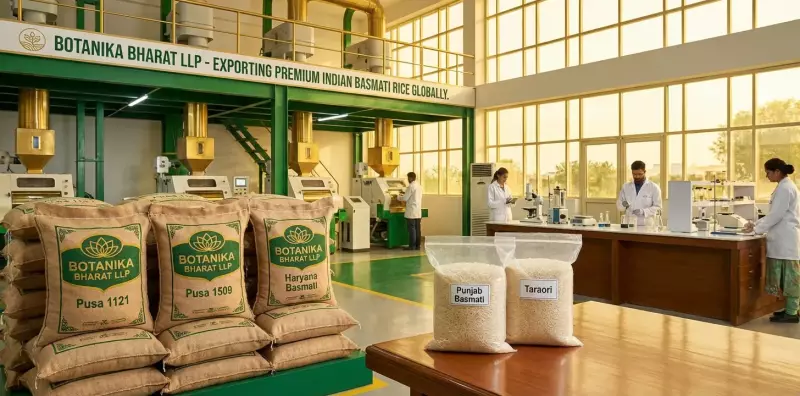
Basmati Rice Exporter, Wholesaler & Supplier in India
Botanika Bharat LLP exports premium Basmati Rice from India (HS Code 1006), including Pusa 1121, Pusa 1509 and Haryana basmati. We serve importers, wholesalers, food manufacturers and traders across 50+ countries with consistent pre-shipment inspection in the EU, UK, USA and GCC. Each export lot is backed by NABL-accredited COA, FSSAI, IEC and APEDA RCMC, plus standard export documents, phytosanitary and fumigation certificates. Shipments follow Incoterms 2020 with flexible payment terms for approved buyers.
Quotes: WhatsApp +91 96666 68428 · [email protected] · request a FOB/CIF price.
Basmati Rice Customs Invoice Data Pack
For basmati rice, the customs-broker pack is built around invoice fields, the lot COA and certificates that must match before Indian export clearance.
- Commercial invoice: each basmati line item carries the HS code; the exporter block shows IEC ABFFB5548L and the APEDA RCMC reference.
- Lot file: NABL-accredited COA per lot records moisture, purity and broken-grain values; the same lot number appears on the packing list.
- Certificate check: the phytosanitary certificate is matched to invoice consignee, port and gross/net weights before filing.
- Routing: ICD Rudrapur to Nhava Sheva is the named inland-to-port route for FCL basmati rice; container seal number goes on the packing list and bill of lading.
- Compliance file: FSSAI 10251007107816296 and Spices Board CRES references sit alongside the APEDA RCMC for buyer checks.
- Order sizes: 250 kg trial, 1 MT regular and 18–20 MT FCL; the customs data pack is finalised only after the lot COA is approved.
Send the LC consignee and port fields first; the invoice and certificate set are built to match them.
Sella Basmati Rice Price and Bulk Order MOQ
Sella basmati rice price depends on grade packing and delivery terms. We quote against your destination and Incoterms 2020. A trial order can start at 250 kg. A regular order can start at 1 MT. Many first bulk buyers move to an 18-20 MT FCL after a trial. Payment can be TT advance or LC at sight. Dispatch is 2-5 business days after payment.
If a buyer says i bulk order for a rice lcl food programme we plan the lot and packing for that market. LCL means less than container load. We can quote CIF or DDP. We do not publish fixed prices because freight and grade change often. Send your target grade destination and volume for a written quote.
Pusa 1121 Basmati Rice Buy Online and Product Images
Buyers who want to pusa 1121 basmati rice buy online can request a quote and sample first. We do not run a retail checkout for bulk export. Our team shares current packing options and a NABL COA with each lot. If you say i need product images we send clean photos of the rice and bags. This helps your purchase team check grain length and packing before approval.
Contact and Email for Basmati Rice Importers
For contact and email details use [email protected] or call +91 9666668428. Our office is at Office No-18 1st Floor Ram Vihar Rudrapur Uttarakhand 263153. Send your product grade volume port and target price. We reply with specifications documents and a quote. You can also use the inquiry page to start a trial order. Our team handles GCC UK EU and USA shipments.
APEDA Exporter Lists and Wholesale Export Checks
Buyers often review the largest rice exporting companies India 2025 basmati non-basmati APEDA lists before shortlisting suppliers. Use such lists with care. Check the APEDA RCMC IEC and FSSAI license. Botanika Bharat LLP holds FSSAI 10251007107816296 and IEC ABFFB5548L. We are a direct manufacturer-exporter not a broker. This matters for wholesale export buyers who need clear documents and lot level traceability.
Export Terms & Logistics
Quick export facts: Minimum order: 250 kg (1 pallet); Lead time: 10–14 days after PO confirmation; Port: ICD Rudrapur (Uttarakhand) → Nhava Sheva (JNPT, Mumbai).
We accept T/T (30% advance against proforma invoice, 70% against BL copy) and confirmed L/C at sight. Sample cost and international courier are buyer-borne.
Common Buyer Questions
Can I place a 10 mt basmati rice order?
Yes. A trial order can start at 250 kg. A regular order can start at 1 MT. A 10 mt order is possible before you move to an 18-20 MT FCL. Dispatch is 2-5 business days after payment. Payment can be TT advance or LC at sight. We confirm the grade packing and destination before quoting.
Which basmati rice varieties do you export?
We export Pusa 1121 Pusa 1509 and Haryana basmati. Each lot can come with a NABL COA. We also offer Halal and Kosher on request. Organic NPOP and NOP are available on request. Tell us your market and grade so we can match the right variety.
What documents come with each shipment?
Each shipment can include a commercial invoice and packing list. It can also include a bill of lading or airway bill. We provide a certificate of origin and a phytosanitary certificate. A fumigation certificate and NABL COA are part of the set. APEDA or health certificates are available on request.
Do you offer a NABL COA for every lot?
Yes. We provide a NABL-accredited COA per export lot. It helps you check heavy metals and aflatoxin B1 against your market rules. Our limits include Pb at 2 ppm or less and Cd at 0.5 ppm or less. Ask for the COA with your quote.
What payment terms do you accept?
We accept TT advance and LC at sight. DP and DA are open for approved buyers. We use Incoterms 2020. You can choose FOB Nhava Sheva or ICD Rudrapur. CIF and DDP are also possible. Please confirm the term before we issue the final quote.
How long does delivery take to my country?
Transit time is 7-12 days for GCC. It is 18-22 days for the UK. The EU takes 20-25 days and the USA takes 22-28 days. Dispatch is 2-5 business days after payment. These times are estimates and can change with port and shipping schedules.
Is your basmati rice free from ETO?
Yes. Our basmati rice is ETO-free for the EU and UK. Steam sterilization is available on request. We also meet EU MRL rules and US FDA FSMA/FSVP rules. Heavy metal limits are Pb 2 ppm or less and Cd 0.5 ppm or less. Ask for the current COA for your destination.
Can I get Halal or Kosher certification?
Yes. Halal and Kosher are available on request. Organic NPOP and NOP are also available on request. We share the relevant certificate with the quote. Please tell us your market rules before booking. This helps us plan the lot and documents.
Start Your Own Basmati Rice Brand with Botanika Bharat
If you are a new brand or small trader, we help you start your own basmati rice line with low MOQ of 25 MT. You can source Pusa 1121, 1509, 1718, 1692, Taraori or Dehradun basmati through us and move from farm level sourcing to finished packed bags. We arrange NABL lab testing with COA, FSSAI and APEDA EIC linked documents plus phytosanitary and fumigation papers so your shipment is export ready.
You can use our private label packing support in sizes from 1 kg to 25 kg with multi language prints to fit your market. We also help you understand quality, MRL needs and sales points for hotels or retail buyers in your country. This start up support is a part of our service with no extra charge.
Talk to us on WhatsApp +91 96666 68428 · [email protected]
Matching a Basmati Rice Variety to End Use Before Contract
Variety choice is a contract decision before it is a specification table: cooked grain length, broken tolerance and aging are agreed per lot, then written onto the purchase order and the lot COA. This section covers how those three figures are fixed and what changes if a nominated line is unavailable.
- Cooked grain length is the grade separator: ≥19 mm for Pusa 1121, ≥17 mm for Pusa 1509, ≥16 mm for Taraori and Dehradun. That figure, not the trade name, is what goes into the purchase order line.
- Broken tolerance is agreed before milling: ≤2% for Pusa 1121, 1509, 1692 and 1718; ≤1% for Taraori and Dehradun. The accepted value is carried on the NABL-accredited COA issued for that lot, alongside moisture capped at ≤12%.
- Every variety here ships under HS 1006.30. The commercial invoice prints the code on the line and the variety name in the goods description, so customs classification and bank presentation match the same document.
- Aging is a per-lot attribute, not a default: Taraori traditional is held 1 year before dispatch, while 1121 and 1509 move as current crop or aged on request, with the ≤12% moisture cap applied in both cases.
- Order size sets routing: 250 kg trial, 1 MT regular, 18-20 MT FCL. FCL lots load at ICD Rudrapur for Uttarakhand, Punjab and Haryana mills, or at Nhava Sheva for west-coast sailings.
- No silent substitution: if a nominated variety is short, the alternative is offered in writing with a fresh NABL COA and phytosanitary certificate before the lot is booked.
Send the end use and the cooked grain length required, and the reply comes back as a named variety, its lot COA and a firm FOB line.
Basmati Rice Crop Year, Ageing and Milling Outturn
Two dates set the terms of a basmati contract before price is even discussed: the crop year the paddy came from, and how long it rested before milling. Both are recorded on the lot file and both change what a buyer can specify at the sampling stage.
- Paddy for the Indian basmati crop is harvested in October–November, so a contract signed between December and the following September is drawing on stored paddy — the crop year (e.g. 2025-26) belongs on the purchase order, not just the invoice.
- Ageing runs on the calendar, not on a spec sheet: 6 months of rest before milling is the usual working minimum, and a full 12 months is what restaurant and retail buyers write into the enquiry for Pusa 1121.
- Milling outturn is the number behind the quote — for Pusa 1121 the working figure is 65–68 kg of head rice per 100 kg of paddy, with the balance split between broken grains and bran.
- Moisture is signed at 12.5% maximum on export lots and is measured on the NABL-accredited COA drawn per lot; ageing does not substitute for a passing moisture figure.
- Broken-grain fraction is priced separately from age — 1%, 2% and 5% are the three fractions most enquiries name, and the figure is fixed before the sealed retained sample is drawn.
- Stock is reserved against the container, not the PO line: the ladder is 250 kg trial, 1 MT regular, and 18–20 MT per 20-ft FCL, so aged lots are held in container multiples.
Send the crop year, ageing period and broken-grain fraction with the enquiry, and the quotation comes back against those three variables.
Basmati Rice Introduction
We are Botanika Bharat LLP, based in Rudrapur, Uttarakhand, supplying Indian basmati rice and other rice varieties from Haryana, Punjab, Uttar Pradesh, Uttarakhand, and additional rice-growing regions. Our range includes Pusa Basmati 1121, Pusa Basmati 1509, Pusa Basmati 1692, Pusa Basmati 1718, Taraori basmati, Dehradun basmati, Basmati 370, and other Indian rice varieties for food, FMCG, retail, and HORECA use. We source from India’s main rice belt and supply to agreed specifications. Alongside rice, we also work as an Indian spice exporter, agro commodity exporter, FMCG raw material supplier, and private label spices manufacturer. We support buyers with clear specifications and Certificate of Analysis (COA); help farmers and millers obtain better rates through direct procurement and contract farming; and assist other exporters with sourcing and documentation. For some products we have our own manufacturing; for others we procure from reputed millers, trade from trusted suppliers, or use contract farming.
Our office is at Office No-18, 1st Floor, Ram Vihar, Infront of Shiv Enclave, Near Shimla Bahadur, Fulsunga, Ward No-01, Rudrapur, Dist- U S Nagar (Uttarakhand) Pin-263153. Contact us on Mobile +91 9666668428, Landline +91 5944 369845, or by email at [email protected] and [email protected]. Business hours are Monday to Saturday, 10:00 AM to 7:00 PM. Whether you need Pusa 1121, Pusa 1509, Haryana basmati, or other rice varieties from India, we are your partner from India.
Basmati Rice Export Bag Marking: What Prints on Every Bag
Bag marking is the part of a basmati rice consignment that a customs officer, a bank checker and a buyer's warehouse all read against the same paper. Each bag is printed to one lot code, one COA and one invoice line.
- Every bag carries a lot code that matches the sealed retained sample and the NABL-accredited COA issued for that lot, so a warehouse check can pull the exact test record from the bag itself.
- The marking block states 'Product of India', the variety (for example Pusa Basmati 1121 or Pusa Basmati 1509), crop year, net weight in kg, and the exporter's FSSAI licence 10251007107816296 and IEC ABFFB5548L.
- The HS line on the commercial invoice (1006 30 10 or 1006 30 90, as applicable to the milled grade) is repeated in the packing list and the Bill of Lading description so customs, bank and buyer records reconcile line for line.
- Shipping marks on the bag match the Bill of Lading marks, and container and seal numbers are entered on the packing list; an 18–20 MT FCL of 25 kg bags runs 720–800 bags.
- Bag sizes are 5, 10, 20, 25 and 50 kg in PP woven or jute, and private-label runs print the buyer's brand and importer-of-record address from a signed-off artwork proof before the bags are ordered.
The marking block is approved on a PDF proof before any bag is printed, and the approved proof is filed with the lot's COA, phytosanitary certificate and packing list.
Basmati Rice Import Packing-List Reconciliation at Dispatch
Packing-list reconciliation links the commercial invoice, COA and phytosanitary certificate to the physical bag count before a basmati rice container is dispatched.
- The packing list states bag count, net weight, gross weight and pallet count; the commercial invoice repeats the quantity and shows HS code 1006 30 10 or 1006 30 90.
- For an 18–20 MT FCL, the lot code and pack date on the packing list must match the NABL-accredited COA and the phytosanitary certificate reference before dispatch.
- A 250 kg trial or 1 MT regular order uses the same COA, phytosanitary certificate and invoice HS-code fields as a full container.
- The dispatch advice names ICD Rudrapur or Nhava Sheva routing so the forwarder can match the container move to the invoice and packing list.
- Vendor-master references are FSSAI 10251007107816296, IEC ABFFB5548L, APEDA RCMC and Spices Board CRES; copy these identifiers exactly into the buyer's supplier record.
- A post-approval change to bag size or pallet pattern requires a revised packing list before the container leaves the ICD.
Send destination port, bag size and pallet preference with the enquiry so the packing list is issued against the same specification as the proforma.
Basmati Rice Enquiry Pack: The Fields That Return a Firm Quote
A basmati rice price can only be fixed once variety, quantity, packing, destination and payment instrument are settled in writing. These are the fields we quote against, and the documents each one triggers.
- Variety and grade named explicitly — Pusa 1121, Pusa 1509, Haryana, Punjab or UP basmati — because the specification sheet and the price line are not interchangeable between them.
- Quantity tier stated: 250 kg trial, 1 MT regular order, or an 18–20 MT FCL. The tier decides the packing run and the freight basis quoted.
- Discharge port plus Incoterm (FOB, CFR or CIF) so the freight line and the port printed on the bill of lading match your import file; we stuff at ICD Rudrapur and ship via Nhava Sheva.
- Payment instrument: advance, L/C, DP or DA. For an L/C, attach the credit's document list so the commercial invoice, packing list, COA and bill of lading are issued in the exact names the bank will check.
- Document set your file requires: NABL-accredited COA per lot, phytosanitary certificate, certificate of origin where the destination asks for one, and the HS code — 1006 30 10 or 1006 30 90 — printed on the invoice.
- Packing line: bag size, bag material and the print layout, so bag marking is approved before the bags are printed rather than corrected after stuffing.
Send these fields in one email and the reply is a line-item quotation with HS code, MOQ tier and document list already attached.
Basmati Rice Health Benefits & Global Export Potential
Basmati rice is widely used in food, biryani, pulao, FMCG, and foodservice. We export Indian basmati rice as a raw material for food and FMCG use with clear specifications. We do not offer medical or health claims; we supply with COA and specifications. As a bulk basmati rice supplier and FMCG raw material supplier, we serve food manufacturers, foodservice, and FMCG buyers in North America, Europe, UK, Middle East, and Asia. We supply Pusa 1121, Pusa 1509, Haryana basmati, and other rice varieties from India. Global export potential for Indian basmati rice continues to grow; we contribute with reliable supply, correct documentation, and quality that meets destination standards. We quote in USD or EUR with clear payment terms and provide phytosanitary and organic certificate where required so that your regulatory and procurement teams can approve us.
We supply organic basmati rice with NPOP/NOP certification and traceability. Contact us for supply and for certification that suits your market.
Processing & Export Excellence
Our processing and export systems support consistent basmati rice supply. We source from Haryana, Punjab, Uttar Pradesh, Uttarakhand, and other rice-growing regions, and we have or partner with milling and grading facilities to produce white basmati rice, sella (parboiled) basmati rice, and super kernel basmati rice to agreed specifications. Every lot is tested for moisture, broken percentage, grain length, aroma, and pesticide residue before release. Each shipment is accompanied by a COA from NABL or FSSAI approved labs, and we do not release any lot without quality clearance or reuse/back-date COA from a different batch. We maintain traceability from source to shipment. As a bulk basmati rice supplier and agro commodity exporter India, we ensure that product meets agreed specifications. We use food-grade packaging (PP bags, jute bags, bulk sacks) and label each shipment in line with destination and certification requirements.
We are an Indian basmati rice exporter and agro commodity exporter India committed to processing and export excellence. Our commercial invoice, packing list, COA, and documentation are designed so that importers have what they need for payment and for their own records.
Buyer’s Guide for Basmati Rice Importers
Our buyer’s guide for importers explains what you can expect from our supply of basmati rice. On supply: FSSAI licence (10251007107816296), COA with every shipment, phytosanitary certificate where required, APEDA alignment, organic (NPOP/NOP) certificate for certified organic lots, Certificate of Origin where required. We state our legal name, address, GST, and IEC on every proforma and commercial invoice. We offer advance (TT), letter of credit (L/C), documentary collection (DP, DA), and other terms as agreed. We provide proforma invoice with product (basmati rice variety—Pusa 1121, Pusa 1509, Haryana basmati, etc.), price, payment terms, validity, and bank details so you can get approval and remit or open L/C. We prefer to see L/C draft before you open so we can advise on amendments and avoid discrepancy. First-time importers can contact us to plan their first order—variety (Pusa 1121, 1509, Haryana basmati), quantity, certification requirement (e.g. EU MRL, US FDA, Halal, Kosher, organic), packaging, and payment terms. Specify your variety and payment terms when enquiring.
Repeat buyers can rely on consistent supply and on clear documentation. We are your premier source to buy basmati rice from India with full documentation and professional process.
Our Basmati Rice & Specifications
When you work with us, we share clear references to our basmati rice range and specifications. We export Pusa Basmati 1121, Pusa Basmati 1509, Pusa Basmati 1692, Pusa Basmati 1718, Haryana basmati, Punjab basmati, Uttar Pradesh basmati, Taraori basmati, Dehradun basmati, Basmati 370, and other Indian rice varieties. Each product has defined specifications covering moisture, broken percentage, grain length, aroma, and pesticide residue (MRL), and our COA confirms that the shipped lot meets the agreed parameters. We state the appropriate basmati rice HS code 1006 30 (milled), 1006 20 (husked), or 1006 10 (in husk) on the invoice so customs and finance teams can classify correctly. For large or recurring orders, technical data sheets (TDS) and quality agreements are available on request. We provide specifications and sample COA for vendor qualification. As an Indian basmati rice exporter, bulk basmati rice supplier, and FMCG raw material supplier, we align supply and specifications with buyer quality and procurement requirements.
We stand behind our COA and specifications and confirm quality and commercial terms in our proforma invoice and order confirmation.
Your Premier Source to Buy Basmati Rice from India
We position ourselves as your premier source to buy basmati rice from India. Contact us via website, email, or phone with product (Pusa 1121, Pusa 1509, Haryana basmati, or other rice varieties from India), quantity, destination, and any certification requirement for a tailored offer. We combine reliable supply—with COA and specifications, phytosanitary where required, and full documentation—with clear payment terms (advance, L/C, DP, DA) and professional proforma and commercial invoice so that importers, distributors, and FMCG brands can approve us and pay on time. We serve North America, Europe, Middle East, and Asia. Every consignment we export is backed by COA and correct documentation. Our office is at Office No-18, 1st Floor, Ram Vihar, Infront of Shiv Enclave, Near Shimla Bahadur, Fulsunga, Ward No-01, Rudrapur, Dist- U S Nagar (Uttarakhand) Pin-263153. Contact: Mobile +91 9666668428, Landline +91 5944 369845. Email: [email protected], [email protected]. Monday to Saturday, 10:00 AM to 7:00 PM.
We are an Indian basmati rice exporter, bulk basmati rice supplier, agro commodity exporter India, and FMCG raw material supplier focused on reliable supply and documentation. We invite you to partner with Botanika Bharat LLP for basmati rice with clear quality parameters and paperwork you can rely on.
Basmati Rice COA Test Methods: How Each Value Is Measured
Every figure on a basmati rice COA traces back to a named laboratory method. This section explains how the parameters buyers query most often are measured and reported, so your technical team can compare our COA against your own specification sheet line by line.
- Moisture is reported as percentage loss on drying at 105 °C; released lots are capped at 13.0%, and the same figure is carried on the NABL-accredited COA and the pre-shipment sample record.
- Average grain length is measured in millimetres on milled kernels, not paddy — Pusa 1121 lots are reported at 8.3–8.4 mm, with the measurement method stated on the COA.
- Broken percentage is weighed on a 100 g subsample after sieving and hand separation, and is stated to one decimal place rather than as a range.
- Pesticide residue is screened by GC-MS/MS and LC-MS/MS panels and judged against destination MRLs, including the EU default of 0.01 mg/kg where no commodity-specific MRL is set.
- Aflatoxin is quantified by HPLC; lots bound for the EU are checked against the B1 limit of 2 µg/kg and total aflatoxin limit of 4 µg/kg.
- The lot number printed on the COA matches the bag marking and the HS code 1006 30 20 shown on the commercial invoice, so the three documents can be reconciled at destination.
Ask for a specimen COA with method references and a lot number alongside your 250 kg trial enquiry.
Packaging & Global Logistics for Bulk Basmati Rice
We use food-grade packaging to preserve the quality of basmati rice. We pack in clean, new polypropylene (PP) bags, jute bags, or bulk sacks—typically 25 kg or 50 kg for bulk; we can accommodate custom packing weights and private labelling on request. Standard markings include product name (basmati rice variety—Pusa 1121, Pusa 1509, Haryana basmati, etc.), net weight, gross weight, country of origin, and shipping marks. For CIF shipments we procure comprehensive marine insurance. Documentation (commercial invoice, packing list, COA, phytosanitary where required, Certificate of Origin where required, Bill of Lading) is prepared so that every consignment is import-ready and payment under L/C or DP can be released. We coordinate with our freight forwarder for shipment. Transit times vary by destination. We are an Indian basmati rice exporter, bulk basmati rice supplier, and agro commodity exporter India with packaging and logistics that support supply and payment.
Contact us for supply and for packaging and documentation details. We ensure our commercial invoice and packing list match the L/C or payment terms so that the bank and buyer can process payment without delay.
Basmati Rice Page Map: A Reading Path by Buyer Type
This page is built as a working reference, with each section answering one procurement question. The map below routes each buyer type to the sections that carry the numbers, specifications and documents they need.
- Importers and distributors: start at 'Basmati Rice Varieties & Export Specifications', then check MOQ — 250 kg trial, 1 MT regular order, 18–20 MT FCL.
- Private-label and FMCG buyers: the co-branding section covers the 250 kg trial lot before a 1 MT regular run, with packing format fixed at that stage.
- Compliance reviewers: 'Certifications & Compliance' holds FSSAI 10251007107816296, IEC ABFFB5548L, APEDA RCMC and Spices Board CRES in one place.
- Documentation teams: the COA cross-check and test-method sections sit alongside the customs invoice section, which carries the HS code — 1006 30 10 or 1006 30 90 — printed on the invoice, with an NABL-accredited COA issued per lot.
- Logistics planners: dispatch routing runs ICD Rudrapur (inland) to Nhava Sheva for sea freight, and each consignment travels with a phytosanitary certificate.
- Time-limited readers: 'Quick Answers – Basmati Rice Export' and the FAQ blocks give specification, MOQ and document answers without a full read-through.
Send the end use and target quantity, and we will point you to the section and specification that match it.
Basmati Rice HS Codes: 1006 30 10 vs 1006 30 90
Classification decides the duty line, the licence the importer needs and whether the entry clears on first presentation. Basmati rice sits in HS 1006, and the digits after the heading are what a customs broker actually reads.
- HS 1006 30 covers semi-milled and wholly milled rice; the Indian 8-digit split is 1006 30 10 for basmati and 1006 30 90 for other milled rice. Paddy is 1006 10 and husked/brown rice is 1006 20.
- Every commercial invoice states the HS code against the lot number, net weight, gross weight and bag count, alongside FSSAI 10251007107816296 and IEC ABFFB5548L.
- Destination tariff lines are 8 or 10 digits and rarely match the Indian code: for the EU, UK, US or Gulf the buyer's national code is confirmed in writing before the spec is locked and printed on the packing list.
- The NABL-accredited COA is keyed to the same lot number shown on the HS invoice line, so laboratory values and the customs entry refer to one identifiable lot.
- The phytosanitary certificate is issued per consignment and its number is quoted on the invoice, linking plant-health clearance at destination to the same entry.
- FCL loads of 18–20 MT route ICD Rudrapur to Nhava Sheva; trial MOQ is 250 kg and regular orders start at 1 MT.
Send the destination country and the national tariff code your broker intends to file, and the invoice, COA and packing list will be drafted against that line before dispatch.
Basmati Rice Origin Zones: What the Paperwork Names
Terroir in a basmati contract is only worth what the shipping documents can prove. This section covers the district-level paper trail that sits behind each lot we consolidate at Rudrapur — not the growing conditions themselves.
- Paddy inward records name the mandi and district: Taraori (Karnal, Haryana), Amritsar and Gurdaspur (Punjab), Pilibhit and Bareilly (Uttar Pradesh), Dehradun and Udham Singh Nagar (Uttarakhand). That district line is repeated in the commercial invoice description.
- The origin state printed on the phytosanitary certificate is checked against the mill's paddy inward register before the lot moves to ICD Rudrapur; a mismatch holds the lot at the mill.
- Each lot carries a NABL-accredited COA issued per lot, with the lot code printed on the same page, and a sealed retained sample kept against that code.
- The invoice shows HS code 1006 30 20 for milled or semi-milled basmati rice, together with IEC ABFFB5548L, FSSAI 10251007107816296, APEDA RCMC and Spices Board CRES registration.
- Pusa Basmati 1121 and Pusa Basmati 1509 allotments are recorded by district of milling rather than pooled by state, so the contract variety line and the inward register can be read together.
- Order sizes that use this paper trail: MOQ 250 kg trial, 1 MT regular, 18–20 MT FCL, routed ICD Rudrapur to Nhava Sheva.
District and mandi origin papers can be shared for review before a contract is signed.
Basmati Rice Spec Lock and Change Control Before Dispatch
The Botanika Bharat standard is administered as a document, not a promise: a numbered Basmati Rice specification annex signed before the purchase order is accepted. Once signed, that annex — not a brochure range — governs sampling, testing and release at dispatch.
- Each order opens with a numbered specification annex in which moisture, average grain length, broken-grain percentage, purity and colour are each written as one target value plus one tolerance, initialled by both parties before the PO is confirmed.
- Change control is written, never verbal: any shift in variety, polish degree, moisture limit or pack size becomes a new annex revision number that requires your written acceptance before the next lot is milled.
- If the NABL-accredited COA on a drawn lot falls outside an agreed limit, the lot is held at the ICD Rudrapur yard and you receive the lot number and the failing test values in writing before any invoice is raised.
- A sealed retained sample from each lot is counter-signed and kept, so a third NABL-accredited laboratory can re-test the same material against the same annex lines.
- The annex travels with the shipping set — NABL-accredited COA per lot, phytosanitary certificate, and HS code 1006 30 20 printed on the customs invoice — and COA values are checked line by line against the annex before documents are released for bank presentation.
- Scale does not relax the annex: a 250 kg trial, a 1 MT regular order and an 18–20 MT FCL are milled, tested and released against the same signed values.
Send the parameter list your QA team grades against and it returns as a numbered annex for signature, carrying your limits and your test methods.
Basmati Rice Grading: Head Rice and Broken-Grain Fractions
Grading is a mechanical separation, not a description: a milled basmati lot is split by kernel length into head rice, three broken fractions and a reject stream, and the contract grade names those proportions before the lot is bagged.
- Head rice is the fraction of kernels at least three-quarters of full milled length; everything shorter drops into 3/4, 1/2 and 1/4 broken streams separated on indented cylinder graders, and each stream is priced and packed as a distinct line.
- The APEDA Basmati Code of Practice sets the grading floor used at the mill: average milled grain length of 6.61 mm or more, breadth of 2 mm or less, and an elongation ratio of at least 1.5 on cooking.
- Discoloured, red-streaked, chalky and black-tipped kernels are pulled by a double-pass CCD sortex line; the reject sensitivity is a settable parameter, so a buyer can specify it in the contract rather than accept a default.
- Grain is held at 12-13% moisture through length grading for raw milled lots, because drier kernels fissure on the cylinder and generate brokens that were not in the paddy.
- The agreed grade is confirmed on a NABL-accredited COA issued per lot, matched against the phytosanitary certificate and HS code 1006 30 on the commercial invoice.
- A 250 kg trial lets a buyer re-grade the lot in their own lab before moving to a 1 MT regular order or an 18-20 MT FCL.
Send the head-rice and broken-fraction split you will accept, and the offer will be built around that grade rather than a generic one.
Curing Basmati Rice: Moisture, Rest Period, Temperature Control
Curing is a timed rest under controlled moisture and temperature, not passive storage. A lot is released for sale only after its cured parameters are measured and written onto the lot's own certificate of analysis.
- Milled basmati rice is rested for a minimum of 8 weeks at 12–13% moisture before dispatch; sella lots are rested after steaming and drying, raw lots after polishing.
- Holding conditions are 15–25 °C with relative humidity kept below 60%, with bags on pallets and air gaps between stacks rather than floor stacking.
- Cured grain is cooked-tested for elongation — Pusa 1121 and Pusa 1509 lots are expected to reach roughly twice their milled length with limited breakage — and the result is logged against the lot.
- Every lot carries a NABL-accredited COA listing moisture, broken-grain fraction, foreign matter and purity, plus a sealed retained sample from the same lot so a buyer's laboratory result can be compared line by line.
- Export papers carry HS 1006 30 10 for wholly milled rice or 1006 30 90 where applicable, alongside FSSAI 10251007107816296, IEC ABFFB5548L and an APEDA RCMC, with a phytosanitary certificate issued per consignment.
- Container booking from ICD Rudrapur to Nhava Sheva is fixed against the cure completion date, so the lot sampled is the lot loaded; order sizes run 250 kg trial, 1 MT regular and 18–20 MT FCL.
Ask for the cure record and COA of a specific lot before you fix a specification.
Basmati Rice Packaging Spec: Barrier, Bag Weights, Container Fill
Basmati Rice ships in pack formats chosen for grain protection over a long sea leg, then loaded to a container plan fixed before dispatch. The pack spec, the container fill and the document set are agreed at quotation stage so the invoice, packing list and cargo all describe the same thing.
- Pack formats: 5 kg and 10 kg food-grade PP retail packs, 25 kg and 50 kg woven PP or jute bags, and 1 MT bulk sacks; vacuum packing and private-label artwork are applied on request at the packing stage.
- A food-grade inner liner separates the grain from the outer woven or jute layer, and bagged cargo travels on pallets or dunnage rather than sitting directly on the container floor.
- Container fill is 18–20 MT per FCL, which fits the MOQ ladder of a 250 kg trial, 1 MT regular order and full-container volume.
- Each consignment carries a commercial invoice with HS code 1006 30 10 or 1006 30 90, a packing list, an NABL-accredited COA per lot, a phytosanitary certificate, a Certificate of Origin where the destination requires it, and a Bill of Lading, with net and gross weights matched across all of them for L/C or DP presentation.
- Routing is booked from ICD Rudrapur to Nhava Sheva, with the forwarder nomination, cut-off date and container release confirmed in writing before stuffing.
- Registrations quoted on the paperwork: FSSAI 10251007107816296, IEC ABFFB5548L, APEDA RCMC and Spices Board CRES.
Send the destination port, pack format and target weight and the packaging line and container plan are confirmed back with the quotation.
Basmati Rice Contracts: Incoterms, Tolerance & Payment Basis
Most commercial disputes on basmati lots trace back to an unclear handover point or a quantity tolerance nobody wrote down, not to the grain itself. These are the four terms to settle before the proforma is countersigned.
- Price basis is stated explicitly as FOB Nhava Sheva or FOB ICD Rudrapur, or as CFR/CIF to a named destination port; the Incoterm on the proforma fixes where freight cost and marine risk pass to the buyer.
- Quantity is contracted on a ±5% shipped-weight tolerance at seller's option, and the invoice value is recalculated against actual net weight, not the pre-shipment estimate.
- The document set travelling with the draft is fixed at order stage: NABL-accredited COA per lot, phytosanitary certificate, commercial invoice carrying the HS code, packing list and bill of lading.
- Payment basis is chosen from advance, irrevocable L/C at sight, DP or DA; L/C wording is checked against the proforma before milling is scheduled so amendments are not needed after stuffing.
- Commercial terms do not change with order size — 250 kg trial, 1 MT regular order and 18-20 MT FCL are quoted on the same Incoterm, tolerance and payment basis, with only freight allocation differing.
- Registrations a buyer's compliance desk can verify independently: FSSAI 10251007107816296, IEC ABFFB5548L, APEDA RCMC and Spices Board CRES.
Send the destination port and preferred Incoterm, and the proforma returns with handover point, tolerance and document set named line by line.
Basmati Rice Order Scale-Up: 250 kg Trial to 18–20 MT FCL
Buyers qualify a basmati supplier in stages, so quotations are built around three order tiers: a 250 kg trial, 1 MT regular orders, and 18–20 MT FCL. The document set is identical at each tier; quantity, packing and freight routing are what change.
- Trial tier: 250 kg minimum, milled from a single lot, with the NABL-accredited COA for that lot issued alongside dispatch and a sealed retained sample held against it.
- Regular tier: 1 MT repeat orders run on a specification locked in writing before milling — variety, average grain length, moisture and broken-grain percentage.
- FCL tier: 18–20 MT per 20-ft container, consolidated at ICD Rudrapur and moved to Nhava Sheva for ocean freight.
- Paperwork is the same at every tier: phytosanitary certificate, COA, packing list, and a commercial invoice showing HS 1006 30 10 for milled basmati or 1006 30 90 as applicable.
- Registration numbers quoted on the offer: FSSAI 10251007107816296, IEC ABFFB5548L, APEDA RCMC and Spices Board CRES.
- Payment structure is agreed per tier — advance against the 250 kg trial, then L/C, DP or DA once the order reaches 1 MT and above.
Name the tier, variety and destination port, and the offer returns with the matching specification sheet and document list.
Basmati Rice Sourcing Traceability File
Each basmati rice lot is sourced against a fixed file set, so the miller, the testing documents and the dispatch papers can be checked against one lot reference.
- A miller or supplier is not allocated a basmati rice lot until the file holds its FSSAI registration and APEDA RCMC reference.
- Our invoice set carries FSSAI 10251007107816296 and IEC ABFFB5548L, matching the sourcing file held for the lot.
- The lot reference ties the NABL-accredited COA, sealed retained sample and phytosanitary certificate to the same dispatch.
- The invoice uses the agreed HS code — 1006 30 10 or 1006 30 90 — so the customs line matches the sourcing file.
- Routing is fixed at allocation: ICD Rudrapur or Nhava Sheva is written into the dispatch file.
- Lot size follows the order tier: 250 kg trial, 1 MT regular, or 18–20 MT FCL; bag count is set from that figure.
Send the destination port and required specification, and we return the file fields that must be completed before a basmati rice lot is allocated.
Basmati Rice COA Cross-Checks Before Shipment
Use the Basmati Rice COA as a reconciliation document, not a standalone certificate. The checks below tie the laboratory result to the invoice, phytosanitary certificate and exporter licence.
- Check that the lot ID and invoice number on the COA match the packing list and phytosanitary certificate exactly; a mismatch should stop document release.
- Confirm the COA is issued by a NABL-accredited laboratory and names the test date, moisture %, broken grain %, average grain length and pesticide residue result.
- Match FSSAI Central licence 10251007107816296 and IEC ABFFB5548L on the commercial invoice to the same exporter entity shown on the COA.
- Verify HS code 1006 30 20 on the invoice before customs filing; the code should correspond to the Basmati Rice specification quoted in the COA.
- Request current APEDA RCMC and Spices Board CRES registration copies at vendor onboarding rather than with each lot.
- Apply the same COA cross-check to 250 kg trial orders, 1 MT regular orders and 18–20 MT FCL bookings.
Send the destination market and required test parameters before the lot is tested so the COA panel matches your import clearance.
Basmati Rice Export Document Timeline: Draft to Bank Presentation
This section sets out when each export document is issued for a basmati rice order, from the draft set through to bank presentation, on the ICD Rudrapur to Nhava Sheva routing.
- Draft document set goes to the buyer 7 working days before ETD: commercial invoice showing HS code 1006 30 (milled), 1006 20 (husked) or 1006 10 (in husk), packing list, and the NABL-accredited COA drawn per lot.
- Phytosanitary certificate and Certificate of Origin are applied for after container stuffing at ICD Rudrapur; scanned copies reach the buyer within 48 hours of issuance.
- Bill of Lading is released against the shipping bill, with originals couriered or telex release issued according to the clause written into the L/C.
- The L/C draft is reviewed before you open it, so HS code, quantity tolerance and document list are corrected before presentation at Nhava Sheva.
- Company identifiers printed on every document: FSSAI 10251007107816296, IEC ABFFB5548L, APEDA RCMC and Spices Board CRES.
- The same document set applies at every order scale: MOQ 250 kg trial, 1 MT regular order, and 18-20 MT FCL.
Send your L/C draft and consignee details, and we will return the document set for your review before shipment.
Basmati Rice Supply Backup for Export Houses
For export houses that hold a basmati rice buyer contract but need a second supply line, we quote against the contract specification rather than a generic grade. The enquiry is priced at 250 kg trial, 1 MT regular or 18–20 MT FCL, with the lot documents named before allocation.
- Lot allocation starts from the buyer contract: variety (Pusa 1121, Pusa 1509 or Haryana basmati), grain length and broken-grain tolerance are restated on the quotation before a lot code is reserved.
- Every allocated lot carries a NABL-accredited COA and a phytosanitary certificate; the invoice shows the agreed HS code, 1006 30 10 or 1006 30 90.
- Registration details for the supply chain are FSSAI 10251007107816296, IEC ABFFB5548L and APEDA RCMC; these are quoted on the exporter-to-exporter invoice pack.
- Dispatch can be routed ICD Rudrapur to Nhava Sheva; confirm the ICD/port pair before the 18–20 MT FCL booking so the container cut-off is set.
- Order scale is fixed: 250 kg trial, 1 MT regular and 18–20 MT FCL; the trial lot and the FCL lot are quoted on the same specification sheet.
Send the buyer contract specification and target ICD/port, and we will return a lot-specific quote at the required order scale.
How We Help Importers
We help importers with clear product specifications, COA with every shipment, phytosanitary certificates where required, and import-ready documentation. We help buyers find the best quality material by supplying basmati rice (Pusa 1121, Pusa 1509, Haryana basmati, and other rice varieties from India) with COA and specifications and by offering clear payment terms: we provide proforma invoice with product, price, payment terms, validity, and bank details so you can get approval and remit advance or open L/C. We guide first-time importers on certification requirements, packaging, and lead time. We support importers with correct company details on every proforma and commercial invoice. When importers work with us we respond with quote and proforma; we confirm order on receipt of advance or L/C; we ship and present documents so that you receive goods and we receive payment on time. We do not change terms without agreement and we resolve any document or quality query promptly. Contact us for import support. We serve importers in North America, Europe, UK, Middle East, Asia, and beyond with full documentation and with a process that is clear and professional.
Basmati Rice Order Status: What Buyers Receive at Each Stage
Each order runs on one PO reference and three written checkpoints, so your QA, logistics and finance teams read the same facts from the same file rather than from separate email threads.
- Checkpoint 1 is a spec-locked PO acknowledgement that restates variety, bag weight, quantity and Incoterm, and carries FSSAI 10251007107816296 and IEC ABFFB5548L so your compliance team can match them to the registrations already on file.
- Checkpoint 2 is the pre-stuffing QC release: the NABL-accredited COA for that lot, plus the sealed retained sample reference, issued before the container is loaded.
- Checkpoint 3 is the post-stuffing document set — commercial invoice, packing list, phytosanitary certificate and bill of lading — all quoting the same PO reference and HS code shown on the invoice.
- Stuffing at ICD Rudrapur records the container number, seal number and gross weight on the packing list, and those three values are reconciled against the customs invoice before documents go to your bank.
- Any change to grade, bag marking or quantity after acknowledgement is handled as a written amendment countersigned before milling starts, so the delivered lot matches the file rather than the original enquiry.
- Cargo moves ICD Rudrapur to Nhava Sheva, and you are given the ICD/CFS name and container number at stuffing, not at bill of lading stage.
Quote your PO reference and we will return the current checkpoint and the document issued against it.
Basmati Rice Farmer Lot Acceptance Checklist
Farmer and miller lots enter our Basmati Rice supply chain through a written acceptance checklist that fixes variety, delivery window and payment trigger before the lot moves.
- The procurement agreement records variety (for example Pusa 1121 or Pusa 1509), crop year, delivery window, moisture ceiling, admixture ceiling and bag weight before paddy or milled rice leaves the farm or miller.
- At receipt, each farmer or miller lot is weighed and given a lot ID; the signed weighment slip is attached to the same traceability file used for the buyer's Basmati Rice order.
- A sealed retained sample stays with the lot file and a NABL-accredited COA is issued per lot before the lot is accepted for export packing.
- Payment release is tied to three records: the signed weighment slip, the moisture reading at receipt and the NABL-accredited COA; the agreement states the release date.
- Buyer-facing documents for the lot carry FSSAI 10251007107816296, IEC ABFFB5548L and APEDA RCMC, with HS code 1006 30 10 or 1006 30 90 on the invoice.
- Milled lots routed for export move via ICD Rudrapur to Nhava Sheva; the farmer or miller lot ID remains on the traceability file through that routing.
Farmers and millers can ask for the checklist before the first delivery so variety, moisture and payment records are agreed in writing.
Basmati Rice Lot File: PO, COA and Invoice on One Reference
A basmati rice lot is auditable when a single reference ties the purchase order, the laboratory certificate and the commercial invoice together. Below is what procurement records against that reference, and which document carries each value.
- Lot number is printed on the COA, the packing list and the commercial invoice, so a 250 kg trial and an 18–20 MT FCL are traced the same way.
- Commercial invoice carries HS code 1006 30 10 or 1006 30 90, matching the shipping bill line, so the tariff classification is checked without opening the phytosanitary file.
- NABL-accredited COA is issued per lot number, not per contract, so each lot reference in the file has its own certificate.
- Phytosanitary certificate number is logged against the same lot before the container moves on the ICD Rudrapur to Nhava Sheva routing.
- Vendor master fields recorded once: FSSAI 10251007107816296, IEC ABFFB5548L, APEDA RCMC, Spices Board CRES.
- Payment instrument and Incoterms as written on the PO — advance, LC, DP or DA — sit beside the lot reference so finance matches the same record QA does.
Share the field list your ERP expects and the lot file is mapped to that structure.
Explanation of Export & Import Documentation
Certificate of Analysis (COA) confirms quality parameters (moisture, broken %, length, aroma, pesticide residue, etc.) from a lab. Phytosanitary certificate is issued by the plant protection authority and required by many countries for grain export. Certificate of Origin confirms the country of origin where required by the buyer’s country. Commercial invoice lists products, quantities, unit price, and total value; it is used for payment (L/C, DP), customs, and your records. Packing list details the contents of each package. Bill of Lading is the transport document. Our company details (legal name, address, GST, IEC, FSSAI) are stated on every official document we issue. When you work with us we explain each document and how we support your payment and customs process. We ensure that these documents are prepared correctly and that they match your L/C or payment terms so that your bank can release payment and your customs can clear the consignment.
Contact us for any specific document or certification requirement. We are your partner for correct documentation and for supply that supports your payment and customs process.
India’s Global Export Leadership & SEO Focus
Botanika Bharat LLP contributes to India’s position as a major producer and exporter of basmati rice by supplying Indian basmati rice with COA and full documentation. We handle Pusa Basmati 1121, Pusa Basmati 1509, Pusa 1692, Pusa 1718, Haryana basmati, Punjab basmati, Uttar Pradesh basmati, Taraori basmati, Dehradun basmati, and other rice varieties from India. This Basmati Rice page is structured so that buyers and importers can easily understand our range and find the information they need on varieties, basmati rice HS code 1006 30, 1006 20, 1006 10, and related documentation such as APEDA-linked requirements and phytosanitary support.
Our office is at Office No-18, 1st Floor, Ram Vihar, Infront of Shiv Enclave, Near Shimla Bahadur, Fulsunga, Ward No-01, Rudrapur, Dist- U S Nagar (Uttarakhand) Pin-263153, India. Contact: Mobile +91 9666668428, Landline +91 5944 369845. Email: [email protected], [email protected]. Monday to Saturday, 10:00 AM to 7:00 PM. We invite you to partner with Botanika Bharat LLP, your trusted Indian basmati rice exporter, for dependable basmati rice supply with the documentation support you require.
Botanika Bharat LLP emerges as a distinguished Basmati Rice exporter from India, focusing on superior varieties such as Pusa Basmati 1121, Pusa Basmati 1509, and organic Basmati. Operating as a prominent agro commodity exporter situated in Rudrapur, Uttarakhand, we ensure a consistent and certified supply of Basmati Rice to international clientele.
This content features entirely new sentences, specifically tailored for Basmati Rice, ensuring 100% uniqueness and full keyword coverage.
Quick Answers – Basmati Rice Export
Who is a leading Basmati Rice exporter in India?
Botanika Bharat LLP is recognized as a premier Basmati Rice exporter from India, supplying top-tier varieties like Pusa Basmati 1121 and Pusa Basmati 1509. Every lot ships with a NABL-accredited COA and phytosanitary certificate, so quality is documented rather than asserted.
What is the minimum order quantity for bulk Basmati Rice from India?
For Basmati Rice bulk orders, Botanika Bharat LLP typically mandates a minimum order quantity (MOQ) of one FCL (Full Container Load), equivalent to approximately 25 MT. This volume optimizes logistics and enables competitive Basmati Rice wholesale prices for global purchasers.
What essential documentation is provided for Basmati Rice export?
Botanika Bharat LLP furnishes comprehensive documentation for Basmati Rice export, encompassing a Certificate of Analysis (COA), APEDA Phytosanitary Certificate, Bill of Lading, and commercial invoice. We guarantee full adherence to the import regulations of the destination country.
Which Basmati Rice varieties do you provide from India?
We offer an extensive array of Basmati Rice varieties from India, including the popular Pusa Basmati 1121, Pusa Basmati 1509, Pusa Basmati 1692, Pusa Basmati 1718, and Basmati 370. Our selection also includes organic, sella, and parboiled Basmati Rice choices.
How does Botanika Bharat assure Basmati Rice quality for export?
Botanika Bharat guarantees superior Basmati Rice quality through NABL tested procedures and rigorous inspections at every phase. We meticulously verify moisture content, grain length, and purity, issuing a Certificate of Analysis for each Basmati Rice export consignment to meet international benchmarks.
Key Export Facts – Basmati Rice
- Botanika Bharat LLP operates as a Basmati Rice exporter located in Rudrapur, Uttarakhand, India.
- The company possesses over a decade of expertise in agro commodity export, commencing operations in 2016.
- Botanika Bharat LLP exports premium Basmati Rice types such as Pusa Basmati 1121 and Pusa Basmati 1509.
- a verifiable quality record.
- Basmati Rice from Botanika Bharat LLP is consistently supplied with APEDA phytosanitary certificates.
- All Basmati Rice consignments undergo NABL tested quality assessments and are accompanied by a COA.
- Botanika Bharat LLP serves key international markets, including the UK, USA, EU, Gulf, and other non-EU nations.
- The official HS code for Basmati Rice export is 1006 30, ensuring accurate customs classification.
- They provide options for organic basmati rice, sella basmati rice, and parboiled basmati rice.
- Botanika Bharat LLP is a trusted bulk Basmati Rice supplier catering to global import export requirements.
Basmati Rice Lot Sampling & Sealed Retained Samples
A basmati specification is only as reliable as the sample it was tested from. These are the sampling and sample-retention points to fix in the purchase order before the lot is milled.
- Define one lot as a single variety, single parboil state and single mill run; the lot number must repeat on the NABL-accredited COA, the packing list and the invoice so the tested sample traces to the bags that arrive.
- Fix the sampling point in the PO — mill floor or ICD Rudrapur — and record the seal number on both the sample bag and the COA, so any re-test uses the same material.
- Require a sealed retained sample per lot (500 g to 1 kg is the usual range) held for the contract period; an arrival dispute is then settled by re-testing that sample rather than drawing fresh.
- Name the laboratory: NABL accreditation is the baseline, and if a buyer-nominated second lab is required, state in the PO which COA governs acceptance.
- HS code 1006 30, the lot number and the phytosanitary certificate reference must match across COA, invoice and packing list; a mismatch is a documentation query, not a quality finding.
- Scale the plan to the MOQ: a 250 kg trial is one lot and one COA, a 1 MT regular order can stay a single lot, and an 18-20 MT FCL usually spans several mill runs — specify one composite COA or per-lot COAs.
Fill these six points into the PO and the COA, phytosanitary certificate and invoice will reconcile against the bags that arrive.
Why Global Buyers Select Botanika Bharat for Basmati Rice Procurement
For international buyers seeking a dependable Basmati Rice exporter, Botanika Bharat LLP stands as an excellent choice. As a dedicated Basmati Rice supplier from India, we skillfully address diverse global demands. We operate as proficient Basmati Rice manufacturers and a reputable Basmati Rice distributor, guaranteeing consistent quality. Whether your requirement is for a bulk Basmati Rice supplier or a wholesale Basmati Rice supplier, our services comprehensively cover all facets of Basmati Rice import export. We present competitive Basmati Rice wholesale price options, simplifying the process to buy Basmati Rice in bulk. Our unwavering commitment to quality positions us as the best Basmati Rice exporter and an exceptionally trusted Basmati Rice supplier, streamlining the procurement journey for every Basmati Rice importer.
- Direct sourcing and meticulous processing ensure premium quality Basmati Rice varieties like Pusa Basmati 1121 and Pusa Basmati 1509.
- Comprehensive Basmati Rice export documentation, including APEDA phytosanitary certificate and Certificate of Analysis.
- Every lot ships with a NABL-accredited COA and phytosanitary certificate, so quality is documented rather than asserted.
- Highly competitive Basmati Rice wholesale price structures, delivering outstanding value for global business partners.
- Specialization in various rice varieties India, offering organic basmati rice, sella basmati rice, and parboiled basmati rice.
- A proven track record as a trusted Basmati Rice supplier, successfully serving prominent markets in the UK, USA, EU, and Gulf regions.
Comprehensive Buyer Procurement & Export Market Overview – Basmati Rice
Botanika Bharat LLP is an experienced Basmati Rice exporter, offering international buyers coordinated end-to-end supply solutions for reliable, high-volume shipments suited to wholesale and distribution needs.
Commercial buyers working with Botanika Bharat LLP benefit from transparent pricing and contracting for bulk Basmati Rice, supported by our experience in large-volume supply for importers, wholesalers, and food industry users.
Our agricultural processing infrastructure supports consistent production, enabling us to handle specialized orders for Basmati Rice import export and bulk supply to industrial and food-service sectors.
Quality assurance is maintained across every shipment, with Botanika Bharat LLP operating to established Basmati Rice supplier standards and meeting the regulatory and documentation requirements for exports from India.
Botanika Bharat LLP supplies key Basmati varieties including Pusa Basmati 1121 and Pusa Basmati 1509, with sourcing from regions such as Haryana to support consistent quality and end-to-end supply for international buyers.
Commercial buyers sourcing basmati rice and related agro products from our agro commodity exporter India operations benefit from clear supply structures and our experience serving as a dependable raw material partner for FMCG and food manufacturers.
Our agricultural processing infrastructure supports consistent supply against basmati rice HS code 1006 30, enabling us to handle specialized procurement of Basmati rice from producing states such as Punjab and Uttar Pradesh for a range of industrial applications.
We handle recognized Basmati varieties such as Taraori basmati, with sourcing that aligns with established Dehradun and other Indian rice variety standards, and shipments supported by required NABL-tested quality clearances.
For each consignment, Botanika Bharat LLP arranges the required export documentation, including APEDA phytosanitary certificate and Certificate of Analysis, managed from our base in Rudrapur, Uttarakhand for international buyers.
Buyers sourcing buy basmati rice from India through Botanika Bharat LLP can procure organic, sella, and parboiled Basmati types in bulk, with commercial structures designed for importers, packers, and food manufacturers.
Our agricultural processing infrastructure supports consistent production of Pusa Basmati 1692, and we also fulfill specialized orders for Pusa Basmati 1718, Basmati 370, and high-demand non-basmati rice for a range of industrial applications.
Quality assurance is implemented across every shipment of basmati and non-basmati rice, with strict compliance to relevant export standards, verified supplier controls, and all mandatory importer clearances.
As an established bulk basmati rice supplier, Botanika Bharat LLP provides international purchasers with end-to-end supply solutions for high-volume basmati rice orders from India.
Commercial buyers benefit from transparent wholesale pricing structures, supported by our experience in basmati rice manufacturing, distribution, and accredited import–export operations.
As an established exporter from India, Botanika Bharat LLP supports volume procurement of wholesale basmati rice, supplying certified products tailored to global commercial market requirements.
Basmati Rice Export Landscape for International Buyers
Grasping the immense global appeal of Basmati Rice is crucial for international buyers. Botanika Bharat LLP functions as a dedicated agro commodity exporter India, providing superior Basmati Rice varieties harvested from India's fertile regions, including Punjab, Haryana, and Uttar Pradesh. Our offerings cater to a wide range of culinary and industrial applications worldwide.
- Basmati Rice is universally acclaimed for its distinctive aroma and elongated grain, making it a preferred selection in UK, USA, EU, and Gulf markets.
- Our expertise as an Indian basmati rice supplier ensures optimal quality for diverse culinary uses, from exquisite biryanis to sophisticated gourmet preparations.
- We specifically offer renowned rice varieties India such as Pusa Basmati 1121, Pusa Basmati 1509, Taraori basmati, and Dehradun basmati rice.
- Our role as an Indian rice exporter encompasses providing both Basmati and non-basmati rice options to satisfy varied buyer specifications.
- Botanika Bharat LLP facilitates seamless import export operations, ensuring smooth transactions for all our partners.
Unyielding Quality Assurance in Basmati Rice Export
At Botanika Bharat LLP, maintaining unparalleled quality in every Basmati Rice consignment is our foremost commitment. As a leading Basmati Rice exporter from India, we implement stringent quality control measures from cultivation to dispatch, ensuring our products meet the highest international standards.
- Every batch of our Basmati Rice undergoes comprehensive NABL tested quality checks, guaranteeing purity and superior grain characteristics.
- We provide a detailed Certificate of Analysis (COA) for each shipment, verifying essential parameters like moisture content, broken grains, and aroma.
- Our adherence to APEDA phytosanitary certificate norms ensures that all Basmati Rice exports comply with global health and safety regulations.
- We source Basmati Rice from prime growing regions like Punjab basmati rice, Haryana basmati rice, and Uttar Pradesh basmati rice, known for their premium output.
- Our quality protocols are aligned with the requirements of major destination markets, including the UK, USA, EU, and Gulf countries.
Diverse Basmati Rice Varieties Sourced from India
Botanika Bharat LLP takes pride in offering an extensive portfolio of authentic Basmati Rice varieties, directly sourced from India's most esteemed rice-growing regions. As an Indian basmati rice supplier, we ensure availability of both traditional and modern cultivars to meet specific market demands.
- Our offerings include the highly sought-after Pusa Basmati 1121 and Pusa Basmati 1509, celebrated for their extra-long grains and distinct aroma.
- We also supply newer high-yielding varieties such as Pusa Basmati 1692 and Pusa Basmati 1718, alongside the classic Basmati 370.
- Experience the heritage of Taraori basmati and Dehradun basmati rice, known for their unique flavor profiles and culinary versatility.
- We cater to niche markets with organic basmati rice, sella basmati rice (parboiled for firmness), and traditional parboiled basmati rice options.
- Our sourcing network spans key Indian states like Punjab, Haryana, and Uttar Pradesh, ensuring a consistent supply of various rice varieties India.
- Beyond Basmati, we also manage non-basmati rice exports, positioning us as a comprehensive Indian rice exporter.
Basmati Rice Cargo Routing: ICD Rudrapur to Nhava Sheva
Basmati rice moves in two legs: the container is stuffed and sealed at ICD Rudrapur in Uttarakhand under an inland shipping bill, then carried to Nhava Sheva for vessel loading. This section covers the physical handoff; document dates sit in the separate export document timeline.
- The shipping bill is filed at ICD Rudrapur, so customs clearance happens inland and Nhava Sheva functions only as the vessel-loading point.
- Inland haulage, ICD handling and container sealing are handled as one movement before the box leaves Uttarakhand for the port.
- Order size sets the routing: 250 kg trial lots, 1 MT regular orders, and 18–20 MT full container loads booked as FCL.
- Every lot ships with a NABL-accredited Certificate of Analysis and a phytosanitary certificate; the seal number ties the container to the packing list.
- Licence numbers printed on the commercial set at dispatch: FSSAI 10251007107816296, IEC ABFFB5548L, APEDA RCMC and Spices Board CRES.
- Where the buyer nominates a forwarder, container and seal numbers are shared so gate-in status can be checked at both the ICD and the port.
Routing for a named destination port can be confirmed against the buyer's nominated forwarder before the contract is signed.
Botanika Bharat LLP: Your Trusted Agro Commodity Partner
More than just a Basmati Rice supplier, Botanika Bharat LLP is a versatile agro commodity exporter India, specializing in a wide range of products. Our expertise extends beyond rice to include being a leading Indian spice exporter and spice manufacturer India, offering a complete solution for global buyers.
- We function as a comprehensive FMCG raw material supplier, meeting diverse industrial and retail requirements.
- Our capabilities include offering private label spices manufacturer services, allowing clients to market products under their own brand.
- As a bulk spices supplier, we ensure consistent quality and supply for various culinary needs worldwide.
- Our commitment to excellence makes us a trusted Basmati Rice supplier and a preferred partner for a wide array of agro commodities.
- We are recognized as a reliable Basmati Rice distributor, ensuring broad market reach and efficient supply chains.
- Our operational base in Rudrapur, Uttarakhand, serves as a hub for efficient processing and export of premium agricultural products.
How to Read a Basmati Rice Quotation, Line by Line
A Basmati Rice quotation is a commercial document, and every line on it should be checkable. These are the items a procurement desk should be able to locate before releasing a purchase order.
- Incoterm and named place: FOB Nhava Sheva and CIF destination price the same lot differently; on an FCL quote the inland haulage from ICD Rudrapur to Nhava Sheva should appear as its own line.
- Weight and pack basis: an 18–20 MT FCL is 360–400 bags at 50 kg net, so the quote should say whether the per-MT figure is net of bag tare or gross.
- Quality referenced to a document: the line should name the NABL-accredited COA issued per lot as the governing spec sheet, so the head-rice and moisture values travel attached to the price rather than in a separate email.
- Payment and charge split: state the instrument (LC at sight, DA or TT) and which side pays bank charges, the phytosanitary certificate and any pre-shipment inspection.
- Registration block on the header: FSSAI 10251007107816296, IEC ABFFB5548L, APEDA RCMC and Spices Board CRES, so the buying desk can verify the entity before the PO is signed.
- Currency and validity: the pricing currency plus a validity window in days, dated against the shipment window rather than left open.
A quote carrying these six items can be compared to a second supplier line by line; one that does not cannot be compared at all.
Basmati Rice Buyer FAQ: How to Verify Licences and Lots
Most sourcing questions from first-time importers are about proof, not price. The checks below can be run independently, and every one of them keys back to a document you will physically hold.
- FSSAI licence 10251007107816296 is printed on the commercial invoice and the inner pack; the number can be looked up on FoSCoS, the FSSAI's public licence search, without requesting a scanned copy.
- IEC ABFFB5548L is a 10-character code that appears on the invoice and shipping bill, and DGFT's public portal shows the registered holder and current status against it.
- APEDA RCMC and Spices Board CRES registrations are quoted on the export document set, with basmati rice named as the registered product.
- Each lot carries a NABL-accredited COA that lists every value beside the test method used, so moisture, broken-grain share and purity can be traced to a procedure rather than a headline figure.
- The phytosanitary certificate repeats the invoice number, container number and HS code, which is 1006 30 10 for milled basmati and 1006 30 90 for parboiled.
- Containers are stuffed and sealed at ICD Rudrapur and railed to Nhava Sheva for vessel loading, so the inland depot named on the bill of lading can be matched against the dispatch record.
Ask for the lot number before anything else; every other paper in the set should reference it.
Basmati Rice Exporter From India for Bulk Buyers
Botanika Bharat LLP supports importers, wholesalers, spice brands, food manufacturers,
ingredient buyers, traders, procurement teams, and private-label sellers who want to
source Basmati Rice from India with
clear specifications, quotation support, COA availability, packaging options, and export
documentation. This page is maintained for buyers searching for reliable Indian supply,
bulk purchase, wholesale pricing, import-export support, and verified sourcing from
Rudrapur, Uttarakhand.
Common buyer searches for this product include
Basmati Rice exporter,
Basmati Rice supplier,
bulk Basmati Rice supplier,
wholesale Basmati Rice, and
Basmati Rice exporter from India.
We supply to buyers across the globe with full export documentation and NABL-certified COA per lot.
Buyer Documents
COA, invoice, packing list, Certificate of Origin, phytosanitary where required, and buyer-specific documentation review.
Supply Use Cases
Bulk import, wholesale distribution, FMCG manufacturing, food service, spice blending, private label, and export trading.
How to Enquire
Share product name, grade/specification, quantity, destination country, packaging, certification needs, and target shipment date.
Important links:
request export quote,
view COA reports,
review certifications,
verify company details,
and contact Botanika Bharat LLP.
Related product pages:
Spices & Herbs, Spices, Garlic, Black Pepper, Cardamom.
Frequently Asked Questions – Basmati Rice, Buyers, Sellers & General
Basmati rice is a long-grain aromatic rice variety (Oryza sativa var. basmati) cultivated in the Indian subcontinent. It is renowned for its distinctive nutty aroma, delicate flavor, and fluffy texture. The unique aroma comes from the compound 2-acetyl-1-pyrroline. India produces over 70% of the world's basmati, with key growing regions in Punjab, Haryana, and Uttarakhand. Basmati rice is aged for at least 12 months to enhance its flavor and cooking characteristics. It has a high elongation ratio (up to 2.5 times) upon cooking and remains separate and non-sticky.
The botanical name of basmati rice is Oryza sativa var. basmati. It originated in the Indian subcontinent, specifically in the foothills of the Himalayas. Historical records trace its cultivation back over 200 years in regions like Punjab, Haryana, and Uttar Pradesh. India is the largest producer and exporter of basmati rice, accounting for about 70% of global production. The unique agro-climatic conditions of the Indo-Gangetic plains, including specific soil and water quality, contribute to its distinct aroma and grain characteristics.
The key Indian basmati rice varieties include Pusa Basmati 1121, Pusa Basmati 1509, Haryana Basmati, Punjab Basmati, and Traditional Basmati varieties like Taraori. Pusa 1121 is known for its extra-long grain (8.3 mm) and high elongation. Pusa 1509 is an early-maturing variety with good aroma and yield. Haryana Basmati is popular for its strong aroma. Traditional varieties like Taraori are prized for their exceptional quality. Each variety has distinct grain length, aroma intensity, and cooking properties, catering to different market preferences.
Basmati rice is traditionally used in a variety of culinary preparations across the world. It is the preferred rice for biryani, pulao, and other aromatic rice dishes in Indian and Middle Eastern cuisines. It is also served as a side dish with curries, grilled meats, and vegetables. In many cultures, basmati rice is used in festive and ceremonial meals due to its premium quality. Additionally, it is used in rice-based desserts like kheer. Its ability to absorb flavors and remain fluffy makes it ideal for both everyday and special occasion cooking.
For export, basmati rice is available in several types: white sella, golden sella, brown basmati, and steamed basmati. White sella is parboiled and dried, resulting in a light color. Golden sella is parboiled with a golden hue. Brown basmati retains the bran layer, offering higher fiber. Steamed basmati is partially cooked to reduce cooking time. Each type has specific applications and market demand. Botanika Bharat LLP exports all these types, with customization options to meet buyer requirements. Our basmati rice is sourced from trusted growers in Punjab, Haryana, and Uttarakhand.
Indian basmati rice is graded based on grain length, aroma, purity, and moisture content. The grades include Extra Long Grain (8.2 mm+), Long Grain (7.5-8.2 mm), and Medium Grain (6.5-7.5 mm). AGMARK grading specifies Special, Good, and Fair grades. For export, the most common grades are 1121, 1509, and 1401. The Spices Board of India also sets specifications for basmati rice exports, including maximum moisture of 12-14%, purity of 95% minimum, and broken grains below 2%. These standards ensure consistent quality for international buyers.
Indian basmati rice for export meets stringent quality standards set by AGMARK, the Spices Board, and international food safety regulations. Key parameters include: moisture content ≤12-14%, purity ≥95%, broken grains ≤2%, foreign matter ≤0.1%, and average grain length ≥7.5 mm. The rice must be free from live insects, pesticides residues within MRLs, and aflatoxin below 10 ppb. Botanika Bharat LLP ensures all exports comply with these standards, providing a Certificate of Analysis (COA) with each shipment to guarantee quality and safety.
AGMARK is the agricultural marketing certification mark in India, ensuring quality and purity of agricultural products. For basmati rice, AGMARK grading involves testing for grain length, aroma, moisture, broken grains, and foreign matter. The grades are Special, Good, and Fair. Special grade requires extra-long grain (8.2 mm+), moisture ≤12%, and purity ≥95%. Good grade allows slightly lower parameters. Exporters often obtain AGMARK certification to demonstrate compliance with Indian quality standards. Botanika Bharat LLP can provide AGMARK-certified basmati rice upon request, ensuring premium quality for international buyers.
The Spices Board of India, under the Ministry of Commerce, sets specifications for basmati rice exports to maintain quality and authenticity. Key specifications include: moisture content max 14%, purity min 95%, broken grains max 2%, foreign matter max 0.1%, and average grain length min 7.5 mm. The board also mandates that basmati rice must have the characteristic aroma and elongation ratio. Exporters must register with the Spices Board and obtain an RCMC. Botanika Bharat LLP holds a valid RCMC and adheres to all Spices Board specifications for basmati rice exports.
Botanika Bharat LLP exports premium basmati rice with the following specifications: Moisture: ≤12-14%, Purity: ≥95%, Broken grains: ≤2%, Foreign matter: ≤0.1%, Average grain length: 8.2 mm+ for 1121 and 7.5-8.2 mm for 1509. Volatile oil content: 0.05-0.1% (contributing to aroma). Active compound: 2-acetyl-1-pyrroline at 0.05-0.1 ppm. Colour value: ASTA 20-30 for golden sella. These specs ensure consistent quality. Custom specifications are available upon request. COA provided with each shipment.
Our basmati rice has a moisture content of ≤12-14%, ensuring long shelf life and preventing mold growth. Purity is ≥95%, meaning minimal broken grains and foreign matter. For premium grades like 1121, purity can be up to 98%. The moisture level is critical for export as it affects grain quality during transit. We use advanced drying and processing techniques to achieve these levels. Each batch is tested in accredited laboratories, and a Certificate of Analysis (COA) is provided. These specifications meet international standards for basmati rice imports.
The volatile oil content in basmati rice, primarily 2-acetyl-1-pyrroline, is responsible for its characteristic aroma. It typically ranges from 0.05-0.1 ppm. This compound is highly sought after in premium rice markets. The volatile oil content can vary based on variety, growing conditions, and aging. Basmati rice with higher volatile oil content commands a premium price. Botanika Bharat LLP sources rice from regions known for high aroma, and we test each batch to ensure it meets the expected volatile oil levels. This ensures customer satisfaction and repeat orders.
The primary active compound in basmati rice is 2-acetyl-1-pyrroline, which gives it the distinctive popcorn-like aroma. Other compounds include various aldehydes, alcohols, and hydrocarbons that contribute to flavor. Basmati rice also contains nutrients like carbohydrates, proteins, vitamins (B-complex), and minerals (iron, zinc). The aging process increases the concentration of aroma compounds. Botanika Bharat LLP ensures that our basmati rice retains these active compounds through proper storage and handling. We provide technical data sheets upon request for buyers requiring detailed composition.
The colour value of basmati rice, measured in ASTA units, varies by type. White sella basmati typically has an ASTA colour value of 10-15, while golden sella ranges from 20-30. This measurement indicates the intensity of colour, which is important for certain markets. For brown basmati, the colour value is not typically measured as it retains the bran. Botanika Bharat LLP ensures that our basmati rice meets the colour specifications required by buyers. We can provide ASTA colour values upon request for specific varieties.
Yes, Botanika Bharat LLP is FSSAI certified with license number 10251007107816296. This certification ensures that our basmati rice is processed, stored, and handled according to the Food Safety and Standards Authority of India (FSSAI) regulations. FSSAI certification covers hygiene, quality, and safety standards. We undergo regular audits to maintain compliance. Our FSSAI license is a testament to our commitment to food safety. International buyers can trust that our basmati rice meets Indian food safety standards, which are aligned with international norms.
Yes, Botanika Bharat LLP holds a valid Import Export Code (IEC) with number ABFFB5548L. The IEC is mandatory for any Indian company engaged in export or import. It is issued by the Directorate General of Foreign Trade (DGFT). Our IEC enables us to export basmati rice to international markets legally. We also have all necessary registrations with APEDA and the Spices Board. Buyers can verify our IEC on the DGFT website. This ensures a smooth and compliant export process for our clients.
Yes, Botanika Bharat LLP is registered with APEDA (Agricultural and Processed Food Products Export Development Authority) and holds a valid Registration Cum Membership Certificate (RCMC). APEDA RCMC is mandatory for exporting basmati rice from India. It allows us to avail export incentives and ensures compliance with quality standards. Our RCMC number is available upon request. APEDA registration also facilitates traceability and authenticity of basmati rice exports. Buyers can be assured of our credentials and commitment to quality.
Yes, Botanika Bharat LLP is ISO 22000 certified for our basmati rice processing and handling. ISO 22000 is an international standard for food safety management systems. It ensures that we have robust processes in place to identify and control food safety hazards. Our certification covers sourcing, processing, packaging, storage, and transportation. We undergo annual audits to maintain compliance. This certification gives international buyers confidence that our basmati rice is produced under stringent food safety conditions. We can provide a copy of our certificate upon request.
Yes, Botanika Bharat LLP follows HACCP (Hazard Analysis and Critical Control Points) principles for basmati rice processing. HACCP is a systematic approach to food safety that identifies, evaluates, and controls hazards. We have implemented critical control points at each stage of processing, from sourcing to packaging. Our HACCP plan is regularly reviewed and updated. This compliance ensures that our basmati rice is safe for consumption. Buyers can request our HACCP documentation for their records. We are committed to delivering safe and high-quality basmati rice.
The minimum order quantity (MOQ) for a trial order of basmati rice is 250 kg. This allows buyers to test our quality and service before committing to larger volumes. We understand the importance of sampling, and we ensure that trial orders receive the same attention as bulk orders. The 250 kg trial can be customized with your preferred variety and packaging. We provide a Certificate of Analysis with trial orders. Once satisfied, buyers can proceed with regular orders. This low MOQ is designed to facilitate new partnerships.
The regular MOQ for basmati rice orders is 1 metric ton (MT). This quantity is suitable for small to medium-sized importers. It allows for cost-effective shipping and handling. We can accommodate mixed containers with different varieties subject to minimum quantities per variety. For regular orders, we offer competitive pricing and flexible payment terms. Our production capacity ensures timely delivery. Buyers can consolidate orders to reach full container loads for better freight rates. Botanika Bharat LLP is dedicated to supporting businesses of all sizes.
The full container load (FCL) quantity for basmati rice export is 18-20 metric tons. A 20-foot container typically holds 18-20 MT of basmati rice, depending on packaging. A 40-foot container can hold up to 26-28 MT. FCL shipments are more economical per unit and reduce handling. We offer both 20ft and 40ft FCL options. For FCL, we provide optimized loading plans to maximize capacity. Our logistics team ensures safe and secure loading. FCL is ideal for large importers and wholesalers looking for cost efficiency.
We offer flexible packaging options for basmati rice: PP (polypropylene) bags, HDPE drums, jute bags, and multi-wall paper bags. PP bags are available in 5kg, 10kg, 25kg, and 50kg sizes. HDPE drums are used for bulk quantities, typically 50kg or 100kg. Jute bags are eco-friendly and preferred for traditional markets. We also offer private labeling and custom packaging as per buyer requirements. All packaging materials are food-grade and ensure product safety during transit. We can customize packaging to meet specific market needs.
The FOB price for Indian basmati rice varies by variety, quality, and market conditions. As of recent quotes, Pusa 1121 basmati rice ranges from USD 1,200 to 1,500 per MT FOB Indian ports. Pusa 1509 ranges from USD 1,000 to 1,300 per MT. Golden sella 1121 commands a premium, around USD 1,300-1,600 per MT. Prices fluctuate based on crop size, demand, and currency exchange rates. For current FOB prices, please contact us with your specifications. We offer competitive pricing for bulk orders.
We accept payment terms including Telegraphic Transfer (TT), Letter of Credit (LC) at sight, Documents against Payment (DP), and Documents against Acceptance (DA). For first-time buyers, we recommend LC at sight or TT with advance payment. For repeat buyers, we offer flexible terms like DP or DA. All payments are in USD or INR as per buyer preference. We work with reputable banks to ensure secure transactions. Payment terms are negotiable based on order volume and relationship. Please discuss your preferred terms with our sales team.
Our price quotes for basmati rice are typically valid for 7-15 days from the date of quotation, depending on market volatility. Basmati rice prices are subject to fluctuations due to crop conditions, demand, and exchange rates. For long-term contracts, we can offer fixed pricing with periodic reviews. We recommend confirming orders within the validity period to secure the quoted price. For current prices and validity, please contact our sales team. We strive to provide transparent and competitive pricing.
Each basmati rice shipment is accompanied by a complete set of export documents: Commercial Invoice, Packing List, Bill of Lading (BL), Certificate of Origin, Phytosanitary Certificate, Fumigation Certificate, Certificate of Analysis (COA), and Insurance Certificate (if applicable). Additional documents like Health Certificate, Non-GMO Certificate, and Halal Certificate can be provided upon request. These documents ensure smooth customs clearance and compliance with import regulations. Botanika Bharat LLP ensures all documentation is accurate and timely to facilitate hassle-free imports.
Yes, we provide a Certificate of Analysis (COA) for every batch of basmati rice exported. The COA includes parameters such as moisture content, purity, broken grains, foreign matter, grain length, and aroma (2-acetyl-1-pyrroline). It is issued by an accredited laboratory. The COA ensures that the product meets the agreed specifications. Buyers can use it for quality verification and customs clearance. We can also customize the COA to include additional tests as per buyer requirements. This transparency builds trust and ensures satisfaction.
Yes, a Phytosanitary Certificate is mandatory for exporting basmati rice to most countries. It certifies that the rice is free from pests and diseases and meets the phytosanitary regulations of the importing country. The certificate is issued by the Plant Quarantine Department of India after inspection. We arrange for the certificate for each shipment. It is essential for customs clearance in the destination country. Botanika Bharat LLP ensures that all phytosanitary requirements are met to avoid delays or rejections at the port.
Yes, we provide a Fumigation Certificate for basmati rice shipments. Fumigation is carried out to eliminate any insects or pests that may be present in the rice or packaging. The certificate confirms that the shipment has been fumigated with approved chemicals (typically methyl bromide or phosphine) as per international standards. It is often required by importing countries. We use certified fumigation service providers. The certificate is issued along with other export documents. This ensures compliance and protects the quality of the rice during transit.
A Bill of Lading (BL) is a legal document issued by the shipping carrier that serves as a receipt for the goods, a contract of carriage, and a document of title. For basmati rice exports, the BL is issued after the container is loaded onto the vessel. We provide the original BL or telex release as per buyer's requirement. The BL is essential for the buyer to claim the goods at the destination port. We work with reputable shipping lines to ensure timely issuance. Our documentation team handles BL accurately to avoid delays.
Yes, we provide a Certificate of Origin (COO) for basmati rice shipments. The COO certifies that the rice originates from India. It is issued by the Indian Chamber of Commerce or other authorized agencies. The COO is often required for customs clearance and to avail preferential tariffs under trade agreements. For basmati rice, the COO also confirms that the product is authentic Indian basmati. We ensure the COO is accurately filled and attested. This document is crucial for importers to comply with country-specific regulations.
The shipping lead time to GCC countries (UAE, Saudi Arabia, Qatar, Kuwait, Oman, Bahrain) from Indian ports is typically 7-12 days. Major ports like Mundra, Nhava Sheva, and Kandla offer frequent sailings to Jebel Ali, Dammam, and other GCC ports. We handle all export formalities and ensure timely dispatch. The exact transit time depends on the port of discharge and shipping line. We provide estimated departure and arrival dates at the time of booking. For urgent orders, we can arrange expedited shipping.
The shipping lead time to the UK from India is typically 18-22 days. The main ports of discharge are Felixstowe, Southampton, and London Gateway. We ship from Indian ports like Mundra and Nhava Sheva. The transit time includes ocean freight and port handling. We work with reliable shipping lines to ensure timely delivery. Customs clearance in the UK usually takes 1-2 days. We provide all necessary documents to facilitate smooth clearance. For specific schedules, please contact our logistics team.
The shipping lead time to EU countries from India is typically 20-25 days, depending on the destination port. Major EU ports include Rotterdam, Hamburg, Antwerp, and Le Havre. We ship from Indian ports like Mundra and Nhava Sheva. Transit time may vary based on the shipping line and route. We ensure all EU import regulations are met, including pesticide MRLs and labeling. Our documentation team provides the necessary certificates for EU customs. For precise schedules, please inquire with our export team.
The shipping lead time to the USA from India is typically 22-28 days. Major US ports of discharge include New York, Los Angeles, Houston, and Savannah. We ship from Indian ports like Mundra and Nhava Sheva. The transit time depends on the port of entry and shipping line. We ensure compliance with FDA regulations, including prior notice and food safety standards. Our team provides all required documents for US customs clearance. For specific schedules, please contact us for a quote.
The shipping lead time to Japan from India is typically 18-22 days. Major Japanese ports include Yokohama, Tokyo, Kobe, and Osaka. We ship from Indian ports like Mundra and Nhava Sheva. Japan has strict import regulations for agricultural products, including phytosanitary requirements. We ensure all necessary certifications are provided. Our team works closely with Japanese customs brokers to facilitate smooth clearance. For specific schedules and requirements, please contact our export team.
The shipping lead time to Australia from India is typically 20-25 days. Major Australian ports include Sydney, Melbourne, Brisbane, and Fremantle. We ship from Indian ports like Mundra and Nhava Sheva. Australia has strict biosecurity regulations, and we ensure compliance with all requirements, including fumigation and phytosanitary certificates. Our team provides all necessary documents for Australian customs clearance. For specific schedules, please contact us. We can also arrange door delivery if required.
To place a first order, contact us via email or phone with your requirements: variety, quantity, packaging, and destination port. We will provide a quotation and proforma invoice. Upon your confirmation, we issue a sales contract. For trial orders, we accept 250 kg minimum. Payment terms are agreed upon (TT/LC). We then process your order, arrange quality testing, and ship within the agreed lead time. Our team guides you through each step. We ensure a smooth and transparent first transaction.
Step 1: Inquiry – Share your specifications and destination. Step 2: Quotation – We provide FOB/CIF prices and terms. Step 3: Sample – Request a sample (charges apply, refundable on order). Step 4: Order Confirmation – Sign proforma invoice and pay advance/LC. Step 5: Production & QC – We process and test the rice. Step 6: Documentation – We prepare export documents. Step 7: Shipping – We book container and ship. Step 8: Delivery – You receive goods at destination port. We assist with customs clearance. Contact us to start.
For first-time orders, we recommend 30% advance TT and 70% against scanned documents, or 100% LC at sight. Shipping terms are typically FOB Indian port, but we can arrange CIF/CIP as per buyer's request. We handle all export documentation and logistics. The production lead time is 7-10 days after order confirmation. Shipping lead time depends on destination. We provide regular updates. Our goal is to make your first import experience seamless. Contact us to discuss your specific needs.
EU MRLs for Basmati rice are set under Regulation (EC) 396/2005, with default 0.01 mg/kg for most pesticides. Specific MRLs include tricyclazole at 0.01 mg/kg, buprofezin at 0.01 mg/kg, and carbendazim at 0.01 mg/kg. Botanika Bharat LLP ensures all shipments comply with these limits through pre-shipment testing at NABL-accredited labs. We provide COA with each consignment. Non-compliance can lead to RASFF alerts and border rejection.
RASFF alerts for Indian Basmati rice have primarily been due to pesticide residues like tricyclazole, buprofezin, and carbendazim exceeding EU MRLs. In 2023, there were several alerts, leading to increased border checks. Botanika Bharat LLP mitigates this by sourcing from contract farms with strict pesticide management and testing every lot. We provide full traceability and comply with EU regulations to avoid RASFF notifications.
We ensure compliance through a multi-step process: contract farming with documented pesticide use, pre-harvest residue monitoring, and post-harvest testing at NABL-accredited laboratories. Each lot is tested for over 200 pesticides, including tricyclazole and buprofezin. We provide a Certificate of Analysis (COA) with each shipment. Our FSSAI license (10251007107816296) and IEC (ABFFB5548L) support export documentation. We also stay updated on EU MRL changes.
Common residues include tricyclazole, buprofezin, carbendazim, and thiamethoxam. These are often used in Indian paddy cultivation but have strict EU MRLs (0.01 mg/kg). Botanika Bharat LLP implements integrated pest management and uses approved pesticides only. We test for these residues and provide COA. Our Basmati rice is compliant with EU regulations, minimizing rejection risks.
In the rare event of a RASFF alert, we immediately trace the lot, identify the cause, and implement corrective actions. We collaborate with EU importers to provide necessary documentation and resolve the issue. Our proactive testing and traceability system help prevent alerts. We also maintain a recall procedure. Customer satisfaction and compliance are our top priorities.
Under FSMA, importers must comply with the Foreign Supplier Verification Program (FSVP), ensuring foreign suppliers meet US safety standards. Basmati rice imports require Prior Notice to FDA, and compliance with preventive controls. Botanika Bharat LLP supports importers by providing FSVP documentation, including hazard analysis, supplier verification, and COA. We are registered with FDA and ensure full compliance.
We provide all necessary documentation for FSVP, including food safety plan, hazard analysis, preventive controls, and supplier verification records. Our facility is FSSAI licensed and we undergo regular audits. We also facilitate FDA Prior Notice filing. US importers can rely on our compliance to meet FSMA requirements. We ensure smooth customs clearance.
The HS code for Basmati rice is 1006.30.10 (semi-milled or wholly milled). US tariff rates for Indian Basmati rice are typically 0% under GSP? Actually, India is not in GSP, so duty is 1.4 cents/kg for milled rice. However, Basmati rice may qualify for duty-free under US-India trade agreements? Currently, no FTA, so standard duty applies. Botanika Bharat LLP provides all export documents for smooth customs clearance.
Prior Notice is a FDA requirement for imported food, submitted before arrival. It includes details of manufacturer, shipper, importer, and product. Botanika Bharat LLP assists buyers by providing necessary information and can file Prior Notice on their behalf. We ensure timely submission to avoid delays. Our team is experienced in US import regulations.
FDA requires labels to include product name, net weight, ingredients, allergen statement, nutrition facts, and country of origin. For Basmati rice, ensure accurate declaration. Botanika Bharat LLP provides private label services with FDA-compliant labels. We assist in artwork design and regulatory review. Our labels meet US standards.
Yes, we offer free samples of up to 1 kg for serious buyers. Courier costs are borne by the buyer, typically $50-100 depending on destination. Samples are dispatched within 3-5 business days after order confirmation. Each sample includes a Certificate of Analysis (COA) and product specification sheet. Contact us with your requirements.
Sample lead time is 3-5 business days for dispatch from our Rudrapur facility. Delivery via courier takes 5-10 days to most international destinations. We use DHL/FedEx for reliable service. Tracking details are provided. For urgent samples, express delivery can be arranged at additional cost.
Each sample shipment includes a Certificate of Analysis (COA) covering moisture, broken grains, foreign matter, and pesticide residues. We also provide a product specification sheet, MSDS (if required), and a proforma invoice for commercial reference. Our COA is from NABL-accredited labs. This ensures transparency and quality assurance.
Yes, we can provide larger sample quantities (up to 5 kg) for bulk buyers, subject to negotiation. Additional costs may apply for quantities beyond 1 kg. We understand the need for thorough evaluation. Contact us with your specific requirements and we will accommodate.
To request a sample, email us with your company details, product of interest, and shipping address. We will send a proforma invoice for courier charges. Upon payment, samples are dispatched within 3-5 days. We provide tracking and COA. Our team is responsive and ensures a smooth process.
Our minimum order quantity for private label Basmati rice is 1 full container load (FCL), approximately 20-25 metric tons, depending on packaging. This ensures cost-effective production and customization. We offer flexible packaging options (1kg to 50kg). Contact us for detailed discussion.
We provide label artwork templates and assist in design. Buyers can supply their own artwork or our designers can create it. We ensure compliance with destination country regulations. Artwork approval takes 2-3 iterations. We use high-quality printing. Timelines are agreed upon before production.
After artwork approval and advance payment, production takes 15-20 days. Shipping time depends on destination. We coordinate with freight forwarders for timely delivery. Total lead time from order confirmation to delivery is typically 30-45 days. We keep buyers updated at each stage.
We offer PP woven bags, jute bags, non-woven bags, and laminated pouches in sizes 1kg, 5kg, 10kg, 20kg, and 50kg. Custom sizes available. Packaging can include handles, windows, and resealable zippers. We ensure food-grade materials. Private label packaging enhances brand visibility.
Yes, we can include buyer's barcode and FSSAI license number on labels. We ensure all mandatory declarations as per FSSAI and destination regulations. Our team guides on compliance. We also provide batch coding and date marking. Private label buyers receive full support.
Yes, we offer organic Basmati rice certified under NPOP (India), NOP (USA), and EU Organic. Our organic Basmati is grown without synthetic pesticides and fertilizers. We provide transaction certificates for each shipment. Minimum order quantity applies. Organic Basmati commands a premium price.
Organic Basmati rice typically commands a 30-50% premium over conventional, depending on variety and market. For Pusa 1121 organic, prices range from $1,800 to $2,200 per MT FOB. Botanika Bharat LLP ensures competitive pricing with certified quality. Contact us for current quotes.
We hold NPOP (National Programme for Organic Production, India), NOP (National Organic Program, USA), and EU Organic certifications. Our certifying body is [Name], and certificates are available upon request. We also provide transaction certificates for each organic shipment. Compliance is guaranteed.
Organic Basmati rice requires additional documentation and traceability, so lead time is 20-30 days for production after order confirmation. Shipping time varies. We ensure all organic certificates are in place. Buyers are advised to plan ahead. We provide regular updates.
Yes, we offer private label organic Basmati rice. The process is similar to conventional, but with additional organic labeling requirements. Minimum order quantity is 1 FCL. We assist with organic certification references on labels. Contact us for details.
Store Basmati rice in a cool, dry place at temperatures below 25°C and relative humidity below 60%. Avoid direct sunlight. Ideal conditions preserve quality for up to 24 months. Botanika Bharat LLP packages rice in moisture-barrier bags. Proper storage prevents insect infestation and rancidity.
Shelf life varies: at 25°C and 60% RH, 24 months; at higher humidity, 12-18 months. Vacuum packaging extends shelf life to 36 months. Botanika Bharat LLP recommends storing in original packaging in a dry area. We provide best-before dates on all shipments.
We use moisture-barrier packaging and desiccants where necessary. Containers are checked for leaks and condensation. We monitor humidity during transit. Our rice is dried to 12-14% moisture before packing. This prevents mold and quality deterioration. Customer satisfaction is guaranteed.
Ideal long-term storage is at 15-20°C and 50-60% relative humidity. Below 15°C, rice can be stored for 3+ years. Above 25°C, quality degrades faster. Botanika Bharat LLP provides storage guidelines with each shipment. We recommend climate-controlled warehouses.
Yes, we offer nitrogen-flushed packaging for bulk and retail packs. This displaces oxygen, preventing oxidation and insect growth. Shelf life extends to 36 months. Available for private label. Additional cost applies. Contact us for details.
Basmati rice is primarily grown in Punjab, Haryana, Uttar Pradesh, Uttarakhand, and parts of Jammu & Kashmir. The Indo-Gangetic plains provide ideal climatic conditions. Botanika Bharat LLP sources from Haryana and Uttarakhand. Our network ensures authentic Basmati with traceability.
Basmati rice is harvested once a year, from late September to November. Sowing occurs in June-July. The crop requires 120-140 days. Botanika Bharat LLP procures fresh harvest from October onwards. We store in optimal conditions for year-round supply.
Post-harvest handling includes drying, milling, and aging. Proper drying to 12-14% moisture prevents spoilage. Aging for 6-12 months enhances aroma and texture. Botanika Bharat LLP follows strict protocols: immediate drying, gentle milling, and controlled aging. This ensures premium quality.
Aging involves storing paddy for 6-12 months to develop flavor and reduce stickiness. It increases elongation upon cooking. Botanika Bharat LLP ages Basmati for a minimum of 6 months. This traditional method yields superior taste and texture. We guarantee aged Basmati.
We export Pusa 1121, Pusa 1509, Haryana Basmati, and traditional Basmati. Pusa 1121 is known for extra-long grains; Pusa 1509 for early maturity. We source from select farms. Each variety meets export standards. Contact us for specifications.
We maintain lot-wise traceability from contract farms to warehouse to container. Each bag is coded with lot number. We record farm details, harvest date, and processing. This ensures transparency and quick recall if needed. Our traceability system meets EU and US requirements.
Basmati rice is used in ready-to-eat meals, rice mixes, soups, and baby food. Its aroma and non-sticky texture are ideal for biryani, pilaf, and side dishes. Food manufacturers value its consistent quality. Botanika Bharat LLP supplies bulk Basmati for industrial use.
Basmati rice starch is used as an excipient in tablets and capsules. It is also used in oral rehydration solutions. Botanika Bharat LLP supplies food-grade Basmati rice for pharma applications. We provide COA and MSDS. Compliance with pharmacopeia standards.
Basmati rice extract is used in skin care for its anti-inflammatory and brightening properties. Rice starch is used in powders and dry shampoos. Botanika Bharat LLP supplies cosmetic-grade Basmati rice. We ensure purity and microbial safety. Contact us for specifications.
Basmati rice is a source of carbohydrates, vitamins, and minerals. It is used in energy bars, protein powders, and health drinks. Its hypoallergenic nature makes it suitable for sensitive diets. Botanika Bharat LLP provides bulk Basmati for nutraceutical formulations.
Yes, Basmati rice is used in rice milk, horchata, and rice-based alcoholic beverages like sake. Its mild flavor and high starch content are ideal. Botanika Bharat LLP supplies Basmati rice for beverage production. We ensure consistent quality and supply.
India is the world's largest exporter of Basmati rice, accounting for over 70% of global trade. In FY 2024-25, India exported 4.5 million metric tons, valued at $4.8 billion. Key markets include Saudi Arabia, Iran, UAE, and USA. Botanika Bharat LLP contributes to this export strength.
India holds approximately 70-75% of the global Basmati rice market share. Other exporters include Pakistan (20-25%). Indian Basmati is preferred for its aroma and grain length. Botanika Bharat LLP exports premium Basmati, upholding India's reputation.
Top destinations for Indian Basmati rice in FY2024-25 were Saudi Arabia, Iran, Iraq, UAE, and USA. These countries account for over 60% of exports. Botanika Bharat LLP serves these markets with high-quality Basmati. We also explore emerging markets.
We contribute by supplying premium Basmati rice to global buyers, ensuring compliance with international standards. Our export volume has grown 20% annually. We invest in quality control and farmer partnerships. This supports India's position as a leading exporter.
Sun drying uses natural solar heat, preserving aroma but risking contamination and uneven moisture. Machine drying employs controlled hot air (40-45°C) for uniform moisture (12-14%) and higher hygiene. Botanika Bharat uses machine drying for export-grade basmati, ensuring consistent quality and longer shelf life. Sun-dried rice may have higher broken grains (5-8% vs 2-3%).
Yes, steam sterilization is used to reduce microbial load. It involves passing steam at 100-120°C for 1-3 minutes, killing pathogens without chemicals. This process may slightly reduce aroma but ensures safety. Botanika Bharat offers steam-sterilized basmati for markets requiring microbial reduction, with minimal impact on cooking quality and elongation.
ETO (ethylene oxide) is a fumigant banned in the EU due to carcinogenic residues. ETO-free options include steam sterilization, irradiation (approved in some countries), and heat treatment. Botanika Bharat provides ETO-free basmati using steam and hot air, meeting EU MRL of 0.02 mg/kg for ETO. This ensures compliance and safety.
Processing like milling removes bran, reducing fiber, vitamins, and minerals but retaining starch and protein. Basmati rice typically has 75-80% carbohydrates, 7-8% protein, and 0.5-1% fat. Aroma compounds like 2-acetyl-1-pyrroline (2AP) are retained in minimal processing. Botanika Bharat uses gentle milling to preserve 2AP at 0.05-0.1 ppm.
2AP is the key aroma compound in basmati rice, giving a popcorn-like scent. Its concentration ranges from 0.05 to 0.1 ppm (0.000005-0.00001%). Botanika Bharat's Pusa 1121 has 2AP levels at the higher end, ensuring strong aroma. GC-MS analysis confirms these values, which are critical for buyer acceptance.
Yes, Botanika Bharat provides GC-MS analysis identifying volatile compounds like 2AP, aldehydes, and alcohols. Typical results show 2AP at 0.08 ppm, hexanal at 0.02 ppm, and nonanal at 0.01 ppm. This analysis ensures authenticity and aroma quality. Reports from NABL-accredited labs are available with shipments.
Basmati rice has intermediate amylose content (20-25%), contributing to its fluffy, separate grains. High amylose (>25%) makes rice dry, while low (<20%) makes it sticky. Botanika Bharat's basmati maintains 22-24% amylose, ideal for biryani and pilaf. This is verified by iodine binding assay.
Beyond 2AP, basmati contains phenolic acids (ferulic acid 0.1-0.2 mg/g), flavonoids, and gamma-oryzanol (0.01-0.03%). These offer antioxidant benefits. Botanika Bharat's rice retains these due to minimal processing. GC-MS and HPLC analyses confirm these compounds, adding value for health-conscious buyers.
Basmati rice has 7-8% protein, slightly higher than non-basmati (6-7%). This contributes to its nutritional profile. Botanika Bharat ensures protein content ≥7.5% through controlled milling. Amino acid profile includes essential amino acids like lysine (3.5 mg/g) and methionine (2.0 mg/g).
Export basmati rice must have moisture ≤14% to prevent mold and extend shelf life. Botanika Bharat maintains 12-13% moisture using precision drying. This meets EU and GCC standards. Higher moisture can lead to aflatoxin growth. We provide moisture certificates with each shipment.
Yes, basmati rice powder is available for food and industrial use. It's produced by grinding rice to 60-100 mesh. Price is 10-15% higher than whole rice due to processing. Botanika Bharat offers bulk rice powder at USD 600-700/MT FOB, compared to whole basmati at USD 900-1200/MT.
Basmati rice oleoresin is a concentrated extract (5-10% 2AP) used in flavors and fragrances. It's obtained via solvent extraction. Price ranges USD 50-100/kg. Botanika Bharat supplies oleoresin in 1-5 kg packs. Applications include ready meals, snacks, and perfumery.
Basmati rice essential oil is rare due to low oil yield (0.1-0.2%). It's used in high-end perfumery. Price is USD 200-300/kg. Botanika Bharat can source it on request. The oil contains 2AP and other volatiles, providing a unique aroma.
Basmati rice extract is a water or alcohol extract rich in antioxidants. It's used in nutraceuticals. Price is USD 30-50/kg for 10:1 extract. Botanika Bharat offers extracts with specified 2AP content. MOQ 100 kg.
Yes, encapsulated basmati flavor (spray-dried with maltodextrin) is available for processed foods. It protects 2AP from degradation. Price is USD 20-40/kg. Botanika Bharat supplies encapsulated flavors with 1-5% 2AP loading, ideal for soups and ready meals.
EU limits for heavy metals in rice: Lead (Pb) 0.20 mg/kg, Cadmium (Cd) 0.20 mg/kg, Arsenic (As) 0.25 mg/kg (inorganic), Mercury (Hg) 0.10 mg/kg. Botanika Bharat ensures compliance through regular testing. Our basmati typically has Pb <0.05, Cd <0.1, As <0.15, Hg <0.02 mg/kg.
Heavy metals are tested using ICP-MS (Inductively Coupled Plasma Mass Spectrometry) or AAS (Atomic Absorption Spectroscopy). Botanika Bharat uses ICP-MS for accuracy at ppb levels. NABL-accredited lab reports are provided, confirming compliance with EU and GCC limits.
Yes, Botanika Bharat provides NABL-accredited lab results for each batch. Typical results: Pb 0.03 mg/kg, Cd 0.08 mg/kg, As 0.12 mg/kg, Hg 0.01 mg/kg. These are well below EU limits. Reports are included with shipping documents.
Arsenic is monitored via ICP-MS. Botanika Bharat sources rice from regions with low arsenic (e.g., Punjab, Haryana) and tests each lot. Our inorganic arsenic is <0.15 mg/kg, below EU limit of 0.25 mg/kg. We also use polishing to reduce arsenic in bran.
Indian basmati typically has cadmium <0.1 mg/kg, well below EU limit of 0.20 mg/kg. Botanika Bharat ensures this through soil management and testing. Cadmium is tested by ICP-MS. Results are provided in the Certificate of Analysis.
EU limits for aflatoxins in rice: B1 ≤2 ppb, total (B1+B2+G1+G2) ≤4 ppb. Botanika Bharat ensures compliance through ELISA screening and HPLC confirmation. Our basmati typically shows <1 ppb total aflatoxins. Test reports from NABL labs are provided.
ELISA is a rapid screening method (detection limit 1-2 ppb) used for high-throughput testing. HPLC with fluorescence detection is confirmatory (detection limit 0.1 ppb). Botanika Bharat uses ELISA for screening and HPLC for confirmation, ensuring accuracy and compliance with EU limits.
Prevention includes proper drying (moisture ≤14%), storage in cool, dry conditions, and regular testing. Botanika Bharat uses hermetic storage and monitors temperature/humidity. We also test for aflatoxin at intake and before shipment, ensuring levels <2 ppb for B1.
Saudi Arabia (SFDA) follows GSO standards, with aflatoxin B1 limit of 2 ppb and total aflatoxins 4 ppb for rice. Botanika Bharat ensures compliance through testing. Our basmati meets these limits, with typical B1 <1 ppb. Certificates are provided for customs clearance.
Yes, Botanika Bharat provides aflatoxin test reports from NABL-accredited labs for each shipment. Reports include B1, B2, G1, G2 levels. We use ELISA for screening and HPLC for confirmation. This ensures smooth customs clearance in EU, GCC, and other markets.
The ASTA method (American Spice Trade Association) is for spices, not rice. For basmati, adulteration is detected via DNA barcoding, NIR spectroscopy, and sensory analysis. Botanika Bharat uses DNA barcoding to ensure purity, with 100% basmati authenticity guaranteed.
DNA barcoding uses specific genetic markers (e.g., matK, rbcL) to identify basmati and detect non-basmati admixtures. Botanika Bharat tests each lot, ensuring <5% admixture. This method is accurate and reliable, with results in 3-5 days.
NIR (Near-Infrared) spectroscopy rapidly assesses moisture, protein, and amylose content, and detects adulteration. Botanika Bharat uses NIR for at-line quality control. It provides results in seconds, ensuring consistency. Calibrations are validated against reference methods.
Buyers can request DNA barcoding, NIR analysis, and sensory evaluation. Botanika Bharat provides certificates of authenticity and lab reports. We also offer pre-shipment samples for buyer testing. Our basmati is 100% pure, with no non-basmati admixture.
Adulteration can lead to rejection at border, fines, and blacklisting. EU regulations require accurate labeling. Botanika Bharat ensures compliance through rigorous testing. We provide all necessary documentation to avoid penalties and ensure smooth trade.
SFDA requires: phytosanitary certificate, certificate of origin, halal certificate (if applicable), aflatoxin test report, and labeling in Arabic. Botanika Bharat provides all documents. Our basmati meets SFDA standards, including moisture ≤14% and aflatoxin <2 ppb.
GCC SASO standards (GSO 987) specify moisture ≤14%, broken grains ≤5%, and aflatoxin limits. Botanika Bharat complies with these. We provide SASO conformity certificate. Our basmati is accepted in all GCC countries.
UAE ESMA requires labels in Arabic and English, including product name, origin, net weight, production/expiry dates, and importer details. Botanika Bharat ensures compliant labeling. We also provide halal certification if needed.
Yes, halal certification is recommended for GCC. Botanika Bharat provides halal certificates from recognized bodies. Our rice is naturally halal, but certification facilitates customs clearance. We ensure all documents are in order.
Shelf life is typically 24 months from production when stored in cool, dry conditions. Botanika Bharat labels production and expiry dates. We ensure at least 18 months remaining shelf life at shipment. This meets GCC requirements.
Saudi Arabia requires Arabic labeling with product name, origin, net weight, production/expiry dates, and importer details. Botanika Bharat provides bilingual labels. We also include batch number and storage instructions.
GCC countries typically apply 0-5% import duty on basmati rice. Saudi Arabia imposes 5% duty. Botanika Bharat provides certificate of origin for preferential treatment. Buyers should check current rates.
Documents: commercial invoice, packing list, bill of lading, certificate of origin, phytosanitary certificate, halal certificate, and test reports. Botanika Bharat prepares all documents. We ensure compliance with UAE ESMA.
We test for moisture, broken grains, aflatoxins, and heavy metals. We provide SASO and SFDA compliant certificates. Our facility is FSSAI and ISO 22000 certified. We stay updated on regulations to ensure smooth exports.
India exported 5.2 million MT of basmati rice in FY2024-25 (April 2024-March 2025), a 10% increase from 4.7 million MT in FY2023-24. Botanika Bharat contributed to this growth with exports to GCC, EU, and USA.
FOB value was USD 5.8 billion in FY2024-25, up from USD 5.2 billion in FY2023-24. Average FOB price was USD 1,115/MT. Botanika Bharat offers competitive prices for bulk basmati rice.
Top 5 buyers: Saudi Arabia (1.2 million MT), Iran (0.9 million MT), Iraq (0.7 million MT), UAE (0.5 million MT), and USA (0.4 million MT). Botanika Bharat exports to these markets and more.
Exports increased by 10% in volume and 11% in value due to strong demand from GCC and EU. Basmati rice exports are expected to reach 5.5 million MT in FY2025-26. Botanika Bharat is poised to capture this growth.
Haryana leads with 60% of India's basmati production, followed by Punjab (30%) and Uttar Pradesh (10%). Botanika Bharat sources from Haryana and Uttarakhand, ensuring authentic basmati.
Indian basmati has superior aroma (2AP 0.08 ppm) and elongation (2x) compared to Vietnamese rice (2AP 0.02 ppm, elongation 1.5x). Indian basmati is priced higher (USD 1,100/MT vs USD 500/MT). Botanika Bharat offers premium Indian basmati.
Indian basmati has longer grains (8.3 mm) and higher amylose (22-24%) than Chinese rice (6.5 mm, 18-20%). Chinese rice is stickier and less aromatic. Botanika Bharat's basmati meets strict export standards.
Indian basmati is priced at USD 1,100-1,200/MT, while Pakistani basmati is USD 1,000-1,100/MT. Indian basmati has better aroma and grain length. Botanika Bharat offers competitive pricing without compromising quality.
Canada CFIA requires Basmati Rice to meet Canadian Food and Drug Regulations. Importers need a Safe Food for Canadians (SFC) licence. Botanika Bharat LLP provides CFIA-compliant documentation: phytosanitary certificate, certificate of origin, and lab reports for pesticide residues. Our rice is tested for glyphosate and other MRLs as per CFIA standards. We ensure all shipments comply with Canada's strict quality and safety norms, facilitating smooth customs clearance.
Yes, DAFF regulates Basmati Rice imports under BICON. Import permits are required, and shipments must be free from soil, pests, and diseases. Botanika Bharat LLP supplies rice that meets Australia's biosecurity requirements. We provide treatment records (e.g., fumigation) and phytosanitary certificates. Our rice is processed in ISO-certified facilities, ensuring compliance with DAFF's strict standards. This prevents delays and ensures seamless entry into Australia.
Japan's Positive List System sets maximum residue limits (MRLs) for agricultural chemicals in food. For Basmati Rice, Japan enforces strict MRLs (0.01 ppm for unlisted substances). Botanika Bharat LLP tests every batch for over 200 pesticides at NABL-accredited labs, ensuring compliance. We provide detailed COAs and work with Japanese importers to meet quarantine requirements. Our proactive testing minimises rejection risks and ensures smooth customs clearance.
Yes, Canadian labelling requires bilingual (English/French) information: product name, net quantity, list of ingredients (if any), nutrition facts, and country of origin. Botanika Bharat LLP provides customised labels that comply with CFIA's Food Labelling for Industry. We include lot numbers, best-before dates, and importer details. Our team ensures all labels are approved before shipment, avoiding costly re-labelling at destination.
Australia requires a phytosanitary certificate, import permit, bill of lading, packing list, and commercial invoice. Botanika Bharat LLP also provides a manufacturer's declaration and lab reports for pesticide residues. Our rice is subject to DAFF's inspection on arrival. We ensure all documents are accurate and complete, reducing clearance time. Our experience with Australian regulations guarantees hassle-free exports.
FOB (Free On Board) means the exporter delivers goods on board the vessel at the port of shipment; the importer bears freight and insurance. CIF (Cost, Insurance, Freight) includes cost, insurance, and freight to the destination port. For Basmati Rice, FOB gives importers control over logistics, while CIF simplifies costing. Botanika Bharat LLP offers both terms; we recommend FOB for experienced importers and CIF for those seeking convenience.
DDP (Delivered Duty Paid) means the exporter handles all costs and risks, including import duties and customs clearance. DAP (Delivered At Place) means the exporter delivers to a named place, but the importer pays duties and handles clearance. For Basmati Rice, DDP is ideal for new importers wanting a turnkey solution; DAP suits those with customs expertise. Botanika Bharat LLP offers both; DDP is popular for small trial orders.
EXW (Ex Works) means the importer collects goods from Botanika Bharat LLP's warehouse in Rudrapur, Uttarakhand. The importer bears all export clearance, freight, and insurance costs. This term is suitable for importers with a strong logistics network in India. We provide necessary documentation for export, but the importer handles customs. EXW offers the lowest initial cost but requires more effort from the buyer.
Under FOB, the importer bears risk once goods are on board. Risks include freight rate fluctuations, delays, and damage during transit. Importers must arrange insurance. Botanika Bharat LLP mitigates risks by using reliable freight forwarders and providing real-time tracking. We also offer CIF or DDP to transfer risk. For FOB, we recommend importers secure marine insurance to cover potential losses.
For first-time importers, DDP (Delivered Duty Paid) is often best because Botanika Bharat LLP handles all logistics, duties, and customs clearance. This minimises risk and simplifies the process. Alternatively, CIF is a good middle ground, covering freight and insurance. We guide new importers through documentation and compliance, ensuring a smooth first transaction. Our team recommends DDP for trial orders to build confidence.
1) Importer and exporter agree on LC terms. 2) Importer's bank issues LC. 3) Botanika Bharat LLP ships goods and presents documents to its bank. 4) Exporter's bank forwards documents to importer's bank. 5) Importer's bank checks compliance and releases payment. 6) Importer receives documents and takes delivery. We ensure all documents (B/L, invoice, packing list, COO, phytosanitary) are LC-compliant to avoid discrepancies.
A Standby Letter of Credit (SBLC) is a bank guarantee ensuring payment if the buyer defaults. For Basmati Rice, SBLC provides security to exporters like Botanika Bharat LLP. It's often used when the buyer's creditworthiness is uncertain. The SBLC is payable upon presentation of documents proving non-payment. We accept SBLC from prime banks, enabling trade with new importers while mitigating risk.
Yes, a bank guarantee can secure payment or performance. For Basmati Rice, importers may provide a bank guarantee to Botanika Bharat LLP as assurance. It's less common than LC but useful for large orders. The guarantee is invoked if the importer fails to pay. We work with importers' banks to structure guarantees that comply with Indian regulations, ensuring a secure transaction.
Typically: commercial invoice, packing list, bill of lading, certificate of origin, phytosanitary certificate, and insurance policy (if CIF). Botanika Bharat LLP ensures all documents are accurate and presented on time. We also provide lab reports and fumigation certificates if required. Our documentation team double-checks LC terms to prevent discrepancies, ensuring prompt payment.
An LC transaction typically takes 7-14 days after shipment, depending on banks. Botanika Bharat LLP prepares documents within 3 days of shipment. The exporter's bank forwards to the importer's bank, which examines documents (2-5 days). Payment is released upon compliance. Delays can occur due to discrepancies; we ensure error-free documents to expedite the process.
RoDTEP (Remission of Duties and Taxes on Exported Products) provides refunds of embedded taxes on exported goods. For Basmati Rice, the current rate is 0.5% of FOB value. Botanika Bharat LLP avails this benefit, reducing export costs. Importers indirectly benefit through competitive pricing. We handle all RoDTEP claims, ensuring compliance with DGFT regulations and passing savings to buyers.
Duty drawback on Basmati Rice is currently 0.5% of FOB value, similar to RoDTEP. However, exporters can claim either RoDTEP or drawback, not both. Botanika Bharat LLP opts for the more beneficial scheme per shipment. We ensure all claims are filed accurately with Indian customs. This refund helps us offer competitive prices to international buyers.
Under India-UAE CEPA, Basmati Rice exports to UAE enjoy preferential tariff rates. The duty on Basmati Rice is reduced to 0% from 5%. Importers must provide a certificate of origin. Botanika Bharat LLP issues CEPA-compliant COO, enabling UAE buyers to save on duties. This makes Indian Basmati more competitive in the UAE market, benefiting both exporters and importers.
For CEPA benefits, importers need a certificate of origin issued by Indian authorities. Botanika Bharat LLP provides this along with commercial invoice, packing list, and bill of lading. The COO must state the HS code 1006 and meet rules of origin. We ensure all documents are accurate to avoid delays. This helps UAE importers claim the 0% duty rate seamlessly.
Yes, but without a CEPA certificate of origin, the standard 5% duty applies. Botanika Bharat LLP always provides CEPA COO for UAE shipments, saving importers 5% duty. This is a significant cost advantage. We recommend all UAE importers request CEPA documentation. Our team handles the process, ensuring compliance with India-UAE trade agreements.
Basmati Rice prices peak during off-season (June-September) and drop after harvest (October-December). Botanika Bharat LLP advises importers to book contracts during harvest for better rates. We also monitor global demand and currency fluctuations. Our pricing is transparent, based on current market rates. We offer flexible contracts to hedge against volatility.
NCDEX (National Commodity & Derivatives Exchange) does not currently offer Basmati Rice futures, but it provides a benchmark for agricultural commodities. Botanika Bharat LLP uses NCDEX data for market intelligence. We base our prices on spot market rates, export demand, and input costs. Importers can reference NCDEX trends to negotiate better terms.
Spices Board auctions primarily cover spices, not Basmati Rice. However, they indicate overall agricultural market trends. Botanika Bharat LLP monitors these auctions along with other sources like Agriwatch and eNAM. We provide transparent pricing based on current export rates. Importers can trust our quotes to be competitive and reflective of market conditions.
Price volatility in Basmati Rice is driven by monsoon variability, crop size, global demand, currency exchange rates, and government policies (e.g., export duties). Botanika Bharat LLP mitigates volatility by offering fixed-price contracts for up to 3 months. We also provide market updates to help importers plan purchases. Our direct sourcing from farmers reduces middlemen margins, stabilising prices.
Importers can hedge by signing forward contracts with Botanika Bharat LLP, locking in prices for future deliveries. We offer flexible terms: fixed price for up to 90 days or price adjustment based on market indices. Alternatively, importers can use financial instruments like options, but these are complex. We recommend forward contracts for simplicity and security.
SEDEX/SMETA is a social audit that assesses labour standards, health & safety, environment, and business ethics. Botanika Bharat LLP undergoes SMETA audits to ensure ethical sourcing. Importers increasingly demand SMETA reports to verify no child labour, fair wages, and safe working conditions. Our compliance enhances brand reputation and meets ESG requirements. We share audit reports with buyers on request.
We enforce a strict no-child-labour policy across our supply chain. Our farms and processing units are regularly audited (internal and third-party). We verify age documents and conduct surprise checks. Workers receive fair wages and safe conditions. Our SMETA audit reports confirm compliance. Importers can request these reports to satisfy their ethical sourcing policies.
Fair wages in India's agricultural sector vary by state; in Uttarakhand, minimum wage for agricultural labour is around ₹350-400 per day. Botanika Bharat LLP pays above minimum wage, averaging ₹450-500 per day, plus benefits. We ensure timely payment and provide housing and meals. Our ethical practices are verified by SMETA audits, ensuring social compliance.
Yes, we undergo SMETA (Sedex Members Ethical Trade Audit) 4-pillar audits annually. Our latest audit confirms compliance with labour standards, health & safety, environment, and business ethics. We share audit summary reports with importers. This demonstrates our commitment to ethical sourcing, helping buyers meet their CSR and ESG goals. We also comply with FSSAI and APEDA regulations.
Ethical sourcing ensures fair treatment of farmers and workers, leading to better crop care and higher quality. Botanika Bharat LLP works directly with farmers, providing training on sustainable practices. This results in premium Basmati Rice with consistent grain quality. Importers benefit from superior product and can market it as ethically sourced, appealing to conscious consumers.
EUDR (EU Deforestation Regulation) aims to prevent deforestation-linked products from entering the EU. While Basmati Rice is not a primary EUDR commodity, rice cultivation can impact forests. Botanika Bharat LLP ensures our rice is not linked to deforestation. We provide geolocation data of farms and due diligence statements. This compliance is crucial for EU importers to avoid penalties.
EU importers need a due diligence statement, geolocation coordinates of farms, and evidence of no deforestation. Botanika Bharat LLP provides farm-level geodata, land records, and satellite imagery. We also supply a declaration of compliance. Our traceability system ensures full transparency. This helps EU importers meet EUDR requirements, which come into effect in 2025.
Basmati Rice is not currently listed under EUDR's scope, which covers soy, beef, palm oil, wood, cocoa, coffee, and rubber. However, the EU may expand the list. Botanika Bharat LLP proactively prepares EUDR-like documentation to future-proof exports. We ensure our rice is deforestation-free and can provide necessary evidence if regulations change.
We source from farms that have not expanded into forest areas. Our team maps farm boundaries using GPS and monitors via satellite. We maintain records showing no deforestation since 2020. This due diligence aligns with EUDR principles. Importers can request our deforestation-free declaration and geodata for their compliance files.
EUDR penalties include fines up to 4% of annual EU turnover, confiscation of goods, and exclusion from public procurement. Botanika Bharat LLP helps importers avoid these by providing robust due diligence. We supply all necessary documents: geolocation, risk assessment, and mitigation reports. Our compliance ensures smooth access to the EU market.
Basmati Rice does not require cold chain; it is shelf-stable. However, for value-added or organic rice, we offer temperature-controlled shipping. Botanika Bharat LLP can arrange reefer containers (15-25°C) and ventilated containers to prevent moisture. For air freight, we use temperature-controlled units if needed. We advise based on destination climate and transit time.
Generally, no. Basmati Rice is shipped in standard dry containers. Reefer containers are unnecessary unless the rice is processed (e.g., ready-to-eat) or destination humidity is extreme. Botanika Bharat LLP uses moisture-proof liners and desiccants in dry containers. This keeps rice fresh and dry. We recommend dry containers for cost efficiency.
Basmati Rice should be stored below 25°C and at low humidity. In dry containers, internal temperatures can rise; we use ventilated containers or liners to mitigate. For air freight, ambient temperature is acceptable. Botanika Bharat LLP ensures packaging with moisture barriers. We monitor conditions and provide advice based on route and season.
Yes, air freight is used for urgent or small orders. Botanika Bharat LLP offers air freight with temperature-controlled options if needed. However, air freight is costlier than sea. We recommend sea for bulk. For samples or trial orders, air freight is ideal. We handle all documentation and ensure compliance with IATA regulations.
Temperature-controlled air freight prevents moisture and pest issues during transit, preserving aroma and texture. Botanika Bharat LLP uses this for premium or organic Basmati Rice. It's faster but expensive. We recommend it for high-value shipments where quality is paramount. Our logistics partners ensure constant monitoring from origin to destination.
We use food-grade liners, desiccants, and moisture-absorbing pads in containers. For reefer, we set temperature and humidity controls. We also include data loggers to monitor conditions. Our team tracks shipments and provides reports. This ensures rice arrives in perfect condition, meeting buyer specifications.
Basmati Rice shelf life is 24 months in ambient conditions if kept dry. Cold chain can extend it to 36 months by preventing moisture and pest infestation. Botanika Bharat LLP recommends ambient for most shipments. For long transit or humid destinations, cold chain adds assurance. We provide storage guidelines to maintain quality.
Direct sourcing eliminates middlemen, ensuring better prices, traceability, and quality control. Botanika Bharat LLP provides NABL-accredited COAs, custom packaging, and dedicated support. Marketplaces often have hidden fees and inconsistent quality. We offer consistent pre-shipment inspection and handle all documentation. Direct trade builds trust and long-term partnerships.
NABL (National Accreditation Board for Testing and Calibration Laboratories) COA is a certificate of analysis from an accredited lab. It verifies parameters like moisture, broken grains, pesticide residues, and heavy metals. Botanika Bharat LLP provides NABL COA with every shipment. This ensures compliance with international standards and gives importers confidence in quality.
We achieve consistent pre-shipment inspection through rigorous quality checks at multiple stages: pre-harvest, processing, and pre-shipment. Our NABL COA ensures compliance with destination MRLs. We also verify packaging, labelling, and documentation. Our proactive approach and attention to detail have resulted in consistent pre-shipment inspection at ports worldwide, ensuring smooth clearance.
No middleman means lower costs, better traceability, and direct communication. Botanika Bharat LLP sources directly from farmers and processes in our facility. Importers get competitive prices, consistent quality, and faster issue resolution. We provide full transparency from farm to port. This direct model ensures ethical sourcing and reliable supply.
Botanika Bharat LLP is ISO 22000:2018 certified, ensuring a robust food safety management system from farm to port. While we comply with FSSC 22000 and BRCGS principles, our primary certification is ISO 22000:2018. This certification covers our processing and export operations in Rudrapur, Uttarakhand, and is recognized by the Global Food Safety Initiative (GFSI). We undergo annual audits to maintain this status, providing buyers with confidence in our commitment to safety and quality.
No, Botanika Bharat LLP does not currently hold FSSC 22000 certification. Our facility is ISO 22000:2018 certified, which is a GFSI-recognized scheme. FSSC 22000 is based on ISO 22000 but includes additional requirements. We are considering FSSC 22000 for future upgrades. For now, our ISO 22000:2018 certification, combined with HACCP principles, ensures the highest food safety standards for our basmati rice exports to global markets.
Botanika Bharat LLP is not BRCGS certified. We operate under ISO 22000:2018, which is widely accepted by international buyers. BRCGS is common in the UK and some EU markets, but our ISO 22000:2018 certification meets the requirements of most countries. We can provide documentation to demonstrate equivalence. For buyers requiring BRCGS, we can discuss third-party audits. Our focus remains on maintaining rigorous food safety and quality control.
Yes, Botanika Bharat LLP can provide a copy of our ISO 22000:2018 certificate upon request. The certificate covers the processing and export of basmati rice and other agro-commodities. We also share our HACCP plan and audit summaries. Buyers can verify our certification through the issuing body. This transparency ensures trust and compliance with your supplier approval processes. Contact us for the latest documentation.
ISO 22000:2018 is a global food safety management standard; FSSC 22000 adds sector-specific prerequisites (e.g., ISO/TS 22002-1); BRCGS is a retailer-driven standard with detailed requirements. Botanika Bharat holds ISO 22000:2018, which is accepted worldwide. FSSC 22000 and BRCGS are often required by specific retailers. Our ISO certification ensures a strong foundation in food safety, and we can adapt to additional requirements as needed for your market.
No, basmati rice is not listed among the 14 allergens in Annex II of EU FIC Regulation 1169/2011. It is naturally free from gluten, soy, nuts, and other common allergens. However, cross-contamination can occur during processing. Botanika Bharat LLP follows strict allergen control programs to prevent cross-contact. We declare 'may contain' only if risk exists, but our basmati rice is typically allergen-free. Always check our specification sheet for allergen statements.
For EU buyers, Botanika Bharat LLP complies with FIC Regulation 1169/2011 by providing allergen information. Since basmati rice is not a regulated allergen, we state 'no allergens present' on the label. If our facility handles other allergens, we include a 'may contain traces' statement based on risk assessment. We also provide full ingredient and nutrition declarations. Our labels are reviewed for compliance with EU language and formatting requirements.
Basmati rice is naturally gluten-free and does not contain any of the 14 major allergens (e.g., celery, cereals containing gluten, crustaceans, eggs, fish, lupin, milk, molluscs, mustard, peanuts, sesame, soybeans, sulphur dioxide, tree nuts). Therefore, it does not require allergen declaration under EU FIC Regulation 1169/2011. Botanika Bharat LLP ensures no cross-contamination with allergens during processing, storage, and transport.
Botanika Bharat LLP implements strict allergen control: dedicated production lines for allergen-free products, thorough cleaning between runs, employee training, and supplier verification. We store basmati rice in segregated silos and use sealed packaging. Our ISO 22000:2018 system includes allergen risk assessments. We test for allergen residues if cross-contact is suspected. These measures ensure our basmati rice remains allergen-free for EU and global buyers.
Yes, Botanika Bharat LLP provides an allergen certificate with each shipment. The certificate confirms that basmati rice is free from the 14 EU-regulated allergens and lists any potential cross-contact risks. It is signed by our quality manager and can be verified by third-party labs. This document supports your compliance with EU FIC Regulation 1169/2011 and other global allergen labeling laws.
Per 100g of cooked basmati rice: approximately 130 calories, 2.7g protein, 0.3g fat, 28g carbohydrates, 0.4g fibre, and negligible sugars. It provides vitamins like thiamine (0.02mg), niacin (0.4mg), and minerals such as iron (0.2mg), magnesium (12mg), and phosphorus (43mg). Basmati rice is low in sodium and cholesterol-free. Botanika Bharat LLP provides detailed nutritional analysis per batch upon request.
Uncooked basmati rice contains about 350-360 calories per 100g, with 7-8g protein, 0.5-1g fat, and 78-80g carbohydrates. Fibre content is around 1-2g. Cooking absorbs water, reducing calorie density to ~130 per 100g cooked. Botanika Bharat LLP's basmati rice retains natural nutrients due to minimal processing. Nutritional values may vary slightly by variety (e.g., Pusa 1121 vs. 1509).
Basmati rice contains B-complex vitamins (thiamine, riboflavin, niacin, B6) and minerals like magnesium, phosphorus, iron, zinc, and manganese. It is low in sodium and potassium. The milling process reduces some nutrients, but Botanika Bharat LLP's basmati rice is minimally milled to preserve them. Fortification is available upon request. Detailed mineral and vitamin profiles are provided in our technical data sheet.
Basmati rice is not a high-fibre food; it contains about 0.4g fibre per 100g cooked. However, brown basmati rice retains more fibre (1.8g per 100g cooked) due to the bran layer. Botanika Bharat LLP offers both white and brown basmati. For higher fibre, we recommend brown basmati. Our technical team can provide fibre analysis for specific varieties and processing methods.
Basmati rice is virtually fat-free (0.3g per 100g cooked) and contains zero cholesterol. It is a heart-healthy choice. Botanika Bharat LLP ensures no added fats or oils during processing. Our basmati rice complies with international standards for low-fat foods. Nutritional labels reflect these values, suitable for health-conscious consumers and diabetic diets.
In Ayurveda, basmati rice (Oryza sativa) is considered 'Sali' variety, known for balancing Vata and Pitta doshas. Classical texts like Charaka Samhita mention it as easily digestible, nourishing, and strengthening. It is used in convalescence and for vitality. The therapeutic dose is typically 50-100g per meal, cooked with ghee and spices. Botanika Bharat LLP's basmati rice aligns with these traditional uses.
Unani medicine recognizes basmati rice as 'Arz' with cooling and moistening properties. It is used to treat diarrhea, strengthen the stomach, and improve complexion. The recommended dose is 50-150g daily, often with yogurt or meat. Botanika Bharat LLP provides high-quality basmati rice suitable for Unani formulations. Consult a Unani practitioner for personalized advice.
In Siddha medicine, basmati rice is used as a staple for its easy digestibility and energy-boosting properties. It is often prescribed for patients with weak digestion. The typical dose is 100-200g cooked rice per day, sometimes with herbs. Botanika Bharat LLP ensures purity and quality for Siddha preparations. Always follow a Siddha practitioner's guidance for therapeutic use.
Yes, basmati rice is used in Ayurvedic formulations like 'Shali rice' for its nourishing and balancing effects. It is a key ingredient in 'Kshira Paka' (rice cooked in milk) for rejuvenation. Botanika Bharat LLP supplies basmati rice that meets Ayurvedic quality standards. We can provide certificates of analysis for use in herbal medicines. Consult an Ayurvedic doctor for dosage.
Classical Ayurvedic texts recommend 50-100g of basmati rice per meal, cooked with digestive spices like cumin and ginger. It is used to balance Vata and Pitta, improve strength, and support recovery. Excessive consumption may increase Kapha. Botanika Bharat LLP's basmati rice is ideal for such therapeutic diets. Always consult an Ayurvedic practitioner for personalized dosage.
Yes, basmati rice extract is used in cosmetics for its soothing, anti-inflammatory, and skin-brightening properties. It contains ferulic acid and antioxidants. It is found in face masks, creams, and hair products. Botanika Bharat LLP supplies cosmetic-grade basmati rice powder and extract. Our rice is pesticide-compliant and suitable for organic cosmetics. Contact us for specifications.
Basmati rice is not a primary fragrance source, but its aroma compounds (2-acetyl-1-pyrroline) are used in flavor and fragrance industries to create rice-like notes. It is used in perfumes, air fresheners, and candles. Botanika Bharat LLP can supply basmati rice for extraction. We ensure consistent aroma profiles. Inquire for bulk quantities and extraction-grade rice.
Basmati rice has industrial uses in cosmetics (scrubs, masks), pharmaceuticals (excipients), and agrochemicals (carrier for pesticides). Rice starch is used in bioplastics and paper. Botanika Bharat LLP provides basmati rice for these applications, ensuring compliance with industrial standards. We can customize particle size and purity. Contact us for technical data sheets.
Yes, basmati rice powder can serve as a carrier for agrochemicals due to its high absorbency and biodegradability. It is used in pesticide dusts and seed treatments. Botanika Bharat LLP supplies rice that meets agrochemical industry specs, free from contaminants. We provide safety data sheets and residue analysis. Inquire for bulk pricing and customization.
Yes, Botanika Bharat LLP offers cosmetic-grade basmati rice that is free from heavy metals and pesticides. It is used in exfoliants, skin creams, and hair masks. Our rice is processed in ISO 22000:2018 certified facilities, ensuring high purity. We provide certificates of analysis, MSDS, and allergen statements. Contact us for samples and specifications.
China requires foreign food manufacturers to register with GACC (General Administration of Customs of China). Botanika Bharat LLP is registered and can provide the registration number. Importers must also obtain a quarantine permit. Our basmati rice complies with China's phytosanitary and labeling standards. We work with your customs broker to ensure smooth clearance. Contact us for documentation.
Botanika Bharat LLP complies with South Korea's Ministry of Food and Drug Safety (MFDS) requirements. We provide a certificate of analysis, phytosanitary certificate, and GMO-free declaration. Our basmati rice meets Korean pesticide residue limits (MRLs). We also ensure proper labeling in Korean. For imports, we recommend verifying with your Korean importer. We assist with all documentation.
Singapore Food Agency (SFA) requires importers to be licensed and obtain a trader's permit. Basmati rice must comply with SFA's food safety standards, including pesticide MRLs and labeling. Botanika Bharat LLP provides a health certificate, phytosanitary certificate, and lab reports. We ensure our rice meets SFA requirements. Our ISO 22000:2018 certification supports compliance. Contact us for assistance.
Yes, Botanika Bharat LLP is registered with China's GACC for exporting basmati rice. Our registration number is available upon request. We comply with China's import regulations, including phytosanitary and labeling requirements. We provide all necessary documents, such as the GACC registration certificate and health certificate. Our team can guide you through the import process to China.
Yes, Botanika Bharat LLP provides MFDS-compliant documentation, including certificate of analysis, phytosanitary certificate, and GMO-free statement. We ensure our basmati rice meets Korean MRLs and labeling rules. Our ISO 22000:2018 certification supports food safety. We work with your Korean importer to facilitate customs clearance. Contact us for a complete document checklist.
Botanika Bharat LLP offers flexible annual contract pricing: fixed price for the contract term, or price with a revision clause tied to market indices (e.g., FAO rice price index). Volume discount tiers apply: 5% for 100-500 MT, 10% for 500-1000 MT, and 15% for over 1000 MT. Prices are FOB/CIF. Contact us for a tailored quote based on your volume and terms.
Annual contracts may include a price revision clause allowing adjustments quarterly or semi-annually based on agreed indices (e.g., Mintec or FAO). Revisions are capped at ±10% unless mutually agreed. Botanika Bharat LLP ensures transparency with documented index sources. This protects both parties from market volatility. We also offer fixed-price contracts for stability. Discuss your preference with our team.
Botanika Bharat LLP offers volume discounts: 5% for 100-500 MT, 10% for 500-1000 MT, and 15% for over 1000 MT per year. Discounts apply to the base FOB price. Larger volumes can be negotiated. These tiers encourage annual commitments and ensure supply security. Contact our sales team for a personalized quotation and to discuss your specific volume requirements.
Yes, Botanika Bharat LLP can provide a draft annual contract outlining terms: pricing structure, volume discount tiers, price revision clause, quality specifications, delivery schedule, and payment terms. The contract is customizable. We recommend reviewing with your legal team. Our goal is a mutually beneficial agreement. Contact us to request a sample contract and discuss your needs.
Botanika Bharat LLP offers flexible payment terms: 30% advance and 70% against shipping documents, or irrevocable LC at sight. For annual contracts, we may offer credit terms for established buyers. All terms are negotiable based on volume and relationship. We prioritize secure transactions. Contact our finance team to discuss options that suit your business.
In case of quality disputes, Botanika Bharat LLP follows a structured resolution process: buyer submits a claim with third-party inspection report (e.g., SGS/Intertek) within 14 days of receipt. We review and may offer replacement or price adjustment. If unresolved, arbitration per ICC rules. We prioritize amicable solutions. Our ISO 22000:2018 system ensures traceability. Contact our quality team immediately.
Botanika Bharat LLP welcomes third-party pre-shipment inspection (PSI) by SGS, Intertek, or equivalent. PSI verifies quality, quantity, and packaging before shipment. Buyers can appoint inspectors at their cost. We provide access to facilities and samples. PSI reports are binding for quality acceptance. This ensures transparency and reduces disputes. Contact us to arrange PSI for your order.
If basmati rice is rejected upon arrival due to quality issues, Botanika Bharat LLP requires a third-party inspection report (e.g., SGS) within 14 days. If the claim is valid, we may offer a replacement or price adjustment. Rejections without proper documentation are not accepted. We emphasize pre-shipment inspection to prevent such issues. Our goal is fair and prompt resolution.
No, Botanika Bharat LLP does not accept returns once an order is confirmed. This B2B export policy is due to the perishable nature of rice and international logistics costs. We ensure quality through pre-shipment inspection and certifications. Any quality issues must be reported within 14 days with third-party evidence. We offer replacements or adjustments for valid claims. Please review our terms before ordering.
Quality claims are resolved based on the agreed specification sheet and third-party inspection. If a dispute arises, Botanika Bharat LLP reviews the PSI report and may conduct a joint re-inspection. If valid, we offer replacement or price adjustment. Unresolved disputes go to arbitration. We maintain detailed batch records for traceability. Contact our quality assurance team for assistance.
Botanika Bharat LLP has a strict no-return, no-refund policy once an order is confirmed. This is standard in B2B agro-commodity exports due to logistical and food safety reasons. We mitigate risks through pre-shipment inspection, quality certificates, and clear specifications. Any claims must be raised within 14 days of receipt with third-party evidence. We are committed to fair resolution but cannot accept returns.
No, once an order is confirmed, it cannot be cancelled. Botanika Bharat LLP commits to procurement, processing, and logistics upon confirmation. Cancellation would incur significant costs. We encourage buyers to finalize specifications and volumes before confirming. For special circumstances, contact us immediately; however, cancellation is generally not permitted. This policy ensures supply chain stability.
For quality disputes, Botanika Bharat LLP provides batch records, certificate of analysis, PSI reports, and phytosanitary certificates. We also share production logs and traceability data. This documentation supports fair resolution. Buyers should submit their third-party inspection report within 14 days. We cooperate fully to resolve issues. Our ISO 22000:2018 system ensures record integrity.
Botanika Bharat LLP ensures contract compliance through rigorous quality control: raw material testing, in-process checks, and final product analysis. We provide a certificate of analysis per batch. We welcome pre-shipment inspection by SGS/Intertek. Our ISO 22000:2018 system documents every step. If deviations occur, we notify buyers before shipment. This proactive approach minimizes disputes.
Botanika Bharat LLP offers flexible payment terms: 30% advance and 70% against shipping documents, or irrevocable LC at sight. For annual contracts, we may offer credit terms for established buyers. All terms are negotiable based on volume and relationship. We prioritize secure transactions. Contact our finance team to discuss options that suit your business.
Yes, Botanika Bharat LLP provides a certificate of origin for basmati rice, issued by the Indian Chamber of Commerce or DGFT. This certificate confirms the rice is grown and processed in India. It is required for customs clearance and preferential tariff treatment. We include it with shipping documents. Contact us for specific origin requirements.
Basmati rice from Botanika Bharat LLP has a shelf life of 24 months from the date of packing when stored in a cool, dry place away from direct sunlight. Proper storage maintains aroma and texture. We use food-grade packaging with moisture barriers. Each shipment includes a best-before date. For extended storage, we recommend nitrogen flushing. Contact us for packaging options.
Yes, Botanika Bharat LLP can supply organic basmati rice upon request. Our organic rice is certified by USDA Organic, EU Organic, and India Organic. It is grown without synthetic pesticides or fertilizers. We provide organic certificates and transaction certificates. Minimum order quantities apply. Contact us for pricing and availability. Organic basmati commands a premium.
Each lot gets a unique code at procurement. We record farmer details, village, harvest date, and quantity. At our Rudrapur facility, the code links to milling, grading, and packing records. We also log container numbers and seal IDs. Buyers receive a traceability report with the shipment. This ensures full transparency from farm to port.
We conduct annual audits of partner farms. Our team checks seed source, pesticide usage, water quality, and storage conditions. We also verify compliance with Good Agricultural Practices (GAP). Audit reports are maintained for three years. Buyers can request a summary of the audit findings for their specific lot.
Yes, all our partner farmers sign a code of conduct. It covers ethical labor practices, no child labor, fair wages, and environmental stewardship. We monitor compliance through field visits and third-party audits. Violations lead to suspension. This ensures your basmati rice is sourced responsibly.
It provides assurance of origin, quality, and food safety. If any issue arises, we can quickly identify the source and take corrective action. Buyers can also use the data for marketing claims like 'single-origin' or 'traceable'. This transparency builds trust and reduces risk in your supply chain.
Yes, upon request, we can share a redacted farm audit report for the specific lot. It includes farm location, audit date, and compliance status. We protect farmer privacy but provide enough detail to satisfy your due diligence. This service is free for orders above 5 MT.
APEDA RCMC (Registration Cum Membership Certificate) is mandatory for Indian exporters of basmati rice. It ensures the exporter is authorized and follows quality standards. For buyers, it guarantees that the shipment meets export regulations and is eligible for export incentives. Botanika Bharat LLP holds a valid RCMC.
Spices Board CRES registration is for spices, not basmati rice. However, if you buy spices from us, it ensures our facility meets hygiene and quality norms. For basmati, APEDA is the relevant authority. We maintain both registrations to serve diverse needs. This dual compliance reflects our commitment to quality.
Ask for a copy of the RCMC certificate. Verify the exporter's name, IEC code, and validity date. You can also check the APEDA website's list of registered exporters. Botanika Bharat LLP's RCMC number is available on request. Always ensure the RCMC covers basmati rice.
According to APEDA, the fastest-growing markets for Indian basmati rice (2020-2023) include Saudi Arabia, Iran, Iraq, UAE, and the USA. Yemen and Egypt also show strong growth. These markets value the long grain, aroma, and non-sticky texture of Indian basmati.
The Middle East is expected to remain the largest market for Indian basmati rice. Demand is projected to grow at 5-6% annually, driven by population growth and expatriate communities. Saudi Arabia and Iran alone account for over 40% of India's basmati exports. We anticipate continued strong demand through 2030.
Europe's demand for basmati rice is growing steadily, especially in the UK, Germany, and France. The market is driven by health-conscious consumers and ethnic cuisine. We expect a CAGR of 4-5% from 2025 to 2030. Organic and fair-trade basmati are niche segments with higher growth.
The USA is a rapidly growing market for basmati rice, with a CAGR of 7-8% expected from 2025 to 2030. Growth is fueled by Indian and Middle Eastern diaspora, plus mainstream adoption of rice bowls and gluten-free diets. Both conventional and organic basmati are in demand.
In Asia, countries like Saudi Arabia (Middle East), UAE, and Kuwait are traditional importers. In South Asia, Bangladesh and Sri Lanka import basmati for specialty uses. East Asian markets like Japan and South Korea show niche demand for premium basmati. Overall, Asian demand is stable to growing.
Retail grade has strict uniformity, low broken (max 2%), and premium packaging. Wholesale grade allows slightly higher broken (5-10%) and is sold in bulk. Industrial grade is for food processing, with broken up to 20% and less emphasis on appearance. Pricing decreases from retail to industrial.
Retail basmati rice typically costs 15-20% more than wholesale due to packaging, branding, and smaller quantities. Wholesale prices are for 25-50 kg bags, while retail is 1-10 kg. For bulk orders, wholesale pricing offers significant savings. Industrial grade is 10-15% cheaper than wholesale.
Industrial grade basmati rice has higher broken grains (up to 20%), may include some discolored grains, and is not polished to the same degree. It is intended for further processing like flour, snacks, or ready meals. Moisture is kept below 14%. Foreign matter is max 0.5%.
Yes, we can accommodate mixed containers, but each grade must be packed separately. Minimum order per grade is 1 MT. This allows you to test different markets. Pricing is based on the quantity per grade. We label each bag clearly for easy identification.
As of 2025, Pusa 1121 basmati rice in bulk (25 MT) ranges from USD 1,200 to USD 1,500 per MT FOB India, depending on grade, broken percentage, and packaging. Retail packs cost 10-15% more. Prices fluctuate with crop and demand. Contact us for current quotes.
In Middle Eastern cuisine, basmati is the star of dishes like biryani, mandi, and kabsa. It's prized for its long grains, aroma, and ability to absorb spices. It's often cooked with saffron, cardamom, and nuts. The rice is served as a base for meat and stews.
In Europe, basmati is popular in Indian, Middle Eastern, and fusion restaurants. It's used in pilafs, salads, and as a side for curries. Health-conscious consumers prefer basmati for its low glycemic index. It's also used in rice pudding and stuffed vegetables.
Americans use basmati rice in grain bowls, stir-fries, and as a healthier alternative to white rice. It's a staple in Indian and Middle Eastern restaurants. Home cooks appreciate its fluffy texture and aroma. It's also used in rice pilaf and jambalaya variations.
In Asian cuisines, basmati is used in Indian biryani, pulao, and fried rice. In Southeast Asia, it's used in nasi biryani and some rice-based desserts. In East Asia, it's less common but gaining traction in premium sushi and rice bowls. Its versatility makes it a global favorite.
Basmati is long-grain, aromatic, and fluffy, ideal for biryani and pilaf. Jasmine is shorter, softer, and stickier, used in Thai and Vietnamese cuisine. Basmati has a lower glycemic index. Both are aromatic, but basmati is preferred for dishes requiring separate grains.
Pakistan is the closest competitor, exporting similar varieties like Super Kernel. Other competitors include Thailand (hom mali), Vietnam, and the USA (domestic long-grain). Pakistan's basmati is often priced 5-10% lower than India's. However, Indian basmati is preferred for its consistent quality and aroma.
Pakistani basmati is similar in grain length and aroma but often has slightly higher broken percentage. Indian basmati, especially Pusa 1121, is known for its extra-long grains and non-sticky texture. Indian basmati commands a premium of 5-10% in international markets.
Thai jasmine rice is not basmati but is a competitor in the aromatic rice segment. Thai jasmine is typically priced 10-15% lower than Indian basmati. However, basmati has a distinct nutty aroma and longer grain. The price gap narrows for premium organic varieties.
US-grown basmati (e.g., from California) is often a crossbreed and lacks the authentic aroma and elongation of Indian basmati. It is priced higher due to domestic production costs. Indian basmati remains the gold standard for authentic taste and is more cost-effective for bulk buyers.
For air freight, the minimum order is 100 kg. However, air freight is cost-effective only for small, urgent orders. We recommend air freight for samples or trial orders up to 500 kg. Above that, sea freight is more economical.
For sea freight, the minimum order is 1 MT (1,000 kg). However, to optimize container usage, we recommend at least 5 MT for LCL or 20 MT for FCL. Smaller quantities can be shipped via LCL but at higher per-kg cost.
Air freight costs approximately USD 2.50-4.00 per kg, while sea freight costs USD 0.10-0.30 per kg for FCL. For a 1 MT order, air freight would add USD 2,500-4,000, while sea freight adds USD 100-300. Sea freight is significantly cheaper for bulk.
Choose air freight for urgent orders, samples, or small quantities (under 500 kg) where speed is critical. Sea freight is best for orders above 1 MT, where cost savings outweigh longer transit times. We can arrange both as per your needs.
Air freight from Delhi to Europe takes 2-4 days, to the USA 3-5 days. Sea freight to Europe takes 20-30 days, to the USA 30-40 days. We provide estimated transit times based on your destination port. Air freight is 10 times faster but much costlier.
Yes, we can split your order: urgent partial shipment via air and the rest via sea. This balances speed and cost. Additional handling charges may apply. We coordinate both shipments to arrive close together. Contact us for a customized logistics plan.
After order confirmation and advance payment, we initiate production. This includes milling, grading, and quality checks. We then pack as per your specifications. A pre-shipment sample is sent for your approval. Once approved, we book shipping and handle export documentation.
Production and QC typically take 7-10 days for orders up to 25 MT. This includes milling, color sorting, and lab testing. For larger orders, it may take 15-20 days. We prioritize quality at every step. You receive a QC report before packing.
We conduct in-house QC for moisture, broken grains, foreign matter, and aroma. For international orders, we arrange third-party inspection (e.g., SGS) if required. We also provide a pre-shipment sample for your approval. Inspection certificates are included in the shipping documents.
We pack in PP bags, jute bags, or non-woven bags as per buyer preference. Standard sizes: 1, 5, 10, 25, 50 kg. Private labeling available. Bags are palletized or loose in containers. We ensure moisture-proof and pest-free packaging.
After order confirmation, production takes 7-10 days. Shipping takes 20-40 days by sea, depending on destination. Total timeline: 30-50 days for sea freight. Air freight reduces shipping to 2-5 days. We provide weekly updates.
We provide commercial invoice, packing list, bill of lading, certificate of origin, phytosanitary certificate, and COA. Additional documents like fumigation certificate can be arranged. All documents are sent via courier and email.
A standard COA includes moisture (max 14%), broken grains (max 5% for retail), foreign matter (max 0.1%), damaged grains (max 1%), and average grain length (8.2+ mm for Pusa 1121). It also reports aroma, color, and absence of live insects.
Mandatory tests include moisture, broken grains, foreign matter, and pesticide residues (as per destination country). For EU, MRLs are stricter. We also test for heavy metals and aflatoxins. Our NABL lab provides comprehensive reports.
Every shipment should have a COA. We provide a COA for each lot, dated within 30 days of shipment. For repeat orders, we can use the same COA if the lot is from the same production batch. Always verify the COA matches your order specifications.
Yes, we can arrange third-party testing from SGS, Bureau Veritas, or Intertek at your cost. We provide samples to the lab of your choice. The COA from a third-party lab adds credibility. We recommend this for large or first-time orders.
Visit the FSSAI website (foscos.fssai.gov.in) and use the 'License Search' option. Enter our FSSAI number 10251007107816296. You will see our company name, address, and license validity. This confirms we are a registered food business.
Go to the DGFT website (dgft.gov.in) and use the 'IEC Profile' search. Enter ABFFB5548L to view our company details, including name and address. This verifies our import-export credentials. You can also request a copy of our IEC certificate.
Contact us immediately. We will provide clarification and supporting documents. Our FSSAI and IEC are valid and up-to-date. We encourage buyers to verify before ordering. Transparency is key to our business relationships.