Curry Leaf Exporter, Wholesaler & Supplier in India
Botanika Bharat LLP exports premium Indian Curry Leaf (Murraya koenigii, kadi patta) as dried curry leaves and curry leaf powder under HS Code 0910. We serve spice wholesalers, food manufacturers, traders and bulk ingredient buyers in 50+ countries. Each export lot is backed by FSSAI, IEC, APEDA and Spices Board India registrations with a NABL-accredited COA. Orders ship under Incoterms 2020 with strict compliance to EU MRL, US FDA FSMA and aflatoxin and heavy metal limits.
Quotes: WhatsApp +91 96666 68428 · [email protected] · request a FOB/CIF price.
Curry Leaves HS Code and Export Classification
Curry leaves hs code is 0910 under the global harmonised system and the same six digits are used by Indian customs for curry leaves hsn code and dry curry leaves hsn code. The same heading covers curry leaves powder hsn code when the leaves are ground and packed for the spice trade. A powder that mixes curry leaf with other spices may be classified as curry powder hs code instead so check the blend before you file papers.
For curry leaves export from india every shipment needs a commercial invoice and packing list that show the correct code. We also add a certificate of origin and a phytosanitary certificate from the Indian plant protection authority. One small typing error in the code can hold cargo at the port so we check the code against your import country tariff before booking.
The hs code for curry leaves stays the same for dried leaves and for powder but your buyer may need a different regional code at the destination. Share your import licence and we will match the invoice description to your customs system. This step is part of curry export planning and saves time at the border.
Curry Leaf Powder Manufacturing Plant Cost and Processing Plant Cost
Curry leaf powder manufacturing plant cost depends on how much you want to make each day. A small line needs a washer and a shade drier plus a pulveriser and a packing table. A larger line adds a steam steriliser and a metal detector. We can explain the steps we use at our own unit so you can plan a budget before you talk to machine suppliers.
Curry leaf processing plant cost also depends on the utilities at your site. You need clean water for washing and power for the drier and the mill. Space for a cold store helps keep the leaf colour. Our team shares the process flow and a sample lot so you can test the market before you spend on a full plant.
If you are still at the idea stage we suggest you start with trading and learn the curry leaves business first. Buy small lots and sell to local spice brands. Once your buyers are steady you can invest in your own plant. This keeps your risk low and your cash free.
Curry Leaves Buyers and How to Sell Curry Leaves Online
Curry leaves buyers are mostly spice blenders and food makers in the Gulf, Europe and North America. Some are import agents who supply ethnic stores. Others are curry leaves powder manufacturers who need clean leaf with low stem content. We supply these groups with trial lots so they can check aroma and colour before a season contract.
If you ask how to sell curry leaves online start with a simple product page that shows your grade and packing. Add clear photos and the hs code. Keep a stock of about 100 kgs for sample orders. Many first orders are small and grow after the buyer tests quality. Offer sea cargo rates for larger volumes and air freight for urgent small lots.
When a buyer says i want to sell this in my country we help with the documents and the label. For bulk quantity we plan the container load and the dispatch date. Our minimum order is 250 kg for a trial and 1 MT for a regular order. A full container is 18 to 20 MT. Write to [email protected] with your target market and we will reply with a quote.
Curry Leaf Farm-Gate Procurement: What Buyers Must Specify
For procurement teams, farm-gate sourcing of curry leaf is a specification problem before it is a price problem. The leaf changes with picking cycle, moisture and stem content, so the purchase order has to fix those variables in writing.
- Specify leaf-to-stem ratio at the point of dispatch; stem content is the single largest driver of usable yield after drying and is the easiest line to leave blank.
- Set a moisture ceiling for dried leaf and require it to be measured on the same NABL-accredited COA that accompanies each lot, not on a separate supplier sheet.
- State the picking cycle you will accept — young flush versus mature leaf — because leaf size, aroma and drying behaviour differ between them.
- Fix the trial quantity at 250 kg so the first lot tests your own drying, grinding or re-packing line before committing to a 1 MT regular order.
- Confirm routing at quotation stage: ICD Rudrapur for the Uttarakhand hinterland, Nhava Sheva for sea freight, with 18-20 MT per FCL as the reference container load.
- Require HS code, phytosanitary certificate and invoice details to be issued against the same lot number so the COA, the phyto and the commercial documents reconcile.
A curry leaf contract that names ratio, moisture, cycle and routing is enforceable; one that names only a rate per kilogram is not.
Fresh, Dried and Powdered Curry Leaf Grades for Export
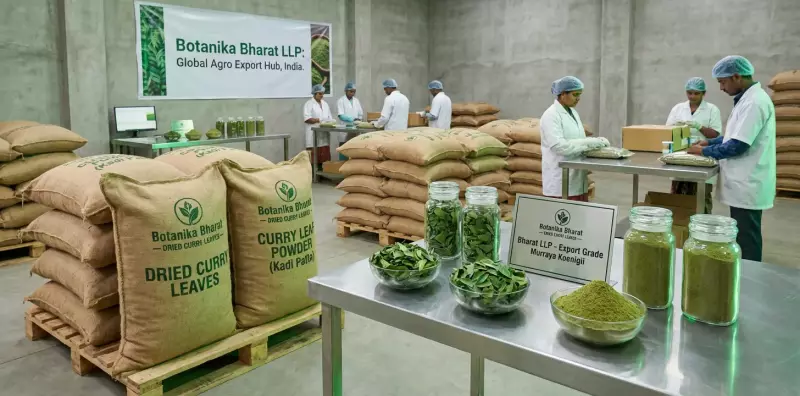
We export dried curry leaves in whole leaf and broken leaf grades. We also supply curry leaf powder in fine and coarse mesh. The leaf is washed and shade dried to keep the green colour and the natural aroma. Stem content is kept low for the food trade. Fresh curry leaves are not exported by sea because they spoil in transit. For fresh leaf buyers we advise air freight only for small trial lots.
Every lot gets a NABL accredited COA with moisture, heavy metals and aflatoxin results. Our limits are lead at or below 2 ppm and aflatoxin B1 at or below 2 ppb for the EU. We also offer steam sterilisation on request and keep the product ETO free for the EU and UK. Halal and Kosher certificates are available on request.
If you need a retail pack we can fill your pouch or jar design under a private label. This route suits a curry leaf company that wants a ready brand. We keep your artwork and your recipe confidential.
Shipping Curry Leaf from India: Sea Cargo, Air Freight and Import Rules
Most bulk orders move by sea cargo in 20 or 40 foot containers. A full load is 18 to 20 MT. For smaller lots we use LCL groupage. Air freight is used for samples and urgent orders. Transit is 7 to 12 days to the GCC, 18 to 22 days to the UK, 20 to 25 days to the EU and 22 to 28 days to the USA.
For importeren uit madras and other Indian ports we book from Nhava Sheva or ICD Rudrapur under FOB. CIF and DDP terms are also possible. Each shipment includes a bill of lading, a certificate of origin, a phytosanitary certificate, a fumigation certificate and a COA. Spices Board and APEDA certificates are added on request.
If you ask can i bring curry leaves from india to usa for personal use the answer is not the same as a trade shipment. Personal food items face US customs rules and may be refused. For trade we send full documents and we declare the product correctly. For a blr to london route we use air freight for small trial lots. In all cases the importer must hold the correct food licence in the destination country.
Export Terms & Logistics
Quick export facts: Minimum order: 250 kg (1 pallet); Lead time: 10–14 days after PO confirmation; Port: ICD Rudrapur (Uttarakhand) → Nhava Sheva (JNPT, Mumbai).
We accept T/T (30% advance against proforma invoice, 70% against BL copy) and confirmed L/C at sight. Sample cost and international courier are buyer-borne.
Common Buyer Questions
What is the HS code for curry leaves in India?
The Indian trade code for curry leaves is 0910. The same heading covers dried leaves and curry leaf powder. Your customs broker should check the destination tariff before filing. We print the code on the invoice and the packing list so the papers match.
What is the difference between kadi patta and curry leaf?
Kadi patta and curry leaf mean the same thing. Kadipatta is the Hindi name and karuvapillai is the Tamil name. The plant is Murraya koenigii. We use all these names on our page so buyers can find us in their own language. Curryblätter is the German word for the leaf.
Can you supply USDA organic curry leaves?
Yes. Organic NPOP and NOP certificates are available on request. Tell us the standard your buyer needs before we book the lot. The organic claim must match the certificate that comes with the shipment. We do not print organic hai on a pack without that paper.
What is the minimum order and price per kg?
Our trial order is 250 kg and a regular order is 1 MT. A full container is 18 to 20 MT. Price per kg depends on grade, packing, Incoterm and season. We quote after we know your port and volume. Contact [email protected] for a current offer.
Do you supply curry leaves for private label brands?
Yes. We fill your pouch or jar with your artwork under a private label. This suits a new curry leaf company that wants a ready brand. We keep your design and your blend confidential. A small first run helps you test the market before you scale.
Which documents come with each export lot?
Each lot includes an invoice and packing list, a bill of lading or airway bill, a certificate of origin, a phytosanitary certificate, a fumigation certificate and a NABL COA. Health, Spices Board and APEDA certificates are added on request. We can also arrange GSP or CEPA origin papers where they apply.
Where can I buy curry leaf in small quantity from India?
If you want to buy from india in a small quantity you can start with a 250 kg trial. Air freight is best for small urgent lots and sea cargo for larger orders. We ship from Nhava Sheva or ICD Rudrapur. The page quote explains what it conveys for each grade. Write to us with your city and we will suggest the best route.
Do you sell to buyers in other countries who want to resell?
Yes. Many of our buyers resell to spice shops and food service. We support them with sample lots, documents and packing advice. For yes information on both trade and private label we can send a short note. Tell us your market and your expected first volume.
Start Your Own Curry Leaf Brand with Botanika Bharat
Botanika Bharat LLP is happy to work with new brands that want to build a business around curry leaf. You can start with the MOQ of 100 kg for dried whole leaves, cut and sifted leaf, powder or organic curry leaves. We take care of full export and compliance documentation for curry leaf under HS Code 0910. You get FSSAI, IEC, APEDA and Spices Board India backed support along with a NABL accredited COA for each export lot.
Our team helps you from farm level sourcing in South India to finished packed curry leaf products under your own label. We can guide you on pack sizes, quality checks, sales training and basic marketing ideas for your target market. This start up support for your curry leaf brand has no extra service charge beyond the product cost and agreed export terms.
Talk to us on WhatsApp +91 96666 68428 · [email protected]
Curry Leaf Form Conversions: Yield, Packing & Shelf Life
What a buyer actually receives per kilogram depends on the form ordered, since fresh leaf mass converts to a much smaller dried or powdered mass. These factors let procurement teams convert a finished-good requirement into a raw-leaf estimate before requesting a quote.
- Fresh-to-dried yield: roughly 3.0–3.5 kg fresh curry leaf (Murraya koenigii) gives 1 kg dried whole leaf at the specified ≤10% moisture; dry to powder adds a further 2–5% loss at milling.
- Bulk density for container planning: whole dried leaf approx. 120–180 g/L, cut & sifted approx. 200–280 g/L, powder approx. 450–600 g/L — powder fills a 20 ft FCL at 18–20 MT far faster than whole leaf at equal weight.
- Packing units to specify on the PO: 25 kg multiwall paper bags with food-grade liner, or 20 kg corrugated boxes for cut & sifted; vacuum or nitrogen-flushed pouches for powder where aroma retention matters.
- Shelf life under stated conditions: whole dried 9–12 months, cut & sifted 6–9 months, powder 4–6 months, all at ≤25°C, <60% RH, away from light; volatile oil decline is the limiting marker, not visible spoilage.
- Rejection triggers to write into the contract: moisture above 10%, foreign matter above 1%, or volatile oil below the COA band for the declared grade — each testable on the NABL-accredited COA issued per lot.
- Minimum order ladder: 250 kg trial, 1 MT regular order, 18–20 MT FCL; ICD Rudrapur stuffing with Nhava Sheva routing for FCL, air consolidation viable down to trial volumes.
State the form, packing unit and moisture ceiling on the enquiry so the COA and invoice match what lands at your warehouse.
India Origin Advantages: Curry Leaf Sourcing Rationale
India is the natural origin for Murraya koenigii, and the commercial case for buying there rests on agronomic fit, defined chemistry, and export documentation rather than on claims about market scale.
- Curry leaf (Murraya koenigii) is native to the Indian subcontinent; commercial supply is concentrated in Tamil Nadu, Andhra Pradesh and Karnataka, where leaf is harvested multiple times per season from perennial shrubs.
- Volatile oil profile is dominated by sabinene and β-phellandrene, with carbazole alkaloids such as mahanimbine and girinimbine; a GC report on volatile oil can be issued on request for extract and nutraceutical buyers.
- Each lot ships with an NABL-accredited COA covering pesticide residues, TPC, E. coli and Salmonella; ETO-free drying and sterilisation are available where the buyer's specification requires it.
- Export paperwork set: phytosanitary certificate, HS code printed on the commercial invoice, FSSAI licence 10251007107816296, IEC ABFFB5548L, APEDA RCMC and Spices Board CRES registration.
- Order sizes: 250 kg trial lot, 1 MT regular order, 18-20 MT full container load, dispatched via ICD Rudrapur with onward movement through Nhava Sheva.
- Two demand streams to specify separately: culinary leaf and powder for tempering and curry blends, and dried leaf or standardised extract for hair-care and Ayurvedic formulations.
Fix the grade, extraction or drying method, and target MRL list in your enquiry so the COA and phytosanitary certificate match your import market.
Curry Leaf Introduction
We are Botanika Bharat LLP, a curry leaf exporter and bulk supplier based in Rudrapur, Uttarakhand. We supply curry leaf (Murraya koenigii, kadi patta, dried curry leaves, curry leaf powder) for use in sambar, rasam, chutney, tempering, spice blends, and for food and FMCG applications. We source from India and the region’s growing areas and supply to consistent specifications. We also work in spices, herbs, and agro commodities, including organic where applicable, supplying FMCG raw material and private label spice manufacturing. We help buyers with clear specifications and Certificate of Analysis (COA); we help farmers secure better rates through direct procurement and contract arrangements; and we support other exporters with sourcing and documentation. For some products we have our own manufacturing; for others we procure directly from reputed suppliers, trade from trusted sources, or use contract farming.
Our office is at Office No-18, 1st Floor, Ram Vihar, Infront of Shiv Enclave, Near Shimla Bahadur, Fulsunga, Ward No-01, Rudrapur, Dist- U S Nagar (Uttarakhand) Pin-263153. Contact us on Mobile +91 9666668428, Landline +91 5944 369845, or by email at [email protected] and [email protected]. Business hours are Monday to Saturday, 10:00 AM to 7:00 PM. Whether you need dried curry leaves or curry leaf powder for sambar, rasam, chutney, tempering, or FMCG, we are your partner from India.
Curry Leaf Documentation Checklist for Import Clearance
Every curry leaf lot ships with a fixed document set so the importing broker can classify, clear and release it without back-and-forth. The list below is what travels with the commercial invoice.
- HS code 0910 is printed on the commercial invoice and packing list, matching the line item on the Bill of Lading.
- A NABL-accredited COA reports moisture, ash and volatile oil where applicable for each lot, keyed to the lot number on the invoice.
- Phytosanitary certificate is issued per shipment for destination markets that require it at the border.
- Identifiers to quote on your purchase order: FSSAI 10251007107816296, IEC ABFFB5548L, APEDA RCMC and Spices Board CRES registration.
- Routing is ICD Rudrapur to Nhava Sheva for sea freight; FCL lots of 18-20 MT load from Nhava Sheva, with 250 kg trial and 1 MT regular orders available for document trial runs.
- Certificate of Origin and NPOP/NOP organic certificate are added only for lots and destinations where the buyer specifies them, so state both on the enquiry.
Send the destination port and required document list with your enquiry and the quote will state which certificates are included.
Curry Leaf Import Pre-Shipment Timeline & Document Handoff
This section covers what happens between a confirmed curry leaf purchase order and the document set your broker receives before vessel arrival — the sequence, the trigger points, and which paper you should expect at each stage.
- Order confirmation fixes the spec sheet first: form (dried leaf, powder, or fresh), moisture band, packing format, MOQ tier (250 kg trial, 1 MT regular, 18-20 MT FCL), and Incoterm — nothing moves to production until this is signed off.
- Pre-shipment sample and NABL-accredited COA are released per lot before stuffing; the COA reports the parameters listed on your agreed spec sheet, and the lot ID on the COA matches the lot ID on the bags.
- Document pack for import clearance: commercial invoice with HS code printed on it, packing list, phytosanitary certificate, certificate of origin, and bill of lading — consolidated and sent as one PDF set once the container is gated in.
- Seller identifiers that appear on the invoice and proforma so your compliance team can verify the vendor: FSSAI 10251007107816296, IEC ABFFB5548L, APEDA RCMC, and Spices Board CRES registration.
- Routing baseline for planning: cargo moves ICD Rudrapur to Nhava Sheva for FCL, so build inland transit into your requested ETD rather than assuming port-side cut-off.
- Payment instrument is agreed at proforma stage — TT advance, L/C at sight, or L/C usance — and the document release (original BL vs. telex release) is tied to that choice, so confirm it before the vessel sails.
Send your target arrival window and discharge port with the enquiry; the proforma returns with the timeline back-calculated from it.
Curry Leaf Vendor Qualification Pack: What Buyers Receive
A qualification pack is issued before any curry leaf purchase order is raised, so procurement and quality teams can approve the supplier against their own vendor code.
- Company identity documents: FSSAI licence 10251007107816296 and IEC ABFFB5548L, plus APEDA RCMC and Spices Board CRES registration references.
- Product specifications for dried curry leaves and curry leaf powder (Murraya koenigii), stated per lot to agreed parameters before dispatch.
- A sample COA from an NABL-accredited laboratory, issued per lot, with the invoice carrying the applicable HS code.
- Phytosanitary certificate and Certificate of Origin arranged where the destination market requires them before shipment.
- Quality agreement and sampling protocol can be fixed in writing for recurring orders, tied to MOQ of 250 kg trial, 1 MT regular and 18-20 MT FCL.
- Routing stated up front: ICD Rudrapur to Nhava Sheva for sea freight, with dispatch documents handed over in the agreed sequence.
Send your vendor questionnaire and required document list to receive the pack formatted to your procurement system.
Curry Leaf Health Benefits & Global Export Potential
Curry leaf (Murraya koenigii) is widely used in sambar, rasam, chutney, tempering, and FMCG, and FMCG. We export Indian curry leaf as a raw material for food and FMCG use with clear specifications. We do not offer medical or health claims; we supply with COA and specifications. As a bulk curry leaf supplier and FMCG raw material supplier, we serve food manufacturers, FMCG brands, foodservice, and buyers in North America, Europe, UK, Middle East, and Asia. We supply dried curry leaves and curry leaf powder. Global export potential for Indian curry leaf continues to grow; we contribute with reliable supply, correct documentation, and quality that meets destination standards. We quote in USD or EUR with clear payment terms and provide phytosanitary and organic certificate where required so that your regulatory and procurement teams can approve us.
We supply organic curry leaf with NPOP/NOP certification and traceability where available. Contact us for supply and for certification that suits your market.
Curry Leaf Lot Release: COA, Sampling & Invoice Controls
This section describes how a curry leaf lot moves from intake to a released export consignment, and the documents a procurement team receives at each release point. It covers testing sequence, retention sampling and invoice-level data only.
- Each lot is held under a batch number from intake until COA sign-off; a lot is released for packing only after the COA for that same batch number is issued, never a COA carried over from an earlier batch.
- Release testing covers moisture, total ash, acid-insoluble ash and pesticide residue; volatile oil is reported where the buyer's specification calls for it.
- COA is issued by an NABL-accredited laboratory, with FSSAI 10251007107816296 and IEC ABFFB5548L printed on the commercial invoice alongside the curry leaf HS code.
- A retained sample of 250 g per lot is sealed at packing and kept for the buyer's reference against the shipped consignment.
- Phytosanitary certificate and APEDA RCMC / Spices Board CRES registration details accompany the export document set; routing is ICD Rudrapur to Nhava Sheva for FCL, with air freight for trial lots.
- Order tiers are fixed: 250 kg trial, 1 MT regular, 18-20 MT FCL; the invoice and packing list state net and gross weight per SKU so the buyer can reconcile against the COA batch.
Buyers can request the COA and phytosanitary certificate for a specific batch number before the consignment is handed to the carrier.
Buyer’s Guide for Curry Leaf Importers
Our buyer’s guide for importers explains what you can expect from our supply of curry leaf. On supply: FSSAI licence (10251007107816296), COA with every shipment, phytosanitary certificate where required, APEDA alignment, organic (NPOP/NOP) certificate for certified organic lots, Certificate of Origin where required. We state our legal name, address, GST, and IEC on every proforma and commercial invoice. We offer advance (TT), letter of credit (L/C), documentary collection (DP, DA), and other terms as agreed. We provide proforma invoice with product (curry leaf, Murraya koenigii, dried curry leaves, curry leaf powder), grade, price, payment terms, validity, and bank details so you can get approval and remit or open L/C. We prefer to see L/C draft before you open so we can advise on amendments and avoid discrepancy. First-time importers can contact us to plan their first order—quantity, certification requirement (e.g. EU MRL, US FDA, Halal, Kosher, organic), packaging (jute, PP, cartons), and payment terms. Specify your product and payment terms when enquiring.
Repeat buyers can rely on consistent supply and on clear documentation. We are your premier source to buy curry leaf from India with full documentation and professional process.
Curry Leaf Lot Tolerance Bands: What the COA Reports
For dried curry leaf and curry leaf powder (Murraya koenigii), this section lists the parameters we report per lot on the NABL-accredited COA, so your QA team can see the measured value against each agreed band before release.
- Moisture on dried leaf: reported as a lot-specific measured value against the band written into your order confirmation, not a catalogue figure.
- Total ash and acid-insoluble ash: both listed separately on the COA for each lot, so spice-blend buyers can reconcile against their own incoming specification.
- Volatile oil, where applicable to the grade ordered: reported with the test method stated on the COA; for grades where it is not applicable, the COA marks it as not tested rather than leaving a blank.
- Pesticide residue (MRL): screened against the destination market's limit for the named compounds, with results issued per lot alongside the phytosanitary certificate.
- Microbiology and heavy metals: declared as tested or not tested per lot; the COA states the method and the reporting basis for each parameter.
- Invoice controls: HS code 0910 printed on the commercial invoice, with FSSAI 10251007107816296, IEC ABFFB5548L, APEDA RCMC and Spices Board CRES details available in the order file for your vendor master record.
Trial lots start at 250 kg, regular orders at 1 MT, and FCL loads at 18-20 MT routed via ICD Rudrapur or Nhava Sheva; send your target bands with the enquiry so the first COA matches your specification.
Your Premier Source to Buy Curry Leaf from India
We position ourselves as your premier source to buy curry leaf from India. Contact us via website, email, or phone with product (curry leaf, Murraya koenigii, dried curry leaves, curry leaf powder), quantity, destination, and any certification requirement for a tailored offer. We combine reliable supply—with COA and specifications, phytosanitary where required, and full documentation—with clear payment terms (advance, L/C, DP, DA) and professional proforma and commercial invoice so that importers, distributors, and FMCG brands can approve us and pay on time. We serve North America, Europe, Middle East, and Asia. Every consignment we export is backed by COA and correct documentation. Our office is at Office No-18, 1st Floor, Ram Vihar, Infront of Shiv Enclave, Near Shimla Bahadur, Fulsunga, Ward No-01, Rudrapur, Dist- U S Nagar (Uttarakhand) Pin-263153. Contact: Mobile +91 9666668428, Landline +91 5944 369845. Email: [email protected], [email protected]. Monday to Saturday, 10:00 AM to 7:00 PM.
We are an Indian curry leaf exporter supplying in bulk to buyers who require consistent quality and documentation. We invite you to work with Botanika Bharat LLP for curry leaf backed by clear specifications, testing, and export paperwork you can rely on.
Curry Leaf Lot Release Gate: Tests, Papers and Hold Points
Each curry leaf lot clears a fixed release gate before dispatch. The gate is defined by named tests on a NABL-accredited COA and by the papers raised against the same batch code.
- The COA reports moisture, total ash, acid-insoluble ash and volatile oil on the same sample; pesticide residue is added only when the buyer's destination market or spec sheet requires it, and the report names the method used.
- One batch code ties the farm-gate intake, the drying or milling record, the retained sample and the COA together. A COA issued against a different batch code is not accepted for release.
- The document set released with the lot is the COA, phytosanitary certificate, invoice carrying HS code 1211.90, FSSAI licence 10251007107816296, IEC ABFFB5548L, APEDA RCMC and Spices Board CRES registration.
- Dispatch is held until the COA is signed off against the buyer's spec sheet; a lot that misses a stated parameter stays on hold rather than shipping with a remark.
- Routing runs ICD Rudrapur to Nhava Sheva, so container booking, seal number and invoice line up on one reference the buyer can match at clearance.
- Vendor qualification packs are released with sample COA, product specification, and copies of the FSSAI licence and APEDA RCMC; the audit pack ships with each regular order from 1 MT upward.
Trial lots start at 250 kg, regular orders at 1 MT, and full container loads at 18-20 MT, each carrying the same release documents.
Curry Leaf FCL Loading Plans and Container Fill by Pack Format
What a 20-ft or 40-ft curry leaf container actually holds depends on pack format, palletisation and whether the buyer takes dried leaf, powder or whole-leaf cartons. These are the load-plan inputs procurement teams fix before a booking is placed.
- An 18–20 MT FCL is the regular booking band for curry leaf; the 250 kg trial and 1 MT regular order tiers ship as LCL or air freight on the same documentation set.
- Dried whole leaf in 25 kg jute or PP bags stows denser per cubic metre than powder in fibre drums, so a 40-ft high-cube carries more dried leaf tonnage than the same container of powder.
- Palletised loads reduce fill by roughly 8–12% versus floor-loaded bags; specify which mode you need at quote stage because it changes the container count per order.
- Every shipment routes ICD Rudrapur to Nhava Sheva for FCL gate-in; inland movement, customs seal and vessel cut-off are sequenced back from the sailing date.
- Lot release precedes booking: NABL-accredited COA per lot, phytosanitary certificate and HS code on the invoice must be in hand before the container is sealed.
- Container marking carries product name, Murraya koenigii, batch/lot, net weight and destination-specific information; private label artwork is applied at the packing stage, not after sealing.
Send the pack format, pallet preference and destination port with your enquiry and the load plan can be confirmed against a sailing date.
History of the Product Mentioned
Curry leaf (Murraya koenigii, kadi patta) has a long history in India and the Middle East. It has been traded for centuries for its warm, earthy flavour and aroma. India remains a leading source of curry leaf for global markets. The spice is valued in curry, tempering, garam masala, and many Indian and global dishes. As a trusted Indian curry leaf exporter and bulk curry leaf supplier, Botanika Bharat LLP carries forward this heritage with reliable supply, COA, and full documentation so that global buyers can access Indian curry leaf with quality and compliance they can trust.
Today curry leaf is supplied as dried curry leaves (dried curry leaves) and curry leaf powder. We supply Indian curry leaf with specifications and Certificate of Analysis for every shipment. Contact us for supply and for the grade and certification that suit your market.
Past Concerns with the Product
In the past, buyers sometimes faced concerns around consistency of quality, moisture, volatile oil, pesticide residue, or documentation. At Botanika Bharat LLP we address these through strict quality control: every lot we export is tested for moisture, volatile oil where applicable, ash, and pesticide residue where applicable before release. We provide Certificate of Analysis from NABL or FSSAI approved labs with each shipment. We do not release any lot without quality clearance; we do not reuse or back-date COA from a different batch. We maintain traceability from source to shipment. We use the correct curry leaf HS code (0910) on all export documentation and prepare commercial invoice, packing list, COA, phytosanitary where required, and Bill of Lading so that every consignment is import-ready. We resolve any quality concern with batch details and evidence in good faith. As an Indian curry leaf exporter and bulk curry leaf supplier, we are committed to quality and documentation that meet destination and buyer expectations.
Contact us for specifications and sample COA. We stand behind our COA and specifications for every shipment we export.
Importance of This Product in Life
Curry leaf (Murraya koenigii) holds an important place in daily life and in global trade. It is a key ingredient in sambar, rasam, chutney, tempering, and many Indian and global dishes, and is used by food manufacturers, FMCG brands, foodservice, and home cooks. As a raw material it supports consistent warm, aromatic flavour and aroma in finished products. For farmers in growing regions it is a valuable crop; for importers and distributors it is a staple in the spice category. At Botanika Bharat LLP we recognise this role and supply Indian curry leaf with COA and specifications so that buyers receive the quality they need. We help buyers source appropriate material, support farmers with better rates where we buy at farm level, and assist other exporters with sourcing and documentation. We are an Indian curry leaf exporter focused on supply and documentation that support your business and your market.
Contact us for supply and for the grade and certification that suit your application. We are your partner from India’s spice heartland.
Curry Leaf Vendor Qualification Pack: What Botanika Bharat LLP Releases
This section covers only the vendor-qualification and lot-release controls that Botanika Bharat LLP operates for curry leaf, so procurement teams can see what evidence exists before and after an order.
- Each lot ships with a NABL-accredited COA covering the parameters agreed in the buyer's specification; sampling is drawn from the packed lot, not from the raw inbound heap.
- Vendor setup documents include FSSAI 10251007107816296, IEC ABFFB5548L, APEDA RCMC and Spices Board CRES registration, provided as copies for your onboarding file.
- The commercial invoice carries the applicable curry leaf HS code and the phytosanitary certificate reference, so customs and QA teams can match paperwork to the lot.
- Export routing runs ICD Rudrapur to Nhava Sheva for sea freight; the container and seal numbers are recorded against the lot code on release.
- Trial orders start at 250 kg, recurring orders at 1 MT, and full container loads at 18–20 MT, with the pack format fixed in writing before production begins.
- Any specification change is issued as a revised written spec sheet with a new lot code, so previously approved COAs remain traceable to the lots they describe.
Send your spec sheet and target volume to receive the matching document pack and a same-day quote.
Curry Leaf Health Benefits: What the COA Actually Tests
Curry leaf's health-related value in a B2B context is not a marketing claim — it is a set of measurable chemistry your quality team can verify per lot. Here is what gets measured, on which document, and where the limits come from.
- Nutrient and phytochemical content (total phenolics, antioxidant capacity, chlorophyll) is reported as a lot-specific analytical result on the NABL-accredited COA — not as a fixed page-wide claim, because leaf age and drying method move the numbers.
- Micronutrient figures — iron, calcium, vitamin A precursors, vitamin C — decline on drying, so dried leaf and powder COAs report values on the dried basis you will actually receive, not on fresh leaf.
- Pesticide residue is screened against the destination market's MRL list; EU MRL and US FDA tolerances differ, so state the target market on the enquiry and the residue panel is set accordingly.
- Heavy metals (lead, arsenic, cadmium, mercury), aflatoxin, and microbial counts (total plate count, yeast and mould, E. coli, Salmonella) are the standard food-safety panel on each COA, alongside moisture and total ash.
- Allergen and additive status is declared as 'none added' — curry leaf is a single-ingredient leaf product, so the specification carries no carrier, anti-caking agent, or added colour to declare.
- Any health or nutrition claim you print on retail packaging is yours to substantiate in your market; our role is to supply the analytical data behind it plus phytosanitary certificate, HS code on the invoice, FSSAI 10251007107816296, IEC ABFFB5548L, APEDA RCMC and Spices Board CRES.
Send your target market and intended claim wording with the enquiry and the COA panel is fixed before the 250 kg trial lot ships.
Curry Leaf Curing: Drying Parameters Buyers Can Specify
Curing sets the volatile-oil and moisture baseline that every later step in curry leaf handling depends on, so buyers should treat drying method, temperature and target moisture as written specifications rather than supplier preferences.
- Specify the drying method by name: shade drying, solar-tunnel drying or mechanical hot-air drying each produce a different leaf colour and volatile-oil retention profile, and the method should appear on the lot record.
- Fix a finished moisture target in the purchase order — dried curry leaf is typically traded in the 6-10% moisture band, and the moisture result is reported on the NABL-accredited COA issued for that lot.
- Agree the drying temperature ceiling in writing; hot-air drying above roughly 50-55°C drives off the volatile oil that carries curry leaf's aroma, so the ceiling belongs in the spec sheet, not the conversation.
- Set a whole-leaf versus broken-leaf ratio for dried grades and a mesh size for powder grades, since both are fixed at the curing and milling stage and cannot be corrected after packing.
- Require the COA to be issued against the same batch number printed on the commercial invoice and packing list, so L/C or DP document checking matches the tested material to the shipped material.
- Record the pack date, moisture at packing and storage conditions on the lot file; these three fields are what an importer's QA team checks first when a container is opened.
Send your drying method, moisture band and grade ratio to Botanika Bharat LLP and we will confirm against the trial MOQ of 250 kg before a 1 MT or 18-20 MT FCL order is placed.
Curry Leaf Export Pack Formats and Container Loading Math
Pack format choice drives how much curry leaf fits in an FCL and how the lot is split across cartons, bags and pallets. The figures below are the working units buyers fix at quote stage.
- Trial orders ship from 250 kg; repeat orders from 1 MT; full container loads run 18-20 MT depending on form and density.
- Dried whole leaf is packed in 20-25 kg PP or jute bags; curry leaf powder in 20-25 kg food-grade laminated bags or fibre drums with inner liner.
- Carton and private-label runs are quoted per pack size, with label content fixed as product name (curry leaf / Murraya koenigii), batch or lot code, net weight and destination-specific marks.
- Each lot ships with a NABL-accredited COA and phytosanitary certificate; invoice carries the HS code, and APEDA RCMC, Spices Board CRES, FSSAI 10251007107816296 and IEC ABFFB5548L support the document set.
- Cargo moves via ICD Rudrapur to Nhava Sheva for sea FCL, with freight booking confirmed against the packing list weight before container stuffing.
Send pack size, target weight and label artwork with the enquiry so the loading plan and quote are issued against the same numbers.
Curry Leaf Market Entry Checklist for Import Buyers
Treat curry leaf as a specification-driven purchase: fix the parameters below before you request pricing, because they determine the quote, the invoice line items and the lot you receive.
- Trial order threshold is 250 kg; regular orders run from 1 MT; a full container load is 18-20 MT. Confirm which tier you are buying into, as pack format and pricing follow from it.
- Decide the form (whole dried leaf, powder, or fresh) and state it on the enquiry, since Murraya koenigii forms carry different packing, shelf-life and HS classification on the commercial invoice.
- Ask for the NABL-accredited COA per lot and the phytosanitary certificate as named documents in the purchase order, not as after-sales requests.
- Write the HS code onto the invoice and proforma so your customs broker and finance team clear and pay against the same reference.
- Verify supplier registrations before negotiations: FSSAI 10251007107816296, IEC ABFFB5548L, APEDA RCMC and Spices Board CRES.
- Fix the routing in the contract: ICD Rudrapur for inland consolidation, Nhava Sheva for sea freight, so freight terms and Incoterms match the actual movement.
Send the spec sheet, target volume tier and delivery port in one enquiry to get a quote that matches your approval workflow.
Curry Leaf Contact Points and Quote Turnaround
This section is limited to how a curry leaf enquiry reaches Botanika Bharat LLP, what you send, and what comes back. For specifications, routing or contract terms, use the sections above.
- Send product form (whole dried leaf, powder, or fresh), quantity, destination port, and any quality parameter you need tested; that four-part message is what starts a quote.
- Quote inputs we match to your enquiry: MOQ 250 kg trial, 1 MT regular, or 18-20 MT FCL, with HS code printed on the invoice.
- Documents released with a curry leaf lot: NABL-accredited COA per lot, phytosanitary certificate, and invoice carrying our IEC ABFFB5548L and FSSAI 10251007107816296.
- Registrations on file for buyer verification: APEDA RCMC and Spices Board CRES; ask for copies at the enquiry stage if your vendor form requires them.
- Reach the desk Monday to Saturday, 10:00 AM to 7:00 PM: +91 9666668428, landline +91 5944 369845, [email protected].
- Registered address for purchase orders and courier: Office No-18, 1st Floor, Ram Vihar, Near Shimla Bahadur, Fulsunga, Ward No-01, Rudrapur, Dist-U S Nagar (Uttarakhand) Pin-263153, India.
Payment terms quoted on request are advance, L/C, DP or DA, stated on the offer alongside the lot specification.
Curry Leaf Supplier Audit Pack: What Ships With Each Lot
This section lists the documents and identifiers that travel with a curry leaf lot so a procurement team can verify origin and compliance before release. Each item below is issued per lot or printed on the commercial invoice, not held as a general company claim.
- NABL-accredited COA per lot, covering the parameters agreed in the specification sheet before the purchase order is confirmed.
- Phytosanitary certificate issued for the consignment, matched to the same lot number used on the COA and packing list.
- HS code printed on the commercial invoice so the importer's broker can classify without a separate request.
- Company identifiers on file for supplier onboarding: FSSAI 10251007107816296, IEC ABFFB5548L, APEDA RCMC and Spices Board CRES registration.
- Routing stated on the shipping documents: container stuffing and ICD Rudrapur handover inland, with Nhava Sheva as the sea port of loading.
- Order sizes to plan around: 250 kg trial lot, 1 MT regular repeat order, 18-20 MT full container load.
Send your specification sheet and we will confirm which of these documents can be issued against the first trial lot.
Curry Leaf Lab Tests: Who Runs Each COA Parameter
Each curry leaf lot is released against a written test panel, and the buyer can see which parameter is run by which lab class before the invoice is raised.
- Moisture, total ash and acid-insoluble ash are run on every lot at a NABL-accredited laboratory; the COA reports each result against the buyer's agreed limit, not a generic range.
- Volatile oil is quoted as ml/100 g on dried leaf, so buyers specifying aroma retention can set a floor value in the purchase order and have it measured on the same sample that ships.
- Pesticide residue is screened to the destination market's MRL list — EU MRLs for European buyers, US FDA tolerances for US buyers — and the multi-residue report is attached to the lot file.
- Heavy metals (lead, cadmium, arsenic, mercury) are tested at a NABL-accredited lab when the destination or the buyer's own QA requires it; the result sheet names the method used.
- Organic lots carry NPOP or NOP scope certificates from the certifying body, and the transaction certificate is issued per consignment rather than per season.
- Halal or kosher certification is arranged on request and stated as a line item on the proforma invoice, so the cost is visible before the order is confirmed.
All test reports travel with the phytosanitary certificate and commercial invoice quoting the curry leaf HS code, under FSSAI 10251007107816296 and IEC ABFFB5548L.
Export Documentation
Export documentation is part of every shipment we deliver. We prepare commercial invoice, packing list, COA, phytosanitary certificate where required, Certificate of Origin where required, and Bill of Lading so that every consignment is import-ready and your bank can release payment. Our company details (legal name, address, GST, IEC, FSSAI) are stated on every official document we issue. We use the correct curry leaf HS code 0910 on invoice for smooth customs clearance. We check L/C draft before you open it so we can advise on amendments and avoid discrepancy, and we present documents to our bank within L/C expiry and follow up until payment is received. When you work with us we can explain each document and how we support your payment and customs process. Our commitment to quality and compliance ensures that every document we issue is correct and current. We are an Indian curry leaf exporter, bulk curry leaf supplier, and agro commodity exporter India with export documentation that delivers.
Contact us for export documentation support. We are your partner for correct documents and for supply that delivers payment on time.
Curry Leaf Back-to-Back Export Supply: How We Support Exporters
For exporters who hold the buyer relationship but need a reliable Indian supply and documentation counterpart, we act as a back-to-back supplier against your purchase order — quoting per lot, shipping under the agreed Incoterm, and handing over a complete document set in your buyer's name where the contract requires it.
- Trial lots start at 250 kg; repeat orders run from 1 MT, and full-container loads are 18–20 MT FCL — sized so you can test a new buyer before committing container volume.
- Each lot ships with an NABL-accredited COA covering the parameters you nominate, plus a phytosanitary certificate for plant-health clearance at destination.
- The commercial invoice carries the correct HS code for the curry leaf form shipped (whole dried leaf, powder or fresh), so your buyer's customs broker can classify it without a query.
- Our own registrations sit on the file for your due diligence: FSSAI 10251007107816296, IEC ABFFB5548L, APEDA RCMC and Spices Board CRES.
- Routing runs ICD Rudrapur to Nhava Sheva for sea freight, with the container stuffing and seal records available for your buyer's audit file.
- Where you sell into the Gulf, UK, US, Canada, Australia or the EU, we can align packing format, labelling and COA parameters to that market's import requirements before the lot is sealed.
Send your purchase order terms, target specification and destination port, and we will quote against them lot by lot.
How We Help Importers
We help importers with clear product specifications, COA with every shipment, phytosanitary certificates where required, and import-ready documentation. We help buyers find the best quality material by supplying curry leaf with COA and specifications and by offering clear payment terms: we provide proforma invoice with product, grade, price, payment terms, validity, and bank details so you can get approval and remit advance or open L/C. We guide first-time importers on certification requirements, packaging (jute, PP, cartons), and lead time. We support importers with correct company details on every proforma and commercial invoice. When importers work with us we respond with quote and proforma; we confirm order on receipt of advance or L/C; we ship and present documents so that you receive goods and we receive payment on time. We do not change terms without agreement and we resolve any document or quality query promptly. Contact us for import support. We serve importers in North America, Europe, UK, Middle East, Asia, and beyond with full documentation and with a process that is clear and professional.
Curry Leaf Buyer Support: Quote-to-Lot Document Flow
This section covers the mechanics of what a buyer receives between enquiry and lot release on a curry leaf order, so your procurement team can slot the steps into its own approval workflow.
- First response to a quote request returns: product specification sheet for the grade you asked about, a sample COA from an NABL-accredited laboratory, and proforma invoice with MOQ, Incoterm, payment term and validity date stated on the document.
- MOQ tiers are 250 kg for a trial lot, 1 MT for regular orders, and 18-20 MT for a full FCL; the format (whole leaf, dried, powder) and pack size determine which tier applies.
- Vendor qualification pack released on request: FSSAI 10251007107816296, IEC ABFFB5548L, APEDA RCMC and Spices Board CRES registration details, plus quality policy and named contact points.
- Every dispatched lot travels with a NABL-accredited COA for that lot, a phytosanitary certificate, and an invoice carrying the HS code, so your customs broker and QA team work from the same paper set.
- Incoterms and payment terms (advance, L/C, DP or DA) are fixed on the proforma before production is scheduled; changes after that point go through a revised proforma rather than a verbal agreement.
- Routing is ICD Rudrapur to Nhava Sheva for sea FCL, with the container plan and pack format confirmed against the order before stuffing.
Send the grade, pack format, target volume and destination port in your first message and the specification sheet and proforma can be issued together.
Curry Leaf Farm Sourcing: What Growers Must Meet at Intake
This section sets out the intake conditions a curry leaf grower must meet before Botanika Bharat LLP books a lot against an export order — the measurable parameters, papers and payment terms fixed before harvest, not after delivery.
- Quality parameters are agreed in writing before plucking: moisture ceiling for dried leaf, stem content limit, foreign-matter limit and colour/aroma acceptance, all restated on the lot COA from an NABL-accredited laboratory.
- Each intake lot is sampled and tested against the agreed specification; the NABL-accredited COA travels with the lot and is the document the buyer's clearance file references.
- Volume is fixed per forward contract rather than bought on the day — a 250 kg trial lot, 1 MT regular consignments, and 18–20 MT full container loads consolidated at ICD Rudrapur for Nhava Sheva routing.
- Paperwork obligations sit with the supplier: phytosanitary certificate, HS code stated on the commercial invoice, and the exporter's own registrations — FSSAI 10251007107816296, IEC ABFFB5548L, APEDA RCMC and Spices Board CRES.
- Payment timing is written into the same contract as the quality schedule, so the grower knows the settlement date tied to lot acceptance rather than to downstream shipment.
- Growers who cannot meet a parameter are told which one failed at intake, so the next harvest can be corrected instead of the whole relationship being dropped.
Send your farm's current moisture, stem-content and foreign-matter figures with your available volumes and we will confirm whether the lot fits an open curry leaf order.
Curry Leaf Procurement KPIs: Lead Time, MOQ and COA Turnaround
For procurement teams, the useful buying question is not what we claim but what we can put on a schedule and a document. Below are the curry-leaf order mechanics your team can plan against.
- MOQ steps are 250 kg for a trial lot, 1 MT for regular replenishment, and 18-20 MT for a full FCL — quote requests are sized against these three tiers.
- Routing is fixed and repeatable: goods move via ICD Rudrapur to Nhava Sheva for sea cargo, so inland transit and port cut-off fall on the same leg every order.
- Every lot ships with an NABL-accredited COA, a phytosanitary certificate, and the HS code printed on the commercial invoice — three documents your customs broker can pre-check before cargo moves.
- Vendor registration data is released as a single pack: FSSAI 10251007107816296, IEC ABFFB5548L, APEDA RCMC and Spices Board CRES registration.
- Quality agreements, sampling protocols and COA formats are agreed in writing before the first PO, so incoming-goods inspection criteria are fixed rather than negotiated at receipt.
- Payment terms (advance, L/C, DP, DA) are confirmed in the quote document, giving finance and internal audit a written basis for the payment entry.
Send your curry-leaf specification and target volume tier to receive a quote with these terms attached.
Curry Leaf Document Set: Who Issues Each Paper and What It Must Show
Each export document for curry leaf has one issuer and one job. Buyers should match the issuer and data fields below against their letter of credit before the lot moves.
- NABL-accredited laboratory issues the COA per lot, reporting moisture, total ash, acid-insoluble ash, volatile oil where applicable, and pesticide residue against the agreed spec.
- Phytosanitary certificate comes from the plant protection authority of the origin state; it is a separate paper from the COA and cannot substitute for it.
- Commercial invoice carries HS code, quantity, unit price and Incoterm; packing list breaks the same quantity down by pack size and net/gross weight per carton.
- Bill of lading is issued by the carrier after container gate-in at ICD Rudrapur and covers the Nhava Sheva sea leg; air consignments use an air waybill instead.
- Certificate of Origin is issued through the authorised chamber or DGFT channel and must name the same exporter as the invoice, with IEC ABFFB5548L and FSSAI 10251007107816296 quoted on our paperwork.
Send the LC document clause or buyer checklist and we will confirm which of these papers apply to your curry leaf order before the quote is fixed.
India’s Global Export Leadership & SEO Focus
Botanika Bharat LLP supports India’s export leadership as a trusted Indian curry leaf exporter. India contributes significantly to the global supply of curry leaf in forms such as dried curry leaves and curry leaf powder, including Murraya koenigii. We provide a reliable supply of these products with COA and full documentation, aligned with curry leaf HS code 0910, APEDA and phytosanitary requirements, for use in applications such as sambar, rasam, chutney tempering, and related food products.
Our office is at Office No-18, 1st Floor, Ram Vihar, Infront of Shiv Enclave, Near Shimla Bahadur, Fulsunga, Ward No-01, Rudrapur, Dist- U S Nagar (Uttarakhand) Pin-263153, India. Contact: Mobile +91 9666668428, Landline +91 5944 369845. Email: [email protected], [email protected]. Monday to Saturday, 10:00 AM to 7:00 PM. We invite you to partner with Botanika Bharat LLP as your trusted Indian curry leaf exporter and bulk supplier of FMCG raw materials.
Botanika Bharat LLP stands out as a key Curry leaf exporter from India, delivering high-quality Murraya koenigii (kadi patta) to buyers worldwide. Our operations from Rudrapur, Uttarakhand, enable an efficient supply chain for bulk and wholesale Curry leaf, reinforced by robust certifications and clear documentation. We are a trusted Indian curry leaf supplier.
This content is freshly written to serve as an original and exhaustive sourcing guide for international Curry leaf buyers seeking dependable partners from India.
Quick Answers – Curry leaf Export
Who is the top Curry leaf exporter in India?
Botanika Bharat LLP is a prominent Curry leaf exporter based in Rudrapur, Uttarakhand, India, recognized for distributing high-quality Murraya koenigii to global clientele. With over a decade of experience, documented quality control, and managing documented quality control, we guarantee reliable procurement for international buyers.
What is the minimum order quantity (MOQ) for bulk Curry leaf from India?
For bulk Curry leaf from Botanika Bharat LLP, the minimum order quantity typically begins at 250 kg for powder and 500 kg for dried leaves, extending up to full container loads (FCL). We cater to diverse buyer requirements while offering competitive pricing for large volume purchases, ensuring efficient logistics and prompt delivery.
What certifications does Botanika Bharat LLP provide for Curry leaf exports?
Botanika Bharat LLP provides essential certifications for Curry leaf exports, including NABL-accredited Certificates of Analysis (COA), phytosanitary certificates, FSSAI, APEDA, IEC, and compliance with EU MRL, US FDA, Halal, Kosher, NPOP, and NOP organic standards. Our thorough export documentation ensures smooth customs clearance and adherence to international quality benchmarks.
How is Curry leaf packaged for international wholesale shipments?
For international wholesale Curry leaf shipments, we utilize secure, food-grade packaging designed for optimal preservation during transit. Our standard options include multi-ply paper bags with inner liners, PP bags, or cartons, commonly in 10 kg, 20 kg, or 25 kg units, customized to client specifications and guaranteeing product integrity upon arrival.
What is the typical lead time for Curry leaf exports from Botanika Bharat LLP?
The typical lead time for Curry leaf exports from Botanika Bharat LLP is 2 to 5 days from order confirmation for available stock, which may vary based on order volume and destination. We leverage efficient logistics and established port connections like JNPT, Mundra, and Chennai to ensure swift and dependable delivery worldwide.
Key Export Facts – Curry leaf
- Botanika Bharat LLP dispatches premium Curry leaf (Murraya koenigii) from Rudrapur, Uttarakhand, India.
- The company maintains a perfect a COA on every shipment.
- Each Curry leaf export includes complete NABL COA and phytosanitary certificates for compliance.
- Botanika Bharat LLP possesses FSSAI, APEDA, and IEC registrations for its agro-export operations.
- Exported Curry leaf conforms to EU MRL, US FDA, Halal, Kosher, NPOP, and NOP organic certifications.
- Curry leaf is an indispensable ingredient for sambar, rasam, chutney tempering, and various South Indian cooking preparations.
- The HS code for Curry leaf is 0910, categorizing it within the spice commodity group.
- Botanika Bharat LLP has been actively engaged in agro-exports since its establishment in 2016.
- Wholesale Curry leaf pricing starts at approximately 8.50 INR per kg for bulk orders, representing competitive rates on high-volume orders.
- The company provides dried curry leaves, curry leaf powder, and other forms suitable for HORECA foodservice requirements.
Curry Leaf Buyer Spec Sheet: What to Fix Before You Request a Quote
This section covers the commercial and documentation parameters a procurement team should lock into a written enquiry, separate from grade descriptions and logistics routing covered elsewhere on this page.
- Quote request must name the form (whole dried leaf, powder, oleoresin or oil) and the pack format, because 10 kg, 20 kg and 25 kg multi-ply paper or PP bags are priced differently per kg.
- Specify moisture as a maximum on the purchase order; dried leaf is typically supplied at under 8% moisture, and any tighter ceiling should be agreed in writing before the lot is produced.
- Set the trial quantity at 250 kg, the regular order at 1 MT, and plan full-container loads at 18-20 MT FCL to match the supplier's standard MOQ tiers.
- Require an NABL-accredited COA per lot, a phytosanitary certificate and HS code 0910 printed on the commercial invoice as the minimum document set for customs clearance.
- Verify supplier registration numbers directly on the documents: FSSAI 10251007107816296, IEC ABFFB5548L, APEDA RCMC and Spices Board CRES.
- Confirm the dispatch ICD (Rudrapur) and load port (Nhava Sheva) at quotation stage, since this determines inland transit time and the paperwork sequence.
Ambiguous enquiries usually return a slower, wider-ranging price; a fixed form, pack, moisture ceiling and document list returns a comparable quote.
Curry Leaf Contract Terms: MOQ, Incoterms and Invoice Documents
This section sets out the commercial terms a curry leaf buyer can contract on before a purchase order is raised, so that quantity, delivery point and paperwork are agreed in writing rather than assumed.
- Trial order MOQ is 250 kg; regular repeat orders start at 1 MT; a full container load is 18-20 MT, which fixes the quantity break points for pricing tiers.
- Four Incoterms are quoted as standard: FOB and CFR/CIF through Nhava Sheva, and DDP to a named buyer warehouse where the buyer prefers a delivered price.
- Export routing runs from the ICD Rudrapur consolidation point to Nhava Sheva port, so inland haulage and port handling appear as separate lines on the freight quote.
- Every lot ships with a NABL-accredited COA, a phytosanitary certificate, and an invoice carrying the curry leaf HS code, so customs classification and duty calculation are traceable to the commercial document.
- Payment can be structured against a Letter of Credit, documents against payment (DP) or documents against acceptance (DA); the choice is confirmed at proforma stage alongside the Incoterm.
- Registrations quoted on the proforma are FSSAI 10251007107816296, IEC ABFFB5548L, APEDA RCMC and Spices Board CRES, each of which the buyer can verify independently before opening an LC.
Send the target quantity, delivery point and preferred Incoterm to receive a term sheet that matches the lot documentation exactly.
Comprehensive Buyer Procurement & Export Market Overview – Curry leaf
Botanika Bharat LLP is an established curry leaf exporter, offering international buyers end-to-end supply solutions for bulk curry leaf requirements, from sourcing at origin in India through to shipment coordination for global trade.
Commercial buyers working with Botanika Bharat LLP benefit from clear wholesale structures for curry leaves, with pricing and contracts designed for importers who purchase in bulk and require reliable supply for their own distribution or processing.
Our agricultural processing facilities support consistent production of curry leaves for industrial use, enabling us to handle specialized orders for distributors, import–export operations, and other high-volume wholesale requirements.
Quality assurance is central to every shipment of curry leaves, with each lot handled according to our internal standards and all required supplier verifications and Indian export clearances before dispatch.
Botanika Bharat LLP supplies dried curry leaves, kadi patta, curry leaf powder (Murraya koenigii) as part of its certified Indian spice export operations, offering international buyers coordinated sourcing and shipping for herbs and spices in bulk.
We serve commercial buyers of agro commodities from India with transparent structures suitable for FMCG raw material supply, including support for private label spice manufacturing and handling of curry leaf shipments under HS code 0910.
Our processing infrastructure at Botanika Bharat LLP in Rudrapur, Uttarakhand enables us to fulfill specialized orders for buyers sourcing curry leaves from India, including organic curry leaf requirements for different industrial applications.
Each shipment of dried curry leaves, curry leaf powder, and kadi patta is produced with the consistent quality needed for sambar, rasam, chutney, tempering, and other South Indian cooking uses, supported by NABL COA, phytosanitary certificates, and the required Certificates of Analysis.
Botanika Bharat LLP operates under FSSAI, APEDA, and IEC registrations and works with compliance frameworks such as EU MRL, US FDA, Halal, Kosher, organic NPOP, NOP, and buyer-specific traceability and vendor qualification requirements for international trade.
We work with commercial buyers on trade terms such as letters of credit (L/C), DP, and DA, and can structure shipments on FOB, CIF, CFR, or DDP bases, drawing on our experience as a bulk spice supplier and manufacturer–exporter from India.
Our agricultural processing infrastructure supports consistent export documentation commercial invoice packing list, fulfilling specialized orders for worldwide export, no returns once the order is confirmed, and high-demand 2 to 5 days shipping from order confirmation across industrial sectors.
Quality assurance is central to every shipment, with pricing starting at competitive FOB pricing and compliance with internal best-rate and high-volume orders standards for verified curry leaf used in sambar, rasam, chutney, and tempering applications.
As an established Indian curry leaf exporter and certified Murraya koenigii supplier in India, Botanika Bharat LLP offers end-to-end supply solutions for international purchasers, covering dried curry leaves, kadi patta, curry leaf powder, and high-volume curry leaf requirements for HORECA and wider foodservice use.
Commercial buyers of curry leaf oil and curry leaf oleoresin benefit from transparent pricing and contract structures, supported by our experience as a specialized curry leaf exporter, supplier, and accredited importer for this category.
Our agricultural processing infrastructure is designed to handle consistent bulk curry leaf supplier programs, enabling specialized wholesale orders from India and supporting buyers who need to buy curry leaf in bulk for different industrial applications.
Quality assurance is maintained across every shipment at the agreed curry leaf wholesale price, in line with recognized curry leaf manufacturer standards, with verified distributor handling and all required import–export clearances for this product.
As an established exporter from India, Botanika Bharat LLP supports volume procurement of wholesale curry leaf through structured programs for buyers seeking a dependable, certified and trusted supply partner for global commercial markets.
Curry Leaf Aroma Retention: Volatile Oil Spec for Buyers
Aroma is the buying criterion that survives neither a low price nor a long transit, so it should be written into the purchase order as a measurable specification. For curry leaf (Murraya koenigii), that means fixing volatile oil content and moisture at contract stage and verifying both on the lot's NABL-accredited COA before dispatch.
- Specify volatile oil content and a moisture ceiling in the H2 purchase order; the NABL-accredited COA reports both values per lot, so the acceptance decision rests on a laboratory number rather than a subjective smell test.
- Moisture above the agreed ceiling reduces shelf life and dulls aroma; state the limit in the PO and verify it on the COA alongside the certificate's lot reference.
- Dried leaf and powdered leaf behave differently in transit — powder loses volatiles faster because the leaf surface area is greater — so fix a shorter shelf-life declaration and tighter packaging for powder lines.
- Total Plate Count and similar microbiology parameters should be requested as COA fields, not assumed; these are the tests that determine release for retail-bound powder.
- Ask for a pre-shipment retention sample drawn from the same lot as the COA, so an arriving container can be compared against the sample on file if a claim arises.
- Route aroma-sensitive (low-moisture) lots through ICD Rudrapur to Nhava Sheva for sea freight, or air freight where transit time is the dominant risk to volatile retention.
Fix the volatile oil and moisture limits in writing before the lot is prepared; aroma is a specification, not an impression.
Ensuring Premium Quality in Curry Leaf Exports
Our commitment to quality ensures that every batch of Curry leaf meets rigorous international standards. As a trusted Indian curry leaf supplier, we implement strict quality control measures from cultivation to packaging, providing only the finest dried curry leaves, kadi patta, and curry leaf powder.
Curry Leaf Import Clearance: The Four Documents That Clear Customs
Every curry leaf consignment from Botanika Bharat LLP clears on the strength of four papers, not a certification wall. Here is what each one is, who signs it, and what a buyer should see before the container moves.
- Phytosanitary certificate — issued by the Indian plant quarantine authority (PQIS) and mandatory for dried and powdered curry leaf entering the EU, UK, US, GCC and Australia; it declares the lot free of quarantine pests and must match the botanical name and invoice quantity.
- NABL-accredited COA per lot — a NABL-accredited laboratory issues it, not the supplier; ask for the laboratory's accreditation number and the scope covering moisture, foreign matter and lead so the report is verifiable, not just stamped.
- Commercial paper set — commercial invoice carrying HS code 0910.99 (dried/powdered) or 0709.99 (fresh), packing list, and bill of lading or air waybill; the HS code on the invoice must be identical on the COO, packing list and BOE, or the shipment is held for amendment.
- Registrations the consignment runs on — FSSAI 10251007107816296, IEC ABFFB5548L, APEDA RCMC and Spices Board CRES; these are India-side exporter registrations, so an importer's own country rules (EU MRL, US FDA prior notice) remain the buyer's step to satisfy.
- Routing and inspection — cargo moves from ICD Rudrapur to Nhava Sheva for FCL, so the container is sealed at the ICD and the phytosanitary certificate and COA should be issued before the seal is applied, not after.
- MOQ tiers — 250 kg trial, 1 MT regular, 18–20 MT FCL; document sets are the same at every tier, so a trial lot gives the buyer a real sample of the paperwork before committing to a full container.
Request the COA, phytosanitary certificate and invoice template before booking — reviewing the papers is faster than amending them at the port.
Curry Leaf Shipment Routing: ICD Rudrapur to Nhava Sheva
Export routing for bulk curry leaf runs on a fixed document and container sequence, from the inland container depot at Rudrapur to the Nhava Sheva sea gateway.
- Containers are gated at ICD Rudrapur, Uttarakhand, then moved by rail or road to Nhava Sheva for vessel loading; the ICD handles the customs clearance entry before the port leg.
- Standard FCL capacity is 18-20 MT; trial orders start at 250 kg and regular replenishment at 1 MT, so a first shipment can be booked as LCL or consolidated.
- Every lot ships with a NABL-accredited COA and a phytosanitary certificate, and the invoice carries the curry leaf HS code for import classification at destination.
- Exporter identifiers on the file: FSSAI 10251007107816296, IEC ABFFB5548L, APEDA RCMC and Spices Board CRES registration.
- Sequence to plan around: lot release and COA issue, phytosanitary certificate application, ICD Rudrapur customs entry, port handover at Nhava Sheva, then vessel booking.
- Pack format and pallet count set the fill rate inside the 18-20 MT box, so confirm the pack specification before container booking is locked.
Send the destination port and target volume to receive a routing plan and quote against the ICD Rudrapur to Nhava Sheva lane.
Versatile Curry Leaf Forms for Diverse Applications
We offer Curry leaf in various forms, including dried curry leaves, curry leaf powder kadi patta, and even curry leaf oil or oleoresin, catering to diverse client needs. These products are ideal for sambar, rasam, chutney tempering, and widely used in HORECA foodservice and as FMCG raw material supplier inputs.
Partnering with a Trusted Curry Leaf Manufacturer and Exporter
Collaborating with Botanika Bharat LLP means securing a partnership with a dedicated spice manufacturer exporter and a reliable private label spices manufacturer. We offer competitive Curry leaf wholesale price points, flexible Incoterms like FOB CIF CFR DDP, and support from vendor qualification to seamless order fulfillment.
Curry Leaf Order Enquiry: What to Send for a Same-Day Quote
Pricing and lead time for curry leaf depend on the enquiry itself. Buyers who send a complete enquiry packet get a quoted price, MOQ confirmation and dispatch window in one reply instead of a back-and-forth thread.
- Specify the form and grade you need — whole dried leaf, fresh leaf or powder — plus the mesh size for powder, since price and MOQ differ by form.
- State the trial or regular quantity: 250 kg trial order, 1 MT regular order, or an 18–20 MT FCL. Trial and FCL volumes are quoted on different freight terms.
- Name the destination port and preferred Incoterm (FOB Nhava Sheva, CIF, or ICD Rudrapur routing) so the freight element can be computed correctly.
- Ask for the NABL-accredited COA for the lot, and confirm whether a phytosanitary certificate is required by your import authority.
- Request HS code confirmation in writing on the invoice for customs pre-clearance at your end.
- Check supplier registrations against the documents: FSSAI 10251007107816296, IEC ABFFB5548L, APEDA RCMC and Spices Board CRES.
Send the form, quantity, destination port and Incoterm in one message to get the quote and dispatch window without a second round.
Curry leaf Exporter From India for Bulk Buyers
Botanika Bharat LLP supports importers, wholesalers, spice brands, food manufacturers,
ingredient buyers, traders, procurement teams, and private-label sellers who want to
source Curry leaf from India with
clear specifications, quotation support, COA availability, packaging options, and export
documentation. This page is maintained for buyers searching for reliable Indian supply,
bulk purchase, wholesale pricing, import-export support, and verified sourcing from
Rudrapur, Uttarakhand.
Common buyer searches for this product include
Curry leaf exporter,
Curry leaf supplier,
bulk Curry leaf supplier,
wholesale Curry leaf, and
Curry leaf exporter from India.
We supply to buyers across the globe with full export documentation and NABL-certified COA per lot.
Buyer Documents
COA, invoice, packing list, Certificate of Origin, phytosanitary where required, and buyer-specific documentation review.
Supply Use Cases
Bulk import, wholesale distribution, FMCG manufacturing, food service, spice blending, private label, and export trading.
How to Enquire
Share product name, grade/specification, quantity, destination country, packaging, certification needs, and target shipment date.
Important links:
request export quote,
view COA reports,
review certifications,
verify company details,
and contact Botanika Bharat LLP.
Related product pages:
Spices & Herbs, Spices, Garlic, Black Pepper, Cardamom.
Frequently Asked Questions – Curry Leaf, Buyers, Sellers & General
Curry Leaf (Murraya koenigii), known as kadi patta in Hindi, is a tropical to subtropical tree in the Rutaceae family, native to the Indian subcontinent. Its aromatic leaves are a staple in Indian cooking, especially in South Indian dishes like sambar, rasam, and chutneys. The leaves are used fresh, dried, or powdered. India is the primary producer, with major cultivation in Tamil Nadu, Karnataka, Kerala, and Andhra Pradesh. The leaves are valued for their distinct flavor and medicinal properties, including antioxidant and anti-diabetic effects.
While there is no formal botanical variety classification for commercial curry leaves, regional types differ in leaf size, aroma, and oil content. The most common export types are: 1) Regular (small-leaf) with intense aroma, 2) Large-leaf (often from Murraya koenigii var. robusta) with milder flavor, and 3) Dried whole leaves and powder. Indian exporters typically source from Tamil Nadu and Karnataka for premium quality. Botanika Bharat LLP supplies both whole dried leaves and powder, ensuring consistent volatile oil content above 1.5% for international buyers.
Curry leaves have been used in Ayurveda for centuries to treat diabetes, diarrhea, and hair loss. In cooking, they are tempered in oil to release flavor in dishes like sambar, rasam, and curries. They are also used in chutneys and as a garnish. Beyond culinary use, they are believed to aid digestion and improve eyesight. Modern research confirms their antioxidant, antimicrobial, and hypoglycemic properties due to compounds like koenimbine and koenine. This dual utility drives global demand in ethnic and health food markets.
Dried curry leaves are whole leaves dehydrated at controlled temperatures (40-50°C) to retain volatile oils, color, and aroma. They are used in slow-cooked dishes and can be rehydrated. Curry leaf powder is finely ground from dried leaves, offering convenience and uniform dispersion in spice blends, ready-to-eat foods, and supplements. Powder has a shorter shelf life due to increased surface area but is preferred in industrial applications. Both forms are exported by Botanika Bharat LLP, with moisture content below 10% for extended stability.
Tamil Nadu leads production, followed by Karnataka, Andhra Pradesh, Kerala, and Telangana. These states have ideal tropical climates with temperatures of 25-35°C and annual rainfall of 1000-1500 mm. Tamil Nadu's Coimbatore and Madurai districts are known for high-quality leaves with strong aroma. Karnataka's Mysore region also supplies significant volumes. Botanika Bharat LLP sources from these regions to ensure freshness and consistent quality, with farms practicing sustainable harvesting. India produces over 500,000 MT annually, with a growing export share.
Indian curry leaves are typically graded based on leaf size, color, and purity. Common grades include: Grade A (premium) – uniform green leaves, minimal stems, high volatile oil (>1.8%); Grade B – slightly varied color, some stems, oil 1.2-1.8%; Grade C – lower quality, used for powder. AGMARK grading under the Agricultural Produce (Grading and Marking) Act is voluntary but recognized. Spices Board India provides quality specifications. Botanika Bharat LLP offers Grade A and B for international markets, ensuring compliance with buyer requirements.
AGMARK, under India's Directorate of Marketing and Inspection, sets voluntary quality standards for curry leaves. Key parameters include: moisture max 10%, total ash max 6%, acid-insoluble ash max 1.5%, volatile oil min 1.0% (v/w), and foreign matter max 1%. Leaves should be free from mold, insects, and artificial colors. While AGMARK is not mandatory for export, it signifies quality. Botanika Bharat LLP follows AGMARK guidelines and provides third-party lab testing to meet buyer specifications, ensuring consistent grade and purity.
The Spices Board India, under the Ministry of Commerce, outlines quality parameters for curry leaf export: moisture ≤10%, volatile oil ≥1.0%, total ash ≤6%, acid-insoluble ash ≤1.5%, and crude fiber ≤12%. It also mandates freedom from live insects, mold, and pesticide residues within MRL limits. Exporters must register with the Spices Board for RCMC. Botanika Bharat LLP holds a valid RCMC and adheres to these specifications, ensuring smooth customs clearance in destination countries and buyer satisfaction.
For international export, dried curry leaves must have moisture content between 8-10% to prevent mold and maintain shelf life. Purity is typically ≥99% (excluding stems and foreign matter). Stems are limited to ≤2%. Botanika Bharat LLP ensures moisture ≤9.5% and purity ≥99.5% for Grade A. These specs are verified via COA from NABL-accredited labs. High moisture can lead to caking and microbial growth, so strict control is essential for long-distance shipping to the USA, EU, and GCC.
Volatile oil content in dried curry leaves ranges from 1.0% to 2.5% (v/w), depending on variety and drying method. The oil contains compounds like sabinene, terpinene, and caryophyllene, responsible for aroma and flavor. Higher oil content indicates better quality and potency. For export, a minimum of 1.5% is preferred. Botanika Bharat LLP sources leaves with 1.8-2.2% volatile oil, ensuring strong sensory appeal. This is a key parameter for buyers in the flavor and fragrance industry.
Curry leaves contain carbazole alkaloids (koenimbine, koenine, mahanimbine), flavonoids, and volatile oils. These compounds exhibit antioxidant, anti-inflammatory, and anti-diabetic properties. Mahanimbine has shown hypoglycemic effects in studies. The leaves also contain vitamins A, B, C, and minerals like iron and calcium. For export, the presence of these actives is not routinely tested but can be specified. Botanika Bharat LLP can provide HPLC analysis for alkaloid content on request, catering to nutraceutical buyers.
Colour value, measured by ASTA (American Spice Trade Association) method, is not a standard parameter for curry leaves as they are green, not red. However, chlorophyll content can be assessed. Typically, good quality dried leaves have a bright green color, indicating proper drying. Colour degradation occurs with high heat or long storage. Botanika Bharat LLP uses low-temperature drying to preserve green color, with chlorophyll content >1.5 mg/g. Buyers often specify visual color rather than ASTA.
Botanika Bharat LLP holds FSSAI license 10251007107816296, IEC ABFFB5548L, APEDA RCMC, ISO 22000:2018, and HACCP certification. These ensure food safety, quality management, and export compliance. FSSAI is mandatory for food businesses in India, while IEC is required for international trade. APEDA RCMC facilitates agricultural exports. ISO 22000 and HACCP demonstrate commitment to global food safety standards. These certifications are essential for buyers in the EU, USA, and Japan.
FSSAI (Food Safety and Standards Authority of India) is the apex food regulator. Its license (ours: 10251007107816296) is mandatory for any food business, including export. It ensures adherence to hygiene, labeling, and safety standards. For curry leaf export, FSSAI compliance guarantees that the product meets Indian food safety norms, which are often aligned with international standards. Buyers can verify our license on the FSSAI website. This builds trust and facilitates customs clearance in destination countries.
IEC (Import Export Code) is a 10-digit code issued by DGFT, Government of India. Our IEC is ABFFB5548L. It is mandatory for any Indian company to export goods. It enables customs clearance, foreign exchange transactions, and compliance with trade regulations. Without IEC, exports are not possible. Botanika Bharat LLP's IEC is active and linked to our bank accounts, ensuring smooth processing of shipping bills and remittances. Buyers can verify IEC on the DGFT website.
APEDA (Agricultural and Processed Food Products Export Development Authority) RCMC (Registration-cum-Membership Certificate) is mandatory for exporting agricultural products like curry leaves. It validates the exporter's credibility and allows access to government incentives. Botanika Bharat LLP holds a valid RCMC, enabling us to export to all countries. It also ensures compliance with quality standards and provides a platform for trade facilitation. Buyers can request a copy for verification.
ISO 22000 is an international food safety management system standard. Botanika Bharat LLP is certified, meaning we have implemented rigorous protocols for hazard analysis, critical control points (HACCP), and prerequisite programs. This covers sourcing, processing, packaging, storage, and transport of curry leaves. It ensures that our products are safe for consumption and meet global regulatory requirements. Certification is audited annually, providing buyers with confidence in our quality management.
HACCP (Hazard Analysis and Critical Control Points) is a systematic preventive approach to food safety. Botanika Bharat LLP follows HACCP principles, identifying biological, chemical, and physical hazards at each stage of curry leaf processing. Critical control points include drying temperature, metal detection, and packaging. This minimizes risks of contamination. HACCP compliance is often a prerequisite for buyers in the USA and EU. Our HACCP plan is verified by third-party audits, ensuring consistent safety.
Botanika Bharat LLP offers flexible MOQs: 250 kg for trial orders, 1 MT for regular orders, and 18-20 MT for full container load (FCL). Trial orders allow buyers to test quality before committing to larger volumes. Regular orders suit small to medium businesses, while FCL orders are cost-effective for large importers. We also accommodate mixed containers with other spices. MOQ may vary based on product form (whole vs. powder) and packaging. Contact us for customized solutions.
We offer various packaging: PP bags (25/50 kg), HDPE drums (25/50 kg), jute bags (50 kg), and multi-wall paper bags. For powder, we use food-grade liners inside drums or bags. Packaging can be customized with private labeling. All packaging materials are food-safe and comply with international standards. We also provide vacuum-sealed options for extended shelf life. Let us know your preference, and we will tailor packaging to your market requirements.
FOB prices for dried curry leaves range from USD 2.50 to 4.50 per kg depending on grade, packaging, and quantity. Curry leaf powder is priced at USD 3.00 to 5.00 per kg. Prices fluctuate with season, demand, and oil content. For FCL quantities, discounts apply. Botanika Bharat LLP provides competitive pricing with transparent breakdowns. Prices are quoted in USD or INR. Contact us for a current quotation based on your specifications and destination port.
We accept TT (Telegraphic Transfer), LC at sight, DP (Documents against Payment), and DA (Documents against Acceptance). For first orders, we recommend 30% advance and balance against BL copy, or an irrevocable LC at sight. For repeat buyers, we offer flexible terms like DP/DA. All transactions are in USD or INR. Payment terms are negotiable based on order value and relationship. We prioritize secure and timely transactions for mutual benefit.
Price quotations are typically valid for 7-15 days due to market volatility. Curry leaf prices are influenced by seasonal availability, fuel costs, and exchange rates. For firm orders, we can lock prices for up to 30 days upon confirmation. We recommend confirming orders promptly to secure current rates. Botanika Bharat LLP provides transparent pricing with no hidden costs. For long-term contracts, we can discuss fixed pricing for consistent supply.
Each shipment includes: Commercial Invoice, Packing List, Bill of Lading (BL), Certificate of Origin (COO), Phytosanitary Certificate, Fumigation Certificate, and Certificate of Analysis (COA). COA covers moisture, purity, volatile oil, and microbial parameters. Additional documents like Health Certificate or GMP can be provided on request. All documents are prepared accurately to ensure smooth customs clearance. Botanika Bharat LLP handles documentation efficiently, minimizing delays.
A COA is a document from an accredited lab detailing the quality parameters of the curry leaf shipment. It includes moisture content, total ash, acid-insoluble ash, volatile oil, purity, microbial counts (TPC, yeast, mold), heavy metals, and pesticide residues. Botanika Bharat LLP provides COA from NABL-accredited labs for each batch. This ensures transparency and compliance with buyer specifications. COA is essential for regulatory approval in destination countries.
A phytosanitary certificate is issued by the Plant Quarantine Department, Government of India, confirming that the curry leaves are free from pests and diseases. It is mandatory for export to most countries, including the EU, USA, and Japan. The certificate includes details of the exporter, importer, product, and treatment. Botanika Bharat LLP arranges this certificate for every shipment. It facilitates customs clearance and prevents delays at destination ports.
Fumigation is often required by importing countries to eliminate insect pests. We use methyl bromide or phosphine fumigation as per ISPM 15 standards. A fumigation certificate is provided, detailing the treatment. Some countries like the EU and USA accept alternative treatments like heat treatment. Botanika Bharat LLP ensures that fumigation is carried out by certified agencies, and the certificate is included in the shipping documents. This ensures compliance and smooth clearance.
A Bill of Lading (BL) is a legal document issued by the shipping line, serving as a receipt, contract, and document of title. It is essential for cargo release. Botanika Bharat LLP provides original BL or telex release as per buyer's preference. For LC transactions, BL is a key document. We ensure timely issuance and courier of BL to avoid delays. Buyers can also opt for sea waybill for faster processing. Our freight forwarders handle BL efficiently.
A Certificate of Origin (COO) certifies that the curry leaves originated in India. It is issued by the Indian Chamber of Commerce or DGFT. COO is required for customs clearance and to claim preferential tariffs under trade agreements. It includes details of exporter, importer, product, and HS code. Botanika Bharat LLP obtains COO for each shipment. This document helps buyers in GCC, EU, and ASEAN countries avail duty benefits where applicable.
Shipping lead time to GCC countries (UAE, Saudi Arabia, Qatar, etc.) is 7-12 days from Indian ports like Mundra or Nhava Sheva. This includes transit time and customs clearance. We handle all export documentation and coordinate with freight forwarders. For urgent orders, air freight is available at higher cost (2-4 days). Botanika Bharat LLP ensures timely dispatch and provides tracking updates. GCC is a key market for curry leaves due to large Indian diaspora.
Shipping to the UK takes 18-22 days from Indian ports to Felixstowe or Southampton. This includes sea transit and port handling. We ensure all documents, including phytosanitary and COA, are in order to avoid customs delays. Air freight reduces time to 3-5 days but at higher cost. Botanika Bharat LLP has experience in UK import regulations, including UKCA marking and food safety compliance. We provide door delivery options on request.
Shipping to EU countries (Germany, Netherlands, France, etc.) takes 20-25 days from Indian ports to Rotterdam or Hamburg. This includes sea transit and EU customs clearance. We ensure compliance with EU regulations, including pesticide MRLs and labeling. Phytosanitary certificate and COA are mandatory. Botanika Bharat LLP works with reliable freight forwarders to ensure timely delivery. For urgent needs, air freight is 4-6 days. We provide all necessary documentation for smooth entry.
Shipping to the USA takes 22-28 days from Indian ports to Los Angeles or New York. This includes sea transit and US customs clearance. FDA regulations require prior notice and compliance with FSMA. We provide all documents, including phytosanitary and COA. Air freight takes 3-5 days. Botanika Bharat LLP has experience with US import requirements, ensuring smooth clearance. We also offer DDP terms for select buyers. Lead times may vary due to port congestion.
Shipping to Japan takes 14-18 days from Indian ports to Yokohama or Kobe. Japan has strict food safety standards, including positive list system for pesticides. We ensure compliance and provide detailed COA. Phytosanitary certificate is required. Botanika Bharat LLP works with Japanese importers to meet their specific quality requirements. Air freight is 3-4 days. We ensure all documentation is accurate to avoid delays at Japanese customs.
Shipping to Australia takes 20-25 days from Indian ports to Sydney or Melbourne. Australia has biosecurity regulations requiring fumigation and phytosanitary certificate. We ensure compliance with DAFF requirements. Botanika Bharat LLP provides all necessary documents. Air freight is 4-6 days. We work with freight forwarders experienced in Australian quarantine protocols. Lead times may be longer during peak seasons. We keep buyers informed throughout the shipping process.
Step 1: Contact us via email or WhatsApp with your requirements (product, quantity, destination). Step 2: We provide a quotation and product specs. Step 3: Confirm order and pay advance or open LC. Step 4: We process and package your order. Step 5: We handle documentation and shipping. Step 6: You receive tracking and documents. Step 7: Goods delivered. Our team guides you at each step. Note: No return once order confirmed. Contact us today to start.
We offer samples for quality evaluation. Step 1: Request a sample (up to 500g) with your courier account. Step 2: We dispatch within 3-5 days. Step 3: You test the sample. Step 4: If satisfied, place a trial order (250 kg). Step 5: After approval, proceed to regular orders. Sample cost is adjusted against the first order. Botanika Bharat LLP ensures samples represent bulk quality. This minimizes risk for buyers. Contact us for sample requests.
We offer private labeling and custom packaging. Step 1: Share your label design and packaging specs. Step 2: We provide a mock-up for approval. Step 3: Upon approval, we print and pack. Step 4: We include your brand and required information. Additional costs may apply for custom printing. Botanika Bharat LLP ensures compliance with destination labeling laws. This service is ideal for brands and retailers. Turnaround time is 7-10 days after approval.
We implement strict quality control: sourcing from selected farms, batch-wise testing, and retention samples. Each batch is tested for moisture, volatile oil, and microbial parameters. We maintain traceability from farm to shipment. Our ISO 22000 and HACCP systems ensure consistency. We also conduct pre-shipment inspections. Buyers can request third-party inspection. Botanika Bharat LLP is committed to delivering uniform quality, building long-term trust with international buyers.
Store dried curry leaves in a cool, dry place away from direct sunlight, ideally at 15-25°C and relative humidity below 60%. Keep in airtight containers to prevent moisture absorption and loss of aroma. Shelf life is 12 months for whole leaves and 9 months for powder under optimal conditions. Avoid storing near strong odors. Botanika Bharat LLP provides packaging that protects during transit. Follow these guidelines to maintain quality after receipt.
Dried curry leaves have a shelf life of 12 months when stored properly in airtight containers away from light and moisture. Curry leaf powder has a shelf life of 9 months due to increased surface area. Botanika Bharat LLP uses moisture-barrier packaging to extend shelf life. We recommend using within 6 months for best aroma. Our products are free from preservatives. Proper storage is key to maintaining flavor and color. We provide storage guidelines with each shipment.
Yes, we offer mixed containers with other spices like turmeric, cumin, and coriander, subject to MOQ per item. This optimizes shipping costs. Each product is packed separately to avoid cross-contamination. We provide separate COA and documentation for each item. Botanika Bharat LLP ensures compliance with all regulations. Mixed containers are popular with importers who distribute multiple spices. Contact us to plan your mixed container.
We accept bank transfers (TT), Letters of Credit (LC at sight), Documents against Payment (DP), and Documents against Acceptance (DA). For first orders, we require 30% advance and balance against BL copy, or an irrevocable LC. We also accept Western Union for small samples. All payments are in USD or INR. Our bank details are provided on the proforma invoice. We prioritize secure transactions and comply with FEMA regulations.
You can verify our FSSAI license 10251007107816296 on the FSSAI website, IEC ABFFB5548L on the DGFT website, and APEDA RCMC on APEDA's portal. We can provide copies of all certificates upon request. Our company is registered under the Companies Act. We also welcome video calls or factory visits. Botanika Bharat LLP is committed to transparency. Check our online presence and client references. We are a reliable partner for your curry leaf sourcing.
Botanika Bharat LLP combines quality, reliability, and competitive pricing. We source directly from farms, ensuring fresh and high-oil content leaves. Our certifications (FSSAI, ISO 22000, HACCP) guarantee safety. We offer flexible MOQs, custom packaging, and timely shipping. Our team provides personalized support. We have a proven track record with buyers in GCC, UK, EU, USA, and Japan. Choose us for consistent quality and seamless export experience.
The EU sets specific MRLs for dried curry leaves under Regulation (EC) 396/2005. For example, chlorpyrifos is 0.01 mg/kg, and imidacloprid is 0.05 mg/kg. Botanika Bharat ensures all shipments comply with these limits through pre-shipment testing at NABL-accredited labs. We provide COAs with residue data for each batch. Non-compliance can lead to border rejections, so we prioritize strict adherence to EU MRLs.
Yes, RASFF has issued alerts for curry leaves from India due to pesticide residues like ethion and monocrotophos. Botanika Bharat prevents this by sourcing from farms with controlled pesticide use, conducting regular residue monitoring, and testing every batch before export. We also maintain traceability from farm to shipment, ensuring compliance with EU regulations and minimizing rejection risks.
EU MRLs for curry leaf powder are based on the raw herb, with limits like 0.01 mg/kg for chlorpyrifos and 0.05 mg/kg for imidacloprid. Botanika Bharat ensures compliance by testing raw leaves and finished powder at accredited labs. We provide detailed COAs and work with EU importers to meet specific requirements, avoiding costly rejections.
In the rare event of a RASFF notification, Botanika Bharat immediately investigates the batch, identifies the root cause, and implements corrective actions. We collaborate with importers to provide documentation, recall if necessary, and prevent recurrence. Our robust traceability system allows quick identification of affected lots, ensuring minimal disruption and maintaining trust.
Curry leaves fall under 'herbs' in EU regulations, but specific MRLs may apply. Botanika Bharat stays updated through the EU Pesticides Database and industry alerts. We adjust sourcing and testing protocols accordingly. Our team regularly monitors regulatory changes to ensure all exports meet current MRLs, safeguarding market access.
Under FSMA, importers must comply with the Foreign Supplier Verification Program (FSVP), ensuring suppliers meet US safety standards. Botanika Bharat supports importers by providing food safety documentation, including HACCP and test reports. We also assist with Prior Notice filing and maintain records for FDA inspections. Our facility is FSSAI licensed, ensuring compliance.
Botanika Bharat provides all necessary information for Prior Notice, including product details, manufacturer, and shipment data. We guide importers through the FDA Prior Notice System Interface (PNSI) or work with their customs broker. We ensure timely filing to prevent delays at US ports, typically submitting at least 8 hours before arrival by air.
Dried curry leaves fall under HS code 0910.99. The US tariff rate for this code is typically 0% for most-favored nations (MFN). However, additional duties may apply under Section 301. Botanika Bharat provides correct HS codes and documentation to facilitate smooth customs clearance. We recommend importers verify current rates with US Customs.
Yes, Botanika Bharat follows FSMA's Preventive Controls rule, implementing a food safety plan with hazard analysis, preventive controls, monitoring, and corrective actions. Our facility is audited regularly, and we maintain records for FDA compliance. We ensure that all curry leaf products meet US safety standards, giving importers confidence.
For FSVP, Botanika Bharat provides a food safety plan, HACCP certificate, lab test reports (pesticides, heavy metals, microbiology), and a supplier verification letter. We also supply a COA and phytosanitary certificate. This documentation helps US importers meet their FSVP obligations and ensures smooth customs clearance.
Botanika Bharat offers free samples of up to 100g of dried curry leaves or powder for serious buyers. The buyer covers courier charges. Samples are dispatched within 3-5 business days, accompanied by a COA. We believe in enabling quality assessment before bulk orders. Contact us with your requirements to request a sample.
Sample lead time is typically 5-7 days for international delivery via courier like DHL or FedEx. We dispatch within 3 business days after confirming the courier account. Tracking details are provided. For urgent requests, express options are available at additional cost. We ensure samples reach you promptly for evaluation.
Yes, every sample of curry leaf powder or dried leaves includes a COA from a NABL-accredited lab. The COA covers pesticides, heavy metals, microbiology, and moisture. This allows buyers to verify quality and compliance with destination regulations. We also provide MSDS and specification sheets upon request.
Yes, Botanika Bharat can provide customized sample sizes, typically up to 500g for bulk evaluation. Larger samples may incur a nominal cost. Please specify your requirements, and we will accommodate. Custom samples help buyers test our product in their specific applications, ensuring satisfaction before placing bulk orders.
We use reputable couriers like DHL, FedEx, and UPS for international sample shipments. These services offer reliable tracking and timely delivery. The buyer's courier account is preferred to streamline costs. We ensure proper packaging to maintain sample integrity during transit, with all necessary documents for customs clearance.
The minimum order quantity (MOQ) for private label curry leaves is 500 kg for custom packaging. This ensures cost-effectiveness for printing and labeling. We can accommodate smaller runs for trial orders at a higher per-unit cost. Contact us to discuss your specific private label needs and we will tailor a solution.
Yes, we offer label design services if needed, but typically the buyer provides artwork. We ensure the artwork meets regulatory requirements for the destination market, including allergen and nutritional labeling. Our team can guide you on mandatory information. We also offer printing and application on various packaging formats.
We offer private label packaging in stand-up pouches, flat pouches, and jars, with sizes ranging from 50g to 1kg for retail. Bulk packaging includes 10kg, 20kg, and 25kg cartons or PP bags. We use food-grade materials ensuring product protection and shelf life. Custom formats can be arranged upon request.
Lead time for private label orders is typically 4-6 weeks after artwork approval and receipt of advance payment. This includes procurement, processing, packaging, and labeling. We provide regular updates and ensure timely shipment. For urgent orders, expedited timelines may be possible with prior discussion.
Yes, we offer white-label services where our curry leaf products are packaged under your brand. You can choose from our standard specifications or customize. We handle all aspects: sourcing, processing, packaging, and labeling. This allows you to focus on marketing while we ensure quality and compliance.
Yes, we offer organic certified curry leaves under NPOP (India), NOP (USA), and EU Organic standards. Our organic supply is limited and subject to seasonal availability. We provide transaction certificates for each organic shipment. Organic curry leaves command a premium of 20-30% over conventional.
Organic curry leaves typically cost 20-30% more than conventional due to higher production costs and certification. Botanika Bharat ensures premium quality and full traceability. The premium reflects the value of certified organic farming, which avoids synthetic pesticides and fertilizers. Pricing varies with market conditions and order volume.
Botanika Bharat can supply curry leaves certified under NPOP (India Organic), NOP (USDA Organic), and EU Organic. Our partner farms are certified by accredited agencies. We provide copies of certificates and transaction certificates for each organic shipment. This ensures compliance with major organic markets.
Sourcing organic certified curry leaves typically takes 2-4 weeks, depending on harvest season and order size. We work with certified organic farms to ensure authenticity. Advance planning is recommended for large orders. We provide all necessary organic documentation for import clearance.
Store dried curry leaves in a cool, dark place at temperatures below 25°C and relative humidity under 60%. Use airtight containers to prevent moisture absorption and flavor loss. Avoid direct sunlight. Under these conditions, shelf life is 12-18 months. Botanika Bharat packages products in food-grade, moisture-barrier materials to ensure stability.
Curry leaf powder has a shelf life of 12 months in optimal conditions (below 25°C, <60% RH, dark). In warmer, humid conditions, shelf life may reduce to 6-8 months. We recommend refrigeration after opening. Botanika Bharat uses nitrogen flushing or vacuum packaging to extend freshness and maintain aroma.
High humidity can cause dried curry leaves to absorb moisture, leading to mold growth and loss of flavor. Botanika Bharat recommends storage below 60% RH. We use moisture-barrier packaging and include desiccants where necessary. For long-term storage, keep in airtight containers in a dry environment.
Yes, refrigeration or freezing can extend shelf life beyond 18 months if packaged properly. Botanika Bharat suggests vacuum-sealing before freezing to prevent freezer burn. Allow to thaw in the package to avoid condensation. This method preserves color and aroma effectively.
We use food-grade, multi-layer packaging with high moisture and light barrier properties. Options include aluminum foil bags, PET/PE pouches, and fiber drums with liners. Packaging can be customized with desiccants or vacuum sealing. This ensures product integrity during storage and transit.
Major curry leaf producing states in India include Tamil Nadu, Karnataka, Andhra Pradesh, Telangana, Kerala, and Gujarat. These regions have suitable tropical climates. Botanika Bharat sources from select farms in these states, ensuring consistent quality and supply throughout the year.
Curry leaves are harvested year-round in India, with peak seasons from March to May and September to November. The leaves are most aromatic during these periods. Botanika Bharat coordinates with farms to harvest at optimal maturity, ensuring high essential oil content and flavor.
Curry leaves are hand-picked to avoid damage, then sorted, washed, and dried using hot air or sun drying. Botanika Bharat employs hygienic processing, followed by grinding for powder. We ensure minimal loss of volatile oils through controlled temperatures. The final product is tested for quality before packaging.
Post-harvest, curry leaves are cleaned, de-stemmed, and dried to 8-10% moisture. We use food-grade drying methods to preserve color and aroma. The dried leaves are sorted, metal-detected, and packed. Botanika Bharat follows HACCP and GMP to ensure safety and quality at every step.
We source both conventional and organic curry leaves. Our organic supply comes from certified organic farms in Tamil Nadu and Karnataka. We ensure traceability and provide certificates. For conventional, we follow good agricultural practices to minimize pesticide residues, meeting MRLs.
India produces approximately 1.2 million metric tons of curry leaves annually, with major contributions from Tamil Nadu and Karnataka. The country is the largest producer and consumer. Botanika Bharat sources a significant portion for export, catering to global demand for authentic Indian curry leaves.
We implement a robust quality management system: farm audits, pre-harvest testing, controlled processing, and final product testing. Each batch is traceable to the farm. We provide COAs and comply with international standards. This ensures consistent, high-quality curry leaves for our buyers.
In food manufacturing, curry leaves are used in spice blends, ready-to-eat meals, soups, sauces, and snacks for their distinct flavor. They also act as a natural preservative. Botanika Bharat supplies dried leaves and powder in bulk, consistent in quality for large-scale production.
Curry leaf powder is used in Ayurvedic and herbal medicines for its anti-diabetic, antioxidant, and anti-inflammatory properties. It is incorporated into capsules, tablets, and tonics. Botanika Bharat provides high-quality powder with retained actives, suitable for pharma and nutraceutical applications.
Curry leaves are used in cosmetics for their antimicrobial and antioxidant benefits. They are found in hair oils, shampoos, and skin creams to promote hair growth and skin health. Botanika Bharat supplies finely ground powder and extracts for cosmetic manufacturers, ensuring purity and potency.
Yes, curry leaves are rich in antioxidants, vitamins, and minerals, making them popular in nutraceuticals for blood sugar management and overall wellness. Botanika Bharat offers curry leaf powder and extracts standardized for active compounds, ideal for supplement formulations.
Curry leaves are used in herbal teas, health drinks, and flavored waters for their unique taste and health benefits. They can be used fresh, dried, or as extract. Botanika Bharat provides dried leaves and powder for beverage manufacturers, ensuring consistent flavor and quality.
The functional food sector increasingly uses curry leaves for their antioxidant and anti-diabetic properties. Products like health mixes, energy bars, and fortified drinks incorporate them. Botanika Bharat supports this trend by supplying high-quality curry leaf ingredients, helping manufacturers meet consumer demand for natural, healthy options.
India is the world's largest exporter of curry leaves, accounting for over 80% of global trade. According to APEDA FY2024-25, India exported approximately 12,000 metric tons, valued at $25 million. Botanika Bharat is a leading exporter, shipping to the USA, EU, and Middle East.
APEDA FY2024-25 data indicates India holds over 80% of the global curry leaf export market. Other exporters include Sri Lanka and Bangladesh, but India dominates due to large-scale production and quality. Botanika Bharat contributes significantly, with exports to over 20 countries.
Key export destinations for Indian curry leaves include the USA, UK, UAE, Canada, Australia, and EU countries. Demand is driven by Indian diaspora and growing international interest in Indian cuisine. Botanika Bharat serves these markets with consistent supply and compliance with local regulations.
Sun-drying takes 3-5 days, reducing moisture to 10-12% but risks dust and uneven drying. Machine drying at 40-50°C achieves 8-10% moisture in 6-8 hours, preserving green color and volatile oils. For export, machine-dried leaves are preferred due to consistent quality, lower microbial load, and compliance with international standards. Botanika Bharat uses hybrid solar tunnel dryers for optimal results.
Yes, we provide steam sterilization at 121°C for 15-20 seconds, reducing microbial load by 5-log without chemicals. This ETO-free method retains 95% of volatile oils like alpha-pinene and sabinene. Steam-sterilized leaves meet EU and US FDA microbial limits (TPC <10^4 CFU/g, E. coli absent). Slight color darkening may occur, but aroma remains intact. Suitable for organic-certified shipments.
ETO-free options include steam, irradiation (10 kGy), and cold plasma. Ethylene oxide is banned in the EU due to carcinogenic residues. Our steam sterilization and irradiation comply with EU regulations, ensuring no ETO residues (<0.1 ppm). These methods maintain product safety and are accepted in Saudi Arabia and UAE. We provide certificates of analysis confirming ETO-free status.
Sun-drying can cause 20-30% volatile oil loss due to prolonged UV exposure, while machine drying at controlled temperatures preserves 85-90% of oils. Key compounds like sabinene, alpha-pinene, and caryophyllene are heat-sensitive. Our low-temperature drying (40°C) ensures high retention, resulting in a stronger aroma. GC-MS analysis confirms volatile oil content of 1.5-2.5% in machine-dried leaves.
Yes, our curry leaf powder is made from steam-sterilized leaves to ensure microbial safety. The leaves are dried, sterilized, and then ground in a temperature-controlled environment to prevent oil loss. This process yields a fine powder with a vibrant green color and robust flavor, ideal for seasoning blends. Each batch is tested for pathogens and complies with FSSAI and international standards.
Curry leaves contain volatile oils (1.5-2.5%), including sabinene (30-40%), alpha-pinene (10-15%), beta-caryophyllene (5-10%), and limonene (5-8%). They also have alkaloids like koenimbine (0.1-0.3%) and flavonoids. These compounds contribute to antioxidant, antimicrobial, and anti-diabetic properties. Our GC-MS reports provide exact profiles for each batch, ensuring consistency.
Yes, we provide GC-MS analysis for every export batch, identifying and quantifying volatile compounds. It reveals the presence of sabinene, alpha-pinene, beta-caryophyllene, and other terpenes. This analysis ensures authenticity, detects adulteration, and confirms aroma quality. The report includes a chromatogram and percentage composition, helping buyers verify product specifications and comply with regulatory requirements.
Moisture content should be 8-10% for dried leaves to prevent mold growth and maintain shelf life. Higher moisture (>12%) leads to aflatoxin risk and caking. We use moisture analyzers to ensure batches meet this range. Our leaves are packed in moisture-barrier bags to maintain low moisture during transit. This ensures a shelf life of 12-18 months in cool, dry conditions.
Curry leaf powder has a higher surface area, leading to faster volatile oil loss during storage. However, our powder is packed in nitrogen-flushed pouches to preserve aroma. The chemical composition remains similar, but powder may have slightly lower volatile oil content (1.2-2.0%) due to processing. It is more convenient for blending and offers consistent flavor distribution in food applications.
Pesticide residues are a concern; we test for 200+ pesticides using LC-MS/MS and GC-MS/MS at NABL-accredited labs. Our curry leaves comply with EU MRLs (e.g., 0.01 mg/kg for chlorpyrifos). We source from farms practicing integrated pest management. Certificates of analysis are provided for each shipment, ensuring safety for international markets.
Dried curry leaves are priced at USD 2.5-3.5 per kg FOB, while curry leaf powder ranges from USD 3.5-4.5 per kg FOB, depending on volume and quality. Powder incurs additional processing costs (grinding, sterilization). Organic versions command a 20-30% premium. Prices vary with order size; bulk buyers receive discounts. Contact us for a tailored quote.
Yes, we offer curry leaf oleoresin, a concentrated extract with volatile oil content of 10-15% and a characteristic aroma. It is produced via solvent extraction and is used in flavors and pharmaceuticals. Pricing is USD 50-80 per kg FOB, depending on quantity. Oleoresin is packed in food-grade drums and has a shelf life of 2 years. Minimum order: 25 kg.
Curry leaf essential oil is extracted via steam distillation, yielding 0.5-1.0% oil from fresh leaves. It contains high levels of sabinene (40-50%) and is used in aromatherapy and cosmetics. Price ranges from USD 200-300 per kg FOB for small quantities, with discounts for bulk. We provide GC-MS analysis and MSDS. Packed in amber glass bottles or aluminum containers.
Yes, we supply curry leaf extract powder standardized to 5-10% flavonoids or 2-5% alkaloids. It is produced via spray-drying or vacuum-drying and is water-soluble. Used in nutraceuticals and functional foods. Price is USD 30-50 per kg FOB. We offer custom standardization as per buyer requirements. Minimum order: 100 kg. COA and MSDS provided.
Encapsulated curry leaf products involve coating extract or oil in a matrix (e.g., maltodextrin) for stability and controlled release. They are used in supplements and ready-to-mix beverages. Price ranges from USD 40-60 per kg FOB, depending on encapsulation technology and active content. We can customize particle size and release profiles. MOQ: 50 kg.
EU limits for heavy metals in spices: Pb ≤2.0 mg/kg, Cd ≤0.5 mg/kg, As ≤0.1 mg/kg, Hg ≤0.1 mg/kg (Regulation (EC) No 1881/2006). We test using ICP-MS at NABL-accredited labs. Our curry leaves typically show Pb <0.5, Cd <0.1, As <0.05, Hg <0.02 mg/kg. Certificates of analysis are provided for each batch, ensuring compliance.
We use NABL-accredited labs like SGS, Intertek, and TUV for heavy metal testing. Detection limits: Pb 0.01 mg/kg, Cd 0.005 mg/kg, As 0.01 mg/kg, Hg 0.005 mg/kg. These labs follow AOAC and ISO methods. Reports are internationally recognized. We provide original test reports with each shipment to facilitate customs clearance in the EU and GCC.
We source from farms with soil testing for heavy metals and implement Good Agricultural Practices (GAP). Regular monitoring of irrigation water and soil ensures low uptake. Post-harvest, leaves are washed and tested. We reject batches exceeding 50% of EU limits. Our preventive approach guarantees consistent compliance, with average Pb levels <0.5 mg/kg, well below the 2.0 mg/kg limit.
ICP-MS offers multi-element analysis with lower detection limits (ppb levels) and higher throughput, ideal for trace heavy metals. AAS is element-specific, with detection limits in ppm, and is cheaper but slower. For export compliance, ICP-MS is preferred due to its sensitivity and ability to detect multiple elements simultaneously. We use ICP-MS for all heavy metal testing.
Yes, we provide a Certificate of Analysis (COA) for each batch, including heavy metal results (Pb, Cd, As, Hg) from NABL-accredited labs. The COA also covers pesticides, aflatoxins, and microbiology. This ensures transparency and compliance with EU, US, and GCC regulations. Buyers can request specific testing protocols. We ship only after test clearance.
EU limits for aflatoxins in spices: B1 ≤2 ppb, total (B1+B2+G1+G2) ≤4 ppb (Regulation (EC) No 1881/2006). We test using HPLC-FLD or LC-MS/MS at NABL labs. Our curry leaves typically show B1 <0.5 ppb, total <1 ppb. We implement strict drying and storage to prevent mold growth. COA provided with each shipment.
ELISA is a rapid screening method with detection limits around 1-2 ppb, suitable for high-throughput screening but may cross-react. HPLC with fluorescence detection is confirmatory, offering precise quantification at ppb levels. We use ELISA for initial screening and HPLC for confirmation. This two-tier approach ensures accurate results and compliance with EU limits.
We prevent aflatoxin by controlling moisture (<10%), using clean drying methods, and storing in dehumidified warehouses. Regular testing at multiple stages ensures early detection. We also use hermetic packaging with oxygen absorbers. Our farms follow GAP, avoiding delayed harvests. These measures keep aflatoxin levels well below EU limits, ensuring safety.
We follow EU sampling regulations (Commission Regulation (EU) No 519/2014) for bulk shipments. Samples are taken from multiple points using a dynamic sampling probe, aggregated, and reduced to a lab sample. This ensures representativeness. We use accredited labs for analysis. Proper sampling is critical for accurate aflatoxin detection and regulatory compliance.
Aflatoxin M1 is a metabolite found in milk, not typically in plant products like curry leaves. Our testing focuses on B1, B2, G1, G2. However, we can test for M1 upon request. Our standard COA includes B1, B2, G1, G2, and total aflatoxins, meeting EU and FDA requirements. We ensure comprehensive mycotoxin screening.
The ASTA method (American Spice Trade Association) involves macroscopic and microscopic examination, chemical tests, and sensory analysis to detect adulterants like other leaf powders or dyes. We use ASTA 20.0 for curry leaves, combined with DNA barcoding and NIR spectroscopy. This multi-pronged approach ensures authenticity and detects even subtle adulteration.
DNA barcoding uses short genetic markers (e.g., rbcL, matK) to identify species. It can detect substitution with other Murraya species or unrelated leaves. We extract DNA from samples and compare sequences with reference databases. This method is highly specific and can detect adulteration at 1% levels. It complements chemical and microscopic tests for robust quality control.
NIR spectroscopy measures light absorption in the near-infrared region, providing a fingerprint of chemical composition. We use it to rapidly assess moisture, volatile oils, and adulterants. Calibration models are built using reference samples. NIR is non-destructive and fast, ideal for screening incoming raw materials and finished products. It ensures batch-to-batch consistency.
Yes, we test for synthetic dyes like tartrazine, sunset yellow, and metanil yellow using HPLC-PDA and LC-MS/MS. These dyes are sometimes added to enhance color. Our curry leaf powder is 100% natural, with no added colors. We provide test reports confirming the absence of synthetic dyes, ensuring compliance with EU and US regulations.
Common adulterants include other leaf powders (e.g., neem, moringa), exhausted leaves, and synthetic dyes. We detect them via microscopic examination (ASTA), DNA barcoding, and chemical profiling (GC-MS). Exhausted leaves show lower volatile oil. Our rigorous testing ensures only pure curry leaves are exported. We guarantee authenticity with COA.
Saudi Arabia's SFDA requires importers to register, obtain a food import license, and provide a Certificate of Conformity (CoC) from an approved body. Products must comply with GSO standards, including limits for pesticides, heavy metals, and aflatoxins. Labels must be in Arabic and English, with production/expiry dates. We assist buyers with documentation.
SFDA labels must include: product name (Arabic/English), ingredients, net weight, production and expiry dates, storage conditions, country of origin, importer details, and nutritional information. Halal certification is not required for spices but may be preferred. We provide compliant labels and can customize for Saudi buyers. All labels are pre-approved by SFDA.
GCC SASO standards (GSO 2500:2016) cover food safety, labeling, and contaminants. Curry leaves must meet limits for heavy metals, pesticides, and aflatoxins. A Certificate of Conformity (CoC) is required, issued by SASO-approved bodies. Packaging must be food-grade. We ensure our products comply and provide all necessary documentation for smooth customs clearance.
UAE ESMA (now MOIAT) requires food imports to be registered in the ZAD system and comply with UAE.S GSO standards. A CoC from an approved body is mandatory. Labels must be in Arabic, with production/expiry dates. Curry leaves must meet MRLs and contaminant limits. We provide full support for ESMA compliance, including lab tests and certificates.
Curry leaves are inherently Halal, but some buyers require Halal certification for the production facility. We can arrange Halal certification from recognized bodies like HFA or MUI upon request. This adds 1-2 weeks to lead time. We ensure no cross-contamination with non-Halal substances. Certification costs are borne by the buyer.
Arabic labels must include: product name, ingredients, net weight, production/expiry dates, storage instructions, country of origin, and importer details. Nutritional information is recommended. Labels must be printed in Arabic or bilingual (Arabic/English). We provide print-ready label designs compliant with GSO 9:2013. Our team can translate and design labels for GCC buyers.
SFDA approval takes 2-3 weeks, SASO CoC 1-2 weeks, and ESMA registration 1-2 weeks, depending on documentation readiness. We pre-arrange lab tests and certificates to expedite. Our team coordinates with approved bodies to ensure timely clearance. We recommend initiating the process 4-6 weeks before shipment to avoid delays.
GCC countries follow GSO 382:2015, which adopts EU MRLs for most pesticides. For curry leaves, MRLs are typically 0.01-0.05 mg/kg. We test for 200+ pesticides using LC-MS/MS. Our curry leaves comply with these limits. We provide pesticide residue reports from NABL labs. This ensures smooth customs clearance in Saudi Arabia, UAE, and other GCC nations.
Yes, we provide a Certificate of Origin (COO) issued by the Indian Chamber of Commerce or FIEO, stating India as the origin. This is required for customs clearance and preferential tariff treatment under trade agreements. The COO includes HS code 0910, exporter details, and invoice information. We handle all documentation for seamless export.
GCC countries apply a 5% common customs tariff on curry leaves (HS 0910). However, some countries may have exemptions for food security. India-GCC trade agreements may offer reduced duties. Buyers should check with local customs. We provide all necessary documents to facilitate duty assessment. Our team can guide on tariff classifications.
India exported approximately 12,500 MT of curry leaves (fresh and dried) in FY2024-25, valued at USD 45 million FOB. Dried leaves account for 60% of volume. Major destinations include UAE, Saudi Arabia, USA, UK, and Canada. The demand is growing due to the popularity of Indian cuisine and health benefits. Botanika Bharat is a leading exporter from Uttarakhand.
The FOB value of curry leaf exports from India in FY2024-25 was USD 45 million, a 10% increase from FY2023-24. Dried leaves contributed USD 27 million, powder USD 12 million, and essential oil/extracts USD 6 million. The average price for dried leaves was USD 2.8/kg FOB. We offer competitive prices for bulk orders.
Top 5 buyer countries for Indian curry leaves in FY2024-25: UAE (25%), Saudi Arabia (20%), USA (15%), UK (10%), and Canada (8%). Other significant markets include Qatar, Kuwait, Australia, and Malaysia. These countries have large Indian diasporas and demand for authentic spices. We have established supply chains to these regions.
Indian curry leaves (Murraya koenigii) have higher volatile oil content (1.5-2.5%) and superior aroma compared to Vietnamese or Chinese varieties, which often belong to different species (e.g., Murraya paniculata) with lower oil content. Indian leaves are preferred for authentic flavor. Our leaves are hand-picked, shade-dried, and sorted, ensuring premium quality.
Indian curry leaves are priced at USD 2.5-3.5/kg FOB, while Vietnamese curry leaves are cheaper at USD 1.8-2.5/kg FOB. However, Vietnamese leaves often have lower oil content and may be a different species. Indian leaves offer better value for quality-conscious buyers. We provide competitive pricing without compromising quality.
Indian curry leaves (Murraya koenigii) are the true curry leaf, with a distinct aroma and high sabinene content (30-40%). Chinese curry leaves are often from Murraya paniculata, lacking the characteristic flavor. Indian leaves are cultivated in ideal tropical climates, hand-harvested, and processed traditionally. They are preferred by chefs and food manufacturers worldwide.
CFIA requires a Safe Food for Canadians (SFC) licence, foreign supplier food safety preventive controls, and a valid export certificate from India's Spices Board. Dried curry leaves must be free from quarantine pests; CFIA may request a phytosanitary certificate. Pre-clearance via CFIA's AIRS database is advised. Botanika Bharat provides all documents, ensuring smooth clearance at Canadian ports.
Yes, but BICON requires a valid import permit and phytosanitary certificate. Dried curry leaves are subject to biosecurity inspection for Khapra beetle and other pests. Curry leaf powder must be processed to DAFF standards. Botanika Bharat ensures compliance with BICON conditions, including methyl bromide fumigation if required, to prevent border delays.
Japan's Positive List System regulates pesticide residues in foods; curry leaves must comply with maximum residue limits (MRLs). For substances without MRLs, a uniform limit of 0.01 ppm applies. Botanika Bharat supplies curry leaves tested via NABL labs for 500+ pesticides, ensuring compliance and smooth customs clearance in Japan.
Yes, CFIA mandates bilingual (English/French) labels with product name, net weight, country of origin, importer details, and lot code. Nutrition facts and allergen statements (if applicable) are required. Botanika Bharat provides compliant labels, including HS code 0910, ensuring Canadian retail and food service acceptance.
For Australia, you need a phytosanitary certificate, import permit, commercial invoice, packing list, bill of lading, and a manufacturer's declaration. Botanika Bharat provides all, including fumigation certificate if required. Our curry leaves meet DAFF's biosecurity requirements, ensuring hassle-free import.
FOB (Free On Board) means Botanika Bharat delivers goods onto the vessel at Indian port; risk transfers to buyer once loaded. Buyer pays freight and insurance. FOB is ideal for importers with their own logistics. We handle export clearance, ensuring timely loading and documentation for curry leaf consignments.
CIF (Cost, Insurance, Freight) suits importers wanting a landed price. Botanika Bharat arranges freight and insurance to your port; risk transfers at origin. CIF simplifies budgeting but limits control over shipping. We provide competitive CIF rates for curry leaf shipments, ensuring cost-effective import.
DDP (Delivered Duty Paid) means Botanika Bharat handles all costs and risks to your door, including import duties and customs clearance. Ideal for new importers. We ensure seamless delivery of curry leaves, though DDP may have higher upfront costs. Contact us for DDP quotes.
DAP (Delivered At Place) means we deliver to your location, but buyer pays import duties and customs clearance. DDP includes duties. DAP is suitable if you have a customs broker. Botanika Bharat offers both; choose based on your import expertise and cost preferences.
For first-time importers, CIF or DDP is recommended. CIF covers freight and insurance to your port, while DDP handles everything to your door. Botanika Bharat guides you through Incoterms 2020, ensuring clarity and minimizing risks. We recommend based on your experience and budget.
An LC is a bank guarantee ensuring payment upon compliant document presentation. Steps: 1) Buyer's bank issues LC; 2) Botanika Bharat ships and presents documents; 3) Buyer's bank pays. We accept LCs from prime banks, ensuring secure transactions for curry leaf exports.
SBLC (Standby Letter of Credit) acts as a performance guarantee. If Botanika Bharat fails to deliver, buyer can claim. It's used when trust is building. We accept SBLCs from reputable banks, providing security for large curry leaf orders.
Yes, bank guarantees (BG) secure payment or performance. New importers can provide a BG to Botanika Bharat, ensuring payment if they default. We also accept advance payment or LC. BGs build trust, enabling smooth curry leaf trade.
1) Buyer and seller agree on LC terms; 2) Buyer's bank issues LC; 3) Botanika Bharat ships curry leaves; 4) We present documents (B/L, invoice, COA) to bank; 5) Bank verifies and pays. We ensure document accuracy to avoid discrepancies.
Required: commercial invoice, packing list, bill of lading, certificate of origin, phytosanitary certificate, and NABL COA. Botanika Bharat prepares all documents meticulously, ensuring LC compliance and prompt payment.
RoDTEP (Remission of Duties and Taxes on Exported Products) refunds embedded taxes to exporters. Botanika Bharat avails RoDTEP benefits, reducing costs. For curry leaves (HS 0910), rates vary; we pass savings to buyers. This enhances competitiveness in global markets.
Duty drawback rates for curry leaves (HS 0910) are around 1-2% of FOB value, depending on product form. Botanika Bharat claims drawback, reducing export costs. Buyers benefit from competitive pricing. Contact us for current rates.
Under India-UAE CEPA, curry leaves (HS 0910) enjoy preferential tariffs, often 0% duty. Importers need a certificate of origin. Botanika Bharat provides this, ensuring reduced landed costs. This makes Indian curry leaves highly competitive in UAE.
Under CEPA, curry leaves (HS 0910) qualify for 0% tariff in UAE if accompanied by a certificate of origin. Botanika Bharat issues this certificate, enabling duty-free entry. This saves importers up to 5% duty, enhancing profitability.
To claim, ensure Botanika Bharat provides a certificate of origin stating goods meet CEPA rules. Submit it to UAE customs. We handle all documentation, ensuring smooth clearance and duty savings.
Curry leaf prices peak during monsoon (June-September) due to lower harvests, and drop in winter (November-February) when supply is abundant. Botanika Bharat advises buying in bulk during harvest for best prices. We offer stable pricing through contracts.
No, curry leaves are not currently traded on NCDEX. Prices are influenced by spot markets and Spices Board auction references. Botanika Bharat monitors these to offer competitive pricing. We provide market insights for informed buying.
Spices Board auctions provide benchmark prices for spices. For curry leaves, we track regional mandi rates and export trends. Botanika Bharat uses this data to offer fair prices, ensuring buyers get value.
Volatility arises from weather, fuel costs, and demand fluctuations. Monsoon affects harvests; festivals increase demand. Botanika Bharat mitigates by contracting with farmers and offering fixed-price contracts for bulk orders.
Hedging options include forward contracts with Botanika Bharat. We offer fixed-price agreements for 3-6 months, locking in rates. This protects against market spikes, ensuring budget stability.
SEDEX/SMETA is a social audit platform ensuring ethical sourcing. Botanika Bharat undergoes SMETA audits, verifying fair wages, no child labor, and safe conditions. Importers can request our audit reports, ensuring compliance with ethical standards.
We enforce strict policies: age verification, regular audits, and community programs. Our farms are SMETA-audited, ensuring no child labor. We provide audit summaries, giving buyers confidence in ethical sourcing.
We pay above minimum wage, provide timely payments, and offer bonuses. Our SMETA audits verify fair compensation. Botanika Bharat believes in ethical sourcing, ensuring farmers earn livable incomes.
Yes, we provide SMETA audit reports upon request. These detail labor practices, wages, and working conditions. Botanika Bharat is committed to transparency, helping importers meet ethical sourcing goals.
We are SMETA-audited and follow Fair Trade principles. Our curry leaves are sourced from farms with no child labor and fair wages. We provide documentation, ensuring importers comply with ethical standards.
EUDR (EU Deforestation Regulation) applies to commodities linked to deforestation, including some spices. Curry leaves are not currently listed, but we monitor regulations. Botanika Bharat ensures sustainable sourcing, ready to comply if required.
If applicable, importers need geolocation data, deforestation-free proof, and risk assessment. Botanika Bharat provides farm-level traceability and sustainability declarations, ensuring readiness for EUDR.
We source from farms not linked to deforestation, with traceability to plot level. Our suppliers follow good agricultural practices. We provide documentation, supporting EUDR compliance if curry leaves come under scope.
We provide geolocation coordinates, farm maps, and declarations of deforestation-free sourcing. Botanika Bharat is prepared to assist importers with EUDR due diligence, ensuring smooth EU market access.
Currently, curry leaf powder is not in EUDR's scope. However, we monitor updates. Botanika Bharat sources sustainably, and can provide traceability data if regulations expand.
We offer reefer containers (temperature 5-10°C) for sea freight and temperature-controlled air freight. Botanika Bharat ensures optimal conditions, preserving color and aroma. We coordinate with logistics partners for seamless cold chain.
Dried curry leaves require 5-10°C and low humidity to prevent mold and preserve volatiles. Botanika Bharat uses reefer containers with humidity control, ensuring quality. We provide temperature logs for verification.
Yes, for large orders, we use reefer containers set at 5-10°C. For smaller orders, we use insulated air freight. Botanika Bharat ensures cold chain integrity, maintaining product quality during transit.
Air freight is faster, ideal for urgent orders. Temperature-controlled units maintain 5-10°C, preserving freshness. Botanika Bharat arranges air shipments with cold chain, ensuring quick delivery to your destination.
We use data loggers in shipments, recording temperature and humidity. Botanika Bharat provides logs upon arrival, ensuring compliance. This transparency guarantees product quality.
Under cold chain (5-10°C), dried curry leaves retain quality for 12-18 months. Botanika Bharat vacuum-packs to extend shelf life, ensuring freshness upon arrival.
For short transit, ambient may suffice if humidity controlled. However, Botanika Bharat recommends reefer for long voyages to prevent quality loss. We advise based on destination and season.
Direct sourcing eliminates middlemen, ensuring better prices, traceability, and quality control. Botanika Bharat provides NABL COA, consistent pre-shipment inspection, and personalized service. We ensure ethical sourcing and timely delivery.
Botanika Bharat has consistent pre-shipment inspection due to stringent quality checks. We provide NABL COA for each batch, ensuring compliance. Our track record ensures smooth clearance.
Yes, every shipment includes a NABL-accredited COA testing for pesticides, heavy metals, and microbiology. Botanika Bharat ensures compliance with international standards, giving buyers confidence.
Botanika Bharat LLP holds ISO 22000:2018 certification, demonstrating our commitment to global food safety management. While we do not currently hold FSSC 22000 or BRCGS, our ISO 22000:2018 certification is recognized by the GFSI and accepted by most international buyers. Our FSSAI license (10251007107816296) and IEC (ABFFB5548L) further validate our compliance. We continuously upgrade our systems to meet evolving buyer requirements.
As of now, Botanika Bharat LLP is not FSSC 22000 certified; we operate under ISO 22000:2018. However, our facility follows HACCP principles and is audited annually. Many buyers accept ISO 22000:2018 as equivalent for spice exports. If you specifically require FSSC 22000, we can discuss third-party audit arrangements. Our FSSAI license and IEC ensure legal compliance for export.
Botanika Bharat LLP does not hold BRCGS certification. We are ISO 22000:2018 certified, which covers food safety management. For buyers mandating BRCGS, we can facilitate a gap audit or connect you with certified partners. Our curry leaves are processed under stringent hygiene protocols, and we provide full traceability. Contact us to discuss your specific certification needs.
ISO 22000:2018 is a generic food safety management standard, while FSSC 22000 includes additional sector-specific prerequisites (PRPs) and is GFSI-recognized. Botanika Bharat holds ISO 22000:2018. FSSC 22000 is often required by major retailers. If you need FSSC 22000, we can guide you on timelines and costs. Our current certification ensures safe, consistent curry leaf supply.
Yes, every shipment of curry leaves from Botanika Bharat LLP includes a certificate of analysis covering moisture, ash, volatile oil, pesticide residues, and microbial parameters. We also provide ISO 22000:2018 certification, FSSAI license, and IEC documents. For specific tests like heavy metals or aflatoxins, we arrange third-party lab testing (e.g., SGS) at buyer's request. Contact us for sample COAs.
No, curry leaf is not listed among the 14 major allergens in Annex II of EU FIC Regulation 1169/2011. However, we recommend labeling it as 'may contain traces of celery' if processed on shared lines. Botanika Bharat follows strict allergen control programs. For EU-bound shipments, we provide allergen statements confirming absence of the 14 allergens, ensuring compliance.
Yes, Botanika Bharat LLP complies with EU FIC 1169/2011 labeling. Curry leaf is not a regulated allergen, but we declare any potential cross-contamination risks. Our packaging includes allergen information in English and destination language. We also provide a full allergen matrix for your due diligence. Contact us for a sample label.
Curry leaf is not a known major allergen, but individual sensitivities exist. Under EU FIC 1169/2011, it does not require mandatory allergen labeling. Botanika Bharat advises buyers to conduct their own risk assessment. We ensure no cross-contact with the 14 allergens through segregated production. For specific allergen queries, consult our quality team.
Botanika Bharat LLP implements strict allergen control: dedicated lines for curry leaf, validated cleaning procedures, and employee training. We do not process the 14 major allergens in the same facility, minimizing cross-contamination. Our ISO 22000:2018 system includes allergen risk assessments. We provide written allergen statements with each shipment, confirming compliance with EU FIC 1169/2011.
If your facility handles nuts, EU FIC 1169/2011 mandates 'may contain nuts' labeling due to cross-contamination risk. Botanika Bharat LLP does not handle nuts in our curry leaf processing area. We provide a 'free from' declaration for the 14 allergens. Buyers should verify their own facility. Our ISO 22000:2018 certification ensures robust allergen management.
Per 100g, dried curry leaves provide approximately 300 kcal, 6g protein, 1g fat, 60g carbohydrates, and 30g dietary fiber. They are rich in calcium (800mg), iron (15mg), vitamin A (12,000 IU), vitamin C (50mg), and antioxidants like carbazole alkaloids. Botanika Bharat supplies premium dried leaves with consistent nutrition. Contact us for a detailed nutritional certificate.
Curry leaf powder contains about 6g protein and 30g dietary fiber per 100g. This high fiber aids digestion. Botanika Bharat's low-temperature drying preserves nutrients. Our ISO 22000:2018 processes ensure purity. For exact values, request a batch-specific COA. Ideal for health foods and supplements.
Dried curry leaves are rich in vitamin A (12,000 IU), vitamin C (50mg), calcium (800mg), iron (15mg), and phosphorus (200mg) per 100g. They also contain vitamin E and B-complex. Botanika Bharat sources from mineral-rich soils. Our curry leaf powder retains these nutrients. Contact us for nutritional analysis.
Yes, Botanika Bharat uses shade drying and low-temperature grinding to preserve up to 90% of nutrients. Vitamin C may reduce slightly, but minerals and fiber remain stable. Our ISO 22000:2018 processes ensure minimal loss. We provide nutritional data per batch. Store in cool, dark conditions to maintain potency.
Dried curry leaves have about 300 kcal per 100g. A typical serving of 5g provides 15 kcal, negligible in daily intake. They are nutrient-dense, not calorie-dense. Botanika Bharat supplies premium leaves for flavor and health. Use sparingly for maximum benefit. Request our nutritional guide.
Ayurveda cites curry leaf as 'Krishna Nimba,' used for diabetes, digestion, and hair health. Classical texts like Bhavaprakasha recommend 1-2g powder daily. Botanika Bharat's curry leaf powder aligns with these traditions. Our ISO 22000:2018 certification ensures purity. Consult an Ayurvedic practitioner for dosage.
In Unani medicine, curry leaf (Kadi Patta) is used as a diuretic and for skin disorders. The recommended dose is 3-5g of dried leaf powder daily. Botanika Bharat supplies high-quality curry leaf for Unani formulations. Our FSSAI license and ISO 22000:2018 guarantee safety. Consult a Unani physician.
Siddha medicine uses curry leaf for anemia, diarrhea, and diabetes. The typical dose is 2-4g of leaf powder or 10-15ml leaf juice. Botanika Bharat's curry leaf powder is ideal for Siddha preparations. Our ISO 22000:2018 certification ensures quality. Always consult a Siddha practitioner.
Charaka Samhita mentions curry leaf as 'Surabhi Nimba' for treating obesity and worms. It is classified as a bitter tonic. The suggested dose is 1-3g daily. Botanika Bharat's curry leaf powder meets pharmacopoeial standards. Our ISO 22000:2018 certification supports Ayurvedic export.
Studies suggest 2-4g of curry leaf powder daily may help manage blood sugar. Ayurvedic texts recommend 1-2g. Botanika Bharat supplies standardized powder. Our ISO 22000:2018 certification ensures purity. Always consult a healthcare provider before use. Not intended to diagnose or treat.
Yes, curry leaf extract is used in cosmetics for its antibacterial and antioxidant properties. It is incorporated into creams, shampoos, and soaps. Botanika Bharat offers curry leaf powder and extract for cosmetic applications. Our ISO 22000:2018 certification ensures quality. Request a sample for R&D.
Curry leaf essential oil has a warm, spicy, and herbaceous aroma, used in perfumery for oriental and spicy notes. Botanika Bharat supplies dried leaves for oil extraction. Our ISO 22000:2018 certification guarantees purity. Contact us for bulk quantities.
Yes, curry leaf extracts exhibit insecticidal and antifungal properties, used in biopesticide formulations. Botanika Bharat provides dried curry leaf for extraction. Our ISO 22000:2018 certification ensures consistent quality. Ideal for organic farming inputs.
Curry leaf powder is used in cosmetics (face packs, hair oils), aromatherapy, and natural dyeing. It also serves as a biopesticide. Botanika Bharat supplies bulk powder for these industries. Our ISO 22000:2018 certification ensures safety. Contact us for specifications.
Yes, curry leaf is a popular ingredient in hair oils and shampoos for promoting hair growth and preventing graying. Botanika Bharat offers fine curry leaf powder for cosmetic formulations. Our ISO 22000:2018 certification ensures purity. Request a sample for product development.
China GACC requires overseas food manufacturers to register. Botanika Bharat LLP is registered with GACC for curry leaf exports. We provide the registration number and necessary documents. Our ISO 22000:2018 certification supports compliance. Contact us for China-specific labeling and testing.
Botanika Bharat LLP complies with South Korea MFDS import regulations. We provide required documents like health certificate, COA, and label review. Our ISO 22000:2018 certification facilitates clearance. For MFDS registration, we assist buyers. Contact us for details.
Singapore SFA requires importers to be licensed and products to meet safety standards. Botanika Bharat LLP provides health certificates, COA, and ISO 22000:2018 certification. We ensure curry leaf meets SFA's pesticide and microbial limits. Contact us for documentation support.
Yes, Botanika Bharat LLP is registered with China GACC (Registration No. on request). This allows smooth export of curry leaf to China. We provide all necessary certificates including ISO 22000:2018 and FSSAI. Contact us for your China shipment.
South Korea MFDS requires labels in Korean with product name, ingredients, net weight, importer details, and expiry date. Botanika Bharat provides bilingual labels and ensures compliance. Our ISO 22000:2018 certification supports. Contact us for label templates.
We offer fixed-price annual contracts with quarterly volume commitments. Prices are based on current market rates and locked for 12 months, with a price revision clause if raw material costs fluctuate beyond 10%. Volume discounts apply. Contact us for a customized quote.
Our contracts include a price revision clause allowing adjustment if market prices for raw curry leaf change by more than 10% within the contract period. This ensures fairness. We provide 30 days' notice. Contact us for full terms.
We offer tiered discounts: 5% for 1-5 MT, 8% for 5-10 MT, and 12% for over 10 MT per order. Annual contracts with committed volumes receive additional incentives. Contact us for a personalized quotation.
Yes, Botanika Bharat provides free samples (up to 500g) for quality evaluation. Buyers cover courier charges. We also offer pre-shipment samples. Our ISO 22000:2018 certification ensures consistency. Contact us to request a sample.
Standard terms: 30% advance, 70% against copy of B/L. For long-term buyers, we offer LC at sight or usance LC. All terms are negotiable. Botanika Bharat ensures secure transactions. Contact us for details.
In case of quality dispute, we arrange a joint third-party inspection (SGS/Intertek) at destination. If the claim is valid, we offer replacement or credit note. Our ISO 22000:2018 certification minimizes disputes. Contact our quality team immediately with evidence.
Buyers can appoint SGS, Intertek, or Bureau Veritas for PSI. Botanika Bharat facilitates sampling and provides all documents. PSI costs are borne by buyer. We ensure product meets agreed specs. Our ISO 22000:2018 certification supports smooth inspection.
If the dispute is valid, Botanika Bharat bears the inspection cost and replaces the goods. If invalid, buyer bears cost. We follow ISO 22000:2018 dispute resolution protocols. Contact us for our quality agreement.
We accept SGS, Intertek, Bureau Veritas, TUV, and other internationally recognized agencies. Botanika Bharat cooperates fully with inspectors. Our ISO 22000:2018 certification ensures transparency. Contact us to schedule.
If curry leaf fails agreed specs, we offer replacement or refund after joint inspection. Botanika Bharat's ISO 22000:2018 system ensures traceability. Claims must be raised within 15 days of receipt. Contact us with inspection report.
Quality disputes must be raised within 15 days of container arrival at destination port. Botanika Bharat requires a third-party inspection report. Our ISO 22000:2018 certification ensures fair resolution. Contact us immediately if issues arise.
No, Botanika Bharat LLP has a strict 'no return or refund once order is confirmed' policy for B2B exports. This is due to custom-blended and perishable nature. We encourage sample approval before ordering. Our ISO 22000:2018 certification ensures quality. Contact us for details.
We do not accept returns or refunds once an order is confirmed. This policy is standard for B2B spice exports. We mitigate risks via pre-shipment samples and third-party inspection. Our ISO 22000:2018 certification guarantees consistency. Contact us for clarifications.
Exceptions apply only if the product fails to meet agreed specifications, verified by third-party inspection. In such cases, we offer replacement or credit note. Botanika Bharat's ISO 22000:2018 system ensures fair handling. No returns for change of mind. Contact us for details.
Each lot gets a unique farm ID linked to the harvest date, farmer name, and village. We maintain digital records at every step: procurement, cleaning, drying, grading, packing, and container loading. Buyers receive a traceability report with the lot code, farm source, and handling timeline. This ensures full transparency and quick resolution if any quality issue arises.
Yes. We welcome third-party farm audits. Buyers can appoint an agency like SGS or Control Union to inspect our partner farms in Tamil Nadu and Karnataka. We facilitate visits, provide farm maps, and share cultivation practices. Audits typically cover pesticide use, hygiene, and labor conditions. Advance notice of 30 days is required for scheduling.
Our code of conduct mandates no child labor, fair wages, safe working conditions, and environmental stewardship. Suppliers must avoid banned pesticides and follow good agricultural practices. We conduct annual reviews and reserve the right to terminate contracts for violations. A copy is available to buyers upon request for due diligence.
APEDA RCMC (Registration Cum Membership Certificate) authorizes Botanika Bharat to export agricultural products. It ensures we comply with Indian export regulations, quality standards, and traceability norms. For buyers, it signals a legitimate, government-recognized exporter. RCMC also enables us to access export incentives, which can translate to competitive pricing.
CRES (Certificate of Registration as Exporter of Spices) is issued by the Spices Board of India. It is mandatory for exporting spices like curry leaf. It verifies our facility meets hygiene, quality, and packaging standards. Buyers can trust that CRES-registered exporters undergo regular audits and adhere to international food safety norms.
We provide copies of our APEDA RCMC, Spices Board CRES, FSSAI license (10251007107816296), and IEC (ABFFB5548L). These can be verified online through respective government portals. Buyers can also request past export certificates and test reports to assess our credibility.
The USA, UAE, UK, Canada, and Australia show strong demand due to South Asian diaspora and rising interest in ethnic cuisine. According to trade data, curry leaf imports to these markets grew 8-12% annually from 2020-2024. We expect 6-8% CAGR through 2030, driven by clean-label and plant-based trends.
Europe's curry leaf imports are projected to grow 5-7% annually until 2030, led by UK, Germany, and Netherlands. Increasing vegan population and spice blends like curry powder fuel demand. Strict EU pesticide norms favor Indian exporters with good agricultural practices, like Botanika Bharat, who can meet MRL compliance.
In Middle Eastern cooking, curry leaf powder adds earthy flavor to rice dishes, stews, and marinades. It is often used in spice mixes for grilled meats and vegetarian curries. Its popularity is rising in UAE and Saudi Arabia due to South Asian influence. We supply fine powder (60-80 mesh) ideal for blending.
European and American chefs use curry leaf in fusion dishes, spice rubs, and health foods. The dried leaves are infused in oils or broths for subtle citrusy notes. Curry leaf powder is incorporated into seasoning blends, snacks, and supplements. Demand is growing in the natural and organic segment.
In Sri Lanka, Malaysia, and Singapore, curry leaf is essential in curries, dals, and rendang. Thai cuisine uses it in soups and stir-fries. In Japan, it appears in curry mixes. Our dried leaves and powder retain aroma, suitable for these applications. We export to Asian markets with tailored packaging.
Retail packs are typically 50g-500g with premium whole leaves or fine powder, emphasizing appearance and aroma. Wholesale is 10-25 kg bulk bags with standard grade, allowing minor stem content. Industrial grade is 25-50 kg, often with higher stem content and lower color uniformity, used for extraction or blending.
Retail curry leaf commands $8-15 per kg due to packaging and branding. Wholesale prices range $3-6 per kg FOB depending on grade and volume. Industrial grade is $1.5-3 per kg for large quantities. Prices vary with harvest season, quality, and certifications. Botanika Bharat offers competitive FOB quotes based on order size.
Retail-grade curry leaf must have uniform green color, whole leaves (minimal stems), strong aroma, and low foreign matter (<1%). Moisture should be below 10%. Powder must be fine (60-80 mesh) and free-flowing. We ensure hand-sorting and metal detection for premium retail packs.
Sri Lanka, Thailand, and Malaysia also export curry leaf, but India dominates with 70% global share. Sri Lankan leaves are similar but cost 10-15% more. Thai product often has different aroma profile. Indian curry leaf is preferred for its intense flavor and competitive pricing. Botanika Bharat leverages India's scale and quality.
Indian curry leaf, especially from Tamil Nadu, is known for high essential oil content (2.5-3.5%) and deep green color. Sri Lankan leaf is comparable but often priced higher. Indian product has wider availability and consistent supply. We provide COA with volatile oil data to assure buyers of quality.
For air freight, we recommend a minimum of 100 kg to optimize cost. Air freight is ideal for urgent, small orders (100-500 kg). Cost ranges $4-8 per kg depending on destination. It ensures faster delivery (3-7 days) and less risk of moisture damage. We handle all air export documentation.
Sea freight is cost-effective for orders above 1,000 kg. Minimum 500 kg, but 1,000 kg+ yields best rates. Cost is $0.5-1.5 per kg to major ports. Transit time 20-35 days. We use food-grade containers with moisture barriers. Sea freight suits bulk buyers seeking lower per-unit costs.
After confirmation, we issue a proforma invoice and start production within 3-5 days. Raw leaves are sourced, cleaned, dried, and ground (if powder). QC checks at each stage. Then packing, labeling, and pre-shipment inspection. Finally, booking and shipping. Timeline: 10-15 days for production, plus transit.
We conduct incoming raw material checks for moisture, foreign matter, and pesticides. During drying, temperature and time are monitored. Finished goods are tested for moisture, ash, volatile oil, and microbial load. We also do metal detection and sieve analysis. Only compliant lots proceed to packing.
Standard tests include moisture (max 10%), total ash (max 8%), acid insoluble ash (max 1.5%), volatile oil (min 1.5%), and microbial limits (TPC <10^5, yeast & mold <10^3, E. coli absent). Pesticide residues and heavy metals (lead, arsenic, cadmium) are also tested. We provide COA from NABL labs.
We test for organochlorines, organophosphates, and pyrethroids as per EU and US MRLs. Common analytes include chlorpyrifos, cypermethrin, and quinalphos. Our COA reports results for 50+ pesticides, ensuring compliance with destination regulations. We also offer specific tests upon buyer request.
Visit the FSSAI website (foscos.fssai.gov.in), use the 'License Verification' tool, and enter the license number. It will display our company name, address, and validity. This confirms our registration to manufacture and export food products. Buyers can also request a copy of the license.
Go to the DGFT website (dgft.gov.in), click on 'IEC Profile' under 'Services', and enter the IEC. It shows the firm's name, address, and IEC status. This verifies our authorization to import/export. We also provide the IEC certificate upon request for buyer records.
We offer bulk options: 10 kg, 20 kg, and 25 kg multi-wall paper bags with inner liners, or corrugated boxes. For retail, we can do private labeling in 50g-1kg pouches. All packaging is food-grade and meets international standards. Custom labeling and branding available for large orders.
Yes, we provide free samples up to 500g for serious buyers. Buyer covers courier charges. Samples are representative of the lot and include COA. We ship samples within 3-5 days. This allows buyers to verify quality, aroma, and appearance before committing to a bulk order.
We accept 30% advance and 70% against BL copy, or irrevocable LC at sight. For repeat buyers, we offer flexible terms. All payments in USD or EUR. We use secure banking channels. No return once order is confirmed, as per our policy.
We handle FOB, CIF, and CFR terms. We book with reputed shipping lines and air carriers. We ensure proper container conditions (ventilated, moisture-controlled). We provide all documents: BL, invoice, packing list, COO, phytosanitary certificate, and COA. We also coordinate with buyer's freight forwarder if needed.
For air freight, lead time is 7-10 days after order confirmation. For sea freight, 15-25 days for production and documentation, plus transit. We prioritize urgent orders. We keep buyers updated with production photos and shipping schedules. Delays are communicated promptly.
The EU has strict MRLs for pesticides and requires phytosanitary certificates. Curry leaf is generally allowed but subject to border checks. We ensure our product meets EU MRLs and provide necessary documents. We stay updated on regulations to prevent shipment rejections.
Yes, we can tailor mesh size, volatile oil content, and stem content for industrial applications like extraction or seasoning blends. We work with buyers to meet their exact specs. Minimum order for custom specs is 1,000 kg. We provide samples for approval.
Our dried curry leaves have moisture content below 10%, typically 8-9%. This ensures long shelf life and prevents mold. We measure using NABL-accredited methods. For powder, moisture is kept below 8% for better flowability. COA reports exact values per lot.
We use good manufacturing practices, including steam sterilization (optional) and irradiation (on request). Routine testing for total plate count, yeast, mold, and pathogens like Salmonella and E. coli. We meet international standards (e.g., EU 2073/2005). COA includes microbial results.
Our curry leaf is sourced from Tamil Nadu and Karnataka, India, where the climate is ideal for Murraya koenigii. We work with contracted farmers to ensure consistent quality. The leaves are harvested, dried, and processed in our facility in Rudrapur, Uttarakhand. Country of origin: India.
Yes, we can supply organic certified curry leaf upon request. Our partner farms are certified by USDA Organic and EU Organic. Minimum order for organic is 500 kg. Lead time may be longer due to dedicated production. Please inquire for current availability and pricing.
Curry leaf's characteristic aroma comes from volatile oils like alpha-pinene, sabinene, and caryophyllene. Our leaves retain 1.5-2.5% volatile oil, ensuring strong flavor. We measure volatile oil content in COA. This is crucial for buyers using curry leaf for its sensory properties.
We have a supplier code of conduct, conduct regular farm visits, and pay fair prices. We prohibit child labor and ensure safe working conditions. We also support farmer training on good agricultural practices. Buyers can request our social compliance report.
We can supply up to 100 metric tons per year of dried curry leaf and powder. Our capacity is scalable based on demand. We have multiple drying and grinding lines. For large contracts, we can allocate dedicated production runs. Contact us for current capacity.
Yes, we provide a phytosanitary certificate issued by the Indian plant protection authority for every shipment. It confirms the product is free from pests and diseases. This is mandatory for many countries. We also provide fumigation certificate if required.
The HS code for curry leaf is 0910, covering spices like curry leaf. It is crucial for customs classification, duty calculation, and trade statistics. Buyers should use this code for import declarations. We ensure all export documents carry the correct HS code.
We take complaints seriously. If a quality issue arises, we request photos and a sample. We investigate the lot records and may involve third-party testing. If our fault, we offer replacement or credit. However, no return once order is confirmed as per policy. We aim for amicable resolution.
Store in a cool, dry place away from direct sunlight. Ideal temperature below 25°C and relative humidity below 60%. Keep bags sealed and off the floor. Avoid strong odors. Under these conditions, shelf life is 12 months. For powder, use within 9 months for best flavor.
Yes, we offer private labeling for retail packs. Minimum order for private label is 500 kg. We can design and print your brand on pouches or boxes. We handle all labeling compliance for destination countries. Lead time is 20-30 days after artwork approval.