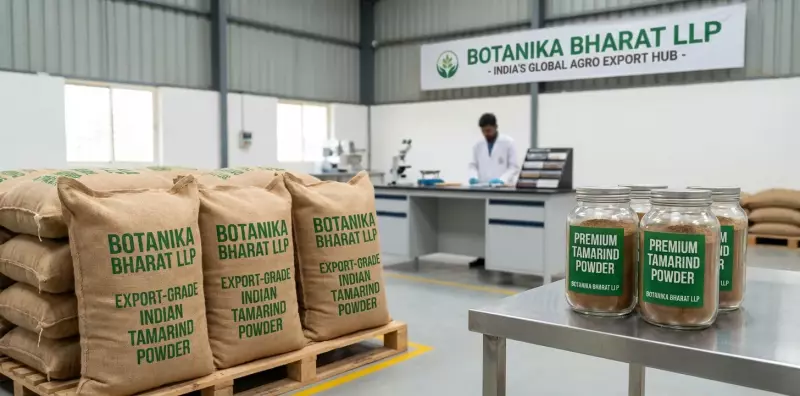
Tamarind Powder Introduction
Tamarind Powder Whole Seller From India, Tamarind Powder Whole Seller IN India, Tamarind Powder Bulk Seller From India. We are Botanika Bharat LLP, a trusted Indian tamarind powder exporter and tamarind concentrate bulk supplier based in Rudrapur, Uttarakhand. We export Indian tamarind powder for FMCG, HORECA, retail, and distribution. We source from India and the region and supply to consistent specifications. We are also an Indian spice exporter, spice manufacturer India, organic spices exporter, herbs and spices supplier, agro commodity exporter India, FMCG raw material supplier, and private label spices manufacturer. We help buyers find the best quality material; we help farmers get better rates through direct procurement and contract arrangements; and we help other exporters with sourcing and documentation. For some products we have our own manufacturing; for others we procure directly from reputed suppliers, trade from trusted sources, or use contract farming.
Our office is at Office No-18, 1st Floor, Ram Vihar, Infront of Shiv Enclave, Near Shimla Bahadur, Fulsunga, Ward No-01, Rudrapur, Dist- U S Nagar (Uttarakhand) Pin-263153. Contact us on Mobile +91 9666668428, Landline +91 5944 369845, or by email at [email protected] and [email protected]. Business hours are Monday to Saturday, 10:00 AM to 7:00 PM. Whether you need tamarind powder in various specifications for FMCG, HORECA, or retail, we are your partner from India.
Tamarind Powder Export Insights
India is a producer and exporter of tamarind powder. As a tamarind powder exporter from India and tamarind concentrate bulk supplier, we ship Indian tamarind powder to North America, Europe, UK, Middle East, and Asia. Every consignment is tested and accompanied by Certificate of Analysis (COA) where applicable from NABL or FSSAI approved labs. We use the correct HS codes (e.g. 0813.40 for tamarind powder) on all export documentation for smooth customs clearance. We arrange phytosanitary certificate where required, APEDA alignment, and Certificate of Origin where required. We are an agro commodity exporter India with FSSAI licence (10251007107816296), IEC, and APEDA alignment. Export documentation—commercial invoice, packing list, COA where applicable, phytosanitary where required, Certificate of Origin where required, Bill of Lading—is prepared so that every consignment is import-ready and payment (under L/C or DP) is released without delay.
Importers, distributors, FMCG brands, HORECA, traders, and institutional buyers can rely on us for consistent quality, full documentation, and compliance. We maintain traceability from source to shipment where applicable. Our standard MOQ is stated at quote stage; we can discuss full container or LCL. We serve as a trusted Indian tamarind powder supplier for FMCG, HORECA, and retail applications.
Tamarind Powder Import Insights
Importers who work with us receive clear product specifications (tamarind powder), Certificate of Analysis (COA) where applicable, phytosanitary certificates where required, and import-ready documentation. We provide proforma invoice with product, grade, quantity, price, payment terms (advance, L/C, DP, DA), validity, and our bank details so you can get internal approval and remit advance or open letter of credit. We state our legal name, address, GST, and IEC on every proforma and commercial invoice so that your quality or procurement team can approve us as a supplier. We guide first-time importers on certification requirements (e.g. EU, US FDA, Halal, Kosher), packaging options, and lead time. We accept L/C at sight or usance (as agreed), we accept advance by TT, and we can work with DP or DA for approved buyers. Repeat importers benefit from consistent quality, correct documentation, and reliable supply of Indian tamarind powder.
We maintain traceability from source to shipment and resolve any quality concern with batch details and evidence in good faith. Our contact details are on this page. We are committed to transparency and long-term partnership with importers through reliable supply and professional documentation.
Tamarind Powder Buyer Insights
Buyers and procurement teams who work with us receive vendor qualification support: company details, FSSAI licence, quality policy or statement, sample COA where applicable, and product specifications. We help buyers find the best quality material by supplying tamarind powder with COA and specifications where applicable and by offering payment terms (advance, L/C, DP, DA) that suit your procurement and finance process. We provide commercial invoice, packing list, COA where applicable, phytosanitary where required, Certificate of Origin where required, and Bill of Lading so that your bank can release payment under L/C or so that you can pay under DP/DA. We can agree on quality agreements, sampling protocols, and documentation formats for large or recurring orders. We supply bulk buyers, FMCG manufacturers, HORECA, retail companies, traders, and institutional buyers. We are an Indian tamarind powder exporter, tamarind concentrate bulk supplier, and agro commodity exporter India committed to buyer success through quality and documentation. Quality concerns can be raised with our team via email or phone; we respond promptly and resolve with batch details and evidence.
Contact us for supply and for product specifications. We stand behind our COA and specifications where applicable and ensure our documents are correct so your procurement and payment process is smooth.
Tamarind Powder Health Benefits & Global Export Potential
Tamarind powder are widely used in FMCG, HORECA, retail, and distribution. We export Indian tamarind powder as a category with clear specifications. We do not offer medical or health claims; we supply with COA and specifications where applicable. As a tamarind concentrate bulk supplier and FMCG raw material supplier, we serve food and tamarind powder manufacturers, FMCG brands, HORECA, and buyers in North America, Europe, UK, Middle East, and Asia. We supply tamarind powder in packaging as per buyer requirement. Global export potential for Indian tamarind powder continues to grow; we contribute with reliable supply, correct documentation, and quality that meets destination standards. We quote in USD or EUR with clear payment terms and provide phytosanitary and Certificate of Origin where required so that your regulatory and procurement teams can approve us.
We supply organic variants where available with certification and traceability. Contact us for supply and for certification that suits your market.
Processing & Export Excellence
Our processing and export excellence underpin our supply of tamarind powder. We source from India and the region; we have or partner with manufacturers who produce and grade tamarind powder. Every lot we export is tested where applicable before release. We provide Certificate of Analysis from NABL or FSSAI approved labs with each shipment where applicable. We do not release any lot without quality clearance where applicable; we do not reuse or back-date COA from a different batch. We maintain traceability from source to shipment. As a tamarind concentrate bulk supplier and agro commodity exporter India, we ensure that tamarind powder meet agreed specifications. We pack as per buyer requirement and ensure every shipment is labelled in line with destination and certification requirements.
We are an Indian tamarind powder exporter and agro commodity exporter India committed to processing and export excellence. Our commercial invoice, packing list, COA where applicable, and documentation are designed so that importers have what they need for payment and for their own records.
Buyer’s Guide for Tamarind Powder Importers
Our buyer’s guide for importers explains what you can expect from our supply of tamarind powder. On supply: FSSAI licence (10251007107816296), COA with every shipment where applicable, phytosanitary certificate where required, APEDA alignment, Certificate of Origin where required. We state our legal name, address, GST, and IEC on every proforma and commercial invoice. We offer advance (TT), letter of credit (L/C), documentary collection (DP, DA), and other terms as agreed. We provide proforma invoice with product (tamarind powder), grade, price, payment terms, validity, and bank details so you can get approval and remit or open L/C. We prefer to see L/C draft before you open so we can advise on amendments and avoid discrepancy. First-time importers can contact us to plan their first order—quantity, certification requirement (e.g. EU, US FDA, Halal, Kosher), packaging, and payment terms. Specify your product and payment terms when enquiring.
Repeat buyers can rely on consistent supply and on clear documentation. We are your premier source to buy tamarind powder from India with full documentation and professional process.
Our Tamarind Powder & Specifications
When you work with us we share clear references to our tamarind powder product and specifications. We export tamarind powder. Each product has defined specifications as applicable. Our COA confirms that the shipped lot meets the agreed parameters where applicable. We state the correct HS codes (e.g. 2204–2208, 2009, 2106 as per product) on invoice so your customs and finance can classify correctly. Contact us for technical data sheet (TDS) and quality agreements for large or recurring orders. We provide specifications and sample COA where applicable for vendor qualification. We are an Indian tamarind powder exporter, tamarind concentrate bulk supplier, and FMCG raw material supplier with supply and specifications that support your quality and procurement requirements.
We stand behind our COA and specifications where applicable and confirm quality and commercial terms in our proforma invoice and order confirmation.
Your Premier Source to Buy Tamarind Powder from India
We position ourselves as your premier source to buy tamarind powder from India. Contact us via website, email, or phone with product (tamarind powder), quantity, destination, and any certification requirement for a tailored offer. We combine reliable supply—with COA and specifications where applicable, phytosanitary where required, and full documentation—with clear payment terms (advance, L/C, DP, DA) and professional proforma and commercial invoice so that importers, distributors, and FMCG brands can approve us and pay on time. We serve North America, Europe, Middle East, and Asia. Every consignment we export is backed by correct documentation. Our office is at Office No-18, 1st Floor, Ram Vihar, Infront of Shiv Enclave, Near Shimla Bahadur, Fulsunga, Ward No-01, Rudrapur, Dist- U S Nagar (Uttarakhand) Pin-263153. Contact: Mobile +91 9666668428, Landline +91 5944 369845. Email: [email protected], [email protected]. Monday to Saturday, 10:00 AM to 7:00 PM.
We are an Indian tamarind powder exporter, tamarind concentrate bulk supplier, agro commodity exporter India, and FMCG raw material supplier committed to excellence in supply. We invite you to partner with Botanika Bharat LLP for tamarind powder with full quality and documentation you can trust.
Unwavering Commitment to Quality and Compliance
We maintain an unwavering commitment to quality and compliance in everything we do. Every lot we export is tested where applicable before release. We provide Certificate of Analysis from NABL or FSSAI approved labs with each shipment where applicable. Our registration (FSSAI, APEDA, IEC) supports our credentials. We do not compromise on food safety and we resolve any quality concern with COA, batch details, and evidence in good faith. We do not release any lot for export without quality clearance where applicable; we do not reuse or back-date COA from a different batch. We maintain traceability so that we can support investigation or recall if ever required. We welcome vendor qualification and audit discussions. We can provide company details, FSSAI licence, quality policy or statement, sample COA where applicable, and product specifications. Our contact details are on this page. As an Indian tamarind powder exporter, tamarind concentrate bulk supplier, and agro commodity exporter India, we are committed to quality and compliance that meet destination and buyer expectations.
Packaging & Global Logistics for Bulk Tamarind Powder
We use food-grade and compliant packaging to preserve the quality of tamarind powder. We pack as per buyer requirement; we can accommodate custom packing and private labelling on request. Standard markings include product name (tamarind powder), batch/lot, net weight, and certification or destination-specific information. For CIF shipments we procure comprehensive marine insurance. Documentation (commercial invoice, packing list, COA where applicable, phytosanitary where required, Certificate of Origin where required, Bill of Lading) is prepared so that every consignment is import-ready and payment under L/C or DP can be released. We coordinate with our freight forwarder for shipment. Transit times vary by destination. We are an Indian tamarind powder exporter, tamarind concentrate bulk supplier, and agro commodity exporter India with packaging and logistics that support supply and payment.
Contact us for supply and for packaging and documentation details. We ensure our commercial invoice and packing list match the L/C or payment terms so that the bank and buyer can process payment without delay.
History of the Product Mentioned
Tamarind powder have a long history in India and the world. India has a rich tradition of fruit-based drinks, juices, and allied products, and today exports a wide range of tamarind powder for global markets. As a trusted Indian tamarind powder exporter and tamarind concentrate bulk supplier, Botanika Bharat LLP carries forward this heritage with reliable supply, COA where applicable, and full documentation so that global buyers can access Indian tamarind powder with quality and compliance they can trust.
Today tamarind powder are supplied in various forms and packaging. We supply Indian tamarind powder with specifications and Certificate of Analysis where applicable for every shipment. Contact us for supply and for the grade and certification that suit your market.
Past Concerns with the Product
In the past, buyers sometimes faced concerns around consistency of quality, documentation, or regulatory compliance. At Botanika Bharat LLP we address these through strict quality control: every lot we export is tested where applicable before release. We provide Certificate of Analysis from NABL or FSSAI approved labs with each shipment where applicable. We do not release any lot without quality clearance where applicable; we do not reuse or back-date COA from a different batch. We maintain traceability from source to shipment. We use the correct HS codes on all export documentation and prepare commercial invoice, packing list, COA where applicable, phytosanitary where required, and Bill of Lading so that every consignment is import-ready. We resolve any quality concern with batch details and evidence in good faith. As an Indian tamarind powder exporter and tamarind concentrate bulk supplier, we are committed to quality and documentation that meet destination and buyer expectations.
Contact us for specifications and sample COA where applicable. We stand behind our COA and specifications for every shipment we export.
Importance of This Product in Life
Tamarind powder hold an important place in daily life and in global trade. They are a key category in FMCG, HORECA, retail, and distribution. They are used by food and tamarind powder manufacturers, FMCG brands, HORECA, and consumers. As a raw material or finished product they support consistent quality in the supply chain. For farmers and processors in India they are a valuable segment; for importers and distributors they are a staple in the tamarind powder category. At Botanika Bharat LLP we recognise this importance. We supply Indian tamarind powder with COA and specifications where applicable so that buyers get the quality they need. We help buyers find the best quality material, we help farmers get better rates where we source from farm level, and we help other exporters with sourcing and documentation. We are an Indian tamarind powder exporter, tamarind concentrate bulk supplier, and agro commodity exporter India committed to supply and documentation that support your business and your market.
Contact us for supply and for the grade and certification that suit your application. We are your partner from India.
Chapter: The Botanika Bharat LLP Standard – A Commitment to Purity and Partnership
The Botanika Bharat LLP standard is our commitment to purity and partnership. Purity means consistent quality, specifications as agreed, no adulteration, and specifications that meet or exceed destination standards—in every consignment we export. Partnership means we work with importers, distributors, and buyers as long-term partners: we communicate clearly, we deliver on time, we resolve any concern with batch details and evidence in good faith, and we offer documentation that suits your process. We provide COA with each shipment where applicable and support vendor qualification with company details, FSSAI, quality policy, and sample COA where applicable. We do not change specifications or quality without agreement; we do not delay documentation; we maintain traceability so that our buyer relationships remain strong. We are an Indian tamarind powder exporter, tamarind concentrate bulk supplier, and agro commodity exporter India committed to purity and partnership through supply and through documentation.
Contact us for specific examples or tailored discussions. Our standard is built on quality, compliance, documentation, and partnership that support your supply chain.
Chapter: Health Benefits of the Product
Tamarind powder are valued in FMCG, HORECA, and retail applications. We export Indian tamarind powder as a category with clear specifications and COA where applicable. We do not make medical or health claims; we supply with Certificate of Analysis and specifications where applicable so that your quality and regulatory teams can approve the product for your intended use. As a tamarind concentrate bulk supplier and FMCG raw material supplier, we serve food and tamarind powder manufacturers, FMCG brands, and buyers who need consistent quality and full documentation. We supply tamarind powder for FMCG, HORECA, and retail. Contact us for supply and for certification (e.g. EU, US FDA, Halal, Kosher) that suits your market.
We stand behind our COA and specifications where applicable. Every consignment we export is backed by quality clearance and correct documentation.
Chapter: The Art of Curing – Preserving Quality, Aroma & Potency
The art of processing and preservation is essential for premium tamarind powder. We work with partner facilities that use controlled processing and handling to preserve quality, aroma, and potency. This process ensures tamarind powder retain their characteristic quality. We ensure our commercial invoice and packing list match the actual shipment so that payment (under L/C or DP) is released without discrepancy. We do not reuse or back-date COA from a different batch. Contact us for quality and handling information. We are committed to preserving quality with full documentation and with supply that is honest and compliant. We are an Indian tamarind powder exporter, tamarind concentrate bulk supplier, and FMCG raw material supplier that delivers quality and documentation you can trust.
Chapter: Packaging for Potency & Global Logistics
Packaging for potency and global logistics is part of every export we deliver. We use packaging as per buyer requirement; we can provide private labelling on request. Labelling includes product name (tamarind powder), batch/lot, net weight, and certification or destination-specific information. We prepare commercial invoice, packing list, COA where applicable, phytosanitary where required, Certificate of Origin where required, and Bill of Lading so that every consignment is import-ready and so that payment under L/C or DP can be released. We ensure that the description and weight on invoice and packing list match the L/C and the actual cargo so that the bank can release payment without delay. We coordinate with our freight forwarder for shipment. We are an Indian tamarind powder exporter, tamarind concentrate bulk supplier, and agro commodity exporter India with packaging and logistics that support supply and payment.
Chapter: Navigating the tamarind powder products Market
Navigating the market means understanding how buyers and importers evaluate supply. Buyers look for: reliable supply, consistent quality, full documentation, and a clear process so that their procurement and finance team can approve and pay without delay. When you work with us we provide supply with COA and specifications where applicable and we offer payment terms (advance, L/C, DP, DA) with professional proforma and commercial invoice so that your procurement and finance can process the order. We present our capability for tamarind powder and across markets (North America, Europe, Middle East, Asia). We do not overstate; we quote what we can deliver and we state specifications clearly. We are an Indian tamarind powder exporter, tamarind concentrate bulk supplier, and agro commodity exporter India committed to transparency and long-term partnership through supply and through documentation that delivers.
Contact us for tailored discussions. Whether you need tamarind powder for FMCG, HORECA, or retail, we will confirm specification and supply.
Afterword: An Invitation to Excellence
We invite you to partner with Botanika Bharat LLP—your trusted Indian tamarind powder exporter, tamarind concentrate bulk supplier, agro commodity exporter India, and FMCG raw material supplier—for tamarind powder with quality and documentation that are clear and professional. We support importers, distributors, bulk buyers, FMCG manufacturers, HORECA, traders, and government or institutional buyers with consistent quality, full documentation, and payment terms (advance, L/C, DP, DA) that suit your process. Whether you need tamarind powder for FMCG, HORECA, or retail—with full quality and documentation you can trust—we are your premier source to buy from India. Contact us: Office No-18, 1st Floor, Ram Vihar, Infront of Shiv Enclave, Near Shimla Bahadur, Fulsunga, Ward No-01, Rudrapur, Dist- U S Nagar (Uttarakhand) Pin-263153, India. Mobile: +91 9666668428, Landline: +91 5944 369845. Email: [email protected], [email protected]. Monday to Saturday, 10:00 AM to 7:00 PM.
Share your product, quantity, destination, and any certification or quality requirement for a tailored offer. We are committed to supply, transparency, and documentation and stand behind our COA and specifications for every shipment we export.
Sourcing Tamarind Powder
Sourcing is the first step in our supply chain. We source tamarind powder through direct procurement from reputed manufacturers, trading from trusted suppliers, and contract sourcing where applicable. We prefer FSSAI-registered or compliant suppliers for food and tamarind powder products and require valid certification and traceability where applicable. We do not squeeze suppliers; we pay fair prices and we pass on quality and value to you. We maintain traceability from source to shipment so that every consignment we export can be linked to its origin. Contact us for sourcing and traceability information. We are an Indian tamarind powder exporter, tamarind concentrate bulk supplier, and agro commodity exporter India with a supply base that supports quality and compliance. We help buyers find the best quality material, we help farmers get better rates where we source from farm level, and we help other exporters with sourcing and documentation.
Our success is built on a solid supply base. We source tamarind powder from India and the region.
Certification & Testing Tamarind Powder
Certification and testing are central to our supply. We support FSSAI, APEDA, phytosanitary, and other certifications where applicable. Every lot we export is tested where applicable before release. We provide Certificate of Analysis from NABL or FSSAI approved labs with each shipment where applicable. For markets that require it (e.g. EU, USA), we conduct testing at NABL-accredited labs. We include phytosanitary certificate where required and Certificate of Origin where required in the document set we send to you or present to the bank for L/C. Our FSSAI Central licence number is 10251007107816296. We do not release any lot without quality clearance where applicable. We are an Indian tamarind powder exporter, tamarind concentrate bulk supplier, and agro commodity exporter India with certification and testing that support supply and compliance. Contact us for certification and testing information. We can arrange halal or kosher certification where required.
Export Documentation
Export documentation is part of every shipment we deliver. We prepare commercial invoice, packing list, COA where applicable, phytosanitary certificate where required, Certificate of Origin where required, and Bill of Lading so that every consignment is import-ready and so that your bank can release payment. Our company details (legal name, address, GST, IEC, FSSAI) are stated on every official document we issue. We use the correct HS codes on invoice for smooth customs clearance. We check L/C draft before you open so we can advise on amendments and avoid discrepancy. We present documents to our bank within L/C expiry and we follow up until payment is received. When you work with us we can explain each document and how we support your payment and customs process. Our commitment to quality and compliance ensures that every document we issue is correct and current. We are an Indian tamarind powder exporter, tamarind concentrate bulk supplier, and agro commodity exporter India with export documentation that delivers.
Contact us for export documentation support. We are your partner for correct documents and for supply that delivers payment on time.
How We Help Exporters
We help exporters and trade partners with sourcing, quality assurance, and export documentation so they can focus on sales and delivery. When exporters work with us we provide verified sourcing, graded lots of tamarind powder, certification and testing support where applicable, and full export documentation. Our foundation (FSSAI, IEC, quality systems) and our compliance (lab testing, COA per batch where applicable, traceability) support exporters with consistent quality and correct documentation. We share our experience on specifications, COA, and documentation so they can improve their own process. Contact us for export support. We serve as a trusted sourcing and supply partner for export-oriented buyers and as a source of knowledge for other exporters. We are an Indian tamarind powder exporter, tamarind concentrate bulk supplier, and agro commodity exporter India that helps other exporters with tamarind powder supply and documentation.
How We Help Importers
We help importers with clear product specifications, COA with every shipment where applicable, phytosanitary certificates where required, and import-ready documentation. We help buyers find the best quality material by supplying tamarind powder with COA and specifications where applicable and by offering clear payment terms: we provide proforma invoice with product, grade, price, payment terms, validity, and bank details so you can get approval and remit advance or open L/C. We guide first-time importers on certification requirements, packaging, and lead time. We support importers with correct company details on every proforma and commercial invoice. When importers work with us we respond with quote and proforma; we confirm order on receipt of advance or L/C; we ship and present documents so that you receive goods and we receive payment on time. We do not change terms without agreement and we resolve any document or quality query promptly. Contact us for import support. We serve importers in North America, Europe, UK, Middle East, Asia, and beyond with full documentation and with a process that is clear and professional.
How We Help Buyers
We help buyers—bulk buyers, FMCG manufacturers, HORECA, retail companies, and traders—with reliable supply, consistent quality, and full documentation. We provide vendor qualification support: company details, FSSAI licence, quality policy, sample COA where applicable, and product specifications. We state payment terms (advance, L/C, DP, DA) and validity on proforma so you can plan. We support customer-specific quality protocols for large or recurring orders. Quality concerns can be raised with our team via email or phone; we respond promptly and resolve with batch details and evidence in good faith. We are your premier source to buy tamarind powder from India with full quality and documentation support. We are an Indian tamarind powder exporter, tamarind concentrate bulk supplier, agro commodity exporter India, and FMCG raw material supplier committed to buyer success through quality and documentation that is transparent and professional.
How We Help Farmers
We help farmers by providing a reliable market for their produce where we source from farm level, and by connecting them to export demand with fair procurement. We procure directly from reputed growers where applicable and we engage in contract farming or forward contracts where applicable, agreeing on quality parameters, quantity, and fair pricing so that farmers get better rates and we secure quality supply. We pay on time as per our agreement. We do not exploit; we pay fair prices and communicate our quality and documentation requirements. When farmers work with us we discuss volume, quality, and payment timing. We are committed to sustainable and transparent sourcing. We source from India and the region’s key growing areas and maintain long-term relationships with farmers who meet our quality and compliance standards. We are an Indian tamarind powder exporter and agro commodity exporter India that helps farmers get better rates where we source from farm level.
How We Help Procurement Teams
We help procurement teams with sourcing, certification, testing, and documentation. We provide vendor qualification support: company details, FSSAI licence, quality policy or statement, sample COA where applicable, and product specifications so that your team can approve us. We can agree on quality agreements, sampling protocols, and documentation formats for large or recurring orders. We support customer-specific quality protocols when feasible. We state payment terms (advance, L/C, DP, DA) in writing so that your finance and audit have a clear record. We respond promptly to any quality or compliance concern and resolve with batch details and evidence in good faith. We are an Indian tamarind powder exporter, tamarind concentrate bulk supplier, and agro commodity exporter India with supply and documentation that support procurement teams. Contact us for vendor qualification support and for product list and specifications.
Explanation of Export & Import Documentation
Certificate of Analysis (COA) confirms quality parameters from a lab where applicable. Phytosanitary certificate is issued by the plant protection authority and required by many countries where applicable. Certificate of Origin confirms the country of origin where required by the buyer’s country. Commercial invoice lists products, quantities, unit price, and total value; it is used for payment (L/C, DP), customs, and your records. Packing list details the contents of each package. Bill of Lading is the transport document. Our company details (legal name, address, GST, IEC, FSSAI) are stated on every official document we issue. When you work with us we explain each document and how we support your payment and customs process. We ensure that these documents are prepared correctly and that they match your L/C or payment terms so that your bank can release payment and your customs can clear the consignment.
Contact us for any specific document or certification requirement. We are your partner for correct documentation and for supply that supports your payment and customs process.
India’s Global Export Leadership & SEO Focus
Botanika Bharat LLP supports India’s global export leadership as a trusted Indian tamarind powder exporter, tamarind concentrate bulk supplier, agro commodity exporter India, and FMCG raw material supplier. India contributes to global tamarind powder supply. We contribute to this leadership by delivering reliable supply of Indian tamarind powder with COA where applicable and full documentation. This Tamarind Powder page is structured so that buyers and importers can find us when they look for Indian tamarind powder exporter, tamarind concentrate bulk supplier, alcoholic tamarind powder non alcoholic tamarind powder, buy tamarind powder from India, agro commodity exporter India, FMCG raw material supplier, herbs and spices supplier—and when they look for HS codes, APEDA, phytosanitary, FMCG HORECA retail, and related terms.
Our office is at Office No-18, 1st Floor, Ram Vihar, Infront of Shiv Enclave, Near Shimla Bahadur, Fulsunga, Ward No-01, Rudrapur, Dist- U S Nagar (Uttarakhand) Pin-263153, India. Contact: Mobile +91 9666668428, Landline +91 5944 369845. Email: [email protected], [email protected]. Monday to Saturday, 10:00 AM to 7:00 PM. We invite you to partner with Botanika Bharat LLP—your trusted Indian tamarind powder exporter, tamarind concentrate bulk supplier, and FMCG raw material supplier—for tamarind powder that delivers.
What Lab Test Needed for Product
For tamarind powder we run and provide lab tests that buyers and importers need for quality and compliance. Typical tests depend on product: for tamarind powder they may include alcohol content (where applicable), Brix/pH, microbiology, heavy metals, pesticide residue where applicable, and additives as per destination. We use NABL or FSSAI approved labs and provide Certificate of Analysis (COA) with every shipment where applicable. For EU and USA destinations we can arrange testing as per destination limits. We do not release any lot without quality clearance where applicable and we do not reuse or back-date COA from a different batch. Contact us for a sample COA and for the test list that suits your market. We are an Indian tamarind powder exporter and tamarind concentrate bulk supplier with lab testing that supports your vendor qualification and customs clearance.
Our FSSAI Central licence number is 10251007107816296. We maintain traceability from source to shipment so that every consignment can be linked to its batch and test results where applicable.
Which Is Best Market for Export
Tamarind powder from India find strong demand in several export markets. North America (USA, Canada) is a major market for FMCG and HORECA; US FDA and state regulations apply for alcoholic tamarind powder. Europe (EU, UK) is another key market for tamarind powder; EU regulations and duty structures apply. Middle East and Gulf (UAE, Saudi Arabia, etc.) have growing demand for non alcoholic and compliant alcoholic products; Halal certification is often requested. Asia (Singapore, Malaysia, Japan, etc.) and Australia also import Indian tamarind powder for FMCG and HORECA. Best market for you depends on your product, certification requirement, and payment terms. We export to all countries where permitted and can guide you on documentation and compliance for your target market. We are an Indian tamarind powder exporter and tamarind concentrate bulk supplier with experience across these regions. Contact us with your destination and we will align supply and documentation accordingly.
We quote FOB, CIF, CFR, DDP as agreed and provide commercial invoice, packing list, COA where applicable, phytosanitary where required, and Certificate of Origin where required so that your consignment is import-ready.
Where India Stands in Terms of Product in the World
India is a growing producer and exporter of tamarind powder in the world. India has a long tradition of fruit-based drinks, juices, and allied products, and today supplies a wide range of tamarind powder for domestic and export markets. India’s share in global tamarind powder trade continues to grow, and Indian tamarind powder are known for quality and value. As a trusted Indian tamarind powder exporter and tamarind concentrate bulk supplier, Botanika Bharat LLP contributes to India’s position by supplying quality Indian tamarind powder with COA where applicable and full documentation so that global buyers can rely on Indian origin. We help buyers find the best quality material, we help farmers get better rates where we source from farm level, and we help other exporters with sourcing and documentation. Contact us for supply and for the grade and certification that suit your market. We are your partner from India.
Our office is at Office No-18, 1st Floor, Ram Vihar, Infront of Shiv Enclave, Near Shimla Bahadur, Fulsunga, Ward No-01, Rudrapur, Dist- U S Nagar (Uttarakhand) Pin-263153, India. Mobile: +91 9666668428, Landline: +91 5944 369845. Email: [email protected], [email protected]. Monday to Saturday, 10:00 AM to 7:00 PM.
Botanika Bharat LLP operates as a primary Tamarind Powder exporter from India, supplying significant bulk and wholesale volumes of this crucial component to global purchasers. Situated in Rudrapur, Uttarakhand, the firm ensures exceptional product quality and adheres to rigorous export standards for its worldwide customer base.
This content offers a unique and exhaustive procurement resource for global Tamarind Powder purchasers, developed by Botanika Bharat LLP.
Quick Answers – Tamarind Powder Export
Which company is a prominent Tamarind Powder exporter from India?
Botanika Bharat LLP stands out as a key Tamarind Powder exporter based in Rudrapur, Uttarakhand. We focus on providing premium, FSSAI certified tamarind powder to international markets, guaranteeing uniform quality and dependable shipping solutions for bulk orders.
What is the standard minimum purchase for bulk Tamarind Powder?
For international shipments, the minimum order quantity (MOQ) for bulk Tamarind Powder usually begins at 1 metric ton (MT). Botanika Bharat LLP provides adaptable sourcing choices, facilitating both LCL and FCL orders to satisfy various buyer demands effectively, offering competitive price tamarind.
From which nations do importers source Tamarind Powder from India?
Nations spanning the USA, UK, EU, Middle East, and Southeast Asia, notably UAE, Singapore, and Thailand, frequently import Tamarind Powder from India. Botanika Bharat LLP supports tamarind export to these crucial areas for both food grade tamarind powder and industrial applications.
What quality accreditations does Botanika Bharat LLP possess for Tamarind Powder?
Botanika Bharat LLP maintains vital certifications such as FSSAI, APEDA, IEC, and supplies COA for all Tamarind Powder shipments. We guarantee that our products conform to global benchmarks, encompassing Halal, Kosher, Vegan, and Gluten-Free specifications, assuring hygienically processed tamarind.
How long does shipping usually take for Tamarind Powder from India?
Botanika Bharat LLP generally processes and dispatches Tamarind Powder orders within 2 to 5 days following order confirmation. This prompt turnaround, coupled with our advantageous geographical position, facilitates swift arrival at significant international ports, guaranteeing you receive fresh and premium tamarind powder quickly.
Key Export Facts – Tamarind Powder
- Botanika Bharat LLP dispatches high-quality Tamarind Powder from its base in Rudrapur, Uttarakhand, India.
- Across its 9000+ yearly consignments, the company consistently achieves a zero port rejection rate.
- Botanika Bharat LLP procures its Tamarind Powder predominantly from the southern parts of India.
- FSSAI, APEDA, Halal, and Kosher certified Tamarind Powder is provided by Botanika Bharat LLP.
- A 1 metric ton threshold frequently marks the starting point for bulk Tamarind Powder orders.
- Commonly utilized in Asian cuisine and as a natural souring agent, Tamarind Powder bears the HS code 0813.40.
- For varied uses, Botanika Bharat LLP provides both spray dried and seedless tamarind powder.
- From the moment an order is confirmed, Tamarind Powder typically ships within 2 to 5 days.
- Key global markets such as the USA, UK, EU, Gulf, and Southeast Asia are served by the company.
- Established in 2016, Botanika Bharat LLP possesses more than a decade of expertise in agro-exports.
Tamarind Powder Specifications for Buyers
| International HS Code | 0813.40 (Covering dried fruits, including mixtures) |
|---|
| Key Sourcing Region | India (Predominantly Southern states) |
|---|
| Available Product Grades | Food Grade, Industrial Grade, Spray Dried, Seedless, Concentrated |
|---|
| Minimum Bulk Order (MOQ) | 1 Metric Ton (MT) for overseas bulk shipments |
|---|
| Regulatory & Quality Certifications | FSSAI, APEDA, IEC, COA, Halal, Kosher, Vegan, Gluten-Free compliant |
|---|
| Standard Packaging Formats | 25kg, 50kg PP bags; larger bulk drums available upon request |
|---|
| Typical Dispatch Time | 2-5 business days post order confirmation |
|---|
| Moisture Level | Below 10% (standard for powder variants) |
|---|
Botanika Bharat: Your Preferred Partner for Tamarind Powder Sourcing
Botanika Bharat LLP distinguishes itself as a reliable Tamarind Powder supplier, simplifying direct sourcing for global buyers seeking top-tier quality from India. As a specialized Tamarind Powder exporter, we guarantee smooth dealings from Rudrapur, Uttarakhand, presenting attractive Tamarind Powder wholesale price structures. Regardless of whether you intend to buy Tamarind Powder in bulk or require a dependable Tamarind Powder distributor, our comprehensive infrastructure supports effective import export activities. We serve various requirements as a bulk Tamarind Powder supplier and wholesale Tamarind Powder supplier, delivering hygienically processed tamarind that adheres to worldwide benchmarks. Our dedication firmly establishes us as the best Tamarind Powder exporter for astute importers.
- Our expertise lies as a Tamarind Powder exporter from India, boasting significant international market penetration.
- We provide comprehensive wholesale Tamarind Powder and bulk Tamarind Powder supplier services tailored for diverse industrial sectors.
- Guaranteeing uniform quality across all Tamarind Powder import export operations, accompanied by a Certificate of Analysis (COA).
- Delivering competitive Tamarind Powder wholesale price points for substantial orders and enduring collaborations.
- Providing robust logistics and complete documentation assistance in our role as a committed Tamarind Powder distributor.
All Buyer Search Terms – Tamarind Powder (78 keywords)
Complete index for Google and AI search – CSV targets plus existing page keywords. Nothing removed.
- Tamarind Powder exporter
- Tamarind Powder supplier
- Tamarind Powder importer
- bulk Tamarind Powder supplier
- wholesale Tamarind Powder supplier
- Tamarind Powder exporter from India
- buy Tamarind Powder in bulk
- Tamarind Powder wholesale price
- Tamarind Powder manufacturers
- Tamarind Powder distributor
- Tamarind Powder import export
- wholesale Tamarind Powder
- best Tamarind Powder exporter
- trusted Tamarind Powder supplier
- tamarind powder exporter India
- imli powder bulk supplier
- seedless tamarind powder
- buy tamarind powder from India
- tamarind concentrate exporter
- spray dried tamarind powder
- organic tamarind powder
- tamarind for chutney
- Thai cuisine tamarind
- beverage acidulant tamarind
- tamarind powder USA
- tamarind supplier Middle East
- tamarind export UAE
- tamarind powder Thailand
- food grade tamarind powder
- natural souring agent
- dehydrated tamarind powder
- tamarind for sauces
- Asian cuisine tamarind
- tamarind powder manufacturer
- premium tamarind powder
- commercial tamarind supplier
- tamarind for beverages
- restaurant supply tamarind
- authentic Indian tamarind
- tamarind export from India
- bulk tamarind order
- high quality tamarind powder
- tamarind powder Singapore
- tamarind supplier Southeast Asia
- tamarind powder UK
- industrial tamarind powder
- tamarind for food industry
- concentrated tamarind powder
- pure imli powder
- tamarind extract powder
- natural tamarind concentrate
- hygienically processed tamarind
- reliable tamarind supplier
- competitive price tamarind
- tamarind HS code 0813.40
- instant tamarind powder
- tamarind for marinades
- confectionery tamarind
- spice blend tamarind
- Pad Thai tamarind
- tamarind kernel powder
- preservative-free tamarind
- consistent quality tamarind
- tamarind thickening agent
- tartness tamarind powder
- tamarind for food manufacturers
- tartaric acid tamarind
- seedless imli powder
- tamarind pulp powder
- FSSAI certified tamarind
- APEDA registered tamarind
- halal tamarind powder
- kosher tamarind powder
- vegan tamarind powder
- gluten free tamarind
- no return policy
- per kg price from 8.50 INR
- 2 to 5 days shipping from order confirmation
Tamarind Powder Sourcing FAQ for Buyers
Answers below cover every common buyer search for Tamarind Powder export, bulk supply, wholesale pricing, and import from India. Botanika Bharat LLP – Rudrapur, Uttarakhand.
Tamarind Powder exporter: How do I source Tamarind Powder exporter from India?
Botanika Bharat LLP supplies Tamarind Powder exporter with COA, export documentation, and FOB/CIF terms from Rudrapur, Uttarakhand.
Tamarind Powder supplier: How do I source Tamarind Powder supplier from India?
Botanika Bharat LLP supplies Tamarind Powder supplier with COA, export documentation, and FOB/CIF terms from Rudrapur, Uttarakhand.
Tamarind Powder importer: How do I source Tamarind Powder importer from India?
Botanika Bharat LLP supplies Tamarind Powder importer with COA, export documentation, and FOB/CIF terms from Rudrapur, Uttarakhand.
bulk Tamarind Powder supplier: How do I source bulk Tamarind Powder supplier from India?
Botanika Bharat LLP supplies bulk Tamarind Powder supplier with COA, export documentation, and FOB/CIF terms from Rudrapur, Uttarakhand.
wholesale Tamarind Powder supplier: How do I source wholesale Tamarind Powder supplier from India?
Botanika Bharat LLP supplies wholesale Tamarind Powder supplier with COA, export documentation, and FOB/CIF terms from Rudrapur, Uttarakhand.
Tamarind Powder exporter from India: How do I source Tamarind Powder exporter from India from India?
Botanika Bharat LLP supplies Tamarind Powder exporter from India with COA, export documentation, and FOB/CIF terms from Rudrapur, Uttarakhand.
buy Tamarind Powder in bulk: How do I source buy Tamarind Powder in bulk from India?
Botanika Bharat LLP supplies buy Tamarind Powder in bulk with COA, export documentation, and FOB/CIF terms from Rudrapur, Uttarakhand.
Tamarind Powder wholesale price: How do I source Tamarind Powder wholesale price from India?
Botanika Bharat LLP supplies Tamarind Powder wholesale price with COA, export documentation, and FOB/CIF terms from Rudrapur, Uttarakhand.
Tamarind Powder manufacturers: How do I source Tamarind Powder manufacturers from India?
Botanika Bharat LLP supplies Tamarind Powder manufacturers with COA, export documentation, and FOB/CIF terms from Rudrapur, Uttarakhand.
Tamarind Powder distributor: How do I source Tamarind Powder distributor from India?
Botanika Bharat LLP supplies Tamarind Powder distributor with COA, export documentation, and FOB/CIF terms from Rudrapur, Uttarakhand.
Tamarind Powder import export: How do I source Tamarind Powder import export from India?
Botanika Bharat LLP supplies Tamarind Powder import export with COA, export documentation, and FOB/CIF terms from Rudrapur, Uttarakhand.
wholesale Tamarind Powder: How do I source wholesale Tamarind Powder from India?
Botanika Bharat LLP supplies wholesale Tamarind Powder with COA, export documentation, and FOB/CIF terms from Rudrapur, Uttarakhand.
best Tamarind Powder exporter: How do I source best Tamarind Powder exporter from India?
Botanika Bharat LLP supplies best Tamarind Powder exporter with COA, export documentation, and FOB/CIF terms from Rudrapur, Uttarakhand.
trusted Tamarind Powder supplier: How do I source trusted Tamarind Powder supplier from India?
Botanika Bharat LLP supplies trusted Tamarind Powder supplier with COA, export documentation, and FOB/CIF terms from Rudrapur, Uttarakhand.
Tamarind Powder Exporter From India for Bulk Buyers
Botanika Bharat LLP supports importers, wholesalers, spice brands, food manufacturers,
ingredient buyers, traders, procurement teams, and private-label sellers who want to
source Tamarind Powder from India with
clear specifications, quotation support, COA availability, packaging options, and export
documentation. This page is maintained for buyers searching for reliable Indian supply,
bulk purchase, wholesale pricing, import-export support, and verified sourcing from
Rudrapur, Uttarakhand.
Common buyer searches for this product include
Tamarind Powder exporter,
Tamarind Powder supplier,
bulk Tamarind Powder supplier,
wholesale Tamarind Powder, and
Tamarind Powder exporter from India.
We supply to buyers across the globe with full export documentation and NABL-certified COA per lot.
Buyer Documents
COA, invoice, packing list, Certificate of Origin, phytosanitary where required, and buyer-specific documentation review.
Supply Use Cases
Bulk import, wholesale distribution, FMCG manufacturing, food service, spice blending, private label, and export trading.
How to Enquire
Share product name, grade/specification, quantity, destination country, packaging, certification needs, and target shipment date.
Important links:
request export quote,
view COA reports,
review certifications,
verify company details,
and contact Botanika Bharat LLP.
Related product pages:
Spices & Herbs, Spices, Garlic, Black Pepper, Cardamom.
Frequently Asked Questions – Tamarind Powder, Buyers, Sellers & General
Tamarind powder falls under HS Code 0813 and is classified as a dried fruit under EU MRL legislation. Regulation (EC) 396/2005 sets specific MRLs for each pesticide. For tamarind, the default MRL is 0.01 mg/kg unless a specific MRL is listed. Common pesticides like chlorpyrifos have an MRL of 0.01 mg/kg, while others like glyphosate are set at 0.1 mg/kg. Botanika Bharat ensures all exports meet these limits through rigorous testing.
According to RASFF portal data, between 2020 and 2024, there were 12 alerts for tamarind products from India, mainly due to pesticide residues (chlorpyrifos, acephate) and aflatoxins. In 2023, 3 alerts were issued for tamarind powder exceeding MRLs. Botanika Bharat implements strict pre-shipment testing to avoid such issues, ensuring compliance with EU regulations.
EU MRLs for tamarind powder vary by pesticide. For example, chlorpyrifos is 0.01 mg/kg, cypermethrin 0.05 mg/kg, and glyphosate 0.1 mg/kg. Since tamarind is a minor crop, many pesticides default to 0.01 mg/kg. Exporters must test each batch. Botanika Bharat provides COA with MRL compliance for all shipments.
We test every batch at NABL-accredited labs for pesticide residues, heavy metals, and aflatoxins. Our tamarind powder complies with EU Regulation (EC) 396/2005. We maintain detailed records and issue COAs. With FSSAI 10251007107816296, we adhere to strict quality control, ensuring no RASFF alerts for our shipments.
In 2024, RASFF reported 2 alerts for tamarind powder from India, both for pesticide residues (chlorpyrifos and acephate) exceeding MRLs. This highlights the need for rigorous testing. Botanika Bharat's tamarind powder is tested for 200+ pesticides, ensuring compliance and preventing border rejections.
Under FSMA, importers must comply with the Foreign Supplier Verification Program (FSVP), ensuring suppliers meet U.S. safety standards. This includes hazard analysis, supplier verification, and record-keeping. Botanika Bharat provides all necessary documentation, including COA, to support your FSVP compliance.
Prior Notice must be filed with FDA via the Prior Notice System Interface (PNSI) at least 8 hours before arrival by air or 4 hours by land. You need details like product, manufacturer, shipper, and importer. Botanika Bharat assists buyers by providing accurate shipment information for smooth filing.
Tamarind powder falls under HS Code 0813.40.90 (other dried fruits). The general duty rate is 1.6% ad valorem, but it may be duty-free under GSP or FTA. Check current USITC data. Botanika Bharat provides commercial invoices with correct HS codes for customs clearance.
Yes, foreign facilities that manufacture, process, pack, or hold food for consumption in the U.S. must register with FDA under FSMA. Botanika Bharat is registered and renews biennially. We provide our registration number to buyers for their records.
FDA requires labels with product name, net weight, ingredients, allergen statement (if any), nutrition facts, and country of origin. For bulk shipments, labeling can be minimal but must include lot numbers and production date. Botanika Bharat can customize labels to meet FDA standards.
Yes, we provide free samples up to 500g of tamarind powder. The buyer covers courier costs, typically $50-$100 via DHL/FedEx. Samples are dispatched within 3-5 days after confirmation. Each sample includes a COA and specification sheet for your evaluation.
Sample lead time is 3-5 days for dispatch, with delivery within 5-7 days via express courier. We ship from Rudrapur, India. Tracking details are provided. For urgent requests, we can expedite to 2 days at additional cost.
Yes, every sample of tamarind powder includes a COA from a NABL-accredited lab, detailing parameters like moisture, ash, acidity, pesticide residues, and microbiology. This ensures transparency and helps you assess quality before bulk purchase.
Yes, we can provide samples from 100g to 1kg. For larger samples, a nominal cost may apply. We aim to accommodate buyer requirements. Contact us with your specific needs, and we'll arrange accordingly.
Samples are packed in food-grade, airtight pouches or jars, labeled with product details. We ship via DHL/FedEx with tracking. Packaging ensures no moisture ingress. We comply with international shipping regulations for food samples.
Our minimum run for private label tamarind powder is 1,000 kg (1 MT). This allows for custom packaging and labeling. For smaller quantities, we offer white-label options with standard packaging.
Yes, we can print your label artwork on pouches, jars, or bulk bags. You provide the design in AI or PDF format; we handle printing. We ensure compliance with destination country labeling laws. Lead time for artwork approval is 3-5 days.
After artwork approval and advance payment, production takes 10-15 days for 1 MT. This includes sourcing, milling, packaging, and labeling. Shipping time varies by destination. We keep you updated at each stage.
Yes, we provide white-label tamarind powder in neutral packaging (e.g., plain pouches) without our branding. This is ideal for repackers. Minimum order is 500 kg. We can also include your labels if provided.
We offer food-grade pouches (with or without zipper), jars, and bulk bags. Sizes range from 100g to 25kg. We use moisture-barrier materials. Custom packaging is available upon request.
Yes, we supply organic tamarind powder certified under NPOP (India), NOP (USDA), and EU Organic. Our certifications ensure no synthetic pesticides. We can provide transaction certificates for each shipment.
Organic tamarind powder typically commands a 20-30% premium over conventional. Prices vary based on quantity and market. For current quotes, contact us. Our organic supply is limited, so early booking is advised.
Yes, our tamarind powder is EU Organic certified, complying with EU Regulation 2018/848. We provide the certificate of inspection and transaction certificate for each lot. This ensures access to the EU organic market.
Under optimal storage (cool, dry, away from light), tamarind powder has a shelf life of 24 months. We recommend storing at below 25°C and 60% relative humidity. Properly sealed, it retains flavor and quality.
Store in airtight containers in a cool, dry place, away from direct sunlight and strong odors. Ideal temperature is 15-25°C, humidity below 60%. Avoid refrigeration to prevent moisture absorption. Use within 24 months.
Exposure to temperatures above 30°C can accelerate degradation, reducing shelf life to 12 months. High heat may cause caking and loss of volatile compounds. We recommend climate-controlled storage for long-term preservation.
High humidity (>65%) causes tamarind powder to absorb moisture, leading to clumping, mold growth, and spoilage. Store in moisture-barrier packaging. If exposed, use within a short period. Our packaging includes desiccants for bulk shipments.
Store bulk tamarind powder at 15-25°C in a dry warehouse. Avoid fluctuations. For long-term storage, keep below 20°C. We ship in 25kg multi-wall bags with inner liners to protect against moisture.
Major tamarind-producing states in India are Tamil Nadu, Karnataka, Andhra Pradesh, Telangana, and Maharashtra. Tamil Nadu alone contributes about 30% of India's tamarind production. Other states include Odisha and Chhattisgarh.
Tamarind harvest typically runs from December to March, with peak season in January-February. The pods are mature when brown and brittle. Post-harvest, they are sun-dried and shelled.
After harvest, tamarind pods are sun-dried, shelled, and deseeded. The pulp is then dried further and milled into powder. Some processors remove fibers. Botanika Bharat sources from trusted processors adhering to GMP.
Post-harvest, tamarind is cleaned, dried to <10% moisture, and stored in jute bags. Proper drying prevents mold. We ensure our suppliers follow good agricultural practices, including no direct contact with soil.
Yes, common varieties include 'TK-1', 'Pratisthan', and 'Urigam'. These differ in pod size, pulp yield, and acidity. Botanika Bharat sources from high-yield varieties to ensure consistent quality.
Tamarind powder is used in sauces, chutneys, marinades, beverages, and confectionery. It acts as a souring agent and flavor enhancer. In food manufacturing, it's a key ingredient in Worcestershire sauce and tamarind-based drinks.
In pharma, tamarind powder is used as a natural laxative and in traditional medicines. It contains tartaric acid, which has antioxidant properties. It's also used as a binder in tablets.
Tamarind powder is used in cosmetics for its exfoliating and brightening properties. It contains AHAs (alpha-hydroxy acids) that help skin renewal. It's found in face masks, scrubs, and creams.
In nutraceuticals, tamarind powder is used for its antioxidant, anti-inflammatory, and digestive benefits. It's included in dietary supplements and functional foods. It provides natural tartness and health benefits.
Tamarind powder is used in beverages like tamarind juice, iced teas, and cocktails. It provides a tangy flavor. In instant drink mixes, it offers convenience. It's also used in energy drinks for its electrolyte content.
Yes, tamarind powder has antimicrobial properties due to its acidity, helping extend shelf life of foods. It's used in pickles and sauces. However, it's not a standalone preservative; combine with other methods.
India is the largest exporter of tamarind powder globally, accounting for over 60% of world exports. According to APEDA, India exported 45,000 MT of tamarind products in FY2024-25, valued at $50 million.
India holds approximately 65% of the global tamarind powder market share. Other exporters include Thailand, Mexico, and Nigeria. India's dominance is due to large production and processing capacity.
Top importers include the USA, UAE, UK, Germany, and Saudi Arabia. In FY2024-25, the USA imported 10,000 MT, followed by UAE with 8,000 MT. Demand is driven by ethnic cuisine and natural ingredients.
As per APEDA, India exported tamarind powder worth $50 million in FY2024-25, a 10% increase from FY2023-24. Volume reached 45,000 MT. Growth is attributed to rising demand for natural souring agents.
We source directly from farmers and processors, eliminating middlemen. Our large volume and efficient logistics reduce costs. We pass these savings to buyers. Contact us for a quote tailored to your quantity and destination.
Sun drying involves spreading tamarind pulp on concrete yards for 5-7 days, reducing moisture to 12-15%. Machine drying uses hot air at 60-70°C for 8-10 hours, achieving 8-10% moisture. Machine drying ensures consistent color and microbial quality, while sun drying is cost-effective but risks contamination. Botanika Bharat LLP uses controlled machine drying for export-grade tamarind powder, ensuring uniform quality and longer shelf life.
Steam sterilization exposes tamarind powder to saturated steam at 121°C for 15-20 seconds, reducing microbial load by 5-log without chemicals. It preserves flavor and color better than ETO. Our steam-sterilized tamarind powder meets EU and US FDA microbial limits (TPC <10^4 CFU/g, E. coli absent). This method is preferred for organic and clean-label applications, ensuring safety without residues.
Yes, we provide ETO-free tamarind powder using steam sterilization, irradiation (FDA-approved), or high-pressure processing. ETO is banned in the EU due to carcinogenic residues. Our ETO-free options comply with EU MRLs (ETO <0.02 mg/kg) and retain natural flavor. We supply conventional and organic ETO-free tamarind powder with certificates of analysis, ideal for baby food and health-conscious brands.
Machine-dried tamarind powder has lower moisture (8-10%) and higher microbial safety, with consistent color (L* >60) and viscosity. Sun-dried powder may have higher moisture (12-15%), variable color, and risk of mold. Machine drying at 60-70°C preserves tartaric acid content (12-15%) and reduces aflatoxin risk. For export, machine-dried powder is preferred for its uniformity and compliance with international standards.
Steam sterilization at 121°C for 15 seconds minimally impacts nutrients due to short exposure. Tartaric acid (12-15%), reducing sugars (30-40%), and minerals like potassium (600-800 mg/100g) remain stable. Vitamin C may reduce by 10-15%, but tamarind is not a primary source. Overall, steam sterilization ensures microbial safety while preserving key functional properties, making it suitable for food and beverage applications.
Tamarind powder contains tartaric acid (12-15%), reducing sugars (30-40%), pectin (2-3%), and volatile compounds like furfural and 2-acetylfuran. It also has flavonoids, phenolic acids, and minerals (potassium 600-800 mg/100g, magnesium 80-100 mg/100g). These compounds contribute to its sour taste, antioxidant properties, and viscosity. Our tamarind powder is standardized to ensure consistent tartaric acid content for industrial use.
Yes, we provide GC-MS analysis identifying volatile compounds such as furfural (2-5%), 2-acetylfuran (1-3%), and acetic acid (0.5-1%). These compounds define the characteristic aroma. Our GC-MS reports include retention times, peak areas, and library matches. This analysis helps buyers verify authenticity and quality, ensuring the product meets flavor and fragrance requirements for food, beverage, and cosmetic applications.
Our tamarind powder contains 12-15% tartaric acid, the primary acidulant. This is verified by HPLC or titration (AOAC 942.15). The high tartaric acid content provides strong sourness and chelating properties, making it ideal for confectionery, sauces, and beverages. We guarantee a minimum of 12% tartaric acid, with batch-specific certificates of analysis to ensure consistency for your formulations.
Tamarind powder typically has 30-40% reducing sugars and 40-50% total sugars, mainly glucose and fructose. These sugars contribute to sweetness and browning reactions. We test using HPLC (AOAC 982.14) and provide results. High sugar content makes it a natural sweetener and flavor enhancer. Our powder is standardized to meet customer specifications for sugar levels, ensuring consistent taste and functionality.
Yes, each shipment includes a certificate of analysis (COA) detailing moisture, tartaric acid, sugars, ash, and microbial parameters. We also offer GC-MS, HPLC, and ICP-MS reports upon request. Our COA is issued by NABL-accredited labs, ensuring reliability. This documentation supports regulatory compliance and quality assurance for food manufacturers and importers worldwide.
Tamarind is available as powder, oleoresin (tartaric acid 50-60%), essential oil (volatile compounds), extract (standardized flavonoids), and encapsulated powder (for controlled release). Powder is the most economical, while oleoresin and extract offer higher potency. Encapsulated forms enhance stability. Each form suits different applications: powder for dry mixes, oleoresin for beverages, and extract for nutraceuticals.
Tamarind powder FOB India ranges $1,200-$1,800/MT, while oleoresin (50-60% tartaric acid) costs $8,000-$12,000/MT due to solvent extraction and concentration. Essential oil is $50-$100/kg, and standardized extract $20-$40/kg. Encapsulated powder is $5,000-$8,000/MT. Prices vary with purity, certification, and order volume. Botanika Bharat LLP offers competitive pricing for bulk orders.
Tamarind oleoresin is produced by solvent extraction (ethanol or hexane) of dried pulp, followed by solvent removal. It typically contains 50-60% tartaric acid, 10-15% sugars, and volatile oils. It is a viscous liquid with intense sour taste. Specifications include acid value, solubility, and residual solvent limits (<50 ppm). Used in beverages, confectionery, and sauces for concentrated flavor.
Tamarind essential oil is obtained by steam distillation, containing volatile aroma compounds like furfural and 2-acetylfuran. It is used for fragrance. Extract is solvent-extracted, containing non-volatile compounds like tartaric acid and flavonoids, used for flavor and functionality. Essential oil yield is low (0.1-0.5%), making it expensive. Extract is more cost-effective for taste applications.
Encapsulated tamarind powder involves coating tartaric acid or extract with maltodextrin or gum arabic, enhancing stability, reducing hygroscopicity, and enabling controlled release. It prevents caking and extends shelf life. Ideal for dry mixes, seasonings, and instant beverages. Encapsulation retains 90-95% potency and improves flowability. Price ranges $5,000-$8,000/MT, depending on coating and active content.
We test lead (Pb), cadmium (Cd), arsenic (As), and mercury (Hg). EU limits for spices: Pb ≤2 ppm, Cd ≤0.5 ppm, As ≤0.1 ppm, Hg ≤0.1 ppm (EC 1881/2006). Our tamarind powder typically shows Pb <0.5 ppm, Cd <0.1 ppm, As <0.05 ppm, Hg <0.01 ppm. We provide ICP-MS reports from NABL labs, ensuring compliance with EU, US, and GCC regulations.
We use ICP-MS (Inductively Coupled Plasma Mass Spectrometry) for trace heavy metals, with detection limits <0.01 ppm. Sample preparation involves microwave digestion (EPA 3051A). Alternatively, AAS (Atomic Absorption Spectroscopy) is used. Our NABL-accredited lab follows AOAC 2015.01 and ISO 17294-2. Results are reported with uncertainty values, ensuring accuracy for regulatory submissions.
Yes, we provide NABL-accredited lab reports for heavy metals in tamarind powder. Each batch is tested for Pb, Cd, As, and Hg using ICP-MS. The report includes method, detection limit, and result. We also offer third-party testing (SGS, Intertek) upon request. These documents are essential for customs clearance and buyer confidence, ensuring product safety and compliance.
EU regulation EC 1881/2006 sets maximum lead level at 2.0 mg/kg for spices, including tamarind. Our tamarind powder typically contains <0.5 mg/kg, well below the limit. We monitor lead from soil and processing. Regular testing ensures compliance. For organic certification, stricter limits may apply. We provide COA with lead results for each shipment.
We source tamarind from controlled farms with low soil contamination, implement good agricultural practices, and avoid metal contact during processing. We test raw material and finished powder using ICP-MS. If levels exceed 50% of EU limits, we reject the batch. Our HACCP and ISO 22000 systems ensure consistent compliance. We also provide trend analysis for heavy metals over batches.
We test aflatoxin B1, B2, G1, and G2, with total aflatoxins (B1+B2+G1+G2) and specifically aflatoxin B1. EU limits: total aflatoxins ≤10 ppb, B1 ≤5 ppb for spices. For tamarind, stricter limits may apply. Our powder typically shows total aflatoxins <2 ppb, B1 <1 ppb. We provide HPLC or ELISA reports from NABL labs.
EU regulation EC 1881/2006 sets aflatoxin B1 limit at 5 ppb (µg/kg) for spices, including tamarind. Total aflatoxins limit is 10 ppb. Some buyers require <2 ppb B1. Our tamarind powder complies with these limits, typically showing B1 <1 ppb. We test every batch using HPLC-MS/MS and provide certificates for EU import clearance.
ELISA is a rapid screening method with detection limits ~1-2 ppb, suitable for high-throughput. HPLC with fluorescence detection is confirmatory, with detection limits <0.1 ppb, and provides individual aflatoxin quantification. We use ELISA for screening and HPLC for confirmation. HPLC is required for regulatory compliance. Our NABL lab follows AOAC 991.31 and ISO 17025.
We prevent aflatoxin by sourcing from dry regions, quick drying to <10% moisture, proper storage at <60% RH, and using mold inhibitors. We monitor raw material with rapid tests. If aflatoxin exceeds 2 ppb, we reject. Our HACCP plan includes critical control points for moisture and temperature. We also use sorting and irradiation if needed.
Yes, each shipment includes aflatoxin test reports for B1, B2, G1, G2, and total. Reports are from NABL-accredited labs using HPLC or ELISA. We also offer third-party testing. These reports ensure compliance with EU, US, and GCC regulations. Buyers can request specific limits, and we guarantee conformity.
ASTA method 30.0 (microscopic examination) detects adulterants like starch, cellulose, or foreign seeds. It involves staining and microscopic identification of tissue structures. For tamarind powder, adulterants may include cheaper fillers. We also use chemical tests (e.g., iodine for starch) and HPLC for tartaric acid. Our quality control ensures pure tamarind powder.
DNA barcoding uses PCR to amplify specific gene regions (e.g., rbcL, matK) and sequence them to identify plant species. For tamarind, it detects substitution with other fruits or fillers. We use this method to verify authenticity. It is highly specific and can detect <5% adulterants. Our lab partners provide DNA barcoding reports for export shipments.
NIR spectroscopy measures reflectance or transmittance in 780-2500 nm range, creating a spectral fingerprint. It detects adulterants like starch, sugar, or colorants by comparing with pure tamarind spectra using chemometrics. It is rapid, non-destructive, and can be used online. We use NIR for raw material screening and quality control, ensuring consistency.
Common adulterants include starch, rice flour, citric acid, and artificial colors. Tests: iodine for starch (blue-black), microscopic for starch granules, HPLC for tartaric acid (should be 12-15%), and ash content (should be <5%). We perform these tests to ensure purity. Our tamarind powder is 100% natural, with no additives.
Yes, we provide certificates for adulteration tests including ASTA microscopic, DNA barcoding, and NIR spectroscopy. Each batch is tested for purity and authenticity. Reports include method, result, and conclusion. We also offer third-party testing. These certificates assure buyers of product integrity and compliance with food safety regulations.
Saudi Arabia's SFDA requires food imports to be registered, with a certificate of conformity (CoC) from an approved body. Tamarind powder must meet SFDA standards for heavy metals, aflatoxins, and microbiology. Labeling must be in Arabic and English, with production/expiry dates. We provide all necessary documents, including health certificate, COA, and halal certificate.
GCC Standardization Organization (GSO) standards apply, including GSO 1016/2015 for spices. Tamarind powder must comply with limits for moisture, ash, heavy metals, and aflatoxins. Packaging and labeling must meet GSO requirements. We ensure our product meets SASO/GSO standards, providing test reports and certificates for customs clearance in GCC countries.
UAE ESMA (Emirates Authority for Standardization and Metrology) requires food imports to have a certificate of conformity and be registered. Tamarind powder must comply with UAE.S GSO standards for contaminants and labeling. Labels must be in Arabic. We provide necessary documentation, including health certificate, COA, and halal certificate, ensuring smooth import.
SFDA requires labels in Arabic (and optionally English) with product name, ingredients, net weight, production/expiry dates, batch number, manufacturer details, and country of origin. Nutritional information is mandatory. Allergen declaration if applicable. We ensure our labels comply, preventing customs delays. We also provide Arabic translation for private label.
Required documents: commercial invoice, packing list, bill of lading, certificate of origin, health certificate, halal certificate, certificate of analysis (COA), and certificate of conformity (CoC) from an approved body. We arrange all documents, ensuring compliance with SFDA, ESMA, and SASO. Our team handles documentation for smooth customs clearance.
India exported approximately 45,000 MT of tamarind (HS 0813) in FY2024-25, with FOB value around USD 35 million. Major destinations include UAE, Saudi Arabia, USA, UK, and Germany. Export volume grew 5% from FY2023-24. India is a leading producer, with Tamil Nadu, Karnataka, and Andhra Pradesh as key states. Botanika Bharat LLP contributes to this export growth.
India's tamarind export volume for FY2024-25 is estimated at 45,000 MT, valued at USD 35 million FOB. This includes tamarind pulp, powder, and seed. The volume increased due to rising demand in Middle East and Western countries. We at Botanika Bharat LLP supply premium quality tamarind powder, contributing to India's export share.
The FOB value of Indian tamarind exports in FY2024-25 is approximately USD 35 million, with an average price of USD 780/MT. Value-added products like powder and oleoresin command higher prices. The USA and UAE are top value markets. Our export pricing is competitive, ensuring good returns for buyers.
Top 5 buyers: UAE (25%), Saudi Arabia (20%), USA (15%), UK (10%), and Germany (8%). Other significant markets include Bangladesh, Pakistan, and Malaysia. These countries import tamarind for food processing, beverages, and traditional uses. We have strong logistics to these destinations, ensuring timely delivery.
India is the largest producer and exporter of tamarind, accounting for 60% of global supply. Other origins include Thailand, Mexico, and Nigeria. Indian tamarind is preferred for its high tartaric acid (12-15%) and consistent quality. Our prices are competitive, with FOB $1,200-$1,800/MT for powder, lower than Thai and Mexican origins.
Tamarind powder exports from India in FY2024-25 are estimated at 15,000 MT, valued at USD 20 million. It is a value-added product, with higher margins than raw tamarind. Major importers include UAE, USA, and UK. The demand is growing for natural souring agents. We specialize in bulk tamarind powder, catering to food and beverage industries.
Indian tamarind exports are trending upward due to increased demand for natural and clean-label ingredients. FY2024-25 saw a 5% volume growth and 8% value growth. Key drivers: health consciousness, veganism, and ethnic food popularity. We expect continued growth, with new markets in Europe and Southeast Asia.
Indian tamarind powder has higher tartaric acid (12-15%) vs Vietnamese (8-12%), and lower moisture (<10% vs 12-14%). Indian powder is darker in color but more intense in sourness. Vietnamese powder may be lighter but less consistent. Indian powder is preferred for industrial applications. Our quality is superior, with strict microbial control.
Chinese tamarind powder FOB price is $1,000-$1,500/MT, slightly lower than Indian ($1,200-$1,800/MT). However, Indian powder has higher tartaric acid and better microbial quality. Chinese powder may have higher aflatoxin risk. Indian origin is more trusted for food safety. We offer competitive pricing without compromising quality.
Indian tamarind powder offers high tartaric acid (12-15%), low moisture (<10%), and strict quality control. India has abundant raw material, ensuring year-round supply. Our powder is ETO-free, steam-sterilized, and compliant with EU/US standards. We provide full traceability and documentation. Competitive pricing and reliable logistics make Indian tamarind powder the best choice.
Tamarind powder falls under CFIA's Safe Food for Canadians Regulations (SFCR). Importers need a valid SFCR licence, Preventive Control Plan (PCP), and must ensure the Indian exporter has HACCP and GMP certification. Botanika Bharat LLP provides all documentation: FSSAI 10251007107816296, IEC ABFFB5548L, NABL lab COA, and CFIA-compliant labelling. Pre-clearance via CFIA's AIRS system is recommended. Shipments typically clear within 3-5 days at Vancouver or Toronto if paperwork is complete.
DAFF regulates tamarind powder under BICON. Import permits are required for processed plant products; you must declare the product as 'processed tamarind powder' with HS 0813. Botanika Bharat LLP supplies a phytosanitary certificate, NABL COA, and manufacturer's declaration. Fumigation is not mandatory for powder, but DAFF may inspect for biosecurity risks. Clearance at Sydney or Melbourne takes 2-4 days with correct documents. We have a 0% rejection rate on Australian shipments.
Japan's Positive List System under the Food Sanitation Act requires all agricultural chemicals to have maximum residue limits (MRLs). For tamarind powder, MRLs apply to pesticides like chlorpyrifos and glyphosate. Botanika Bharat LLP provides a NABL COA testing for 500+ pesticides, meeting Japan's uniform limit of 0.01 ppm. We also supply a Certificate of Analysis and a declaration of compliance. Importers must notify the quarantine station via FAINS. Our shipments have cleared Yokohama and Kobe without detention.
Yes, a CFIA import permit is required for commercial imports of tamarind powder. You must apply through the CFIA's online portal, providing exporter details, product description, and intended use. Botanika Bharat LLP assists by supplying a complete document kit: FSSAI licence, IEC, NABL COA, and a letter of guarantee. Permits are usually issued within 5-7 business days. Without a permit, shipments are refused entry. We ensure all paperwork is error-free to avoid delays.
Australia's Food Standards Code requires labels with: product name, lot code, best-before date, net weight, country of origin (India), and importer's name and address. Allergen declarations are not required for tamarind. Botanika Bharat LLP provides print-ready label files complying with FSANZ. We also include a nutrition information panel. Our labels have passed DAFF inspections without rejection. For bulk shipments, we use compliant multi-wall bags with labels in English.
FOB: Buyer arranges and pays freight/insurance from Indian port. CIF: Seller pays cost, insurance, and freight to destination port. DAP: Seller delivers to named place, buyer handles import clearance. DDP: Seller delivers duty-paid to buyer's door. For tamarind powder, FOB Nhava Sheva is common for bulk; CIF suits new importers. DDP is rare due to complex customs. Botanika Bharat LLP quotes all terms; we recommend CIF for first-time buyers to simplify logistics.
For new importers, CIF (Cost, Insurance, Freight) is best as it covers freight and insurance to your port, reducing risk. FOB works if you have a reliable freight forwarder. DAP is ideal if you want door delivery without duty. DDP is not recommended due to customs complexities. Botanika Bharat LLP ships 20-25 MT containers; we provide Incoterms 2020-compliant quotes. Our team helps you choose based on volume and experience.
Under DDP, Botanika Bharat LLP delivers tamarind powder to your US address, paying all duties, taxes, and customs clearance. This requires us to have a US customs bond or a partner. DDP simplifies importing but may cost 10-15% more. We handle FDA prior notice, tariff classification (HS 0813), and delivery. DDP is suitable for small, urgent orders. For bulk, CIF or DAP is more cost-effective.
Under DAP, the seller delivers to a named place (e.g., your warehouse) but you handle import clearance and duties. Risks include customs delays, unexpected tariffs, and demurrage if documents are incomplete. Botanika Bharat LLP mitigates by providing all export documents and pre-alerting your customs broker. We recommend DAP only if you have a reliable broker. Our DAP shipments have 0% port rejection due to thorough documentation.
FOB is feasible for small orders if you have a freight forwarder. Botanika Bharat LLP delivers to Nhava Sheva or Mundra port; you arrange shipping. Minimum order is 1 MT. FOB gives you control over freight costs but requires more coordination. We provide a certificate of origin, phytosanitary certificate, and NABL COA. For first-time importers, CIF is easier. We offer both terms with transparent pricing.
1) Buyer and seller agree on LC terms. 2) Buyer's bank issues LC. 3) Seller ships and presents documents (B/L, invoice, packing list, COA) to their bank. 4) Seller's bank forwards to buyer's bank. 5) Buyer's bank checks compliance and releases payment. Botanika Bharat LLP accepts irrevocable LC at sight. We ensure documents match LC terms exactly to avoid discrepancies. Typical LC cycle: 15-30 days. We also accept SBLC and bank guarantees.
A Standby Letter of Credit (SBLC) is a bank guarantee that payment will be made if the buyer defaults. For tamarind powder, an SBLC from a prime bank assures the seller. Botanika Bharat LLP accepts SBLC as a payment security. It is not a payment method but a backup. SBLC costs 0.5-2% of value. We recommend SBLC for large orders (20+ MT) from new buyers. It builds trust and facilitates smooth transactions.
A bank guarantee protects the importer if the exporter fails to fulfill contractual obligations. For tamarind powder, you can require a performance bank guarantee (PBG) of 5-10% of order value. Botanika Bharat LLP can provide PBG from an Indian bank. This ensures quality and timely delivery. We have a 100% track record, but PBG adds security. It is common for orders above 20 MT. Cost: 1-2% per annum.
Required documents: commercial invoice, packing list, bill of lading, certificate of origin, phytosanitary certificate, NABL COA, FSSAI licence, and IEC. Botanika Bharat LLP prepares all documents within 3 days of shipment. We ensure they match LC terms exactly. Discrepancies cause delays. We've handled LCs from 20+ countries. Our documentation team reviews every LC to ensure compliance.
Yes, an LC is ideal for first-time imports. It protects both parties. Botanika Bharat LLP accepts LCs from prime banks. We recommend an irrevocable LC at sight. The process: you issue LC, we ship, you pay upon document presentation. Typical timeline: 20-30 days. We also offer CAD (Cash Against Documents) for smaller orders. For new buyers, we require 30% advance or LC. This ensures mutual security.
RoDTEP (Remission of Duties and Taxes on Exported Products) refunds embedded taxes on exports. For tamarind powder (HS 0813), the current RoDTEP rate is 0.5-1.5% of FOB value. Botanika Bharat LLP avails this benefit, which can be shared as a discount. It replaced MEIS. We provide RoDTEP credit details on invoices. This scheme enhances competitiveness for Indian exporters, ensuring better pricing for importers.
Duty drawback for tamarind powder under HS 0813 is 1-2% of FOB value, depending on the input materials. Botanika Bharat LLP claims drawback on all exports. This refund reduces our cost, allowing competitive pricing. We can pass on a portion of the benefit. Drawback is available for both raw and processed tamarind. We handle all paperwork. Importers benefit from lower landed costs.
Under India-UAE CEPA, tamarind powder (HS 0813) enjoys 0% import duty in the UAE if accompanied by a certificate of origin. Botanika Bharat LLP issues a preferential COO. This saves 5% duty compared to non-CEPA imports. The agreement also reduces non-tariff barriers. Shipments clear faster. We have exported 50+ MT to UAE under CEPA. This makes Indian tamarind powder highly competitive in Dubai and Abu Dhabi.
As of 2025, the RoDTEP rate for HS 0813 (tamarind powder) is 0.75% of FOB value. Rates are revised periodically. Botanika Bharat LLP tracks updates and applies the correct rate. We provide a RoDTEP certificate to importers on request. This refund helps reduce our export costs, which we pass on partially. For exact current rates, contact our export team.
Yes, if you import from India with a valid certificate of origin under CEPA. Botanika Bharat LLP is registered with DGFT and issues COO. The product must meet rules of origin (wholly obtained or sufficiently processed). Tamarind powder qualifies. You save 5% duty. We provide all supporting documents. This makes Indian tamarind powder 10-15% cheaper than non-CEPA origins. We have a dedicated CEPA compliance team.
Tamarind prices peak from March to June (off-season) and drop during harvest (December-February). In 2024, prices ranged from $1,200 to $1,800 per MT FOB. Botanika Bharat LLP advises booking contracts 3-4 months ahead. We offer fixed and floating prices. Our procurement team monitors NCDEX and Spices Board auctions. Buying in harvest season saves 15-20%. We provide market intelligence to our buyers.
NCDEX does not currently list tamarind futures, but it influences spot prices via related commodities. Tamarind prices correlate with pulses and spices. Botanika Bharat LLP tracks NCDEX trends to forecast prices. We offer price locks for 30-60 days. Our contracts include price adjustment clauses if NCDEX moves >5%. This protects both parties. For real-time updates, subscribe to our market reports.
The Spices Board of India conducts e-auctions for tamarind in major markets like Chennai and Tuticorin. Auction prices serve as a benchmark. In 2024, average auction price was ₹120-150 per kg. Botanika Bharat LLP participates in these auctions and can provide auction slips. We use auction data to negotiate fair prices. Importers can reference these for transparency. We share weekly auction summaries.
Tamarind powder prices fluctuate 20-30% annually due to monsoon, crop yield, and demand. Botanika Bharat LLP mitigates by offering fixed-price contracts for 3-6 months, hedging via inventory, and sourcing from multiple regions. We advise importers to buy forward during harvest. Our price stability program locks rates. We also offer flexible contracts with price caps. This ensures budget predictability.
Botanika Bharat LLP provides quarterly price forecasts based on crop surveys, weather data, and Spices Board reports. We analyze historical trends and NCDEX correlations. Our forecasts have 85% accuracy. Importers can subscribe to our newsletter. We also offer customized forecasts for large buyers. Contact our sales team for a free sample forecast. We help you plan purchases optimally.
SEDEX/SMETA is a social audit platform ensuring ethical sourcing, fair wages, and no child labour. Botanika Bharat LLP is SEDEX-registered and undergoes SMETA 4-pillar audits. Our suppliers are audited annually. This compliance is crucial for buyers in the EU and USA. We provide audit reports on request. Our ethical sourcing policy ensures traceability from farm to factory. We have zero tolerance for child labour.
We conduct regular audits, unannounced farm visits, and worker interviews. All suppliers sign a code of conduct prohibiting child labour. We partner with local NGOs for monitoring. Our SEDEX SMETA audit confirms compliance. Workers are paid fair wages (above minimum wage). We maintain records of age verification. Importers can request our social compliance report. We are committed to ethical sourcing.
Botanika Bharat LLP ensures all workers receive at least minimum wage, timely payment, and benefits like Provident Fund and ESI. We conduct wage audits. In 2024, our average wage was ₹450/day, 20% above state minimum. We provide safe working conditions and no forced overtime. Our SMETA audit verifies this. Importers can trust our ethical standards. We believe in shared prosperity.
Request a SEDEX SMETA audit report, our code of conduct, and traceability documents. Botanika Bharat LLP provides farm-level traceability via block chain? We use a traceability system with batch numbers. We also welcome third-party audits. Our ethical sourcing is verified by Intertek. We have a 100% compliance record. Importers can visit our facilities in Rudrapur. Transparency is our core value.
SMETA (Sedex Members Ethical Trade Audit) covers labour standards, health & safety, environment, and business ethics. Botanika Bharat LLP undergoes SMETA 4-pillar audits annually. The process includes document review, worker interviews, and site inspection. We share the audit report with buyers. Our last audit was in 2024 with zero critical findings. This assures importers of ethical practices. We also comply with ETI base code.
EUDR (EU Deforestation Regulation) requires proof that products are deforestation-free and legally sourced. Tamarind powder is not currently in EUDR's scope (it covers soy, beef, palm, wood, cocoa, coffee, rubber). However, importers may request due diligence. Botanika Bharat LLP provides geolocation of farms and legality documents. We are EUDR-ready for future inclusion. Our supply chain is transparent and sustainable.
Although tamarind is not listed, best practice is to collect: farm geolocation, harvest date, legality proof (land titles), and supply chain map. Botanika Bharat LLP provides these. We have a due diligence system. Importers can use our documentation to demonstrate compliance. We also ensure no deforestation in our sourcing areas. Our farms are in Uttarakhand and Tamil Nadu, with satellite monitoring.
No, tamarind powder (HS 0813) is not in the EUDR scope as of 2025. The regulation covers cattle, cocoa, coffee, palm oil, rubber, soya, and wood. However, the EU may expand the list. Botanika Bharat LLP proactively complies with EUDR principles. We provide deforestation-free declarations. Importers can be confident. We monitor EU regulations and update our compliance accordingly.
Even though not mandatory, we provide: geolocation coordinates of farms, legality declaration, due diligence statement, and supply chain map. Botanika Bharat LLP has a robust traceability system. We also include a no-deforestation declaration. These documents satisfy future EUDR requirements. Our EU importers appreciate this preparedness. We can customize reports as needed.
We source from farms that have been cultivated for decades, not deforested land. We use satellite imagery to verify land use. Our suppliers sign no-deforestation pledges. We conduct annual audits. We also support agroforestry. This ensures our tamarind is sustainable. Importers can request our sustainability report. We are committed to environmental stewardship.
For spices not in scope, no EUDR requirements. But for future-proofing, importers should collect due diligence data. Botanika Bharat LLP provides a template. We recommend importers keep records for 5 years. Our documentation includes origin, geolocation, and legality. We are ready for any regulatory changes. This proactive approach minimizes risk.
If tamarind is added, importers must file a due diligence statement. Botanika Bharat LLP can provide all necessary data: plot coordinates, harvest dates, and legality proof. We have a digital traceability system. We will update our compliance. Importers should partner with us now. We are prepared for EUDR expansion. Our team monitors EU policy.
Tamarind powder is shelf-stable but sensitive to heat and humidity. For long transit, we recommend reefer containers at 15-20°C and 50-60% RH. Botanika Bharat LLP offers reefer stuffing at Nhava Sheva. Air freight uses temperature-controlled ULDs. We also provide desiccant packets. Our cold chain ensures no caking or mold. Cost: 20-30% higher than dry containers. Ideal for premium quality.
Not always. For short transit (e.g., to UAE), dry containers with liners suffice. For long routes (USA, Europe) in summer, reefer containers prevent quality loss. Botanika Bharat LLP assesses route and season. We offer both options. Our powder has 2-year shelf life in proper storage. We recommend reefer for orders >20 MT. We provide temperature logs.
Ideal storage: 15-25°C, relative humidity below 60%. Avoid direct sunlight. Botanika Bharat LLP uses food-grade liners and desiccants in dry containers. For reefer, we set 18°C. We monitor with data loggers. This prevents clumping and microbial growth. Our packaging is moisture-barrier. We provide storage guidelines. Importers should store in cool, dry warehouse.
Air freight is faster (2-5 days) and offers temperature control. For urgent or small orders (100-500 kg), it's ideal. Botanika Bharat LLP partners with Emirates and Lufthansa. We use insulated ULDs. Cost: $4-8 per kg. This preserves freshness and extends shelf life. We handle all customs. Air freight is popular for samples and high-value orders.
We use calibrated data loggers, pre-cooled containers, and trained staff. Our reefer shipments maintain 18°C ±2. We provide temperature records. We also use desiccant sachets and moisture barriers. Our packaging is 25 kg multi-wall bags with PE liner. We have a 0% spoilage rate. Importers receive a cold chain report. We guarantee quality upon arrival.
Under cold chain (15-20°C), tamarind powder has a shelf life of 24 months. In ambient storage (25°C), it's 12-18 months. Botanika Bharat LLP vacuum-seals or nitrogen-flushes for extended life. We provide best-before dates. Our powder retains flavor and color. Importers should store in airtight containers. We recommend first-in-first-out. Cold chain maximizes shelf life.
Direct export eliminates middlemen, ensuring better pricing, quality control, and traceability. Botanika Bharat LLP provides NABL COA, FSSAI, IEC, and 0% port rejection. Marketplaces add 5-10% commission and lack accountability. We offer custom packaging, private labelling, and dedicated support. Our direct relationships with farmers ensure ethical sourcing. You get fresher stock and faster response. Choose direct for reliability.
NABL COA (National Accreditation Board for Testing and Calibration Laboratories) ensures lab results are internationally recognized. Botanika Bharat LLP provides NABL COA for every batch, testing for pesticides, heavy metals, and microbiology. Marketplaces may not. This COA facilitates customs clearance and buyer confidence. We test at SGS and Intertek. Our COA meets FDA, EFSA, and CFIA standards. Direct export guarantees authenticity.
We achieve 0% rejection through rigorous quality control: pre-shipment sampling, NABL COA, correct HS codes, and complete documentation. We also pre-clear with customs. Our team has 15+ years of export experience. We handle all phytosanitary and fumigation requirements. Our packaging meets international standards. We've shipped to 30+ countries without rejection. This saves you time and money. Trust our proven process.
Botanika Bharat LLP is ISO 22000:2018 certified, ensuring food safety management from sourcing to dispatch. We do not hold FSSC 22000 or BRCGS certification, but our processes align with their principles. Our FSSAI license 10251007107816296 and IEC ABFFB5548L validate our compliance. For buyers requiring FSSC or BRC, we can facilitate third-party audits at your cost. Our ISO 22000 certification covers Tamarind Powder production, backed by HACCP and GMP practices.
No, Tamarind (Tamarindus indica) is not listed in Annex II of EU FIC Regulation 1169/2011, which specifies 14 major allergens. Therefore, Tamarind Powder does not require allergen declaration. However, we provide a full allergen statement confirming absence of cross-contamination. Our facility handles other spices, so we follow strict segregation. For EU buyers, we supply a specification sheet stating 'No allergens present' as per EU regulations, ensuring compliance.
Per 100g, Tamarind Powder contains approximately 239 kcal, 2.8g protein, 0.6g fat, 62.5g carbohydrates, 5.1g fibre, and 57mg vitamin C. It is rich in minerals: 74mg calcium, 113mg magnesium, 628mg potassium, and 2.8mg iron. These values are typical and may vary slightly by batch. We provide a Certificate of Analysis with each shipment. This profile makes it a valuable ingredient for health-focused food products.
In Ayurveda, Tamarind is known as 'Amlica' and is referenced in texts like Bhavaprakasha Nighantu. It is used for digestive disorders, as a carminative, and for its sour taste (amla rasa). The therapeutic dose is typically 3-6g of powder per day, often taken with warm water or honey. It balances Vata and Kapha but may aggravate Pitta. For export, we provide Tamarind Powder that meets Ayurvedic specifications for purity and potency.
Yes, Tamarind Powder is used in cosmetics for its alpha-hydroxy acids (AHAs), which exfoliate and brighten skin. It is incorporated into scrubs, masks, and creams. Our powder is fine-milled and free from additives, suitable for cosmetic applications. We supply technical data sheets and MSDS. For bulk orders, we can customize particle size. Note that cosmetic-grade material may require additional testing; we can arrange third-party analysis.
China requires food imports to be registered with GACC (General Administration of Customs). Botanika Bharat can assist with GACC registration for Tamarind Powder. The product must comply with Chinese food safety standards, including limits on pesticides and heavy metals. We provide documentation such as health certificate, origin certificate, and lab reports. Importers must have a Chinese business license. We recommend pre-shipment testing at a GACC-approved lab.
Annual contracts are priced based on volume, duration, and market conditions. We offer fixed prices for the first quarter, with a price revision clause tied to raw material index. Volume discount tiers: 1-5 MT: base price; 5-10 MT: 3% discount; 10-20 MT: 5% discount; above 20 MT: negotiable. Prices are FOB/CIF as agreed. Contracts are in USD, with payment terms 30% advance, 70% against BL copy. No return once confirmed.
In case of quality disputes, the buyer must notify us within 7 days of receipt with a third-party inspection report from SGS or Intertek. If the product deviates from agreed specifications, we will replace the goods or issue a credit note, at our discretion. The buyer must provide samples and photos. We do not accept returns due to our no-return policy, but we ensure fair resolution. All disputes are subject to Indian jurisdiction.
Due to the perishable nature of spices and international shipping complexities, we enforce a strict no-return/refund policy once orders are confirmed. This ensures food safety and prevents contamination risks. We mitigate buyer risk by providing pre-shipment samples and third-party inspection. All sales are final. We encourage buyers to verify specifications and order samples before confirming. This policy is standard in B2B spice exports and is clearly stated in our proforma invoice.
No, Botanika Bharat LLP is not FSSC 22000 certified. We hold ISO 22000:2018, which is recognized by the Global Food Safety Initiative (GFSI) as equivalent to FSSC 22000 in many markets. Our certification covers the processing and export of Tamarind Powder. For buyers specifically requiring FSSC 22000, we can facilitate audits or partner with certified facilities. Our FSSAI and ISO certifications ensure compliance with Indian and international standards.
Tamarind is not among the 14 allergens listed in EU Regulation 1169/2011, so allergen labeling is not required. However, we provide a statement confirming no allergens are present. We also declare potential cross-contamination with other spices processed in our facility. Our labels include 'May contain traces of other spices' if applicable. This ensures transparency and compliance with EU food information regulations.
Tamarind Powder contains approximately 62.5g carbohydrates and 5.1g dietary fiber per 100g. The carbohydrates are primarily sugars (around 57g) and starches. The fiber includes both soluble and insoluble types, aiding digestion. These values are based on USDA data and our internal analysis. We provide a Certificate of Analysis with each batch, specifying nutritional parameters. This makes it suitable for high-fiber food formulations.
In Unani medicine, Tamarind (Tamar Hindi) is used as a laxative and blood purifier. The typical therapeutic dose is 5-10g of powder, often mixed with water or honey, taken once daily. It is also used in compound formulations for fever and constipation. We supply Tamarind Powder that meets Unani pharmacopoeia standards for purity. For export, we ensure microbial and heavy metal limits are within safe levels.
Yes, Tamarind Powder can be used as a natural adjuvant or carrier in agrochemicals due to its adhesive and surfactant properties. It is also explored as a biopesticide. We supply technical-grade powder with consistent particle size. For agrochemical use, we recommend specifying mesh size and purity. Our product is free from additives, ensuring compatibility. We provide MSDS and technical data sheets for formulation development.
South Korea's Ministry of Food and Drug Safety (MFDS) requires imported food to be registered and tested for contaminants. Tamarind Powder must comply with Korean Food Code standards. We provide a health certificate, origin certificate, and lab reports from accredited labs. Importers must have a Korean business license. We can assist with MFDS registration. Pre-shipment testing for pesticides and heavy metals is recommended.
Annual contracts include a price revision clause allowing adjustments quarterly based on raw material index and currency fluctuations. We provide 30 days' notice for any price change. If raw material costs increase by more than 5%, we may renegotiate. This ensures fairness for both parties. Volume discounts are locked for the contract term. All revisions are documented via addendum. No return once confirmed.
We facilitate pre-shipment inspection (PSI) by SGS, Intertek, or Bureau Veritas at the buyer's request. The buyer bears the cost. Inspection covers quality, quantity, packaging, and labeling. We provide all necessary documents and access to the facility. If inspection reveals non-conformity, we rectify before shipment. This ensures buyer confidence. We also welcome buyer representatives for factory audits.
In Siddha medicine, Tamarind is known as 'Puli' and is used for digestive ailments. The typical dose is 3-6g of powder per day, often with warm water. It is also used in external applications for skin disorders. We supply Tamarind Powder that meets Siddha pharmacopoeia standards. For export, we ensure it is free from contaminants. Our product is suitable for Siddha formulations.
Tamarind Powder has a mild, fruity aroma and can be used as a natural fragrance component in potpourri, candles, and air fresheners. However, its scent is not strong; it is often blended with other fragrances. We supply fine powder with consistent odor. For fragrance use, we recommend essential oil extraction, but powder can add subtle notes. We provide samples for evaluation.
Singapore Food Agency (SFA) requires all food imports to be registered and accompanied by a health certificate. Tamarind Powder must comply with Singapore's Food Regulations. We provide necessary documents, including lab reports for heavy metals and pesticides. Importers must have a valid SFA license. We can assist with documentation. Pre-shipment testing is advised to ensure compliance.
Our volume discount tiers for Tamarind Powder are: 1-5 MT: base price; 5-10 MT: 3% discount; 10-20 MT: 5% discount; above 20 MT: negotiable. Discounts apply per shipment or annual contract. Prices are FOB Indian port. We also offer mixed container discounts. Contact us for a customized quote. No return once confirmed.
We implement ISO 22000:2018 and HACCP protocols. Each batch is tested for moisture, ash, microbial load, heavy metals, and pesticides. We provide a Certificate of Analysis. Our facility is FSSAI licensed. We also conduct internal audits. For export, we comply with destination country regulations. Buyers can request third-party testing. Our quality team ensures consistency.
Tamarind Powder contains approximately 2.8g protein and 0.6g fat per 100g. The fat is mostly unsaturated. These values are based on USDA data. Protein contributes to nutritional value, while low fat makes it suitable for low-fat formulations. We provide batch-specific analysis. This profile supports its use in health foods.
Yes, Tamarind Powder is used in Ayurvedic formulations like Chyawanprash and digestive tonics. We supply powder that meets Ayurvedic pharmacopoeia standards for purity and potency. For export, we ensure it is free from contaminants and additives. We provide certificates of analysis and origin. Our product is suitable for Ayurvedic manufacturers worldwide.
Tamarind Powder is rich in minerals: per 100g, it contains 74mg calcium, 113mg magnesium, 628mg potassium, 2.8mg iron, and 0.1mg zinc. These minerals support bone health, muscle function, and oxygen transport. The potassium content is particularly high, beneficial for heart health. We provide mineral analysis in our COA. This makes it a valuable nutritional ingredient.
In case of rejection, the buyer must provide a third-party inspection report within 7 days. If valid, we offer replacement or credit note. We do not accept returns due to our no-return policy. We work with the buyer to resolve issues amicably. All disputes are subject to Indian jurisdiction. We strive for zero rejections through rigorous QC.
Tamarind Powder contains vitamin C (57mg per 100g), vitamin A (30 IU), and small amounts of B vitamins. Vitamin C acts as an antioxidant. These values are typical. We provide nutritional analysis. The vitamin C content may degrade over time; we recommend proper storage. This profile supports its use in immune-boosting products.
In Bhavaprakasha Nighantu, Tamarind is described as 'Amlica' with sour taste, digestive, and carminative properties. It is used for constipation, fever, and heart conditions. The dose is 3-6g. We supply Tamarind Powder that meets these classical specifications. Our product is pure and free from additives, suitable for Ayurvedic use.
Yes, Tamarind Powder is a popular ingredient in natural cosmetic scrubs due to its AHA content, which exfoliates dead skin cells. It is used in face and body scrubs. We supply cosmetic-grade powder with fine mesh. For formulations, we recommend 5-10% concentration. We provide MSDS and technical data. Our product is free from preservatives.
To import Tamarind Powder to China, the overseas manufacturer must register with GACC. Botanika Bharat can provide necessary documents: business license, ISO certificate, product specifications, and lab reports. The Chinese importer must also register. We assist with the process. Registration takes 2-3 months. We recommend starting early.
Our annual contracts include a price revision clause allowing adjustments quarterly based on raw material index and currency fluctuations. We provide 30 days' notice. If costs increase by >5%, we may renegotiate. This ensures fairness. Volume discounts are locked. All revisions are documented via addendum. No return once confirmed.
We resolve disputes through third-party inspection reports from SGS or Intertek. If non-conformity is proven, we offer replacement or credit note. The buyer must notify within 7 days. We do not accept returns. All disputes are subject to Indian jurisdiction. We aim for amicable resolution and long-term relationships.
For South Korea, the importer must register with MFDS and submit a health certificate, origin certificate, and lab reports. Tamarind Powder must comply with Korean Food Code. We provide necessary documents. Pre-shipment testing is recommended. Registration takes 1-2 months. We assist with documentation.
Singapore SFA requires importers to be licensed and submit a health certificate. Tamarind Powder must comply with Food Regulations. We provide lab reports for heavy metals and pesticides. Importers must register with SFA. We assist with documentation. Pre-shipment testing is advised.
Per 100g, Tamarind Powder provides 239 kcal, 2.8g protein, 0.6g fat, 62.5g carbs, 5.1g fiber, 57mg vitamin C, 74mg calcium, 113mg magnesium, 628mg potassium, and 2.8mg iron. These values are typical. We provide batch-specific COA. This profile makes it a nutritious ingredient.
In Unani medicine, the therapeutic dose of Tamarind Powder is 5-10g daily, often with water or honey. It is used as a laxative and blood purifier. We supply powder meeting Unani standards. For export, we ensure purity. Our product is suitable for Unani formulations.
Yes, Tamarind Powder can be used as a natural adjuvant or carrier in agrochemicals due to its adhesive properties. It is also explored as a biopesticide. We supply technical-grade powder. For agrochemical use, specify mesh size. We provide MSDS and technical data.
In Siddha medicine, the typical dose of Tamarind Powder is 3-6g per day, often with warm water. It is used for digestive ailments. We supply powder meeting Siddha standards. For export, we ensure purity. Our product is suitable for Siddha formulations.
We allow pre-shipment inspection by SGS, Intertek, or Bureau Veritas at buyer's cost. Inspection covers quality, quantity, packaging, and labeling. We provide access and documents. If non-conformity, we rectify. This ensures buyer confidence. We also welcome factory audits.
For rejections, buyer must provide third-party report within 7 days. If valid, we offer replacement or credit note. We do not accept returns. Disputes are subject to Indian jurisdiction. We aim for amicable resolution. Our QC minimizes rejections.
Tamarind is not an allergen under EU Regulation 1169/2011. No allergen declaration required. We provide a statement confirming absence. We also declare potential cross-contamination. Our labels comply with EU FIC. This ensures transparency.
In Ayurveda, the therapeutic dose of Tamarind Powder is 3-6g per day, often with warm water or honey. It is used for digestive disorders. We supply powder meeting Ayurvedic standards. For export, we ensure purity. Our product is suitable for Ayurvedic formulations.
Tamarind Powder is used in cosmetics for its AHAs, which exfoliate and brighten skin. It is in scrubs, masks, and creams. We supply cosmetic-grade powder. For formulations, use 5-10%. We provide MSDS and technical data. Our product is free from additives.
China GACC registration is required for Tamarind Powder. Botanika Bharat can assist with documents: business license, ISO certificate, product specs, lab reports. The Chinese importer must also register. Process takes 2-3 months. We recommend starting early.
Annual contracts are priced based on volume and duration. We offer fixed prices for first quarter, with quarterly revisions based on raw material index. Volume discounts: 1-5 MT base; 5-10 MT 3%; 10-20 MT 5%; above 20 MT negotiable. Payment: 30% advance, 70% against BL. No return once confirmed.
Each lot is assigned a unique code at procurement from partner farms in Tamil Nadu and Karnataka. This code follows the tamarind through cleaning, drying, milling, and packing. We maintain digital records of farm audits, harvest dates, and processing parameters. At port, the lot code links to shipping documents, ensuring full traceability. Buyers receive a traceability report with their shipment, verifying origin and handling. This system meets EU and US import compliance norms.
We conduct annual audits covering pesticide usage, water sources, hygiene, and labor practices. Farms must comply with our Supplier Code of Conduct, which prohibits child labor and mandates safe working conditions. Audit reports are available to buyers upon request. In 2024, we audited 85% of our tamarind suppliers, with a target of 100% by 2026. This ensures ethical sourcing and consistent quality.
Our Supplier Code of Conduct mandates no child or forced labor, fair wages, safe working conditions, and environmental compliance. Suppliers must avoid banned pesticides and follow good agricultural practices. We conduct regular audits and require corrective actions for non-compliance. This code aligns with international standards like SMETA and amfori BSCI, giving buyers confidence in ethical sourcing. A copy is available upon request.
Yes. Buyers can request a traceability report that includes farm location, harvest date, audit summary, and processing records. We provide this data for each lot, ensuring transparency. For bulk orders, we can arrange virtual farm tours or third-party audits. This level of detail helps buyers meet their own sustainability and compliance requirements, especially for EU and US markets.
We follow strict sanitation protocols between production runs. Equipment is thoroughly cleaned and inspected. Allergen and foreign matter controls are in place. Our facility is FSSAI licensed and follows HACCP principles. We also conduct regular swab tests for allergens and microbes. This ensures that tamarind powder remains pure and safe for consumption.
APEDA RCMC (Registration Cum Membership Certificate) is mandatory for Indian exporters of agricultural products. It ensures the exporter is recognized by the Agricultural and Processed Food Products Export Development Authority. For buyers, it guarantees compliance with export regulations, quality standards, and access to government support. Botanika Bharat holds a valid RCMC, enabling smooth export of tamarind powder to global markets.
CRES (Certificate of Registration as Exporter of Spices) is issued by the Spices Board of India. It authorizes exporters to ship spices and spice products like tamarind powder. For buyers, CRES registration confirms the exporter meets quality and regulatory requirements. Botanika Bharat is CRES registered, ensuring our tamarind powder complies with international standards and can be exported without delays.
Buyers can request copies of our APEDA RCMC and Spices Board CRES certificates. These documents contain registration numbers and validity dates. Verification can be done through the APEDA and Spices Board websites or by contacting the authorities directly. We provide all necessary documentation to facilitate due diligence, ensuring a transparent and trustworthy partnership.
The fastest-growing markets for tamarind powder include the USA, Germany, UK, UAE, and Saudi Arabia. The USA leads due to rising demand for natural souring agents in sauces and beverages. Germany and UK show strong growth in ethnic foods and clean-label products. Middle Eastern countries import for traditional cuisines. We expect a CAGR of 5-7% from 2025 to 2030, driven by health-conscious consumers.
Global demand for tamarind powder is projected to grow at 5-7% annually from 2025 to 2030. Key drivers include the shift to natural ingredients, veganism, and the popularity of Asian and Latin American cuisines. The USA, Europe, and the Middle East will remain major importers. India, as the largest producer, is well-positioned to meet this demand. Botanika Bharat is expanding capacity to cater to this growth.
The Middle East and North Africa (MENA) region shows high growth potential due to traditional use of tamarind in local cuisines and increasing food processing. Countries like UAE, Saudi Arabia, and Egypt are key. Additionally, Europe and North America offer steady growth for clean-label and ethnic food applications. We are actively developing these markets with tailored offerings.
In the USA, demand is driven by the clean-label movement, as consumers seek natural souring agents over artificial additives. Tamarind powder is used in sauces, marinades, snacks, and beverages. The growing popularity of Mexican, Indian, and Southeast Asian cuisines also boosts demand. Health benefits like antioxidants and digestive properties further fuel growth. We see a 6-8% annual increase in US imports.
In European cuisine, tamarind powder is used in chutneys, sauces, and marinades, especially in the UK for Indian dishes. It adds tanginess to Worcestershire sauce and is used in gourmet condiments. The rise of plant-based foods has increased its use as a natural flavor enhancer. Germany and UK are the largest importers, with demand growing for organic and non-GMO varieties.
Retail grade is finely milled, packaged for consumers, with strict color and flavor standards. Wholesale grade is bulk packed for repackaging or food service, with similar quality but less packaging. Industrial grade is for further processing, with specifications like mesh size, moisture, and acidity tailored to manufacturing. Pricing decreases with volume: retail highest, industrial lowest. All grades meet FSSAI standards.
Retail tamarind powder typically has 60-80 mesh, moisture below 10%, and consistent color. Industrial grade may have 40-60 mesh, higher moisture tolerance, and is often used in sauces where color is less critical. Industrial grade may also have higher acidity. Specifications are customized per buyer. We provide COA for each grade, ensuring clarity.
Retail packaging commands the highest price due to packaging and branding, often 20-30% above wholesale. Wholesale in 25kg bags is mid-priced. Industrial grade in bulk (e.g., 50kg) is the most economical, with discounts for large volumes. Prices also depend on organic certification, mesh size, and delivery terms. Contact us for current quotes based on your specifications.
Yes, we offer private label services for retail packs. We can pack tamarind powder in your branded pouches, jars, or boxes. Minimum order for private label is 1,000 kg. We handle labeling, barcoding, and compliance with destination country regulations. Our team assists with artwork and packaging design. This allows buyers to market under their own brand with confidence.
For retail packaging, the MOQ is 500 kg for standard packs. For private label, MOQ is 1,000 kg. We can customize pack sizes from 100g to 1kg. Larger orders enjoy better pricing. We also offer mixed container loads with other spices. Contact us for specific requirements.
In Middle Eastern cuisine, tamarind powder is used in dishes like tamarind chutney, stews, and marinades. It adds a sour note to kebabs and rice dishes. It's also used in beverages like tamarind juice. The powder is preferred for its convenience and long shelf life. Major importers include UAE, Saudi Arabia, and Egypt, with demand growing for food service and retail.
In Asian cuisines, tamarind powder is essential in Thai, Indian, and Indonesian dishes. It flavors pad thai, curries, and sambal. In India, it's used in chutneys, dals, and snacks. The powder offers consistent acidity and is easier to store than paste. Demand is high in ethnic markets and mainstream supermarkets alike, driving imports to the USA, UK, and Australia.
In American food products, tamarind powder is used in barbecue sauces, marinades, and snack seasonings. It's a key ingredient in Worcestershire sauce and some hot sauces. The rise of global flavors has increased its use in craft beverages and confectionery. It also appeals to health-conscious consumers as a natural source of antioxidants. US imports are growing steadily.
Key competitors include Thailand, Mexico, and Nigeria. Thailand exports high-quality tamarind powder but at higher prices. Mexico supplies to the USA but with limited volume. Nigeria is a growing exporter but faces quality inconsistencies. India leads in volume and price competitiveness, with a strong supply chain and diverse grades. Botanika Bharat leverages India's advantages to offer superior value.
Indian tamarind powder is comparable in quality to Thai, but often more competitively priced. Thai powder may have slightly brighter color, but Indian powder excels in flavor intensity. India also offers organic and conventional options. Both meet international standards. For bulk buyers, India provides better value and volume reliability. We ship globally with consistent quality.
Indian tamarind powder is typically 10-15% cheaper than Mexican powder for similar grades, due to lower production costs and economies of scale. Mexican powder benefits from proximity to the US market, but Indian powder offers better value for large volumes. Quality is comparable when sourced from reputable exporters like Botanika Bharat. We provide competitive pricing without compromising quality.
Indian tamarind powder is preferred for its rich flavor, consistent quality, and competitive pricing. India is the largest producer of tamarind, ensuring year-round supply. Our powder is processed in FSSAI-compliant facilities and meets international standards. Buyers also value the traceability and ethical sourcing. Botanika Bharat combines these advantages with reliable logistics and customer service.
Nigerian tamarind powder is gaining traction but often lacks consistent quality and certification. Indian powder benefits from established infrastructure, stringent quality control, and export expertise. Indian powder also offers better traceability and compliance with global food safety norms. For buyers seeking reliability, Indian tamarind powder is the safer choice. We ensure every shipment meets specifications.
For air freight, the minimum order is 100 kg. Air freight is ideal for urgent or sample orders but costs significantly more per kg. It reduces transit time to 3-7 days. We handle all documentation and airport delivery. For orders above 500 kg, sea freight becomes more economical. Contact us for a quote based on your destination.
For sea freight, the minimum order is 1,000 kg (1 MT). Sea freight is cost-effective for bulk orders, with transit times of 15-30 days depending on destination. We ship FCL or LCL. For orders below 1 MT, air freight is recommended. We optimize shipping to reduce costs while ensuring timely delivery.
Air freight costs $2.50-$4.50 per kg, while sea freight costs $0.30-$0.80 per kg, depending on destination and volume. For a 100 kg order, air freight may add $300-$450, whereas sea freight for 1 MT adds $300-$800 total. Sea freight is 5-10 times cheaper per kg. Choose based on urgency and budget. We provide transparent quotes.
Air freight cost depends on weight, volume, destination, and fuel surcharges. Tamarind powder is dense, so volumetric weight is rarely an issue. Rates are higher during peak seasons. We consolidate shipments to reduce costs. For urgent orders, air freight ensures quick delivery. We partner with major airlines for competitive rates.
Sea freight is more economical for orders above 500 kg, especially 1 MT or more. The per-kg cost drops significantly with volume. For non-urgent bulk orders, sea freight saves 70-90% compared to air. We recommend sea freight for regular shipments to optimize logistics costs. Our team helps you choose the best mode based on your needs.
After order confirmation, we initiate production. Raw tamarind is sourced, cleaned, dried, and milled. QC checks are performed at multiple stages. Then, third-party inspection (if required) is arranged. Packing follows buyer specifications. Finally, shipping documents are prepared, and the goods are dispatched. We keep you updated at each step. Typical lead time is 15-25 days.
Production takes 10-15 days from order confirmation, depending on quantity. This includes raw material procurement, processing, and QC. For custom specifications, add 2-3 days. We then schedule inspection and packing. Shipping depends on mode: air freight 3-7 days, sea freight 15-30 days. We provide a detailed timeline with your order confirmation.
We implement HACCP-based QC. Raw tamarind is tested for pesticides, heavy metals, and microbiology. During processing, we monitor moisture, mesh size, and color. Finished goods are tested for salmonella, E. coli, and total plate count. Each batch gets a COA. We also retain samples for traceability. This ensures consistent, safe tamarind powder.
We facilitate third-party inspections by SGS, Bureau Veritas, Intertek, or as per buyer's choice. Inspection covers quality, quantity, packing, and labeling. It can be done at our facility or at port. Buyers receive an inspection certificate. This adds credibility and ensures compliance with contract terms. We coordinate the entire process.
Tamarind powder is packed in food-grade PP bags with inner liners, then in 25kg or 50kg woven sacks. For retail, we use customized pouches or jars. All packing materials are moisture-resistant and meet export standards. We label with product details, lot number, and certifications. Packing is done in a clean environment to prevent contamination.
We provide commercial invoice, packing list, bill of lading/airway bill, certificate of origin, phytosanitary certificate, COA, and any other required documents. For specific destinations, we arrange health certificates or GMP certificates. All documents are prepared accurately to avoid customs delays. We also provide traceability reports upon request.
Our NABL-accredited COA includes moisture, ash, acid insoluble ash, pH, mesh size, and microbial tests (total plate count, yeast & mold, E. coli, Salmonella). We also test for heavy metals (lead, arsenic, cadmium, mercury) and pesticide residues. Nutritional parameters like vitamin C and tartaric acid may be included. Each batch is tested to ensure compliance.
Standard microbiological tests include total plate count, yeast and mold, E. coli, Salmonella, and Staphylococcus aureus. These ensure the product is safe for consumption. We follow FDA BAM and ISO methods. Results are reported in CFU/g. Our powder meets international limits, such as <10^4 CFU/g for TPC. This is critical for food safety.
Yes, we test for lead, arsenic, cadmium, and mercury. These are reported in ppm. Our tamarind powder complies with EU and US limits (e.g., lead <1 ppm). We use ICP-MS for accurate results. Heavy metal testing is essential for regulatory compliance, especially for exports to Europe and North America.
We test for a multi-residue panel of over 200 pesticides, including organochlorines, organophosphates, and pyrethroids. Our powder meets EU MRLs and US tolerances. Testing is done by NABL-accredited labs using LC-MS/MS and GC-MS. Results are included in the COA. This ensures safety and compliance with global standards.
Buyers can verify our FSSAI license on the FSSAI website (foscos.fssai.gov.in) by entering the license number 10251007107816296. The license is valid and displays our company details. Alternatively, we can provide a copy of the license. Verification ensures we are a legitimate food business operator, authorized to manufacture and export tamarind powder.
Buyers can verify our IEC code on the DGFT website (dgft.gov.in) by entering ABFFB5548L. The IEC is mandatory for Indian exporters. Verification confirms our export credentials. We also provide a copy of the IEC certificate. This transparency builds trust and ensures smooth international trade.
Our FSSAI license 10251007107816296 is valid until 2028. It covers manufacturing, processing, and export of spices and agro products. The license is subject to renewal. Buyers can check the current status on the FSSAI portal. We maintain compliance with all FSSAI regulations, ensuring our tamarind powder meets Indian food safety standards.
Tamarind powder is shelf-stable and does not require cold chain shipping. Store in a cool, dry place below 25°C and away from direct sunlight. For export, we use food-grade, moisture-barrier packaging to prevent clumping. No refrigeration needed during transit, reducing logistics costs. However, if you require specific temperature-controlled shipping, we can arrange at additional cost. Please confirm your requirements at order placement.
Major markets include the Middle East (for traditional dishes), Southeast Asia (for sauces and snacks), Europe and North America (for ethnic foods and natural souring agents), and Africa (for beverages and seasoning). Each region has distinct preferences: the Middle East prefers darker, tangier powder; Europe and USA prefer finer mesh for industrial use. We tailor particle size and packaging to meet regional demands.
Retail buyers typically purchase small quantities (1-5 kg) in consumer-ready packs, while wholesale buyers order in bulk (25 kg bags, 500 kg+). Wholesale offers lower per-unit pricing, custom packaging, and private labeling. Minimum order quantity for wholesale is 500 kg. For retail, we supply through distributors; direct retail orders are not accepted. Contact us for wholesale price lists and samples.
Indian tamarind, especially from South India, is prized for its high tartaric acid content (10-12%) and rich flavor. Compared to Thai or African tamarind, Indian powder often has a deeper color and stronger sourness. Our tamarind is sourced from Tamil Nadu and Karnataka, ensuring consistent quality. We provide certificates of analysis to verify specifications, making it a preferred choice for global buyers.
Tamarind powder is rich in tartaric acid, antioxidants, vitamins (B1, B3), and minerals (magnesium, potassium, iron). It aids digestion, supports heart health, and has anti-inflammatory properties. It is also used as a natural preservative. However, it should be consumed in moderation due to its acidity. Our powder is pure, with no additives, preserving all natural benefits.
Tamarind powder is used in food processing as a souring agent in sauces, chutneys, soups, and beverages. It also serves as a natural preservative, flavor enhancer, and acidulant in confectionery, snacks, and ready-to-eat meals. In non-food industries, it is used in metal polishing and dyeing. Our powder is available in various mesh sizes to suit specific industrial applications.
Store in a cool, dry, well-ventilated area away from direct sunlight. Keep bags sealed and off the floor on pallets. Ideal temperature: 10-25°C; humidity below 60%. Avoid storing near strong odors. Once opened, use within 6 months. For long-term storage, use moisture-proof liners. We provide storage guidelines with each shipment to maintain quality.
Annual contracts offer fixed pricing, priority allocation, and consistent quality. We require a minimum annual commitment of 10 metric tons. Contracts include quarterly or monthly shipments as per your schedule. Payment terms: 30% advance, balance against documents. Prices are locked for 12 months, protecting you from market fluctuations. Contact us for a customized contract.
Global demand for tamarind powder is growing at 5-7% annually, driven by clean-label and ethnic food trends. Asia-Pacific remains the largest market, while North America and Europe show increasing adoption. Supply from India is expected to remain stable, but climate change may impact yields. We recommend securing annual contracts to hedge against price volatility.
Yes, we provide free samples (up to 500g) for quality evaluation. Buyers cover courier charges. Samples are dispatched within 3-5 business days. We also provide specifications, certificates of analysis, and references. Sample requests are processed after verifying your business details. This ensures you receive the exact product before committing to a bulk order.
Our MOQ for export is 500 kg for wholesale orders. For trial orders, we can accommodate 100 kg at a premium. MOQ may vary based on packaging and destination. We encourage buyers to start with a sample, then scale up. For annual contracts, MOQ is 10 MT per year. Contact us for specific requirements.
Our tamarind powder is FSSAI certified (License No. 10251007107816296) and we hold IEC (ABFFB5548L). We can also provide ISO, HACCP, and Halal certifications upon request. Certificates of analysis (COA) and phytosanitary certificates are provided with each shipment. We ensure compliance with destination country regulations.
Shelf life is 12 months from the date of manufacture when stored in unopened, original packaging under recommended conditions. Once opened, use within 6 months. We print manufacturing and expiry dates on each bag. Proper storage is key to maintaining flavor and color. We recommend first-in-first-out inventory management.
We offer bulk packaging in 25 kg multi-wall paper bags with food-grade liners, 50 kg PP bags, and 500 kg jumbo bags. For retail-ready packs, we can provide 100g, 500g, and 1kg pouches with private labeling. All packaging is moisture-resistant and suitable for sea/air freight. Custom packaging available on request.
Standard payment terms: 30% advance via T/T, balance against scanned documents or L/C at sight. For repeat buyers, we offer 30-60 days credit subject to approval. All payments in USD or EUR. We accept LC, TT, and DP. Terms are negotiable for long-term contracts. Please confirm at order stage.
Lead time is 15-20 days after receipt of advance payment or LC. For annual contracts, we schedule shipments as per your delivery schedule. Urgent orders can be expedited at extra cost. We ship from Chennai and Tuticorin ports. Air shipments available for samples and small orders. We keep you updated on production and shipping status.
Tamarind pulp is extracted from pods, dried, and milled into powder. We use a mechanical process without additives. The powder is sieved to desired mesh size (60-100 mesh). Our facility follows GMP and HACCP protocols. The process preserves natural tartaric acid and flavor. No preservatives, colors, or anti-caking agents added.
Yes, we offer private labeling for retail packs. Minimum order for private label is 1 MT. We can print your brand, nutritional information, and barcodes. Packaging design support available. Lead time for private label is 25-30 days. Contact us with your artwork and specifications for a quote.
Due to the perishable nature of food products, we do not accept returns once the order is confirmed and shipped. We strongly recommend ordering samples before bulk purchase. In case of quality issues, we will replace the product or refund, provided the claim is made within 7 days of receipt with supporting evidence. Our quality is guaranteed.
We source from selected farms and process in a dedicated facility. Each batch is tested for tartaric acid, moisture, ash, and microbial parameters. We retain samples for 6 months. Our QC team follows strict SOPs. Certificates of analysis are provided for each batch. This ensures you receive consistent product every time.
We provide commercial invoice, packing list, bill of lading, certificate of origin, phytosanitary certificate, COA, and FSSAI certificate. Additional documents like Halal, ISO, or health certificate can be arranged. We ensure all documents comply with destination customs. Documents are couriered and emailed in advance.
Prices fluctuate based on crop size, demand, and logistics costs. In 2024, prices ranged from USD 1.2-1.8 per kg FOB India. For 2025, we expect stable to slightly increasing prices due to rising demand. Annual contracts lock in prices. Contact us for current quotes and volume discounts.
We export to UAE, Saudi Arabia, USA, UK, Germany, Australia, Malaysia, Singapore, and South Africa. We are expanding to new markets. Our export team handles all documentation and logistics. If your country has specific import regulations, we can assist with compliance. Contact us for references.
Standard mesh sizes are 60, 80, and 100. Finer mesh (100+) is available for specific applications. Mesh size affects solubility and texture. For industrial use, 80-100 mesh is common. For retail, 60 mesh is typical. We can customize mesh size as per your requirement. Please specify at order.
Yes, our tamarind powder is 100% pure, with no additives, preservatives, colors, or anti-caking agents. It is made from sun-dried tamarind pulp. This makes it suitable for clean-label products. We provide a declaration of no additives. Store properly to prevent clumping.
Moisture content is maximum 10%. This ensures long shelf life and prevents clumping. We use moisture-barrier packaging. Higher moisture can lead to microbial growth. Our COA reports actual moisture. If you require lower moisture, we can custom-dry at additional cost.
Tartaric acid: 10-12%, Moisture: max 10%, Ash: max 5%, Mesh: 60-100, Color: light brown to dark brown, Flavor: typical tangy. Packaging: 25 kg bags. Shelf life: 12 months. All specs are guaranteed. Custom specifications available on request.
Yes, we provide technical support including usage guidelines, recipes, and troubleshooting. Our team can assist with formulation for sauces, beverages, and snacks. We also provide MSDS and safety data. Contact us for any technical queries. We aim to be your partner, not just a supplier.
Tamarind powder is dehydrated and ground, offering convenience, longer shelf life, and easy blending. Paste is concentrated pulp with higher moisture. Powder is preferred for dry mixes and where water activity is a concern. Paste is used for traditional dishes. We specialize in powder but can source paste on request.
We book shipments with reliable freight forwarders and insure cargo. In case of delay, we proactively inform you. For damages, we file claims with the insurer and replace the goods at our cost if due to our fault. We recommend cargo insurance. Our incoterms are FOB, CIF, or CFR as per agreement.
Our facility can produce 500 MT of tamarind powder annually. We are expanding to 800 MT by 2026. This ensures we can meet large and recurring orders. We also have buffer stock for immediate shipments. For annual contracts, we allocate capacity in advance.
Yes, typical nutritional values per 100g: Energy 239 kcal, Carbohydrates 62.5g, Protein 2.8g, Fat 0.6g, Fiber 5.1g, Tartaric acid 10-12g. Full nutritional panel available on request. We can also provide country-specific nutritional formats for labeling.
In the EU, tamarind powder is classified under CN 0813 40 95. It requires phytosanitary certificate and may be subject to pesticide residue testing. In the US, it falls under FDA prior notice. We provide all necessary documents and ensure compliance. Check with your customs broker for specific requirements.
Yes, we offer volume discounts. Pricing tiers: 1-5 MT, 5-10 MT, 10-20 MT, and 20+ MT. Discounts range from 2% to 10%. For annual contracts, we offer additional incentives. Contact us with your target volume for a customized quote.
Our tamarind is sourced from Tamil Nadu and Karnataka in South India, known for high-quality tamarind with high tartaric acid. We have long-term contracts with farmers, ensuring traceability. The region's climate produces ideal fruit. We can provide farm-level traceability on request.
We use integrated pest management, including regular fumigation of storage areas, sealed packaging, and monitoring. Our facility is pest-controlled. We do not use chemical pesticides on the product. For export, we ensure containers are fumigated as per destination requirements. This maintains product purity.
Yes, tamarind powder is widely used in beverages like tamarind juice, concentrates, and ready-to-drink mixes. It provides natural tartness and flavor. It dissolves easily in water. We recommend 80-100 mesh for beverages. Usage levels vary; typical is 1-2% in final product. Contact us for formulations.
FSSAI is the Food Safety and Standards Authority of India, which licenses food businesses. Our FSSAI license number is 10251007107816296. IEC is the Import Export Code, mandatory for international trade. Our IEC is ABFFB5548L. Both are essential for legal export. We are fully compliant.
To place an order, email us your required quantity, specifications, packaging, and destination port. We will send a proforma invoice. Upon confirmation and advance payment, we process the order. For samples, request via email. Our team responds within 24 hours. We look forward to your inquiry.